
At Gallery by Chele, Coconut as You’ve Never Had it Before

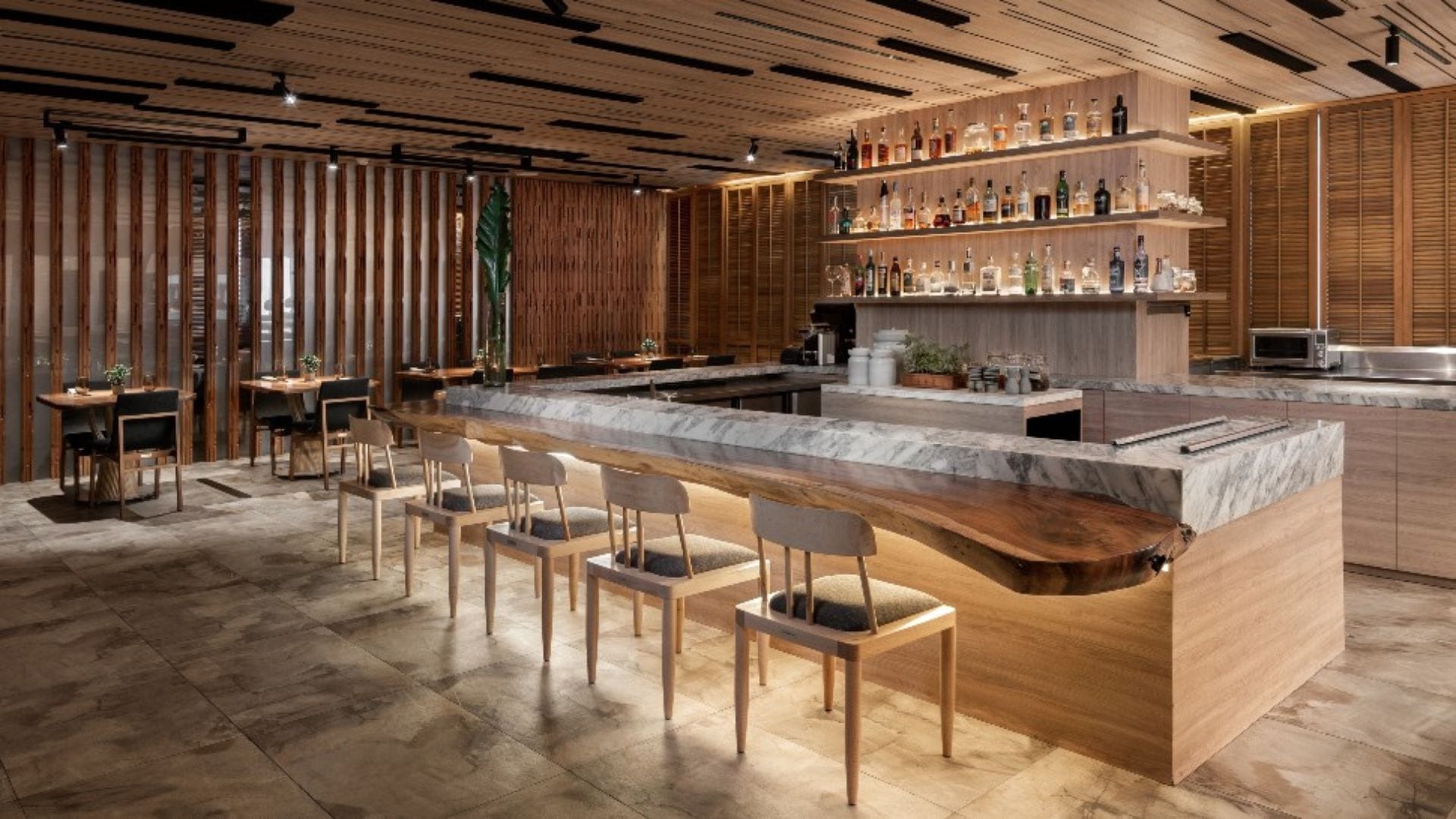
Any Filipino—or anyone who’s spent any significant amount of time in the Philippines—would know how important and essential the coconut is to the local economy. The coconut industry takes up about 3.6 million hectares across the country, which is about 25 percent of our total agricultural land. The sector itself contributes roughly six percent of the nation’s gross value added (GVA) and about 1.14 percent of the country’s GDP, according to the Philippine Institute for Development Studies.
Perhaps the most obvious way the humble coconut has inserted itself into the consciousness of every Filipino is through our food. Whether it’s gata or coconut milk, its meat (buko or niyog), coconut water or oil, turning it into sugar or vinegar, there as many ways to infuse it into everyday dishes as there are culinary traditions in different corners of the archipelago. It’s in our curries, our halo-halo, our ginataang gulay. Even the husk or its byproducts are used as charcoal for grilling, underscoring the versatility of this valuable fruit.
Chef Chele Gonzalez
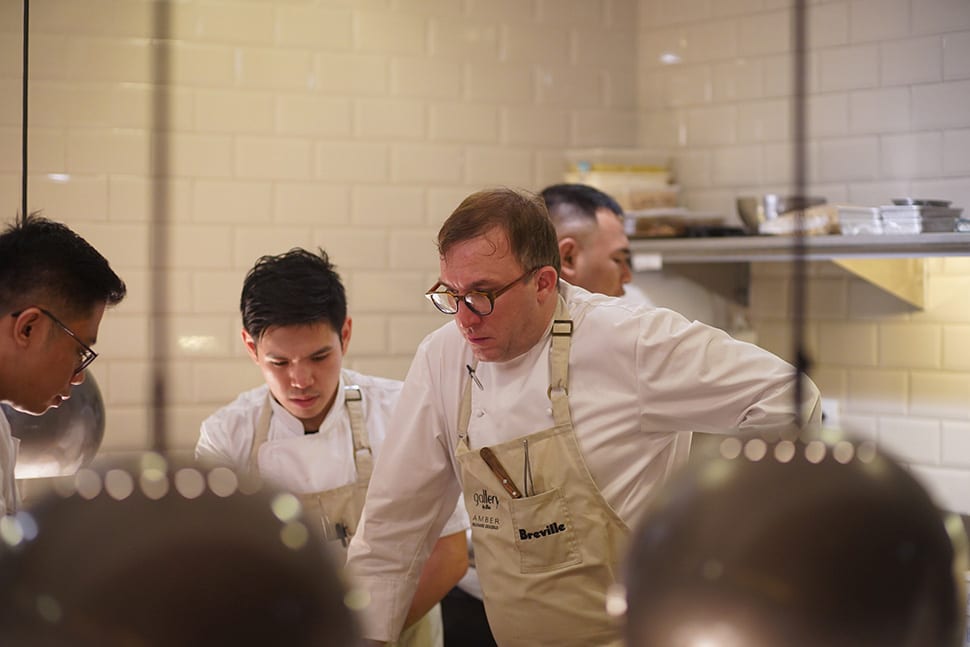
It was this realization that led to Chef Jose Luis “Chele” Gonzalez developing his new tasting menu at his restaurant Gallery in Bonifacio Global City. After his critically acclaimed tasting menu featuring cacao, Chef Chele found his next inspiration in the coconut.
At first, the concept sounded deceptively simple. But that’s exactly why Chef Chele chose it. The challenge was in the attempt to take a familiar, well-loved ingredient, turn it on its head and present it in newer and more inventive ways. The result is The Tree of Life menu—a 10-plus course degustation menu that doesn’t just put coconut front and center; it explores its qualities and nuances and combines it with unexpected processes and ingredients to create truly outstanding dishes.
ALSO READ
Cantabria by Chele Gonzalez Welcomes New Spanish Chef de Cuisine
The Latest from Chef Chele Gonzalez: A Spanish Restaurant Without Tapas and Paella
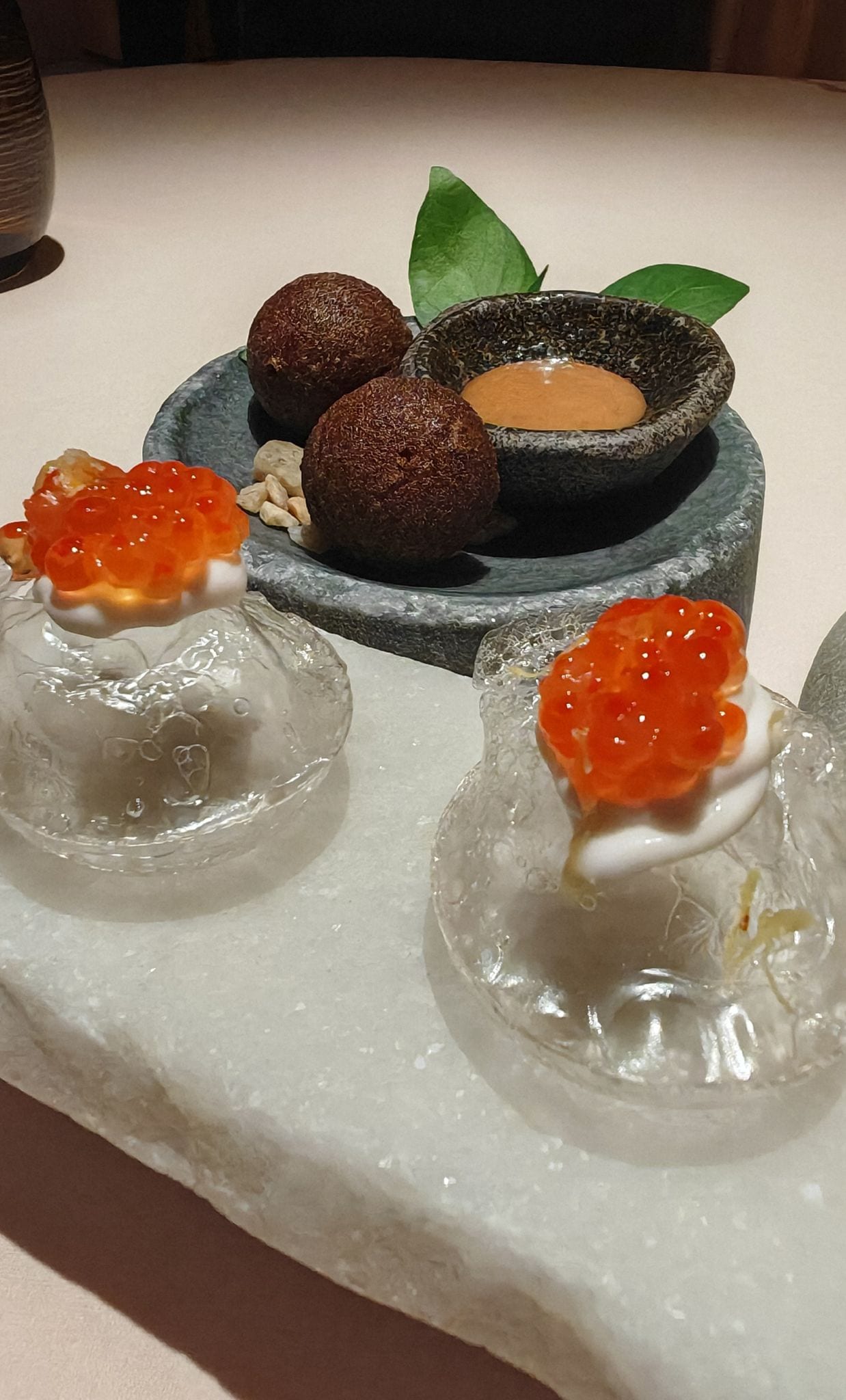
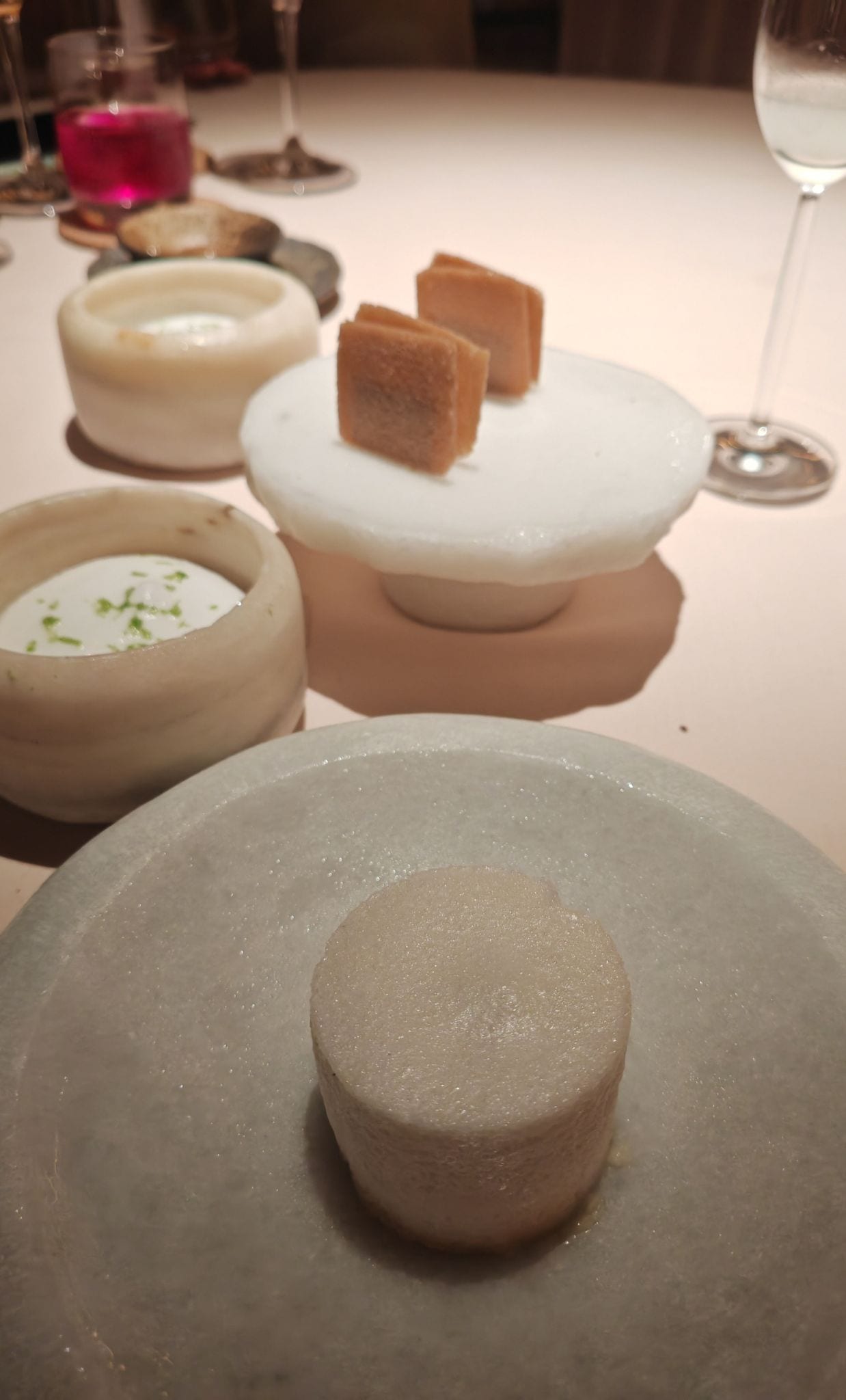
As always, the meal began with short “excursions” to different parts of the restaurant to sample pre-appetizers: a cocktail shot with a nata de coco amuse-bouche that didn’t come in the syrupy, dessert form we’re all familiar with, but fermented and thickened into supple, jelly-like strips; another small bite at the restaurant garden outside, and another one in the studio lab. All were curtain-raisers for the main event. The dinner also offers a cocktail or mocktail pairing carefully curated by Gallery’s mixologist in tandem with the culinary team.
Trio of appetizers
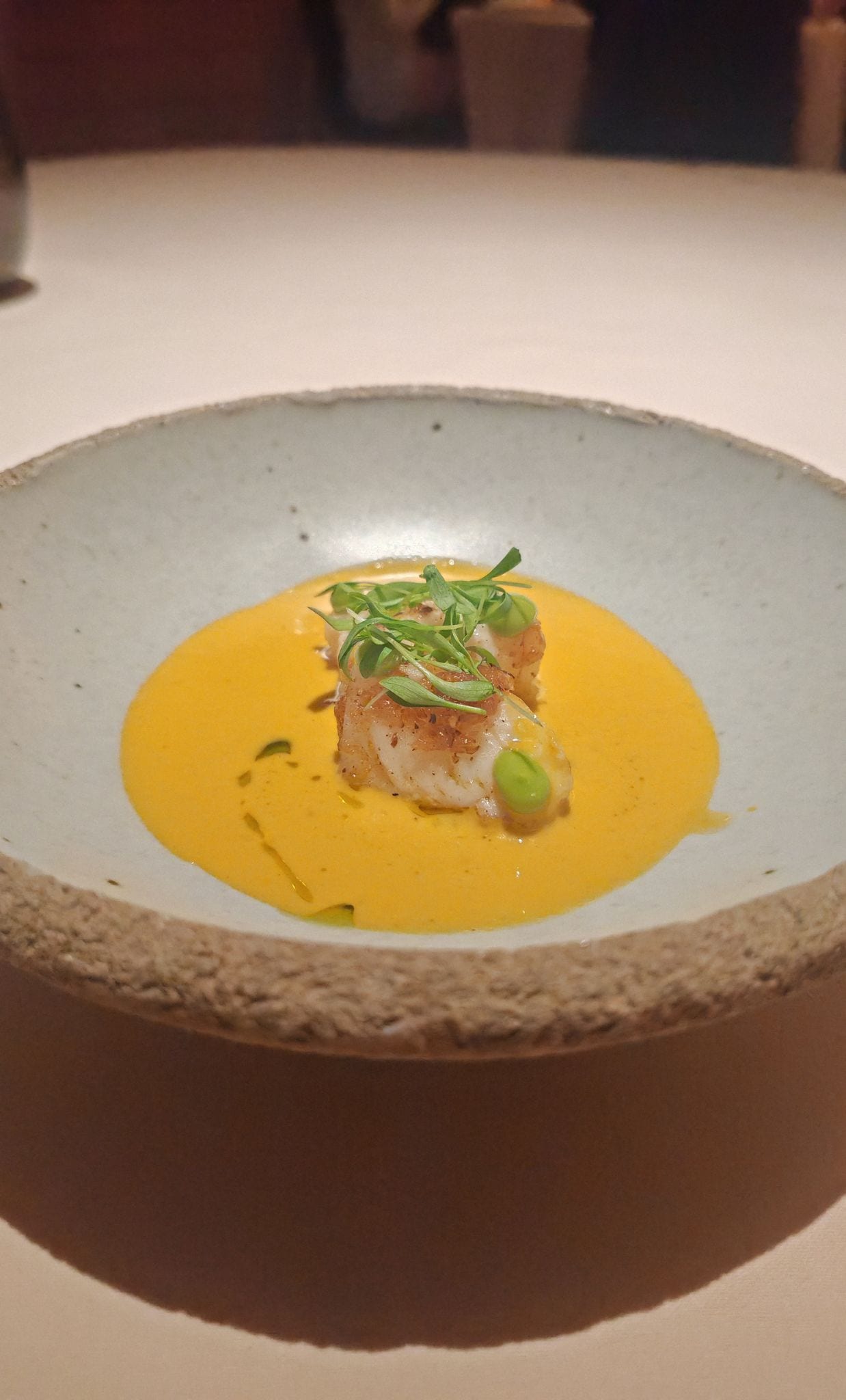
Grouper Pilpil
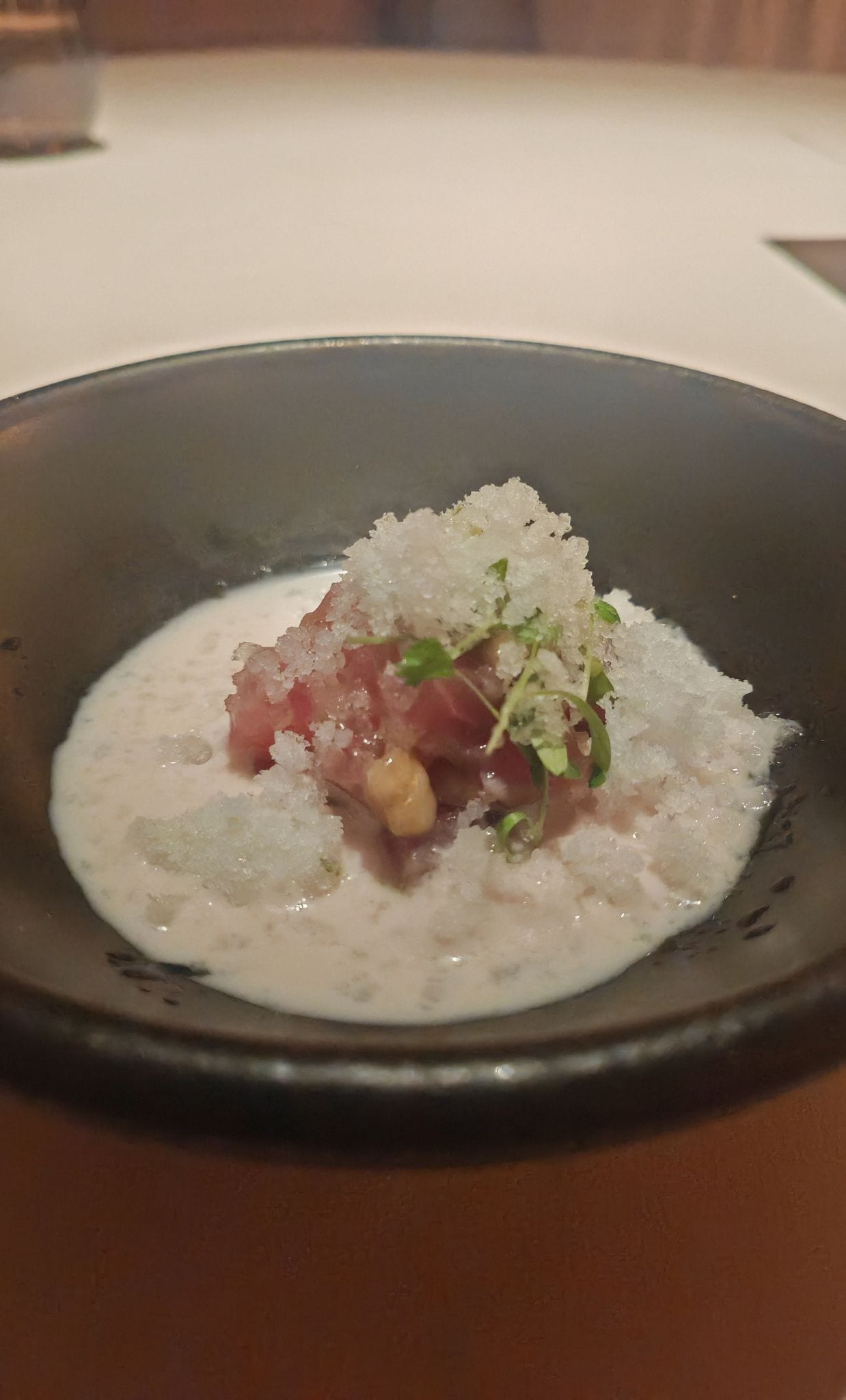
The next courses came in quick succession: a tropical kinilaw with yellowfin tuna, banana in a habanero and coconut milk sauce with a granita of coconut juice and local dayap; a Coco Crab Jelly with shiitake jelly on top, with coconut and crab stew foam, coconut milk, and ginataang alimasag; and a Palawan Lobster, grilled yakitori style with an XO sauce with dried coconut, and a calamansi puree and cilantro emulsion.
It became clear then that Chef Chele and his team not only did their homework, they dug deep and immersed themselves in the world of the coconut, coaxing out flavors and textures that were there, ready to be discovered. The Crab with XO sauce, in particular, was an easy standout—it was briny, smoky, and alive.
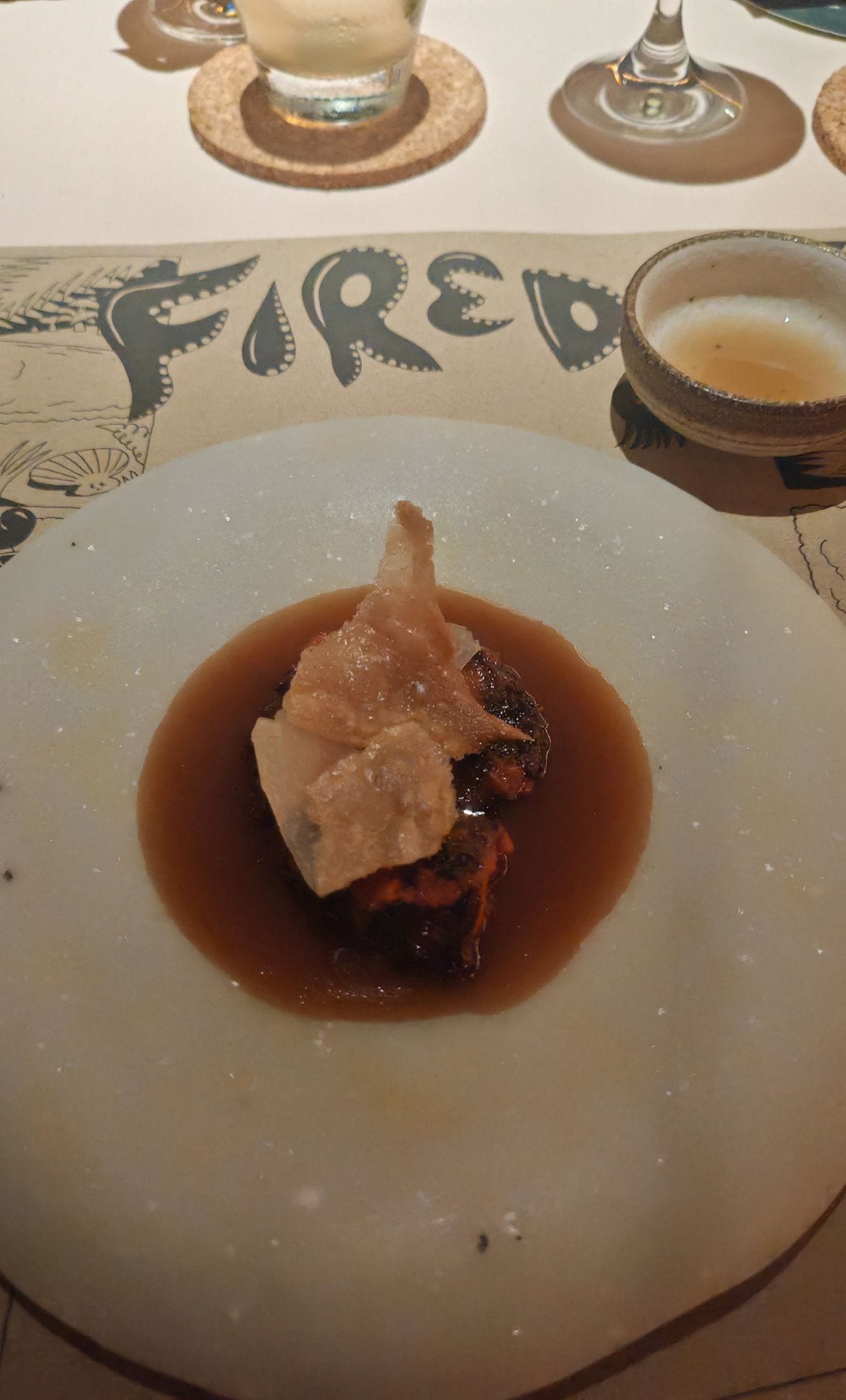
The next courses took things a step further: there was Fried Pulpo that the server said was inspired by the chicken inasal, with ingredients like ginger, calamansi and anatto seeds that weren’t out of the ordinary. The coconut came in the homemade vinegar, where the octopus was marinated and grilled as the Bacolodnons would their chicken.
The Grouper or Lapu-Lapu Pilpil was cooked Basque-style but enriched with coconut cream instead of olive oil. The fish came with Pilpil sauce, which is a mixture of fish collagen and aromatics thickened with the coconut cream.
Tropical Kinilaw
Fired Pulpo
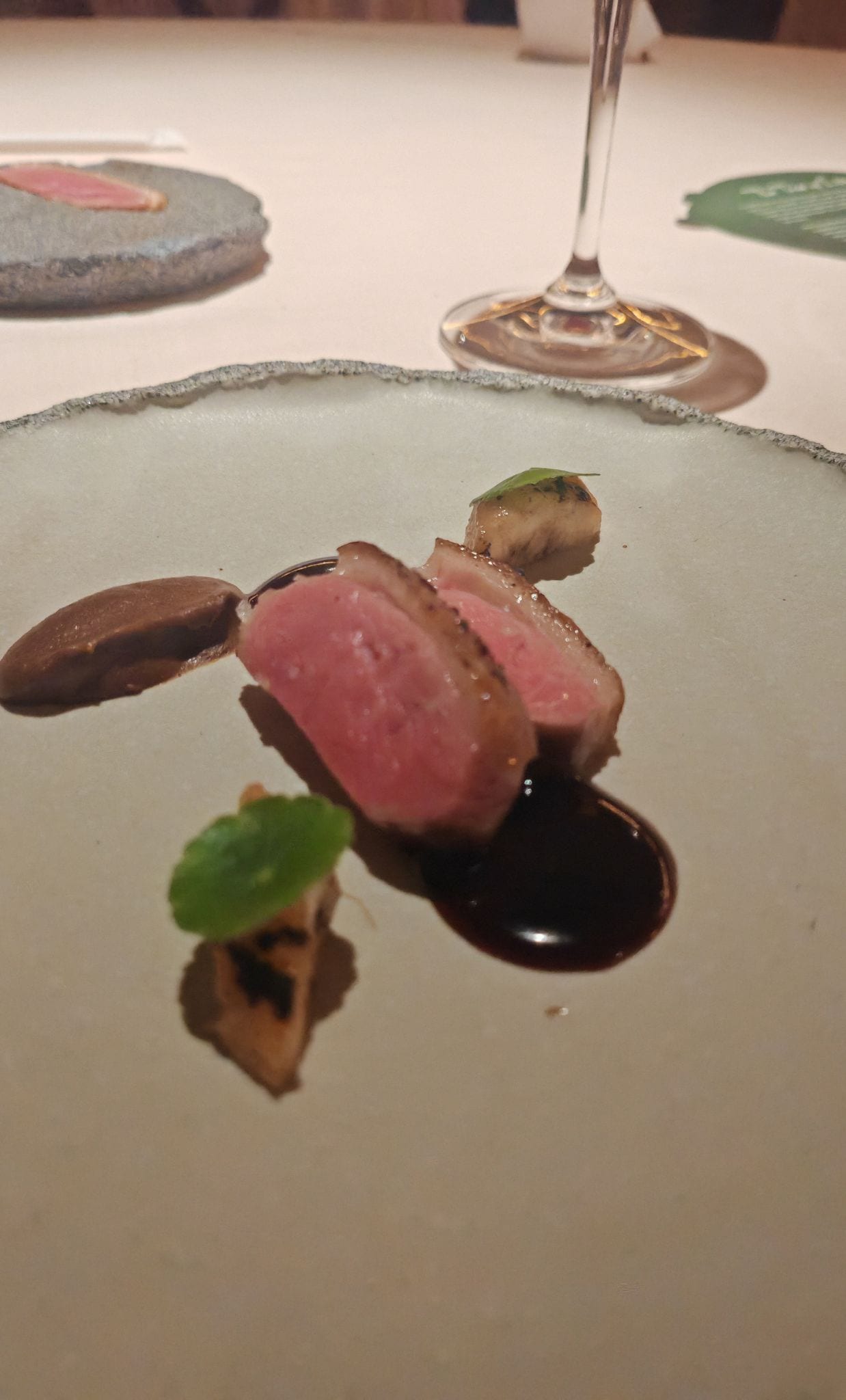
There was also a Duck Roselle with a mole sauce; yes, the popular Mexican sauce made with a variety of ingredients but tweaked here with some latik or a kind of syrup derived from coconut milk. It also came with a slice of duck pastrami on the side, in case diners wanted more of that unmistakable duck flavor.
The palate cleanser was buko salad, with nata de coco (again) served with fruits, lemongrass and basil.
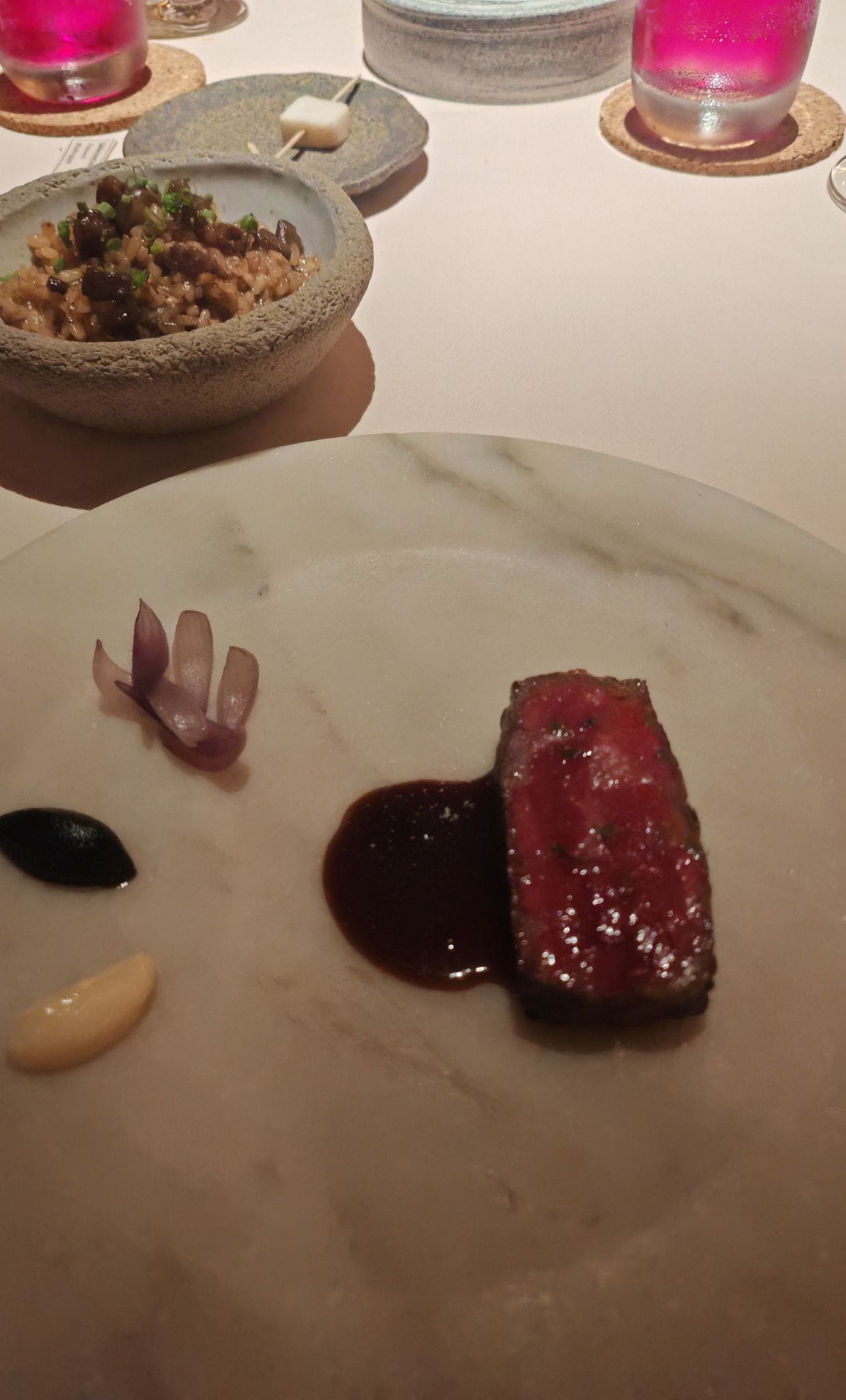
Chef Chele and his team pulled out all the stops for the menu’s main event: a slice of A5 Wagyu, cooked to medium perfection, enhanced with emulsified wagyu fat, beef jus, and a confit of garlic puree. I appreciated that Chef served it with wagyu fried rice instead of the traditional potatoes. Clearly the chef knows his (local) audience.
Duck Roselle
Wagyu A5
What followed was a cheese course made of coconut Roquefort, funky and salty with a tropical finish, kamote camembert, sweet potato puree, some dried mango bits and a local sourdough with just a touch of latik.
Dessert was a trio of reimagined classics: “Mucilage” or the meringue and sorbet ganache; a “coconut texturas” or latik, dulce de leche souffle, and coconut-infused chocolates and petits fours.
Eating is ultimately a biological function, necessary to sustain life, but there are those who insist on elevating it to a fine art form, allowing us to move past its utilitarian aspect into something more satisfying and pleasurable. There’s no denying Chef Chele is one of these culinary savants, and his Tree of Life menu deserves to be highlighted and celebrated.
Trio of desserts
Gallery by Chele is located at the fifth floor, CLIPP Center, 11th Avenue corner 39th street, Bonifacio Global City, Taguig. The Tree of Life menu is priced at P7,500 per person, inclusive of VAT and exclusive of a seven percent service charge.
