

What Ever Happened to the Manilla Spaniel?

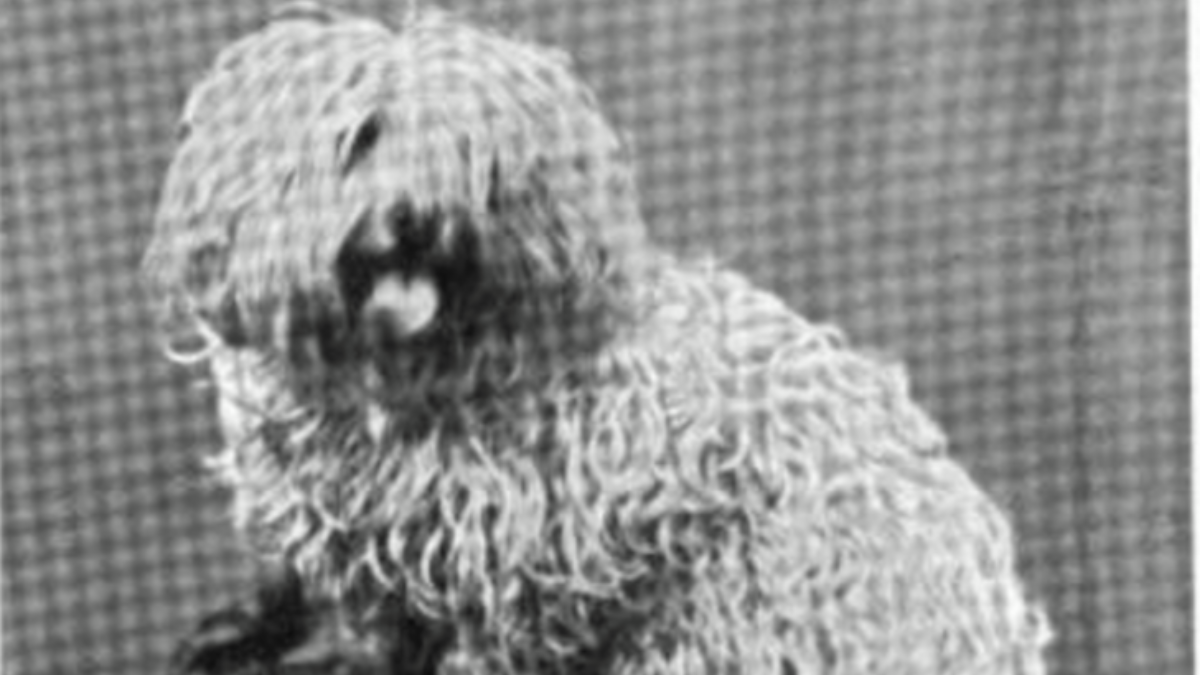
Nobody seems to remember the Manilla Spaniel. Not even Filipinos. Except for, say, some obscure records from books of a different time, as well as a few posts online asking about its existence, it remains a relative mystery. What we do know about the lost Filipino dog breed is that it disappeared sometime in the early 20th century.
We now know, too, that separate accounts by foreign travelers to Manila from the 19th century have each described a local spaniel that had the makings of a Maltese dog. One such researcher who legitimately recognizes the breed's existence is Dr. Desmond Morris. A world-renowned zoologist, ethnologist, writer, and painter, Morris wrote about the Manilla Spaniel in the 2001 book Dogs: The Ultimate Dictionary of Over 1,000 Dog Breeds.
It was said to have been popular during the 19th and early 20th centuries. The dog wasn't exactly a spaniel nor was it a bichon or Maltese. It weighed more than such a breed, boasting a long, wavy coat of white fur and droopy ears.
A photo of the Manilla Spaniel, Archer, in Country Life Magazine published in 1987.

Coincidentally, we can find another entry about such a dog from the 1907 book The new book of the dog; a comprehensive natural history of British dogs and their foreign relatives, with chapters on law, breeding, kennel management, and veterinary treatment by Robert Leighton. In the book, clear comparisons between the Havana and Manilla Spaniels were made.
"These two little toy Spaniels are no doubt varieties of the ancient Maltese dog, from which they differ only in minor points, although owners both in Cuba and the Philippines claim them as native breeds," the book claims.
It adds: "The Manilla is somewhat larger than the Maltese and may attain to a weight of 16 lbs... Usually it is white, and the coat instead of falling straight lies in wavy strands... The Manilla Spaniel is an uncommonly intelligent little dog, and is as quick as a Poodle at learning tricks."
ALSO READ:
Asong Gubat: Will This Be the First Official Dog Breed of the Philippines?
Believe It or Not, Chow Chows Were Once Stray Dogs That Roamed the Streets of Manila
Going even further, another account written by English artist Robert Elwes describes a similar animal. In his 1854 book A Sketcher’s Tour Round the World, Elwes writes:
"Manilla is famous for little white dogs, a sort of diminutive poodle, prettier than the Maltese dogs. They are very tractable, and are taught to sit on the arms of arm-chairs and beg, and do many other tricks; but are very delicate, and will not stand a cold climate."
ADVERTISEMENT - CONTINUE READING BELOW
Interestingly, the Manilla Spaniel would even find its way to Australia, based on an old 1863 ad in the Sydney Morning Herald, as pointed out by writer Mikael Angelo Francisco, that was auctioning off Manilla Spaniels. This is one of the rare occasions of its acknowledged breed name.
How did the Manilla Spaniel Disappear?
The Manilla Spaniel was said to have been a loyal and disciplined dog that lived a long life. So there's a good chance that it was a coveted dog by traders at the time.
Unfortunately, because of the growing popularity of the breed, it would be exploited. The lapdog would be used for bartering on early trading ships, similar to how the Havanese or Bichon Frise became a worldwide phenomenon. Most of them sadly couldn't withstand long voyages because of stress or poor hygiene. British merchant Robert MacMicking wrote of this predicament in Recollections of Manilla and the Philippines, During 1848, 1849, and 1850, saying:
"They are so delicate, that few of them can stand a sea-voyage, and all those I have ever sent away from Manilla, to any distance, have died before reaching their destination. A well-bred dog of this breed of middling size, is about as large as a full-grown tom-cat, or a little bigger."
So did they all just die out? With the only few escaping death here and living out their lives elsewhere? Or was it just a random breed that happened to share a network of owners, both actual and prospective, that wanted it to become a thing? Was it even a breed? Nobody knows exactly to this day, considering the scarcity of records. At the very least, we can still call Asong Gubat our own.
