
Today I Learned: Filipino Men are Up to 4x More Likely to Die by Suicide Than Women

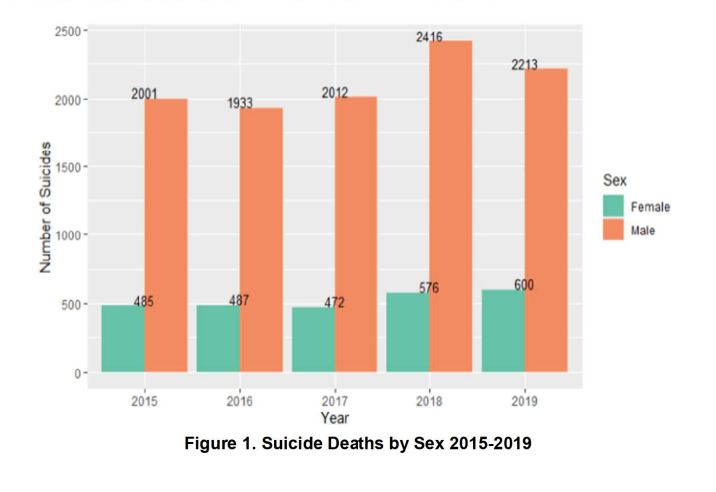
It is difficult to accurately measure the suicide rate in the Philippines because of faulty reporting or measurement errors. However, based on a study by the Philippine Statistics Authority, deaths attributed to suicide hovered at around 2,500 annually between 2015 to 2017. And dividing the numbers by sex, the number of male suicide deaths is about four times the number of female suicide deaths.
According to the PSA, it is important to measure suicide “so that evidence-based policies and interventions to reduce premature deaths due to suicide can be crafted.” It’s even more urgent now, especially since data seems to suggest that there is an “epidemic” of male suicides happening not just in the Philippines, but across Southeast Asia.
ALSO READ
One Out of Five Young Filipinos Have Thought About Suicide, According to This Study
In Korean Celebrity Suicides, the Spotlight Shines on the Country's Institutionalized Tragedy
According to a study in the U.S., suicide is now the “leading cause of death among middle-aged adults” in Thailand and is the leading cause of death for Singaporeans aged between 10 and 29.
In August, there was reportedly a rash of suicides in Cambodia, where many of those who take their own life are between 15 and 19 years old. And here in the Philippines, a study says that 7.5 percent of youths reported attempting suicide in 2021, increasing three percent from 2013. And between 2021 to 2022, at least 404 student suicides were reported in the country.
According to the PSA study, which collected data from between 2015 to 2019, although suicide mortality rates in the Philippines is still generally lower compared to the world average, this could be attributed to measurement errors, which could mean that we are not seeing the complete picture.
Data on suicide
Based on studies by the World Health Organization, more than half of all reported suicides in the world occurred before the age of 45 and that about 90 percent of adolescents who died by suicide come from low or middle-income countries. This has made suicide a serious public health issue and its reduction a part of the United Nations Sustainable Development Goals.
Specifically, the SDG states that, by 2030, premature mortality from non-communicable diseases should be reduced by one-third through prevention and treatment and promote and promote mental health and well-being.
The PSA says that the Philippines is one of the 74 SDGs that do not yet have an established compilation methodology, which is essential in monitoring targets and programs and policies of the national and local government units.
Given this, the PSA came out with a report detailing specific data on suicide in the Philippines within the 2015 to 2019 period. It presents eye-opening facts that give us a glimpse into just how sobering the reality of suicide in the Philippines is.
Here is a rundown of some of the most noteworthy data from the study:
- The youngest reported suicide victim was five years old, with two cases happening in 2016 and 2018.
- The oldest, meanwhile, was at 98, with two cases in 2016 and 2017.
- The average age range is from 34.4 to 36.2.
- Of all deaths attributed to suicide, it was most prevalent in the age group of 10 to 39 years old, whose percentages ranged from a low of 2.18 percent of all deaths in 2016 to high of 2.74 percent in 2018.
- The most frequent method used in suicide is hanging; for every five suicide deaths, four were caused by hanging. Other methods include the use of pesticides and other chemicals, rifle or shotgun, sharp object, and others.
- Around 72 percent of suicide deaths occur at home, 21 percent in the hospital.
- Compared to the worldwide suicide rate, the Philippines’s suicide rate is still quite low. In 2016, for instance, the worldwide suicide rate was at 10.5 per 100,000 people versus the Philippines’ 2.5 per 100,000 people.
It’s important to note that the numbers of the study covered the years 2016 to 2019. In 2020, the number of suicide cases shot up to 4,420, which is 57.3 percent higher versus the 2019 number of 2,810. The stark increase is attributed to the pandemic that had resulted in prolonged lockdowns and a rise in unemployment, according to Statista.
And, according to a wide-ranging article about suicide across Southeast Asia, cases of self-harm among men far outpace that of women in 2019: it’s more than double in Cambodia, Laos, Singapore, Timor-Leste and Vietnam; in the Philippines, it was almost three times as many (based on a different set of data); it was over three times as many in Indonesia and Malaysia; it was five times as many in Brunei; and six times as many in Thailand.
With this data, clearly there needs to be a targeted approach to suicide prevention in the country, one that addresses the underlying causes for self-harm, especially among men.
