
Aftersun and the Curse of Intergenerational Depression

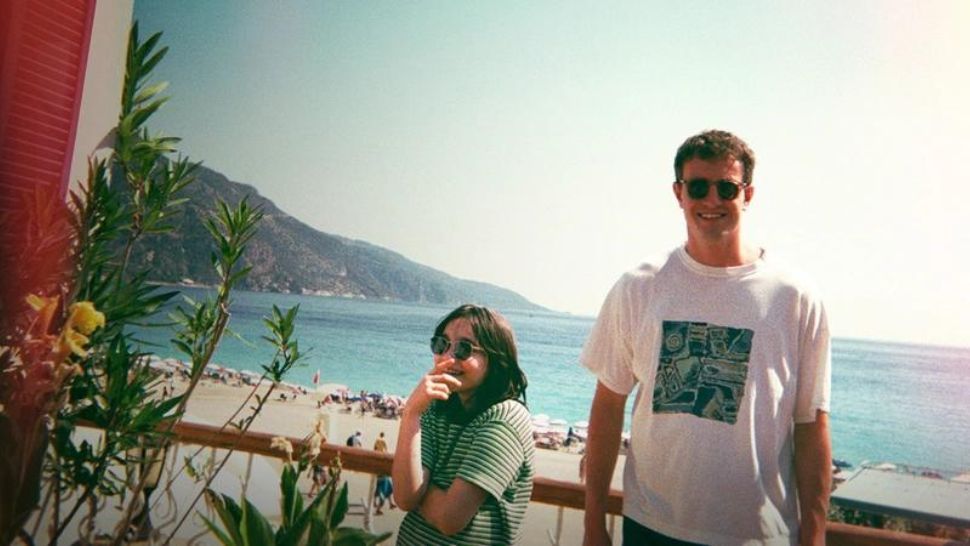
There’s a scene in Charlotte Wells’ directorial debut, Aftersun, where the father and daughter pair of Calum (Paul Mescal) and Sophie (Frankie Corio) have their picture taken on one of their last dinners out while on their annual vacation. Calum playfully puts his hand up behind Sophie’s head, his fingers in a ‘V’ sign, a harmless bunny ears prank in a family photo. As the Polaroid starts to materialize, you realize the bunny ears are unintentional devil horns, a painful, heart-wrenching metaphor for Aftersun’s core message of how intergenerational depression is an invisible curse.
Also read:
Blue Beetle Isn't Filipino, But He Might As Well Be
The Bear Is the Best of Stress TV

It should’ve come with a trigger warning. The trailer for the celebrated film, which won a jury prize at Cannes 2022, deceptively depicts a touching story of a father and daughter on vacation. In that regard, the trailers didn’t lie. It is. The entirety of the film features meandering shots of Calum and Sophie’s days at a cheap, beachside resort in Turkey. What the trailers won’t tell you, just like the film won’t tell you until the truth ambushes you, is that this is a memory. Towards the end, as Calum entreats a reluctant Sophie to dance with him to the rising, rousing beat of Queen’s Under Pressure, Bowie chants, “This is our last dance, this is ourselves,” and you realize the Wells has betrayed you. This is the last time Sophie ever sees her father, a memory that intercuts with an adult Sophie (Celia Rowlson-Hall) in a darkened dance floor intermittently lit by the heartbeat of a blue strobe light and the last flashes of Calum in her mind.
In many ways, Aftersun’s earnestness and authenticity is its own worst enemy. It’s a difficult watch even under the best circumstances, but it’s especially painful for people who suffer from depression and anxiety. I saw this film with my wife thinking it would be a sentimental look and exploration at the father-daughter dynamic. And while it was certainly that, the undercurrent of Calum’s depression and self-loathing, which he appears to have passed on to Sophie, was all too real and triggering for my wife who suffers from the same mental illnesses. Given that all three of our children are undergoing therapy for a myriad of mental health issues (the ADHD portion of which I’m responsible for), it was an unwelcome reminder of her own culpability and self-estimated failure as a parent.

Paul Mescal delivers a powerful performance as Calum, who has separated from the 11-year-old Sophie’s mom. In one conversation with an instructor during a dive, Calum remarks how he’s surprised he’s made it to thirty. The feeling of dread never leaves you once you realize that Calum is haunted by the demons of his mental illness. At one point, while brushing his teeth, he unexpectedly spits into his own reflection, an uncharacteristic and sudden manifestation of his self-loathing. It’s also indicative of how he sees himself reflected in Sophie, who in adulthood exhibits some symptoms of her dad’s own struggles.
It’s too real. My wife wanted to walk out of the cinema, arguably a triumph for Wells’ storytelling and adeptness at delivering cinematic heartache. To someone with depression, it’s a drawn-out reprimand and reminder that there are forces beyond our control and that as parents, sometimes we pass on our demons to our children whether we like it or not. But there’s beauty in the moment, too, a deep, indelible melancholy in our most cherished memories that Wells captures with agonizing familiarity.
It’s a hundred odd minutes of lazy shots and quiet moments following a father and daughter spending time together on a vacation Calum can barely afford. The financial recklessness is universal, as it turns out, as Filipinos who mostly live a hand-to-mouth existence, we find ways to afford things we shouldn’t. But Aftersun proves why it matters because there’s no price tag on memory. And while Calum unwisely splurges on a Persian carpet—I distinctly remember one summer when my parents fell to the budol of a Persian carpet, mistakenly believing it to be an investment—Wells is able to contrast the worth of a physical object that ultimately won’t matter against the priceless string of moments that Calum and Sophie share.

Wells seeds Aftersun with lovingly curated metaphors that sting so deeply that it’s clear that she draws from personal experience. The film also closes with one of the most beautiful and poignant sequences in a film in recent memory. As Calum walks away and through the door, into the unending rave and flickering strobe lights of Sophie’s mind, Wells ties everything together in one messy, heartbreaking package much like the handycam documentation father and daughter have been intermittently filming throughout their vacation. Few films can stun, stump, and shatter you the way Aftersun can, but it’s a rare experience that merits sitting through with the important caveat that depressives, particularly parents whose children also suffer from mental illness, might want to steer clear.
Aftersun is now showing in Ayala Malls Cinemas until August 29.
