
Barbie Is the Most Important Film of 2023

My 15-year-old daughter Zoe Fable was, from the time she was little, never your stereotypical girl. She is athletically gifted, excelling in practically every sport she pursued; she preferred plastic swords to dolls and dresses and grew up collecting NERF guns and Ninja Turtles. These days she spends most of her time trying to improve her Valorant ranking, studies as well as coaches Brazilian Jiu-jitsu, and tries to be cute for a British girl she met online. It might surprise you—because it certainly surprised her parents—that Zoe loves Barbie. She never wears pink, has no interest in make-up, but she watches and rewatches all the Barbie cartoons because she thinks Barbie is boss.
It made no sense to me and my wife until Greta Gerwig educated us: Barbie is boss. And Barbie represents every girl in the world, from the Margot Robbies to the Zoe Fables. Barbie is every woman but also quintessentially not any woman because she’s really just plastic and all her successes, from being President to winning a Nobel prize to sitting on the Supreme Court, are manufactured by a marketing team comprised mostly of men. Gerwig astutely reminds us that Barbie’s world is a twisted, or corrected, if you will, reflection of the real world, which is run by men.
Also read:
The Problematic Treatment of Women in Mission: Impossible—Dead Reckoning Part One
Dear Hollywood, Give Us More Jennifer Lawrence Comedies, Thanks
Barbie is a pointedly ironic character owned by a company whose name is a portmanteau of its founders Harold “Matt” Matson and the husband and wife team of Elliot and Ruth Handler. Except that they couldn’t fit Ruth’s name anywhere so they settled with just Matt and Elliot to form “Mattel.” Today, Mattel’s CEO is the most dudebro of all CEOs, exuding bigger dick energy than either Elon Musk or Mark Zuckerberg. Ynon Kreiz, who took the helm in 2017 and led Mattel to IP-driven growth, doesn’t need boxing matches or rockets in space because the numbers speak for itself.

Adding to the irony is the self-emasculating Will Ferrel playing the nebulously credited role of “Mattel CEO” when they could just as easily and maybe even justifiably cast a dudebro like Jason Statham. But Mattel is in on the joke, exaggerating the patriarchal structure of the company (the real Mattel has a fairly even split of male and female employees at 52 percent and 48 percent, respectively) to drive home the point that Barbie is a dream. Or a hope. It’s easy to confuse one for the other but they’re not necessarily the same.
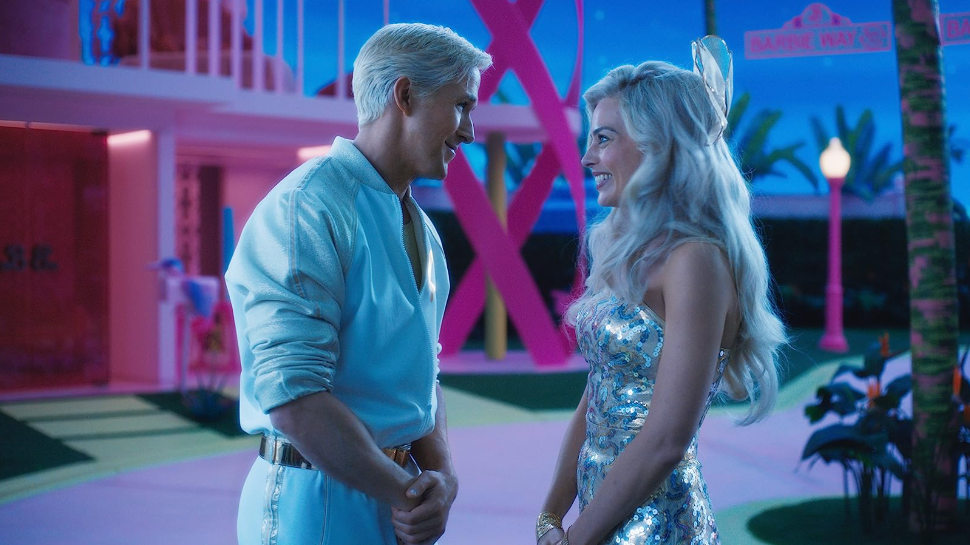
Does Barbie really inspire little girls to be whatever they want to be? Or is it merely an illusion to keep the peace? When Margot Robbie’s stereotypical Barbie goes into the real world, made possible with some hand-waving and theatrical scenery, she’s disabused of her long-standing belief that Barbie changed the world and that feminism’s goal has been achieved. Conversely, Ken, who tags along for the ride, is awakened to the empowering realization that the patriarchy has made it easy for men just because they have a penis. The fact that Ken does not, in fact, have a penis is one of the most sublime parts of Gerwig’s multilayered joke-slash-commentary.
Barbie is an incredibly self-aware, self-deprecating, and yet poignant and reflective tale that sits with you long after you leave the theater.
The Barbie movie addresses and hopefully puts to rest one of the most elusive questions in the toy’s history: What is the purpose of Ken? Named after Handler’s son the way Barbie was named after their daughter, Ken was always just an accessory. Ken always existed purely in relation to Barbie, first released in 1961 with the label “Barbie’s boyfriend” and he’s never quite grown from there the way Barbie has run for office, become a diplomat, or written a novel. At least he’s been a mermaid. More often than not, Ken was always released as a counterpart to Barbie: Malibu Ken only exists as an accessory to Malibu Barbie; Rollerblade Ken for Rollerblade Barbie; and sadly, Ken even owes being a mermaid to Dreamtopia Mermaid Barbie.

Unlike Barbie, who holds every job imaginable, from Avon representative to astronaut, Ken is kind of an underachieving nobody. That’s why when Ken declares his job to be the nonsensical ‘beach’, it’s code for ‘bum’ (beach bum, get it?). In the few times that Ken gets to step out on his own, such as the Palm Beach Sugar Daddy Ken released in the Spring 2010 as part of Barbie’s 50th Anniversary special edition line, he creates such controversy that he’s immediately pulled from shelves. Sugar Daddy Ken is a real doll released by Mattel, a Ken in a flamboyant green jacket and a tiny dog named Sugar on a hot pink leash. He’s technically Sugar’s daddy, hence the name.
Did that sound disturbing? The fact that the product unironically made its way to retail after presumably passing R&D is an argument for the fact that Mattel knows exactly what it's doing. Never mind that in 1993, Mattel released Earring Magic Ken (a partner for Earring Magic Barbie, of course) with an oversized to-scale ‘earring’ on a necklace that every gay man identified immediately as a cockring. Earring Magic Ken became Mattel’s best-selling doll of all time but was discontinued because, well, Ken isn’t supposed to be gay.
Barbie is as unsubtle as it is sublime, a commentary on archaic societal structures, rampant consumerism, and questions of existence and purpose delivered in bright pink plastic packaging to make it easier to digest.
But even if he were, it should be okay. That’s the point. Ken can and should be anything the way Barbie is in their world but he isn’t. His existence is defined purely by Barbie, who never really gives him the time of day, which leads him to an existential crisis. Everything about this film is meta, including the fact that Kenneth Handler, the man whom the Ken doll is named after, was rumored to be a closeted gay man who died in 1994 from AIDS. He was a wonderful father and loving husband, but maybe like Ken, not quite sure of who he was supposed to be.
So when Ken gets a taste of the real world and realizes that it’s run by men the way Barbie Land is run by women, it gives him some unhealthy ideas that spread quicker than COVID at a spring break beach party. At times, Gerwig and her partner Noah Baumbach’s script is a little on-the-nose, with exposition on the patriarchy and feminism, but it’s part of the point. Barbie is as unsubtle as it is sublime, a commentary on archaic societal structures, rampant consumerism, and questions of existence and purpose delivered in bright pink plastic packaging to make it easier to digest. Or not.

Barbie is a film that you can watch with your brain turned off or turned on, and when the film’s marketing said it was made for people who love Barbie and people who hate Barbie, they couldn’t have been more right. It’s also a film made for adults as much as it is for children. Gerwig’s absurdist vision is for everybody and it’s a remarkable feat. Barbie’s tiny waist and impossibly long legs have angered feminists who argue that the doll sets unrealistic expectations for women, not realizing that this criticism is based purely on Barbie’s appearance, the kind judgement that feminists rail against. This irony, this self-contradiction, appears over and over again throughout Barbie, an incredibly self-aware, self-deprecating, and yet poignant and reflective tale that sits with you long after you leave the theater.
Barbie is arguably the most important film of the year, despite the fact that it shows on the same day as what might be Christopher Nolan’s most defining film yet. Barbie is a movie about a toy and Gerwig embraces the assignment with gusto. At one point she uses the fact that there are no guns in Barbie Land to poke fun at war with an epic, non-lethal battle scene that reminds us all that men tend to go to war for absolutely no good reason whatsoever, no matter what a shirtless Putin on a horse tells you. Putin on a horse might even have a hand in the imagery Gerwig uses for the patriarchy. Using the universal symbol for big dick energy as the mascot for a bunch of literally dickless men is intentional irony and it’s fabulous.
The film is as much Ken’s journey as it is Barbie’s, and that’s what makes it important and elevates it from being what conservatives call feminist or LGBTQ+ propaganda. Ken isn’t gay or even an incel, even if he falls into incel behavior when he’s sent into the friend zone by Barbie. It isn’t his fault he was created purely as an accessory, it’s Mattel’s. And Mattel knows it. But Ken is just Ken, and that’s enough. And while Barbie has done all the jobs, she still hasn’t done the one job that’s hardest of all: being a woman. Gerwig has managed to pack all the questions and some of them even have answers in a movie about a doll who lives a fantastic plastic life.

If no other actress could’ve played the original Barbie better than Margot Robbie, it’s equally hard to imagine any other actor playing basic Ken more than Ryan Gosling, who turns in a performance as spectacular as his pecs and abs. Even Michael Cera is perfect as the singular Alan, but the entire film is loaded with so many cameos that even the pairing of Ncuti Gatwa’s Ken and Emma Mackey’s Barbie is a genius wink and nod to fans of Sex Education. No film has had as much fun and absurdity while deftly tackling existentialist angst and made up concepts like feminism and the patriarchy. And how better to explore made up topics than with a made up girl made from plastic on a Pinocchio journey of self-realization?
Barbie is both paradox and paragon, where an indie filmmaker becomes a blockbuster director for the most commercial product, and it makes perfect sense because life is just messy that way.
Kate McKinnon’s Weird Barbie might be the saddest Barbie of all, a broken doll perpetually in ‘the splits,’ which may or may not be a metaphor for the splintering experienced by women who go through abuse. Weird Barbie has been played with too much and too hard, and it’s treated as a gag so that it flies over kids’ heads. But because Barbie represents all women, Weird Barbie is a stand-in for every woman broken by abuse and the way she is ridiculed by other Barbies behind her back and to her face is a very real reflection of the ostracism and isolation that abuse victims must endure.
In the end, when Barbie meets her maker—literally and figuratively—and grapples with the idea of what it means to be a woman, to be human, with the overture of Billie Eilish’s powerful and haunting “What Was I Made For?,” it’s the culmination of idea meeting actualization. Barbie is both paradox and paragon, where an indie filmmaker becomes a blockbuster director for the most commercial product, and it makes perfect sense because life is just messy that way. “Mothers stand still,” Ruth Handler tells Barbie, “so that daughters can look back and see how far they’ve come.”
Before watching the film, Zoe Fable brimmed with excitement. “Every Barbie movie is great,” she told me, referring to the animated features she’s watched over the years, “Barbie can be anything.” She rattles off Barbie’s myriad occupations, and through her excitement, I finally understand. Barbie didn’t fail women. Maybe the world is run by men, and maybe it’ll be that way for some time. But if I stand still, one day she’ll look back and see how far she’s come, and Barbie will have been part of that journey.
Barbie is now showing in the Philippines.
