From starring as a troubled father in the coming-of-age drama film Aftersun, Irish actor Paul Mescal stars as Lucius in the highly anticipated action adventure film Gladiator II. Lucius is the son of Maximus, the iconic character from the original Gladiator film played by Russell Crowe. His role in the sequel involves stepping into the legacy and responsibilities left behind by his father, evolving from a young man driven by revenge into a leader with significant influence in Rome.
In this exclusive interview, Mescal offers insightful glimpses into his physical and mental preparations for the role, the nuances of portraying Lucius, and the thrilling reality of embodying a role that has captivated audiences for generations.
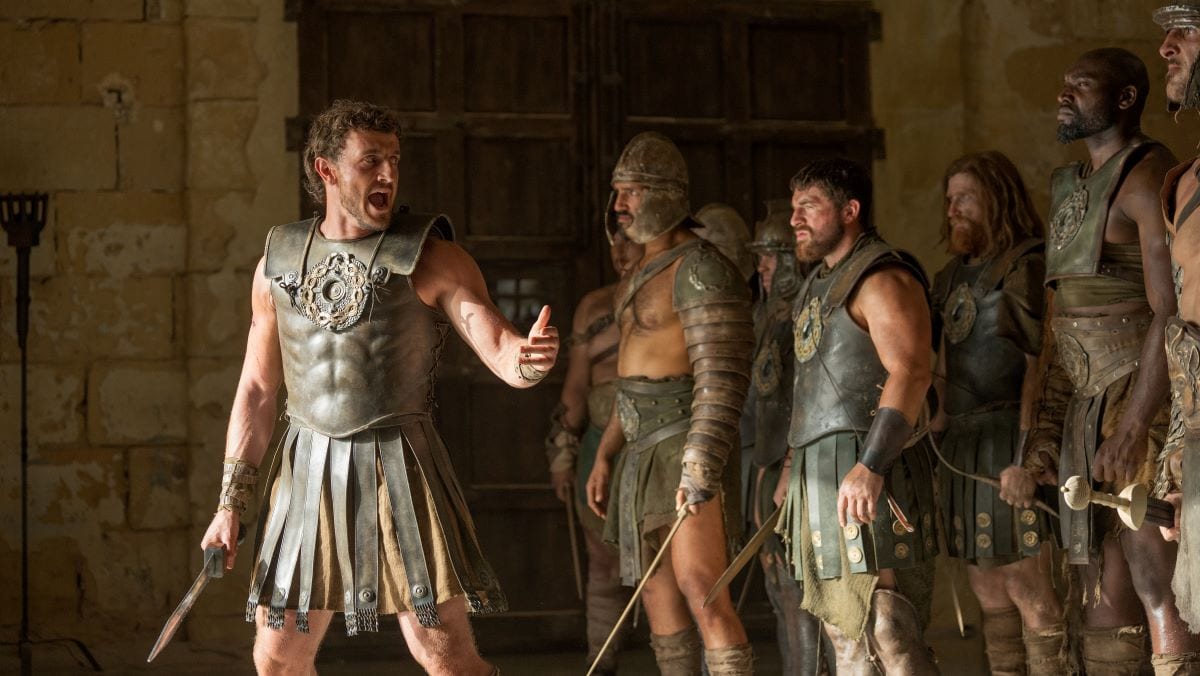
PHOTO: Paramount Pictures
Where were you when you got the call saying you were going to play Lucius in Gladiator II?
I was walking up Upper Street in Islington [in London], on the way to the theater. The call came through in my earphones. I remember it being cold, winter cold. But the cold went away when they told me. I was ecstatic. And then the weight of it dawned on me, having that private information that you know will be public at some point, and mean a lot of things to a lot of people. It was a lot of information to hold!
ADVERTISEMENT - CONTINUE READING BELOW
You said the news would mean a lot of things to a lot of people. What did the original movie mean to you?
I have a very interesting relationship with that first film because it was one I loved as a boy. I was obsessed with it when I watched it at 13, due to all the fights and physical elements. But then as I grew up, I became much more focused on other more emotional elements of the story, like Maximus’ journey in it. That’s the reason I think the original is a classic—how it evolves with you as you grow up. And it’s also a film I remember watching emotionally with my dad. It’s a film we shared together, so it’s very important to me.
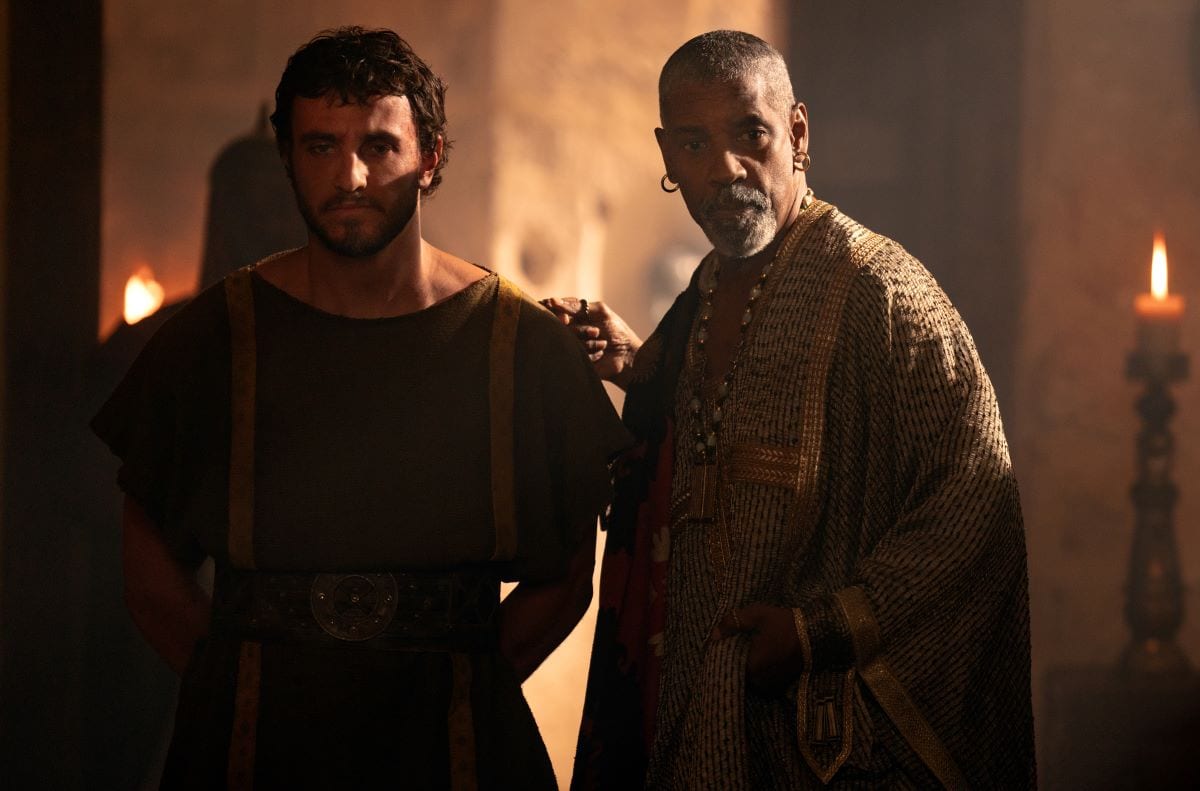
Paul Mescal and Denzel Washington have gotten early Oscar buzz for their performances in Gladiator II.
Paramount Pictures
CONTINUE READING BELOW
watch now
Has your father seen Gladiator II with you yet?
Not yet. But when we do, it’s going to be something special. Watching it with my whole family is going to be a pretty full-on moment for us all. I can’t wait to share it with them.
Maximus is a shadow that looms large over this story, and Russell Crowe’s performance in the original was iconic. Did you watch the film again before shooting Gladiator II?
No, because I think being overly reverential would have stifled me a bit. The legacy left by both Ridley and Russell is so strong that you carry it with you innately anyway.
Especially with the knowledge that Lucius is Maximus’ son. I made a conscious decision not to watch the [original] film after I had been cast because this screenplay did a lot of work in terms of drawing certain parallels between Lucius and Maximus. It was my job to delineate between them, so you as the audience pay your total attention to Lucius, and who he is.
ADVERTISEMENT - CONTINUE READING BELOW
There’s a line towards the end of the screenplay where it just reads, "Lucius becomes Maximus." How did you calibrate that particular moment?
That line is symbolic and spiritual. And to play it is subjective. There's no one single way to skin that. A different actor would go a totally different way with it. But I think what the screenplay means by that is that Lucius is finally stepping into his responsibility as a leader of these men. It’s a moment where he shifts his perspective from himself onto the greater responsibility of what's happening to Rome. That's how I interpreted that line. Up until that point, Lucius has just been driven by revenge. But that’s when he changes.
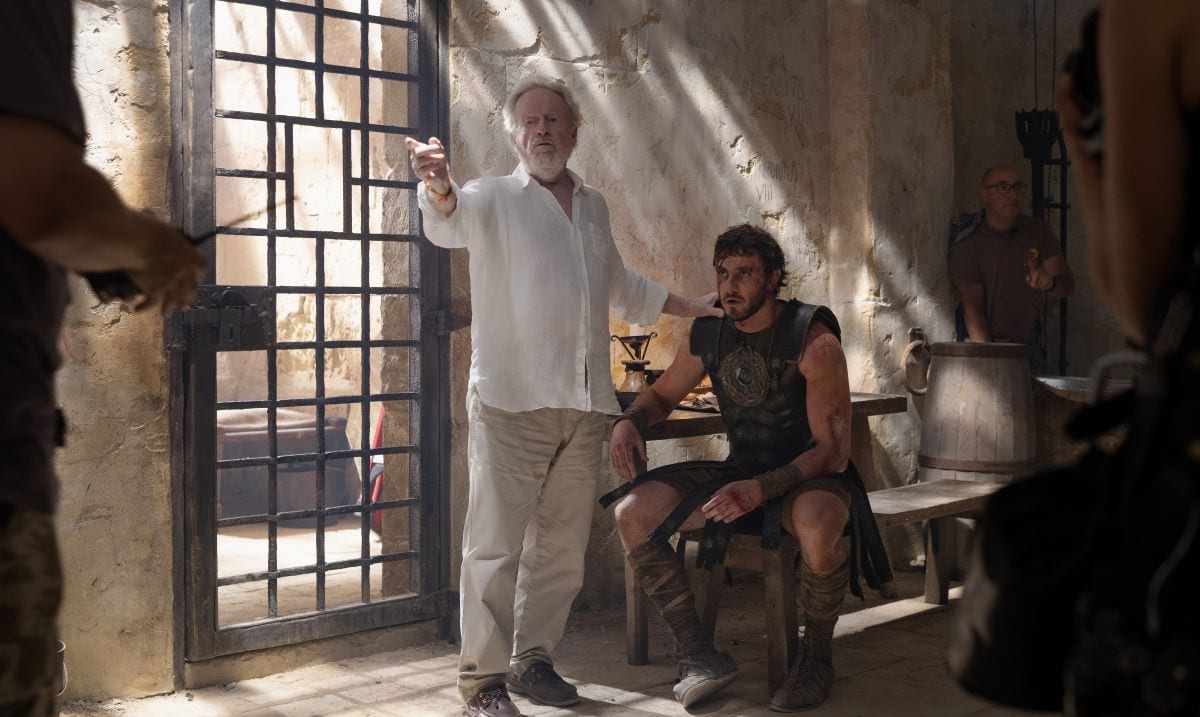
Mescal on working with director Ridley Scott: "Ridley is so impulsive. If he feels something, he's going to go with it. It’s part of what makes him so brilliant, I think."
Paramount Pictures
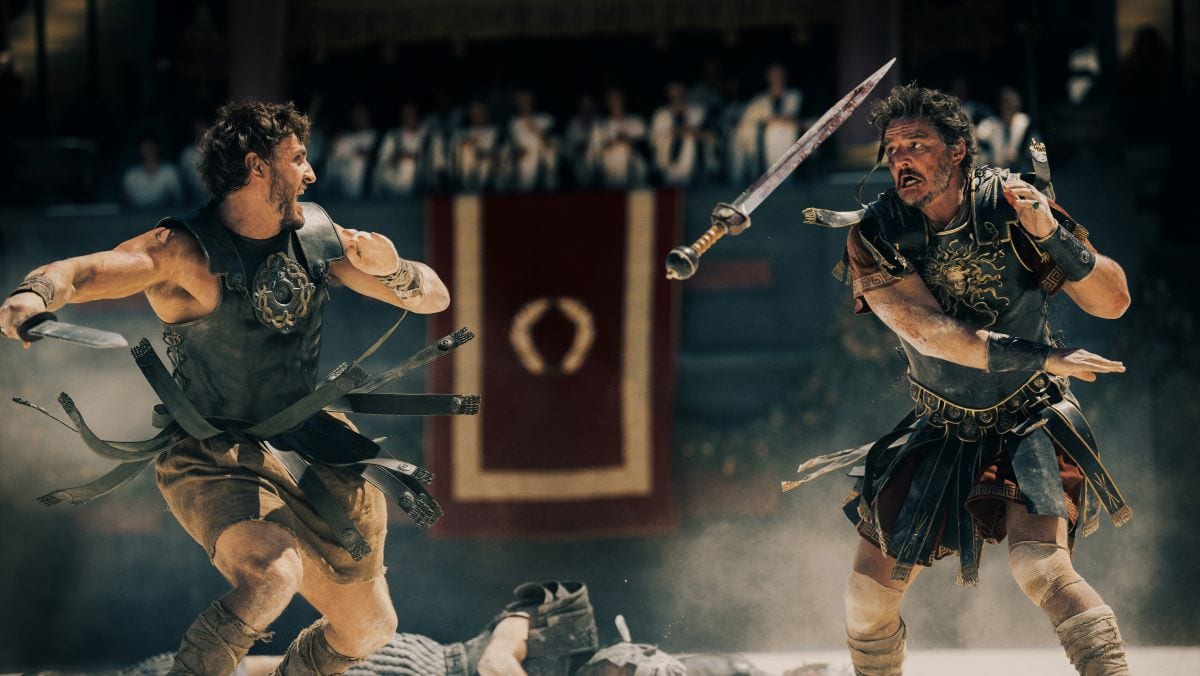
How did you and Pedro [Pascal] approach playing the scene where Lucius and Acacius finally meet in the arena?
We didn’t have huge conversations about it; we just launched ourselves into it! The point of that scene is that there's a massive discovery that Lucius makes at the tail end of it that shifts his whole perspective on what he's doing and essentially, what he's fighting for. What happens after that scene is that this silence falls over the Colosseum.
ADVERTISEMENT - CONTINUE READING BELOW
You feel in that moment that the power balance in Rome is starting to shift, that something is growing. And Lucius is at the center of that. He becomes kind of a figurehead, becomes a threat to Macrinus [Denzel Washington], a threat to the emperors [Joseph Quinn and Fred Hechinger], and everything starts to unravel from that moment on.
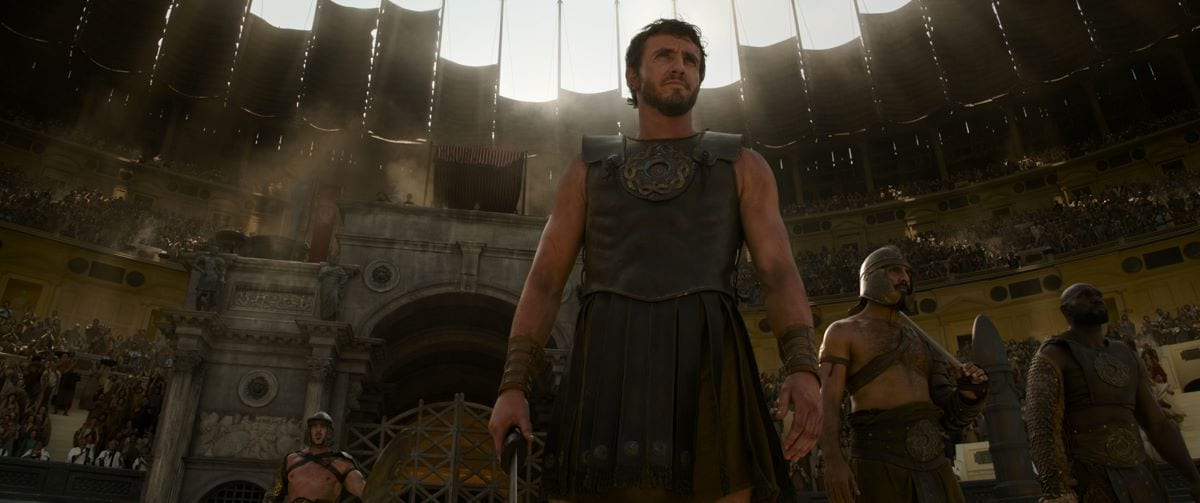
What’s it like to stand there, in the middle of this vast Colosseum that director Ridley Scott has built for this epic movie?
It’s extraordinary. As an actor, you're just trying to reach every person that's out there, in the audience.
PHOTO: Paramount Pictures
What was your favorite scene to shoot, and why?
I could name a ton, but all the scenes with Ravi [the doctor who tends to the gladiators’ wounds after they have fought in the Colosseum] were very special because they are moments where you get to breathe with my character. In those moments, you get a sense of who Lucius is outside of the violent world that surrounds him. I also love the scene between Lucius and Macrinus, when Lucius is in the bath, because that’s when you start to feel the shift in their power dynamics. And you're acting with Denzel!
Then also there’s the scene when Lucius meets Lucilla for the first time in years. That is such an important moment for the film because it reveals the root of Lucius' trauma. When you realize it's so much bigger than you thought; that he feels abandoned by his mother and is now back in the belly of the beast. It’s a scene that makes the emotional territory of the film very murky. He's so hurt by her that he can't even look at her to begin with. There is so much tension in that scene. It’s brilliant and so interesting.
What was your first meeting with Ridley like, in the casting process?
I had a great Zoom meeting with him. It was supposed to be a half-hour meeting, but we only spent about five minutes discussing what Gladiator II would look like. The other 25 minutes were spent talking about Gaelic football, dogs, and other stuff.
Two weeks later, I was offered the job. It was totally bananas and bizarre. But on the call, it became clear to me that it wasn't going to be a talk about the film, more that he was just sussing me out. I hadn't received a script at that point, so I assumed the next phase would be an audition, a camera test, something along those lines. But that's just not the way he operates. I was totally blown away that that was all we did. In one way, it's kind of absolute madness, a half-hour Zoom in which five minutes was spent talking about the actual film. But Ridley is so impulsive. If he feels something, he's going to go with it. It’s part of what makes him so brilliant, I think.
Mescal on physically preparing for the role: "I realized I had to make myself capable of causing some damage to people, which is a weird thought, but that was just what was required. So from there, it was six days a week, training, eating, and repeating—for six months."
Paramount Pictures
How would you describe your physical preparation for this role?
A lot of it was a blur because there was so much going on, with the Oscars and all that [Mescal was nominated for Best Actor, for Aftersun, in 2023]. After Christmas, I started working with a trainer and started a meal plan. Initially, naively, my approach was like, "You know what I'm going to go for here? A more normal gladiator, rather than a bulked-up one." That idea wasn’t born of laziness, by the way! But then I realized that was me getting in the way of it.
At the time, I thought that approach could be really interesting. But then I said to myself, "There's no way that an average person with my frame at that time would have survived with these giants swinging their swords at him." I realized I had to make myself capable of causing some damage to people, which is a weird thought, but that was just what was required. So from there, it was six days a week, training, eating, and repeating—for six months.
PHOTO: Paramount Pictures
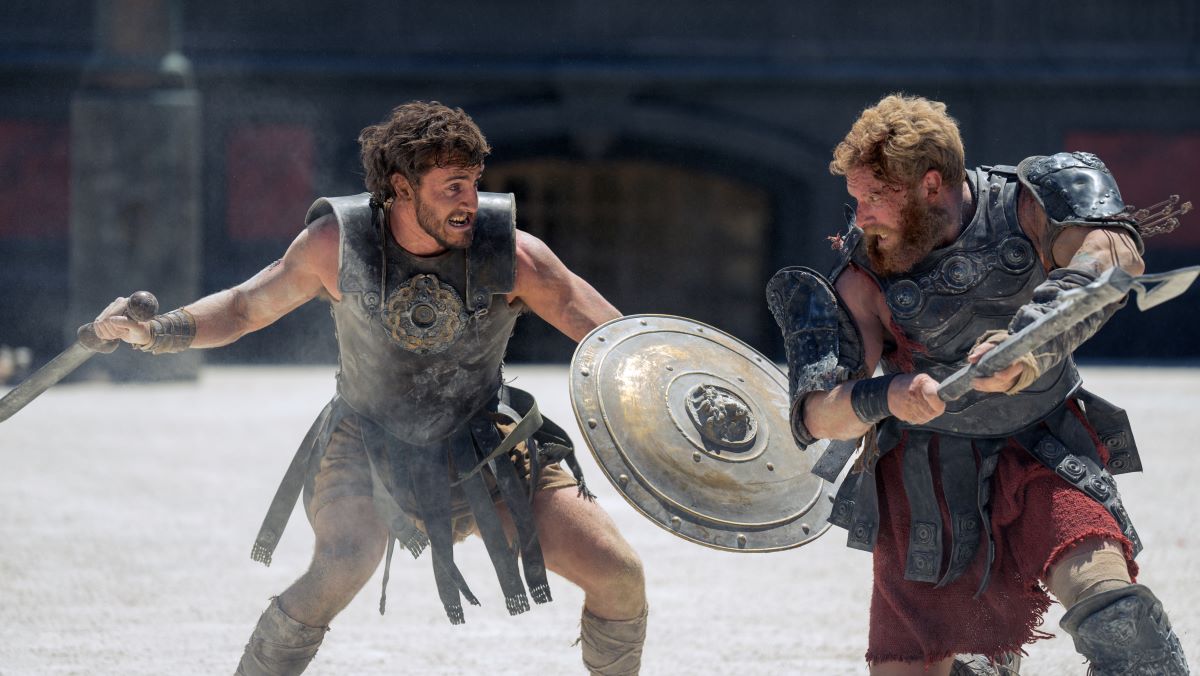
Did you enjoy the sword-fight training?
Of course! Let’s face it, sword-fighting is every boy's dream. Except now I wasn’t doing it in my imagination. Now I was getting to stick on the armor and had the best people in the world training me how to fight. It was an amazing, amazing experience. And then, obviously, toward the end of the film, Lucius gets to finally put on Maximus’ armor. And that was a huge, huge moment for me because there are only two actors in the world who have ever gotten to do that—and I’m one of them.
What was your fundamental approach to finding the character of Lucius?
My big starting point was, "How is it that this person survives? Why is it that Lucius manages to survive three weeks in the arena? Why does he survive North Africa [the siege at the start of the film]?" And I think it's because he's got this stubborn, dogged attitude, like, "I will do whatever it takes to reject any kind of sympathy" and, "I'm just not going to lose."
He possesses a robust mental fortitude. He’s a badass, stoic, quiet. He is not going to expend energy where he doesn't need to. He'll eyeball you. And I think he wins before he even goes into the arena a lot of the time. That's my theory on him. There's a reason that he's not overly verbose. That felt to me like the script was telling me who he is, fundamentally. He’s anti-establishment, definitely a bit unhinged. There’s no sense of self-preservation in a lot of what he does.
With some of the other gladiators in the film, there’s a lot of chest-beating, but that’s not Lucius. Whenever I watch boxing, always the fighters I'm most frightened of are the ones who are quietly standing in the corner, looking at the ground. They are the ones to worry about, and that’s Lucius. He's totally nihilistic because [after the events at the start of the film] his whole life has been blown up. He doesn’t care if he lives or dies, and that’s a dangerous person to come across. You don't want to be in a fight with someone like that, because they're always going to be taking risks.
We use cookies to ensure you get the best experience on Esquiremag.ph. By continued use, you agree to our privacy policy and accept our use of such cookies. Find out more here.