Review: A Quiet Place: Day One Is Cinematic Poetry

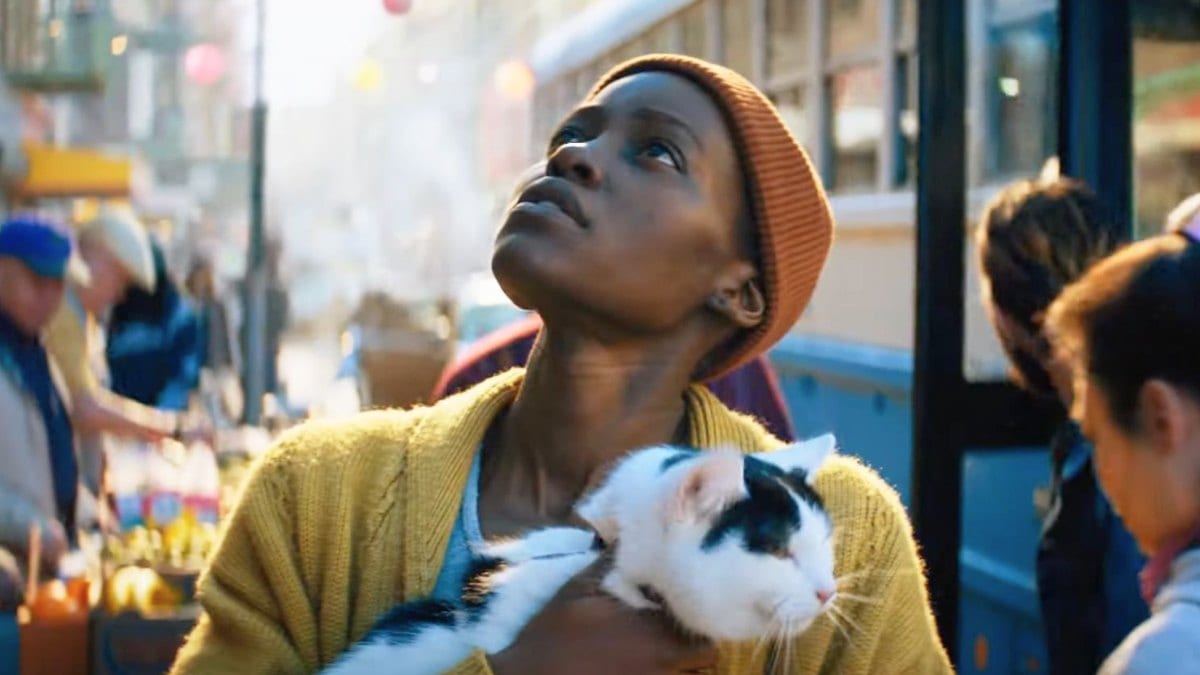
There is an understated brilliance to the fact that Sam, Lupita Nyong’o’s cancer-stricken character in A Quiet Place: Day One, is a poet. Few artists appreciate and utilize the value of silence, the spaces between words and stanzas, more than a poet. The third film in the Quiet Place franchise conceived by Scott Beck and Bryan Woods, Day One follows Sam as she navigates and attempts to survive the first few days of an alien invasion. While the first two films are set in rural areas in upstate New York almost two years after the arrival of the aliens, Day One opens with the premise of shushing one of the noisiest cities on Earth. A helpful factoid tells viewers that the average noise level of New York is around 90 dB, which is louder than a laugh, softer than a jackhammer, and about the same as a constant scream.
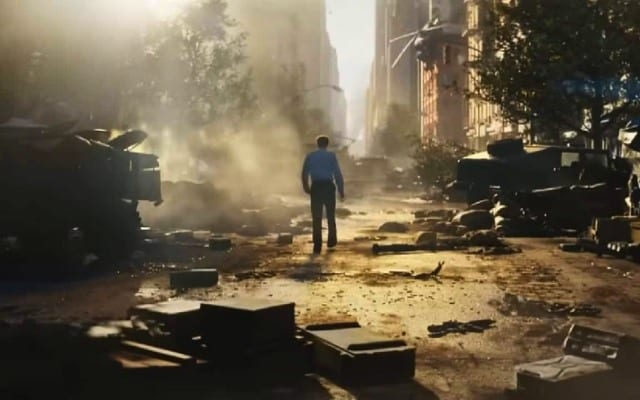
The idea behind A Quiet Place is simple: be quiet or be killed. The monsters have an extreme case of misophonia and slaughter anything that makes a noise, which makes for a novel theatrical experience. While most horror movies welcome, sometimes even aim for audience screams, the Quiet Place series works best if the audience keeps as quiet as possible, which demands both investment in the story and a collective suspension of disbelief. Few things are more disruptive to a viewing of a Quiet Place film than the crinkling of a bag of chips or the chitchat from another row. But Sam is such a compelling character, a terminal cancer patient whose only true friend is a cat, with a quest to return to her neighborhood in Queens in the midst of the Apocalypse, that it’s easy to be invested. When she crosses paths with fellow survivor Eric, brought to life with effusive charm by Stranger Things’ Joseph Quinn, it’s part romcom, part Lord of the Rings where Sam plays Frodo (not coincidentally the name of her cat) to Eric’s Sam.
ALSO READ
These Are The Horror Films Jordan Peele Thinks You Should Have Seen
Lesser-Known Horror Films That Are Sure to Shock, Scare, and Disturb
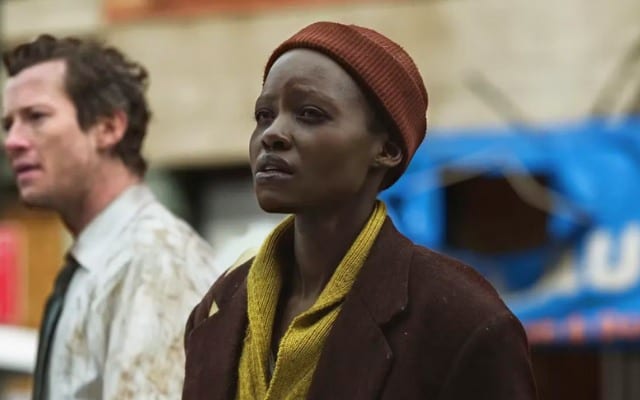
At its heart, A Quiet Place: Day One is a simple, grounded story of one woman’s desire to have a slice of her favorite pizza before she dies. Sam survives on pain and spite, her cynicism for life borne from a terminal illness she clearly feels she doesn’t deserve. As the world crumbles around her, as humans die by the numbers and the city falls into silence, Sam’s bitterness gives way to fear and, later on, to hope. Writer and director Michael Sarnoski manages to imbue Sam’s journey for pizza with such uncommon, poignant urgency that it becomes the most important thing. Yes, the city is overrun by monsters hell-bent on killing every last human being, but Sam needs her pizza, and my god, do we all want her to get it.
Eric wants it for her, too. There’s an endearing gentleness to Quinn’s Eric, and when he follows her around after a chance encounter, he’s like a lost puppy demanding love and attention that’s a deliberate contrast to the independence and confidence of Frodo, the cat. When Sam goes against the tide and ventures deeper into the city while the rest of New York stampede—as quietly as possible—to evacuation points, Eric accompanies her because he has nowhere else to go and because he’s really, really nice.
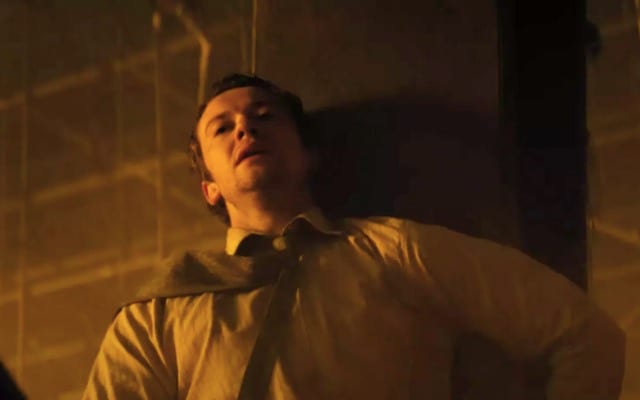
Sarnoski is too clever a scribe not to have thought of Sting’s "Englishman in New York" as a parallel for Eric. "I’m an alien, I’m a legal alien," Sting croons in the song, which makes the idea of xenophobia towards other human beings laughable and silly in the face of actual, murderous aliens.
Takes more than combat gear to make a man,
Takes more than a license for a gun.
Confront your enemies, avoid them when you can
A gentleman will walk but never run.
Unlike in the first and second films, where humanity found a chink in the monsters’ armor, Day One is simply people trying to stay alive. Eric isn’t a soldier. He’s just a law student with parents back in Kent trying to make a terminally ill patient’s last days as pain-free and hopefully pleasant as possible. It’s heroism on a personal, intimate scale that transforms an otherwise mundane, if dangerous, journey epic.
The monsters aren’t even important. They’re just gruesome bit players in Sam and Eric’s pizza quest. This isn’t to say the monsters aren’t scary. They are. Of course, they are. In fact, Day One has a scene that shows the aliens feeding on some sort of otherworldly flora, which, along with the fact that they never bother doing anything with dead bodies, implies that they don’t even kill humans for food. They’re just assholes.
A Quiet Place: Day One uses silence to create tense moments, just like the other films, but there’s an eeriness to the unnatural silence of a quiet city. Shots of Eric or Sam in the middle of the street in what would otherwise be a busy scene filled with car horns, the din of people, and every conceivable noise in a cityscape are haunting and lonely. New York is a noisy city, but its noise is a reminder that it’s alive.
It’s 2020, and Sam still anachronistically uses iPods for her music, but it’s also a reminder that beautiful things have their time, even if they fall into disuse. Sarnoski sprinkles his story with reminders of impermanence, from Sam’s dermal patches of Fentanyl that serve to dull pain for a limited time to her short line remembering her jazz musician dad, "My father played beautiful piano." More than a source of jump scares or tense moments, A Quiet Place: Day One is an exhortation to celebrate life. When Eric reads Sam’s poem about the passage of time, it’s lyrical longhand for the Persian adage, “This too shall pass.”
The other two films taught audiences to seek refuge in silence, to hold their breath in fear, and to be still. Day One has those elements, too, but Sarnoski imbues some of the quiet scenes with so much tenderness and love that it overpowers fear. Perhaps the best example of this is when Sam and Eric find themselves at the empty jazz bar where Sam’s dad used to play. Quinn is at his most charming in this scene, and it is everything. A Quiet Place: Day One is about the first day of possibly humanity’s last days, as seen through the lens of someone who knows her days are numbered—and it changes everything. It’s no longer about survival but squeezing the beauty and wonder from every moment we have left. Day One is beautiful, moving, and, yes, necessarily terrifying in parts, a story about reclaiming life in the face of certain death. It’s a surprising and unheralded candidate for one of the best theatrical experiences of 2024.