
Review: Netflix’s Outside Shows Us That the Real Monsters Are On The Inside

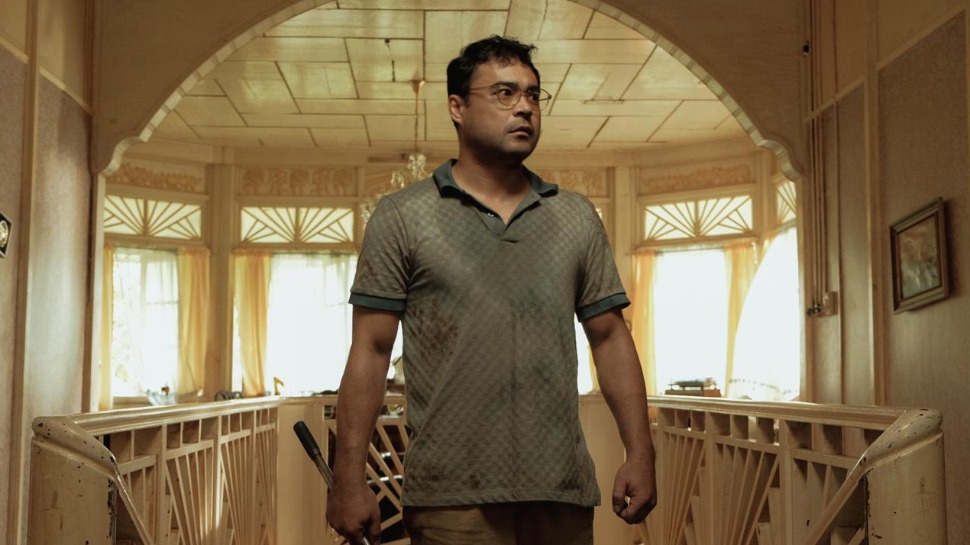
Outside is touted as Netflix Philippines’ first zombie film. This is great, but it’s also kind of underselling Carlo Ledesma’s tale, originally conceived for an Australian setting when the director lived abroad. It wasn’t until over a decade later that Ledesma’s core idea of a family crumbling into dysfunction in the midst of a zombie apocalypse was transposed to a Philippine setting, from Sydney suburbia to Negros farmlands. There’s an eerie sentimentality and melancholy in the locale, the sweeping fields of sugarcane stalks, a faded ancestral house with walls stained with memory, and a long, lonely road that terminates in a barricaded bridge where hopes have gone to die.
This is Outside, a zombie film by name, a harrowing exploration of generational trauma by nature. When the first zombie audiences see is the lead character’s mother crawling and shrieking, “Sorry!” you know the film means business. Ledesma’s opus doesn’t scare so much as it scars, and while the zombies— dubbed “The Dead Ones” by the cast and crew—deliver an adequate sense of dread, the real monsters of Outside are the sins of the past. What’s dead never stays truly dead if it keeps getting dug up, and that’s exactly what happens with Sid Lucero’s Francis, whose marital issues with Beauty Gonzales’ Iris are the rotting core of Outside.
ALSO READ
Sweet Tooth and the Uncomfortable Truths of Human Nature
Review: Godzilla Minus One is Out on Netflix and it’s as Good as People Say it is
But wait, there’s more! On top of, or more accurately, buried deep beneath the couple’s unraveling relationship, are horrors from Francis’ childhood which are exacerbated by his unwise decision to hole up in the ancestral home.
Zombies are scary, sure, but you can run away from them (most of the time) or even shoot them in the head. Childhood trauma and the inability to forgive and forget? Not so much. This is what sets Outside apart from your average zombie movie, as it stumbles somewhat as a horror movie but elevates itself as a psychological drama and a quiet triumph of breaking free from vicious cycles. Francis treats his eldest son Josh (Marco Masa) differently from his younger brother Lucas (Aiden Tyler Patdu), with an aggressive coldness that is revealed to come from Francis’ unresolved issues. There’s almost as much terror in seeing Francis lose his cool while instructing Josh how to shoot a pistol as there is in a congregation of zombies shambling towards the family. The real monsters of Outside are inside and there’s no running away from that.
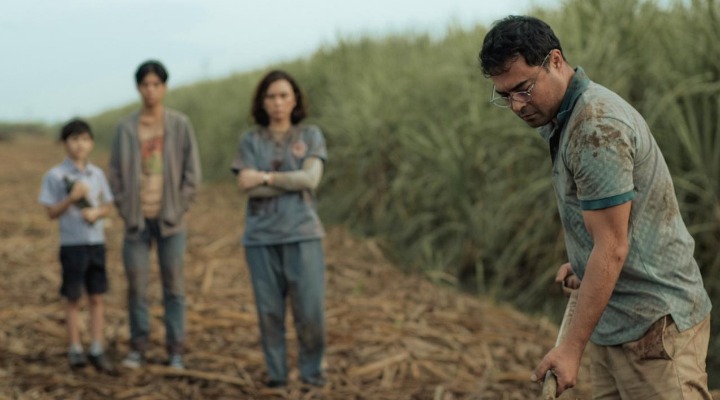
Both Lucero and Gonzales are stellar, portraying a couple whose relationship is strained to the breaking point. It’s Kramer vs Kramer combined with The Shining, and as Francis’ sanity frays over the months of isolation, it’s also a stark, uncomfortable reminder of the long year and change we were all locked inside due to the pandemic. Lucero’s performance is layered, loaded with all the nuance needed to convey a toxic masculinity that is hard to spot because it masks itself as steadfastness and duty to protect the family.
But Francis is a terrified, insecure man who tries to keep his family safe the only way he knows how: control. As he works tirelessly to barricade his childhood home, the family’s refuge slowly becomes a prison and venturing outside feels far less dangerous than staying inside.
Over the course of the film, Iris’ disaffection rekindles into something that resembles love before devolving into horror and disgust. Gonzales’ apathy matches Lucero’s desperation beat for beat and both actors deliver performances to remember. There’s a deep sadness in seeing Francis and Iris drift steadily apart because there’s a rare chemistry between them that conflagrates in one erotically charged scene in the darkness of their dirty kitchen. It doesn’t feel out of place in the apocalypse, but instead feels necessary, a very honest and human look at our needs and wants. Ledesma takes a masterful lens at the complex relationships of a family trying to keep it together in a world where nothing seems to be waiting for them and there’s very little to live for. When all Josh has of his girlfriend, who may or may not have survived, are pictures and saved TikTok videos, it reframes the importance of electronic media. Taking videos and selfies are no longer acts of frivolity but of preservation. Little touches like this show that Ledesma has learned his lessons from isolation and distance.
The cinematography is exemplary, and the light and color is sublime in every scene. Director of Photography Shing-Fung Cheung conveys the bleakness of a zombie apocalypse and the nostalgia of visiting a childhood home with graying skies and yellowing walls. Outside is a thoughtfully crafted film from start to finish, with several memorable scenes that sit with you long after the credits have rolled. When Iris hacks away at the barricade on the bridge, her face is a furrowed in desperation and frustration, segueing to the film’s most exciting scene that happens in one long take. When Francis picks up a hammer, there’s an unpredictability that climaxes into unspeakable horror that’s juxtaposed with almost comical music. And when Iris raises her machete to save her son’s life, it’s gruesome but purposeful and demonstrates how a motherly love steps up when toxic masculinity fails.
Outside is a film that lingers, which isn’t necessarily good because it is heavy. This isn’t a casual watch or something to put on with popcorn and some friends. This is a film that Filipinos should watch, but because of how much it weighs upon the viewer, probably watch only once. Ironically, this is a shame because Ledesma has infused Outside with so much symbolism and imagery that it is a richer experience when viewed from a more informed lens. Every detail is carefully considered, such as the talking zombies who parrot their last thoughts before death; or Francis’ father’s watch, which he takes from his father’s corpse and cleans of blood only to get it bloodied again. Outside is a triumphant piece of cinema that probably isn’t that great of a zombie film but certainly measures up as a harsh indictment of the patriarchy, toxic masculinity, and generational trauma.
