
Review: Godzilla Minus One is Out on Netflix and it’s as Good as People Say it is

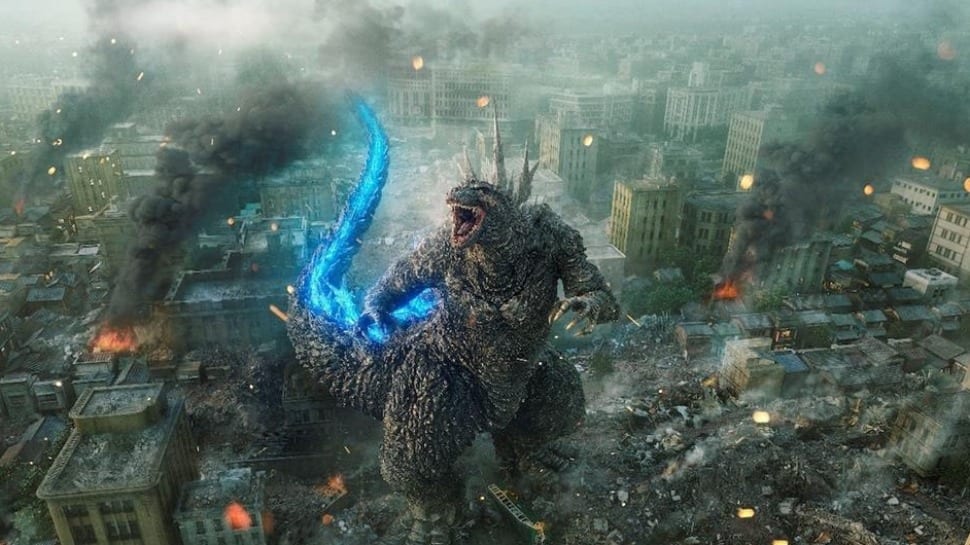
Netflix dropped the biggest surprise of the summer by quietly adding Godzilla Minus One to its slate last June 1. The acclaimed Japanese production, basically a reboot of the Godzilla franchise in Japan completely unrelated to Legendary Pictures’ and Warner Bros’ ‘Monsterverse,’ never came out in Philippine cinemas last year, leaving fans of the king of kaijus hanging.
The film was a critical and commercial success, garnering various awards and nominations including an historic Academy Award for Visual Effects on what would be considered by Hollywood a shoestring budget of $15 million (director and visual effects supervisor Takashi Yamazaki even contested that figure, saying, “I wish it were that much”). It was the first ever Godzilla film to win an Oscar. Minus One went on to earn over $115 million in its theatrical run on limited screens in several countries except the Philippines and some other Asian territories. When Godzilla Minus One became available digitally through torrent sites, it made history by becoming the most pirated film of all time.
ALSO READ
Review: Furiosa: A Mad Max Saga Achieves the Impossible by Making Fury Road Even Better
Review: Shogun is a Masterclass in Slow Burn Storytelling
It was a massive yet pleasant surprise, then, that Netflix dropped the Toho production over the weekend without any fanfare whatsoever. By all accounts, Godzilla Minus One on Netflix should have been a huge deal. It’s the kind of film that makes the P549 Premium subscription, which allows streaming on Ultra HD, totally worth it. Instead, it just popped up on the Netflix library without so much as a tweet or Facebook post from the streaming giant.
But who cares? Godzilla Minus One is now available to stream, and it’s absolutely fantastic. Get a Premium subscription, find the biggest screen available, and set aside 2 hours for the most intense and poignant Godzilla experience yet.
Godzilla Minus One opens in 1945, at the tail end of World War II, where we see Kamikaze pilot K?ichi Shikishima (Ryunosuke Kamiki) land his Zero on a small island repair base, ostensibly for repairs. We quickly learn that Shikishima shirked his duty by faking his plane’s technical issues, privately called out by lead mechanic S?saku Tachibana (Munetaka Aoki). Kamikaze pilots during World War II were Japan’s last-ditch attempt to regain air and sea superiority, essentially using their planes as human-piloted guided missiles that were meant to fly out and crash into targets like boats and bunkers. Kamikaze pilots are expected to die.
So when Godzilla shows up from nowhere and attacks the Odo Island repair base, killing almost everyone except Shikishima and Tachibana, it sends the former on a long journey of dealing with shame and survivor’s guilt. Shikishima’s failure to fulfill his duty and to help the island’s mechanical crew haunt him when he returns to a Tokyo in the process of rebuilding itself. Circumstances pair him with war survivor, Noriko ?ishi (Minami Hamabe) and an infant she rescued, and they start to build a life together as some sort of makeshift family. The theme of survival and rebuilding is the core of Godzilla Minus One, reflective of a Japanese culture shaped by having to constantly rebuild after natural disasters. It’s also how Japan navigated the decades following its defeat in the war, when the whole country was brought to its knees with the bombing of Nagasaki and Hiroshima. It survived. It rebuilt.
In many ways, Godzilla has always been a metaphor for what Japan suffered during the war. No other country was devastated by an atomic bomb, let alone two. In the original 1954 film, Godzilla is an ancient creature awakened by hydrogen bomb testing at sea and when he is killed by a powerful new bomb called the “Oxygen Destroyer,” its creator, scientist Daisuke Serizawa commits suicide to prevent his design from being mass produced. It was a commentary on weapons of mass destruction, a message identical to Nolan’s Oppenheimer but with a giant, 16-storey lizard monster with radioactive halitosis.
Equal opportunity day-ruiner
Unlike the Monsterverse films, where Godzilla is portrayed as a destructive antihero, a big bad monster that keeps the badder monsters at bay, Godzilla Minus One’s kaiju is a force of nature that destroys without rhyme or reason. Godzilla isn’t any different from the earthquakes or tsunamis that level buildings and wipe out small towns in Japan on a fairly regular basis. Godzilla appears without any explanation and starts sinking boats, throwing boats and trains, and reducing buildings to rubble. When Yamazaki says he based his Godzilla off his cats, every cat owner will immediately understand and nod in agreement: some cats are assholes. And Minus One’s Godzilla is the biggest asshole of them all.
Godzilla isn’t out to ruin Shikishima’s life, specifically. He’s out to ruin everyone’s day. He’s an equal opportunity day-ruiner. But when Godzilla keeps showing up where Shikishima happens to be and appears to kill someone he cares for, the former Kamikaze pilot can’t help but take things personal. When Godzilla levels Ginza, it’s a turning point in the film where Shikishima yells out in anguish and hate, a man who’s had one bad day too many, pushed over the edge by a giant, radioactive monster. Oh, this definitely isn’t the Monsterverse good guy Godzilla; no, this Godzilla is a terrible monster that needs to go down.
Minus One’s Godzilla embodies all the trauma and destruction that Japan has constantly had to deal with. It is natural disaster given form. It is Hiroshima and Nagasaki on two legs with a tail. So when Shikishima and the brave citizens of Japan, left mostly on their own because the government is too busy dealing with other things like the Soviets, it’s a metaphor for Japan coming to terms with its past. More importantly, the proposed solutions to deal with Godzilla are clever and scientific, an ode to a forward-thinking future, the seeds of what helped Japan grow into the most futuristic nation on the planet.
Whereas America’s solution would’ve been more and bigger guns and bombs, Godzilla Minus One’s answer to Godzilla involves scientific solutions like freon and decompression. It’s such an anti-military answer to a problem that highlights Minus One’s most pointed criticism: Japan’s government during the war treated its citizens as expendable resources. Shikishima was a Kamikaze pilot who is only alive because he was too afraid to die, an act of cowardice that transforms into bravery over the course of the film as Shikishima goes from being afraid of death to wanting to embrace life. It’s a poignant and powerful message: live. Shikishima’s parents, in a letter written to him before they died in the war, exhorted him to live. In the final encounter with Godzilla, Shikishima’s newfound friends make him promise to live.
It’s a stark contrast to how he was shamed for being alive as a Kamikaze pilot. When he first returns to Tokyo, he is recognized by an old neighbor, Sumiko ?ta (Sakura Ando), whose first reaction to seeing a living Kamikaze pilot is disgust. Towards the end of the film, Ota, a mother who lost her children in the war and who had been helping Shikishima and Noriko raise their adoptive baby, wants more than anything for him to live. It’s a tall order when facing the unstoppable kaiju, but everyone wants him to deliver on a promise that’s impossible to keep.
Godzilla Minus One juggles several heavy concepts at once with subtlety and deftness unexpected from a film about a giant monster. When it talks about how the Model 52c Zero fighter planes weren’t even equipped with ejector seats, it’s a sharp rebuke against a government that cared so little for its citizens it used them as ammunition. So when Shikishima sets off on a vendetta against Godzilla, you know it’s suicide, but as the real hero of this story, you want him to come back alive. It’s a nod to the original where Serizawa sacrifices himself to bring Godzilla down, but unlike Serizawa, whom we know little about, Shikishima has a toddler to raise and a found family to return to.
This is what Godzilla Minus One leaves us: we must live. We are tasked not only to survive but to live life to its fullest, for ourselves and for those who have gone ahead of us. There’s no sense in crashing and burning as Kamikaze pilots are expected to. Even Shikishima’s post-war gig, eliminating the thousands of mines left by the Americans and Japanese in the oceans during the war, is a metaphor for getting over trauma and cleaning up the past. Japan suffered post-war trauma as a nation, collectively suffering survivor’s guilt for the hundreds of thousands lost to a pair of atomic bombs. Godzilla is the walking embodiment of Japan’s sins of the past, a radioactive force of nature that reminds Japan they were on the wrong side of the war and punishes them for it.
If the recent Godzilla x Kong film was a shallow yet tremendously enjoyable romp featuring a bunch of kaijus suplexing each other, Godzilla Minus One is a deeply moving film that invites discussion and reflection, with a multi-layered story that serves as commentary and metaphor for a myriad of things Japanese and simply human. Godzilla destroys, absolutely, but humanity survives, rebuilds, and in the film’s most important takeaway, learns to finally live.
