Filipino Grit Takes Center Stage on Physical: Asia

The Physical 100 reality competition series on Netflix has gained a solid following after its first two seasons. The ongoing spin-off though, Physical Asia, might just turn out to be its most riveting iteration.
From a mostly individual testing ground of a human’s capacity to overcome pain, weariness, and limitations, all while avoiding a deglamorized look in front of the cameras, the showrunners have turned the competition into a battle royale among eight countries.
Not only has the show’s appeal expanded beyond Asia, but it also grew its roots deeper in the region. Now some of the most loyal Southeast Asian fan bases—Filipinos, Indonesians, and Thais, usually among the noisiest on social media—have devoted themselves to the show, although how long that devotion will last remains to be seen, given that all these countries have already exited the competition.
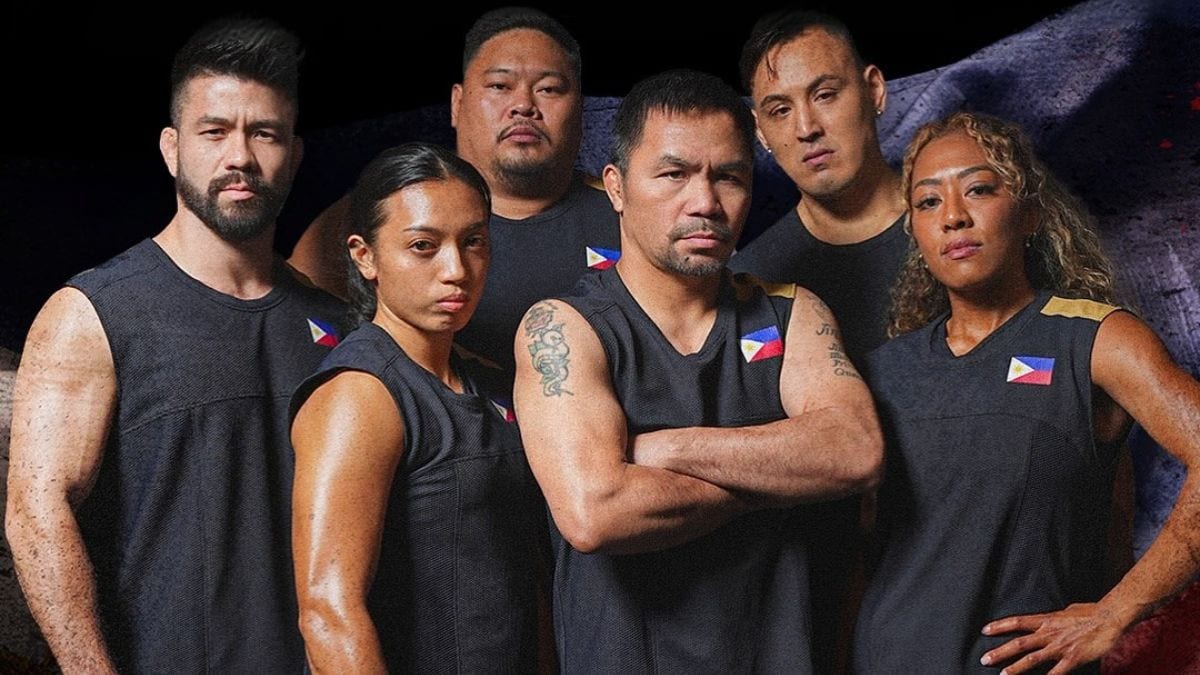
Team Philippines on Physical Asia: (front) Lara Liwanag, Manny Pacquiao, Robyn Brown; (back) Mark "Mugen" Striegl, Ray Querubin, and Justin Coveney
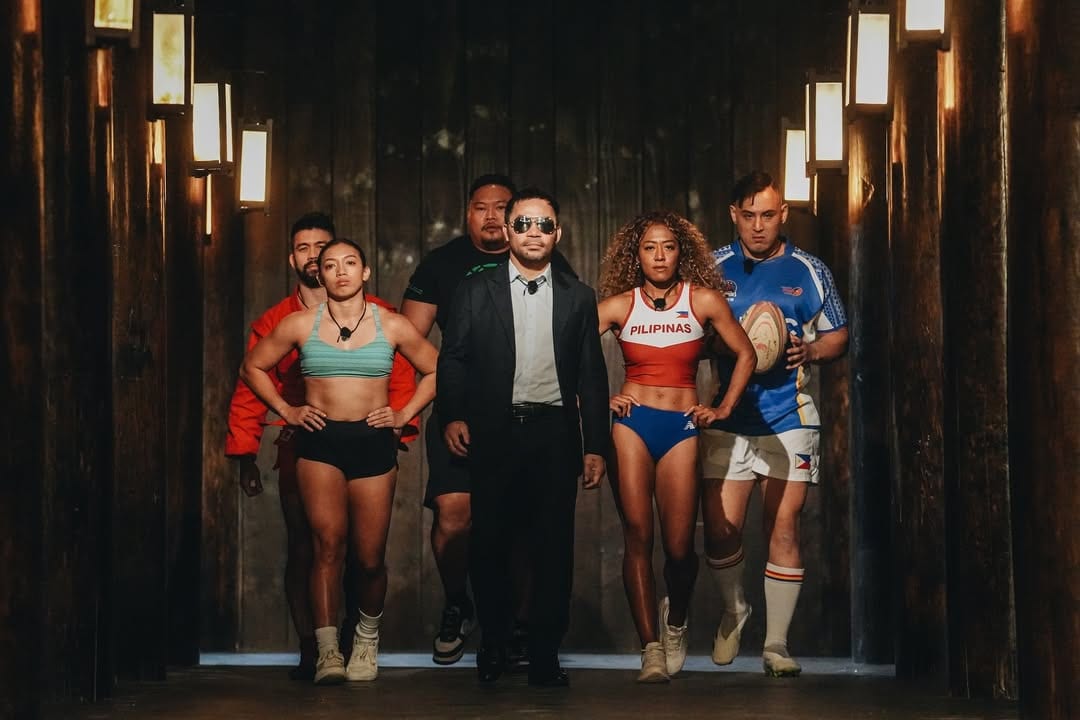
Getting Manny Pacquiao to spearhead the Philippine team was a casting coup of blockbuster proportions. Each of the captains of the seven teams is renowned in his respective country, some even internationally. But not one of them is famous the world over. Korean captain Kim Dong Hyun was right when he described Pacman as not just a legend but a legend among legends. There are sports stars and there are crossover superstars, the latter being those who are recognized even beyond their own sports. In boxing, it’s Pacquiao, Mike Tyson, Oscar dela Hoya, and Floyd Mayweather. In football, there’s Lionel Messi, David Beckham, and Cristiano Ronaldo; in basketball, LeBron James, Stephen Curry, and Caitlin Clark; and in tennis, Roger Federer, Rafael Nadal, and Coco Gauff—a pantheon of athletes who have become global brands.
Though he only competed in three challenges, Pacquiao already did his part in shining the spotlight on the show and inspiring the Philippine team. The truth is, there was nothing much for Pacquiao to gain, financially and popularity-wise, but he did the show anyway. Physical Asia offers a cash prize of one billion Korean won, or a little less than $700,000, to the winning team. The lowest fight purse that Pacquiao earned in the last two decades was $1,000,000 when he defeated Mexico’s Oscar Larios. That was 19 years ago in 2006.
This season has connected with the Filipino audience who have found a scrappy team to cheer for.
The Physical series has always been aspirational, with contestants possessing six-pack physiques and abilities beyond the realm of possibility for the average man or woman on the street.
The athletes representing the Philippines displayed both vulnerability and strength that are sui generis to the Filipino psyche, grounding each member to a sphere that resonates with the Filipino walking the sidewalks of Recto or standing in a bus from Megamall to Fairview during rush hour.
Filipino athletes often come in as underdogs in international competitions. Richer countries simply have more resources for sports development, giving their athletes access to superior training, better coaching, and higher level of competition.
When the likes of Hidilyn Diaz, Caloy Yulo, and Nesthy Petecio win Olympic medals, or EJ Obiena and Carlo Biado make the top five in the world in their sports, or Robyn Brown comes out of nowhere to become the first Filipina in 14 years to win gold at the Asian Athletics Championships, it means they have had to hurdle various obstacles to rise above the underdog tag and become elite athletes.
So when Team Philippines is able to take out Southeast Asian rival Thailand and push heavy favorites South Korea to the brink of elimination, it becomes both a cause for celebration and a call to rally behind the flag. Nothing enraptures the nation more than the sight of a Filipino athlete taking down a Goliath. It happened when Pacquiao beat Antonio Margarito, when Alex Eala pulled off a straight-sets stunner over former world no. 1 Iga ?wi?tek in the Miami Open, when Gilas Pilipinas shocked world no. 6 Latvia in Riga during the Paris Olympic qualifiers, and when the Filipinas defeated host New Zealand in the FIFA Women’s World Cup. Apparently, it is also a more potent unifying symbol than the flood-control corruption scandal, where partisanship and political rabidity hinder collective outrage.
There have been a number of memorable moments for Team Philippines through the first seven episodes of the series. But one thing is indisputable—Mark Mugen Striegl has been the team’s MVP thus far.
He surmounted the advantage in height and heft of Thailand rugby player Sunny Kerdkao Wechokittikorn in the Death Match and outlasted Korean crossfitter Choi Seung-Yeon and Australian fitness coach Alexandra Milne in the Hanging Endurance Challenge. Resilience has been the Filipino trump card, borne not by choice but by the need to survive in the face of wave upon wave of calamities that storm the country. Striegl has been resilience personified, and in typical Pinoy fashion, he exemplified it with aplomb, with still some extra chill on the side to play mind games even after hanging for close to three hours.
ALSO READ
Manny's Maturation From PacMan to Statesman
Outsized but not outworked, Lara Liwanag’s grit and Robyn Brown's grip spelled the difference in their head-to-head against crossfit athlete Jar Uracha Teerawanitsan and Muay Thai coach Ploy Nuannaree Olsen. Brown later revealed how Liwanag calmed her down in the midst of the intense battle: “literally so collected during the panic.” Liwanag and Brown were the human embodiment of tenacity, pushing and pulling even when the end goal seemed impossible. The duo showed the value of fighting until the very end, a trait common among Filipinos who combine a Hail Mary with resolute obstinacy to put themselves in a position to eke out a last-second miracle.
Justin Coveney had been the leader the team needed, imperfect but the right fit for the unenviable role of not just holding the squad together but also devising strategies and match-ups. There had been home runs and strikeouts. The Flying Jeepney in the first challenge was brilliant. His team-up with Querubin in the Stone Totem Challenge proved to be a dud. Pitting Striegl against Wechokittikorn was a masterstroke, getting the Philippines off to a strong start in the Death Match while preserving Coveney himself for the all-important third encounter against Thai wrestler Anucha Yospanya. The thought process behind the team’s choices shows Coveney’s uncanny ability to combine rational decision-making and good, old-fashioned diskarte.
It is convenient to view the Physical series as nothing more than a fantasy, as any made-for-TV reality show is intended to be. But in the few hours over three straight Mondays that Filipinos stayed glued to the screen, relegating to the sidelines the worries and stresses of reality, they witnessed a motley crew whose valiant effort and relentless drive mirrored their struggles against seemingly insurmountable odds in everyday life. Amid all the corruption scandals, empty rhetoric about reforms from officials, toxic political debate on social media that leads nowhere, and super typhoons, the OGs of Team Philippines entertained and gave Filipinos something to cheer for. Maybe it was just the temporary escape Filipinos deserved.