
The Boys Has an Important Message and It’s Running Out of Time to Tell It
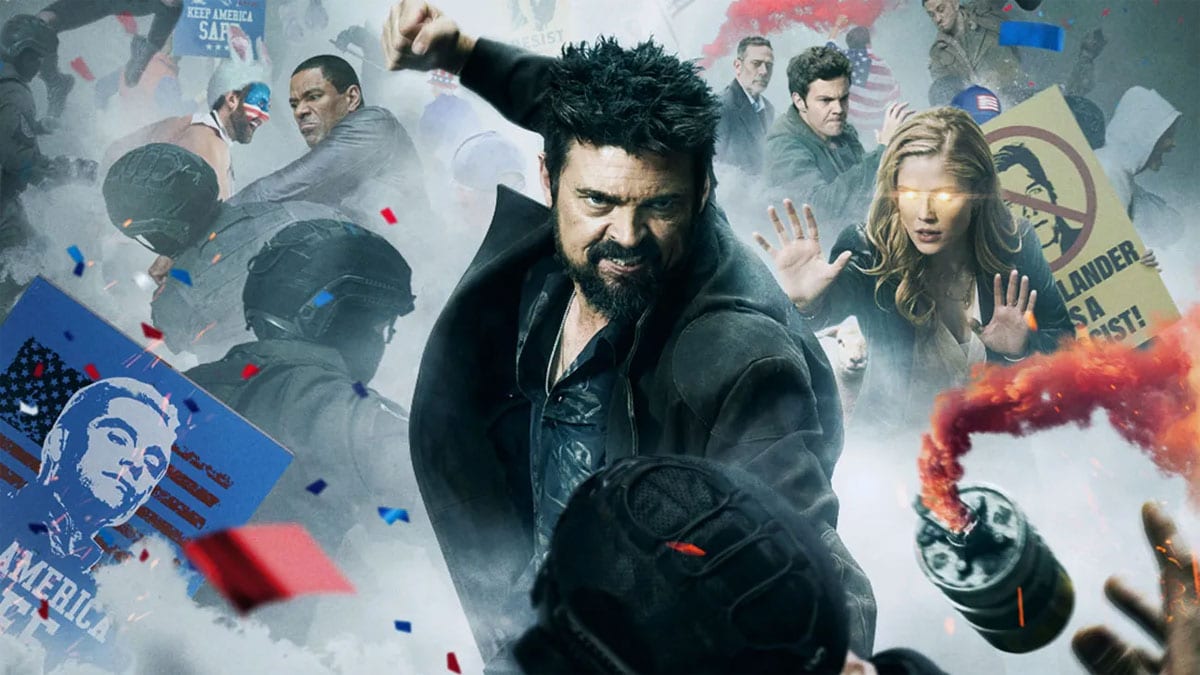
When a show opens seasons with exploding girlfriends and penises, it tends to set audience expectations unreasonably high. Amazon Prime’s The Boys has never shied away from shock value and gore, a gritty deconstruction of the superhero genre that captivated audiences inured to the colorful bombast of billionaire playboy philanthropists or dumb jock Norse gods. Extremely violent, graphic, and deliberately offensive, The Boys is based on a comic book series by writer Garth Ennis, who’s penned similarly adult material such as Hellblazer, The Punisher, and Preacher. Now in its fourth and penultimate season, The Boys has taken a slower, more thoughtful approach to unraveling a story that’s building up to an inevitable, bloody finale. Some will argue that this calculated pace is what has led to the newest season garnering its lowest audience score yet, but the actual reason might be that showrunner Eric Kripke has gotten tired of failing to deliver the message to his intended audience for three seasons.
The Boys is political. It always has been. Homelander (Anthony Starr) is a pastiche of the Superman mythos and a thinly veiled analog for Donald Trump and his demagoguery. In previous seasons, Kripke sprinkled in a few jabs at liberals to mask its obvious criticism, but when the cautionary tale is instead used as inspiration, subtlety needs to be thrown out the window. When Trump lost to Biden in 2020, a handful of supporters showed up at the Million MAGA March dressed up as Homelander wearing Trump masks, which must’ve been a terrifying realization for Kripke, who asked, "Um... are they actually watching the show?" Starr, Homelander himself, responded, "the art of ignorant dumbfuckerry." The Boys, a biting piece of sociopolitical commentary, turned out to be too smart for its own good.
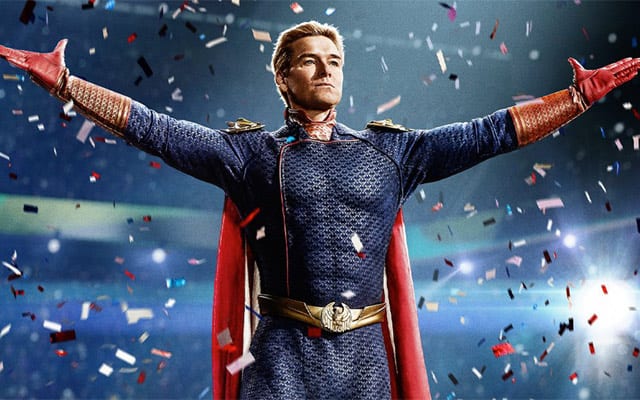
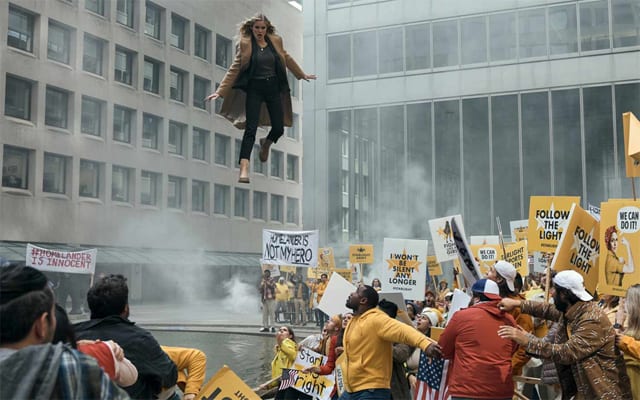
Conversely, it just might be that the audience Kripke had perhaps hoped to reach might truly be too dumb to get the point. Homelander is a psychopathic, narcissistic, manipulative white nationalist who’s tortured and murdered countless victims, a villain you love to hate. But there’s no shortage of Homelander memes and unironic fan art on the Internet because it turns out that Homelander is a villain that some people just…love. When Homelander lasered a protester’s head off at the end of Season 3, and people cheered, it was a tongue-in-cheek reference to Trump’s audacious claim, "I could stand in the middle of Fifth Avenue and shoot somebody, and I wouldn't lose any voters, OK?"
ALSO READ
Everyone Was Wrong Except Trump
Donald Trump is a Filipino Politician
It turns out, for once, that Donald Trump—the inveterate liar—might have been telling the truth. Even as a convicted felon with numerous pending court cases, even as a Bible-shilling Christian who’s committed adultery and fraud, Trump is poised to be proclaimed as the Republican Party’s Presidential candidate at the 2024 Republican National Convention in Milwaukee, Wisconsin, this July. It isn’t any one television show’s responsibility to effect any sort of change, not when uncomfortably prescient fiction such as The Handmaid’s Tale or reactionary comedic takes from political commentators like Stephen Colbert, John Oliver, and John Stewart all help drive the message home. But The Boys had the unique distinction of being subversive enough to be embraced by the Far Right in no small part thanks to a superhero clad in All-American iconography.
Imagine, then, Kripke’s dilemma upon realizing that The Boys’ message wasn’t merely lost on a key segment of the population but even emboldened it. When America’s democracy itself is threatened, when a manifesto called Project 2025—which is, in essence, a step-by-step guide to fascism—provides the blueprint for a Trump presidency, there’s no more room for ambiguity. There’s no time to be clever. The Boys, one of television’s most intelligent, insightful shows for three seasons running, no longer had the luxury of concealing its intent with a wink and a smile. Not that The Boys was ever very subtle, to begin with. But when Season 4’s humor consists mostly of taking real events and simply changing the names, you are faced with the reality that America is teetering on the brink of irrevocable dystopia.
In Episode 2, The Boys—led by Mother’s Milk (Laz Alonso)—infiltrate a conspiracy theory convention called TruthCon, which is just a reskinned QAnon with the same nut job conspiracies beat-for-beat. B-tier superhero Firecracker’s (Valorie Curry) actual power isn’t her middling pyrotechnics; it’s her Alex Jonesian podcast where she peddles conspiracy theories like Oprah and Tom Hanks running a sex trafficking home delivery service that caters to pedophiles. "An order of a hotdog gets you a boy; a taco, a girl; a combo gets you a child they forced to have trans surgery; and a soda gets you a shot of adrenochrome," she reveals to a cheering room of mostly white males. It’s Pizzagate with a different cast of characters. It ticks the usual far-right talking point checkboxes of pedophilia and transgender youth that conservative viewers, who might have been oblivious to the satire in the past, came to the belated realization that they were the butt of the joke the whole time.
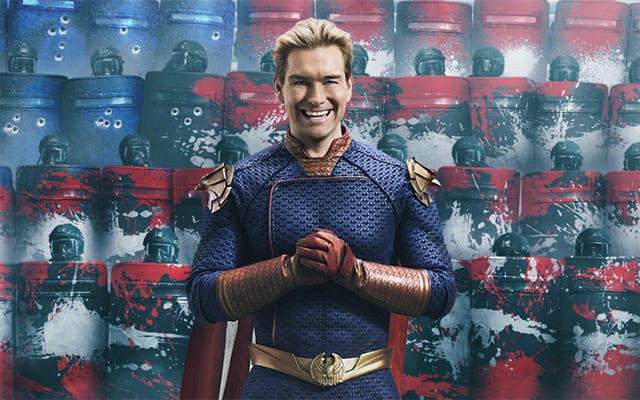
Homelander might have been too good a villain. A charming, highly charismatic blonde white man with the powers of a god and swathed in stars and stripes is simply too aspirational. Many viewers looked past his transgressions the same way an entire political party is looking the other way by preparing to nominate a candidate convicted of 34 felonies. Firecracker, who stokes the fires of Christian outrage, completely annihilates Starlight (Erin Moriarty) in a way that Homelander, with all his power, never could. By mixing outright lies (pedophilia) with a little bit of truth (abortion), Firecracker broke Starlight so completely that the latter became unhinged on live television. It was a defeat so absolute that even Starlight’s powerful backer, President-elect and Supernatural Easter egg Robert Singer (Jim Beaver) dropped her like a hot potato.
The latest season of The Boys is actually the most uncomfortable to watch, not because of its shock value scenes, such as a self-multiplying man pleasuring himself human centipede-style, but because it hits too close to home. Alex Jones might be bankrupt (morally and financially), but he’s only one among many conservative voices who amplify the alarming sentiment The Boys attempts to satirize. In this way, Kripke doesn’t even have to try too hard. There’s so much material that it’s probably a bigger challenge to stay on target. And with stakes this high, The Boys can’t afford to miss.
Season 4 has been criticized for poor writing, but Kripke’s pen is sharper than it has ever been, and despite being more blatant in its anti-Right Wing messaging, he manages to imbue this modern parable with subtlety and brilliance that deserves recognition. The contrast and parallel between Homelander, the world’s most powerful Supe, and Hughie Campbell (Jack Quaid), a powerless human and The Boys’ most ineffectual fighter, is the core of the fourth episode and arguably underscores the heart of the entire show. It’s easy to miss in the concurrent, action-filled subplot pitting Firecracker against Starlight, but Homelander paying a visit to the lab where he was created is mirrored by Hughie trying to find a way to save his moribund dad—Simon Pegg, who is incidentally The Boys’ co-creator Darick Robertson’s inspiration for Hughie.
Homelander and Hughie are worlds apart in every conceivable way, and Quaid’s awkward, lanky portrayal of a man who respects and defers to his literally more powerful female partner is what most right-wing misogynists who worship Andrew Tate would describe as a "simp," "soy boy," or "beta male." Hughie doesn’t exude machismo the way the chest-puffing Homelander does. But make no mistake: Hughie is the hero of The Boys. When Homelander says, "I forgive you," it’s right after he’s incinerated you in an oven or right before he squashes your skull beneath his red boot. When Hughie says, "We’re good," he means it and, as he explains to Butcher (Karl Urban), "I don’t want to spend the rest of my life hating anybody."
This is the most important message of The Boys, and it’s in an easily missed line at the end of the episode. Despite all its violence; despite Butcher, Mother’s Milk, Frenchie (Tomer Capone), and Kimiko (Karen Fukuhara) all being notorious killers; despite the common solution to out-of-control supes being killing them in the bloodiest, most brutal way; it’s Hughie’s sentiment that grounds The Boys. It’s about forgiveness, not hate. And that the only way to live is to forgive those who have wronged us, not for their benefit, but for our own peace of mind.
Unfortunately for Kripke, the beauty of Homelander and Hughie’s dichotomy is too sublime for viewers who truly need to hear the message. As The Boys reaches its halfway point, messages—both subtle and overt—are all laid out and furiously racing to change at least a few minds. When all is said and done, The Boys Season 4 will end with the stage set for its last hurrah. It remains to be seen if most of it fades to fiction or if everyone’s Vought-ian nightmare turns real.
