
A Closer Look at the Parrot on the 500-Peso Banknote

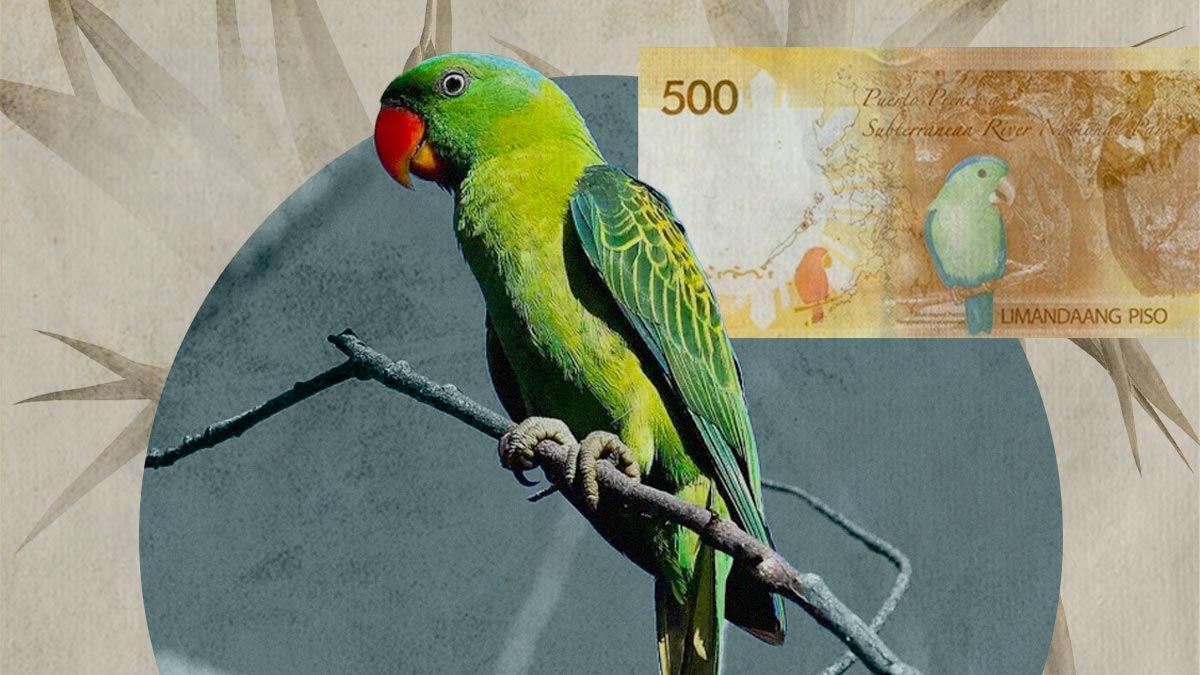
Do you know another bird on the Philippine currency besides the majestic Philippine Eagle (Pithecophaga jefferyi) that's featured on the 1000-peso bill?
In case you haven't noticed, the reverse side of the 500-peso bill also features a bird—the blue-naped parrot—positioned centrally against a backdrop of the Puerto Princesa Subterranean River National Park. On the left side is a depiction of the Philippine archipelago, while a traditional cloth design from Southern Philippines adorns the right side.
The blue-naped parrot, also known by the scientific name Tanygnathus lucionensis and locally called 'pikoy,' is a bird species that can be found in the Philippines, as well as in Malaysia, Borneo, Indonesia, Greater Sundas and Sulawesi. It inhabits forests, woodlands, and areas under cultivation, provided that these locations offer an ample supply of fruiting vegetation.
This bird possesses several fascinating qualities that make it an interesting species, so it's also no wonder it has earned a distinguished place on the 500 peso banknote.
The pikoy is a visually striking bird. It has a bright green feathers, blue-tipped wings, and a distinctive blue patch on the back of its neck (nape).
Like many parrots, blue-naped parrots are capable of vocal mimicry. They can learn to imitate a variety of sounds, including human speech, which makes them popular in the pet trade.
They are inherently social creatures, typically spotted in pairs or clusters, and is typically characterized by its loud and frequent vocalizations.
The pikoy's diet is diverse, consisting of fruits, seeds, and nuts, which they forage from the forest. This varied diet is important for their health and well-being.
Blue-naped parrots typically nest in tree cavities, which provide protection for their eggs and young. Their nesting habits and breeding activities facilitate seed dispersal, contributing to the ecosystem.
They have shown a degree of adaptability to altered habitats, which is important for their survival given the widespread deforestation and habitat loss in their native regions.
As a near-threatened species, the blue-naped parrot's existence highlights the importance of conservation efforts. Their status serves as a reminder of the impact of human activities on wildlife and the need for sustainable practices.
