

Today I Learned: The National Museum Once Housed the Congress and Senate

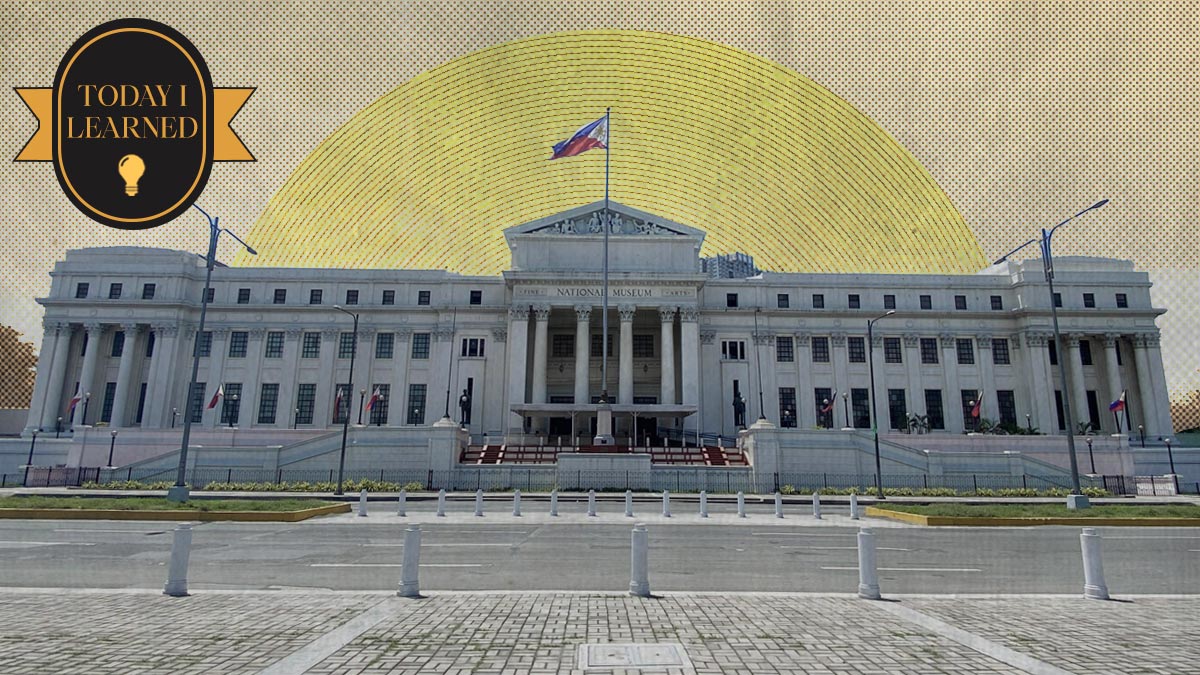
To students around U-Belt, tourists visiting Rizal Park and Intramuros, and locals traversing Padre Burgos Avenue, the National Museum of Fine Arts is a familiar sight. Designed by American architect Ralph Harrington Doane with Antonio Mañalac Toledo, the grand neoclassical building was originally intended to be the National Library. However, funding issues and shifting government priorities led to its conversion into the Legislative Building in 1926, with architect Juan Arellano designing the interior structure to accommodate its new purpose.
The four-million-peso building was officially inaugurated on July 16, 1926, during the Second Regular Session of the 7th Philippine Legislature. Present at the event were Senate President Manuel L. Quezon, Governor-General Leonard Wood, House Speaker Manuel Roxas, and U.S. Envoy Colonel Carmi A. Thompson, among others. At the same time, it was also the headquarters of the National Library from 1928 to 1944. It served as the home of the National Assembly during the Commonwealth period and later housed both the Senate and House of Representatives when the bicameral Congress was established in 1940.
With towering Corinthian columns and intricate relief structures, the iconic building’s façade exuded the power and prestige that it housed within its walls. Its interior, flanked by grand halls and open courtyards, has hosted some of the nation’s most defining moments—the inauguration of former President Manuel L. Quezon, the 1934 Constitutional Convention, and it was briefly the Executive House for the Prime Minister during the Martial Law.
Surviving the War and Major Transitions
Arguably the event that left its biggest mark on the building was World War II. During the Battle of Manila in February 1945, Japanese forces fortified the structure, turning it into a military stronghold. In response, American troops and their relentless artillery bombardment reduced large sections of the building to rubble. By the end of the war, only the central portion remained standing—a silent witness to the destruction of the Philippines’ capital city.
Reconstruction efforts began in 1949 with funding from the U.S. Philippine War Damage Corporation. While the façade retained much of its original grandeur, its transformation meant fewer ornamental details. That same year, the Congress moved back in, continuing its legislative functions until the imposition of Martial Law in 1972.
With the declaration of Martial Law leading to the dissolution of Congress, the building was repurposed as the Executive House, housing various government offices, the Prime Minister’s office, and the Ombudsman. After the 1986 People Power Revolution, the Senate and Congress returned but in 1997, the Senate relocated to Pasay City.
By 1998, it was officially turned over to the National Museum of the Philippines. After a series of renovations, it reopened as the National Museum of Fine Arts and now houses some of the country’s most treasured and finest artistic masterpieces.
ALSO READ
Today I Learned: How an Ilonggo Doctor Discovered Erythromycin
Today I Learned: The Oldest Mosque in the Philippines Was Built During the Byzantine Empire
National Museum of Fine Arts Today
As of writing, the National Museum of Fine Arts houses 29 galleries and exhibitions featuring works by 19th-century Filipino artists, including National Artists and contemporary visionaries. One of its most famous pieces is Juan Luna’s “Spoliarium,” a towering work of art standing at almost 14 feet tall. The haunting piece won a gold medal at the 1884 Exposición Nacional de Bellas Artes in Madrid and depicts fallen gladiators being dragged into darkness.
Another highlight is the “Filipino Struggles Through History,” a sprawling mural series by Carlos “Botong” V. Francisco that narrates the country’s journey from pre-colonial times to the modern era. This exhibit’s home is the old Senate Session Hall, where solons once debated the nation’s fate.
Other notable exhibit spaces include the gallery featuring Dr. Jose Rizal’s works, the Far East Bank and Trust Company’s gallery which houses Juan Luna and Felix Resurrección Hidalgo’s pieces, the Security Bank Hall which holds Guillermo E. Tolentino’s sculptures, and the Early 20th Century Portrait Hall featuring works by Fernando Amorsolo, Fabian de la Rosa, Jorge Pineda, Ramon Peralta, and more.
Why Now Is the Best Time to Visit
Earlier this year, the National Museum of the Philippines made an exciting announcement that all National Museums—those in the Manila complex as well as the Regional Component Museums—will be open every day of the week. And the best part? It’s still free.
“Universal access has always been our priority. By opening our museums every day and maintaining free admission, we aim to make our programs and services even more accessible to everybody,” their social media post said.
So the next time you find yourself in Manila, why not stop by the National Museum— whether it’s the National Museum of Fine Arts, the National Museum of Anthropology, or the National Museum of Natural History? After all, the feeling of walking those same now-99-year-old halls where our nation’s presidents and statesmen once stood deciding the future of the Philippines? Well, that feeling never gets old.
