
Today I Learned: The Oldest Mosque in the Philippines Was Built During the Byzantine Empire

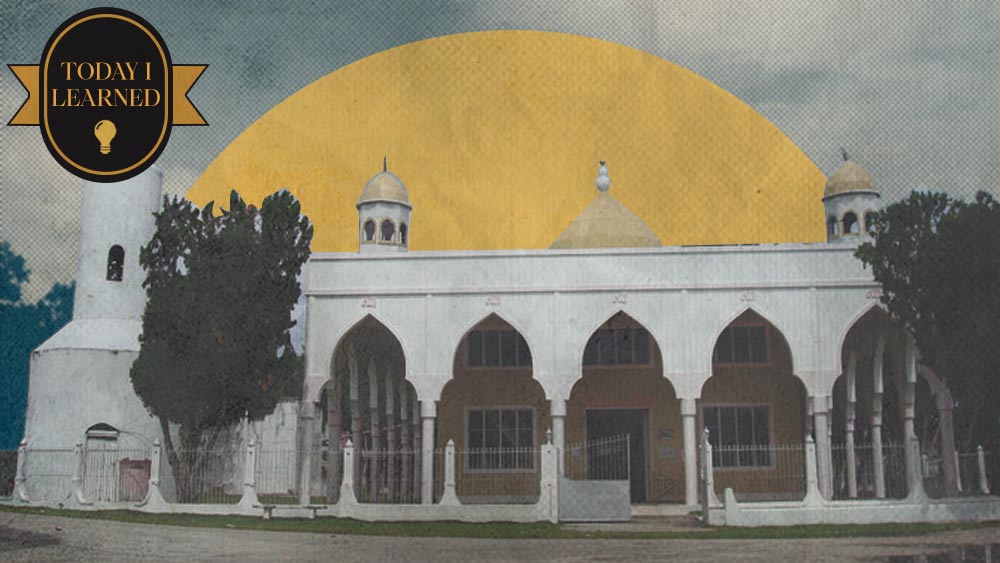
The Philippines has a rich Muslim identity that predates Spanish colonialism and Western Christianity by roughly 200 years. In the six centuries between the introduction of Islam to the country and today, Islamic traditions persist. It could be argued that Islam, after all, was the first monotheistic established in the Philippines, considering that it had been introduced around the 14th century by Arab and Gujarati traders.
Being a Muslim outpost in what is an eminently Catholic nation, Mindanao, in particular, with Maguindanao del Sur, Maguindanao del Norte, and Lanao del Sur, is home to some of the most enduring symbols of the Islamic faith in the country. The area was once a hub for commerce and trade, as well as fraternalism among different cultures and religions.
An integral part of the Bangsamoro Autonomous Region in Muslim Mindanao, Tawi-Tawi is where the oldest mosque in the Philippines, and Southeast Asia stands. Found in Simunul, the Sheikh Karimul Makhdum Mosque commemorates the propagation of the Islamic faith. Marked as a National Historical Landmark by the National Historical Commission of the Philippines, the mosque. In many ways, its stature reflects just how deep Islamic roots are in not just the Philippines, but all of the Southeast Asian region.
ALSO READ:
The Story Behind This Ancient Sulu Sultan's 600-Year-Old Tomb in China
Why the Heirs of the Last Sulu Sultan Want to Seize $15-Billion Worth of Malaysian Assets
A Short History of the Sheikh Karimul Makhdum Mosque
According to local folklore, it was first built in 1380 AD by the Arab trader and missionary Sheikh Karimul Makhdum. To put things into context, this means that it was first built and existed at the same time as the Byzantine Empire.
An Arab Sunni Sufi Muslim, Sheikh Karimul Makhdum came to Malacca and would eventually find himself affiliated with the Kubrawi Hamadani missionaries toward the end of the 14th century. He brought Islam to the Philippines with him. It should also be noted that he arrived 141 years before Ferdinand Magellan set foot in the Philippines.
The pillars found within the mosque were once thought to have been part of the original mosque. Hence, their status as sacred pieces to the Islamic faithful. Later on, the National Museum of the Philippines seen in the mosque stretches back to the 17th century. This means that these pillars are still the oldest known Islamic artifacts in the country.
“Legend has it there were various attempts to remove the old pillars of the mosque. For some reason, those attempts were unsuccessful. Hence, some old folks thought that those pillars were a source of blessings and people began to take pieces from them and use them as amulets,” Prof. Julkipli Wadi, dean of the Institute of Islamic Studies at the University of the Philippines, told Arab News. “That led the local government to protect the pillars with plastic glass so that people would not be able to carve pieces from them.”
When Japan invaded the Philippines, the mosque would become a casualty, with most of its pillars lost to the destruction of the war. The good news is that it would later be rebuilt in the '60s. It would undergo several renovations over the years, too.
In 1998, it was designated as a national historical landmark. 15 years later, then-President Benigno S. Aquino III would sign a Republic Act to declare it such. Six hundred forty-four years later, Sheikh Karimul Makhdum Day is celebrated annually on November 7 to celebrate his contributions.
