

Boracay's New Port Ticketing System Promises Smoother Travel

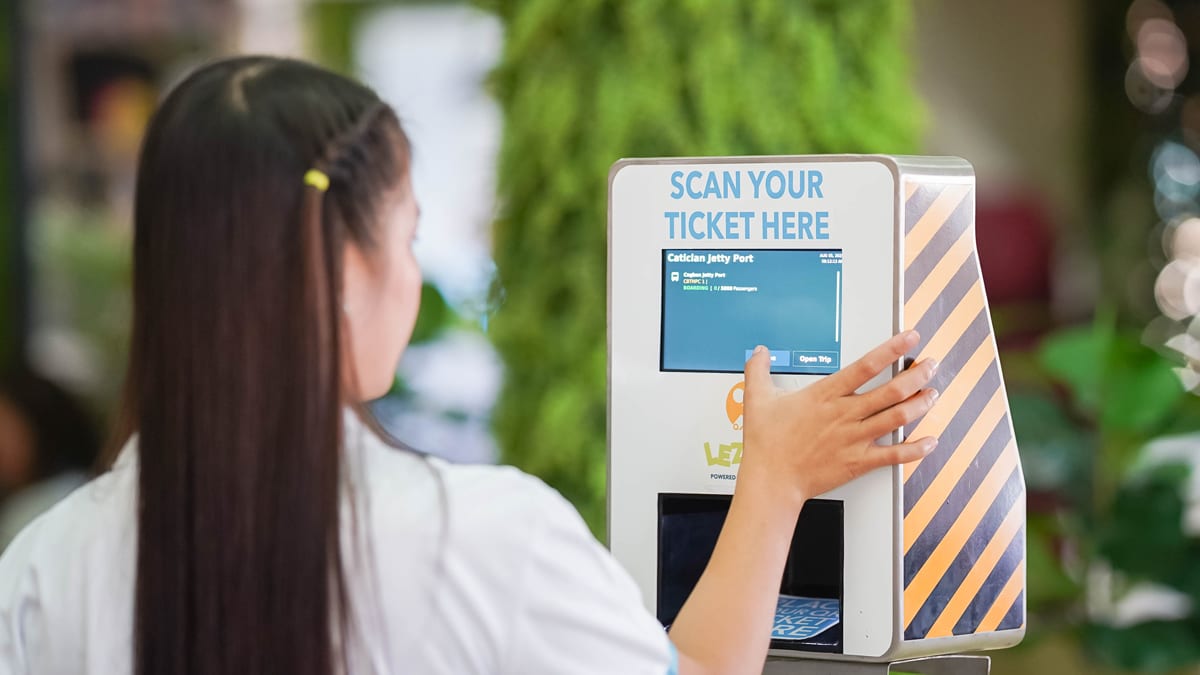
On a surprisingly summer-like August morning, the jetty port in Caticlan is noticeably less congested, but not for lack of passengers—because even in the off-peak season, daily arrivals still average around 4,000 tourists. The change in the scene lies in the flow of passenger movement, now beginning to smooth out thanks to the partial rollout, ahead of its full launch this month, of a new digital ticketing system that is making the trip to Boracay far more convenient.
For decades, the Caticlan and Cagban Jetty Ports were the setting of Philippine travel’s major inconveniences—no thanks to the puzzling requirement to line up three separate times to pay three separate fees: terminal fee, boat fare, and environmental fee, a process that acted as a bottleneck before passengers could board a ferry.
Boracay's Caticlan Jetty Port

ALSO READ:
Boracay's Evolving Tide: How Local Tourism Is Reshaping The Lind's Story
Today I Learned: The Science Behind the Green Algae in Boracay
Today, that time-wasting practice may finally be over. The Caticlan and Boracay ports have introduced a Unified Automated Ticketing System (UATS) platform called LezzGo Boracay, developed by Topline Hi-Tech. The system consolidates all payments into a single transaction. You can pay cashless at their website or through a quick over-the-counter process via cutting-edge ticketing machines, which scan a passenger’s ID and automatically record the details.
The launch comes as the country’s transportation sector begins to slowly bid goodbye to its reliance on manual ticketing systems. In recent months, Metro Manila’s LRT and MRT systems have adopted cashless payment options, enabling commuters to tap credit cards, debit cards, or e-wallets like GCash at turnstiles.
If trends continue, 2025 may well be remembered as the year the Philippines’ transportation system took major steps into the digital age.
LezzGo Boracay Sets a New Standard for Passenger Ports Across the Philippines
The new digital ticketing system, known as “LezzGo Boracay,” began as an idea pitched by Department of Tourism (DOT) Secretary Christina Frasco to Eugene Erik Lapasaran Lim, chief executive of Topline Hi-Tech, a Cebu-based firm specializing in smart port systems under the umbrella of Topline Business Development Corp. The company has been involved in modernizing several ports across the Visayas, like the Pier 88 in Liloan, the first smart port in the region, as well as inland, namely the South Bus Terminal in Cebu City.
At the system’s presentation on August 5, 2025, at Caticlan Jetty Port, Lim recalled how, a few years earlier, Secretary Frasco had approached him with a question: Could the company explore the possibility of automating Boracay’s ticketing system?
What followed were numerous trips to the island to meet with stakeholders and local consultants, visits that—Lim noted—left him with no time to even set foot on Boracay’s famed white-sand beach. “Every trip was purely work,” he said.
Now, the P150 million project is in place under a 10-year public-private partnership contract. Beyond the modern ticketing kiosks and online platform already operational, Lim said that plans are underway for a second phase: self-check-in kiosks similar to those used by airlines. A third phase is also in the works, though he declined to reveal details. “We want to keep that a secret for now,” he said with a smile.
LezzzGo Boracay Ticketing Counters
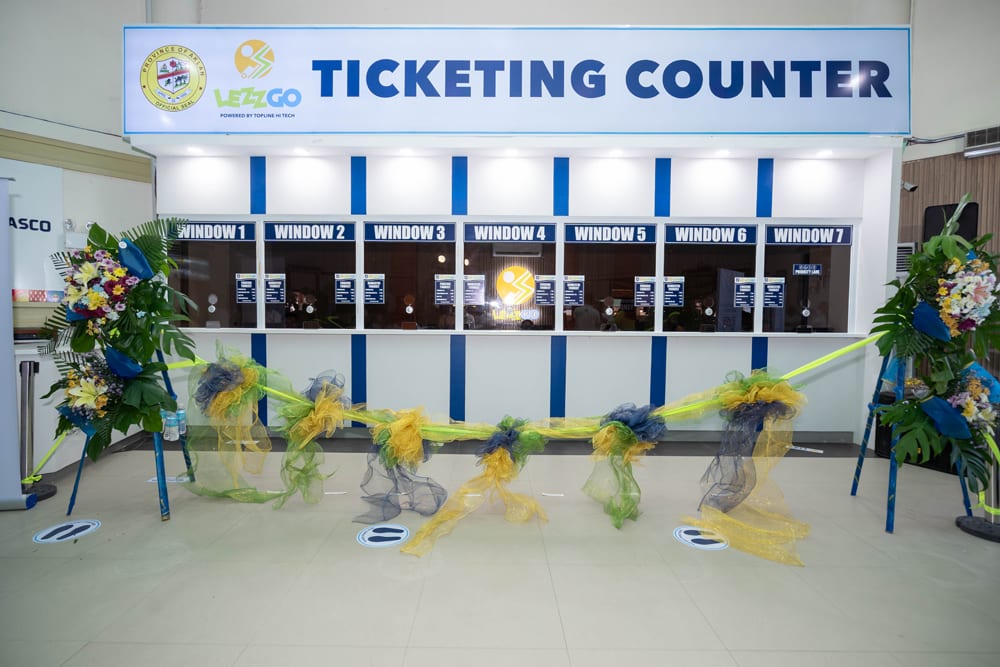
LezzGo Boracay is a unified digital ticketing system designed to streamline entry to Boracay Island by consolidating multiple fees into a single transaction. Through one web-based platform, travelers can pay the terminal fee, the environmental fee, and the boat fare. The system also automatically registers each passenger in the Philippine Coast Guard’s manifest. A convenience fee of P35 applies when using the platform.
Accessible via desktop, mobile phone, and soon through self-service kiosks, the system allows travelers to input their personal and travel details simply by scanning their IDs, then settle their payments either online in advance or in person at the port.
The ID scanner automatically inputs all data in the database fields, thereby saving time spent on manual input.

Scanning of the QR code

Once payment is confirmed, the system generates a QR code, which serves as the traveler’s digital ticket. On the day of travel, passengers present the QR code at the ticketing counter for identity verification and ticket issuance. From there, they proceed to a validation area, scan their tickets, and board the boat to Boracay.
According to officials, the platform eliminates the need for three separate payment lines at the port as well as the manual recording of passenger details. This upgrade is expected to significantly reduce waiting times during peak tourist seasons, marking a welcome improvement in the overall travel experience.
“Instead of a 30- to 45-minute journey, it’s now about 10 to 15 minutes,” said Lim. Less waiting time at the port, more beach bumming time in Boracay, he added.
LezzGo Boracay is expected to be fully rolled out at the Caticlan and Cagban ports, as well as at the alternate ports of Tabon and Tambisaan, which are used during the habagat season. A mobile app is expected to be released sometime in 2026.
While automation often raises concerns about job losses, Topline Hi-Tech said that nearly all of the workers who once staffed Boracay’s manual ticket counters have been retrained and absorbed into the LezzGo Boracay workforce. About 90 percent of them are from Aklan, the company noted.
Lim also announced that a share of LezzGo’s profits will be channeled through the Topline Foundation, in partnership with the Provincial Government of Aklan, to support needy individuals and accredited nonprofit groups.
Aklan Governor Jose Enrique Miraflores and Topline Executives Atty. Constance Lim (CFO), Eugene Erik Lapasaran Lim (CEO), and Brigette Lapasaran Lim (COO) during the press conference last August 5, 2025, at the Caticlan Jetty Port.

Troubled Bridge Proposal
After a seamless walkthrough of Boracay’s newly introduced LezzGo ticketing system to board our boat, a sign on the ferry captain’s door caught our attention: 'No to Boracay Bridge,' a reference to the bridge project proposed by San Miguel Corporation.
It was not the sort of message one expects to see posted on a passenger boat, but it mirrors the prevailing sentiment that such a project could transform or perhaps irreversibly damage the Philippines’ most famous island.
Boracay, which measures just 10.32 square kilometers, has already felt the strain of overdevelopment and mass tourism. While proponents of the proposed bridge argue it will improve access, critics fear it could trigger a surge in vehicles and construction and possibly deliver the island’s final blow.
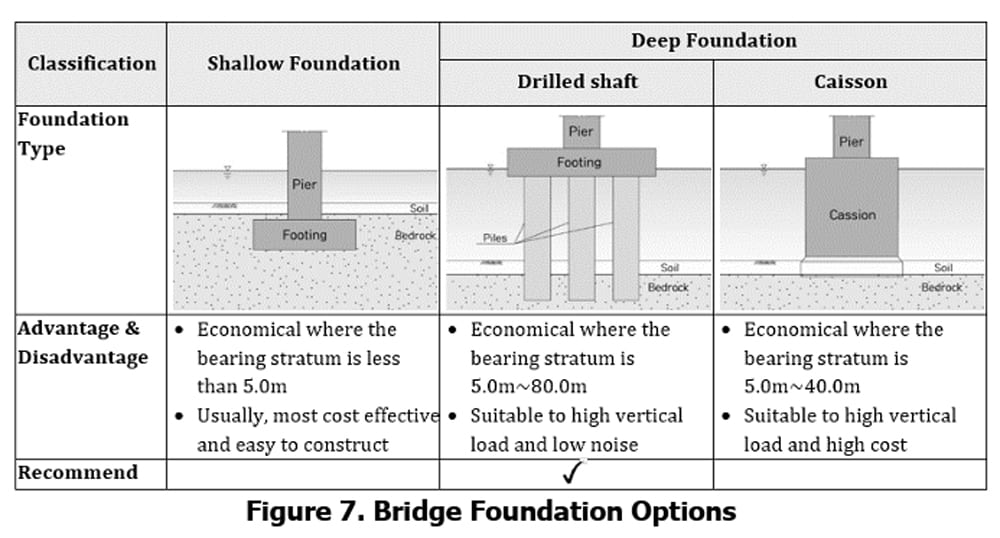
For comparison, consider Sicily, where a similar bridge plan has been under debate for decades. At 25,000 square kilometers, Sicily has the size and infrastructure to absorb increased traffic. Even then, Italian engineers have insisted on a suspension bridge to avoid disturbing the seabed. Boracay would get no such safeguard, as the current plan envisions bridge columns drilled into the sea floor, a design flaw that would disrupt marine biodiversity in a region already regularly battered by typhoons and shaken by earthquakes.
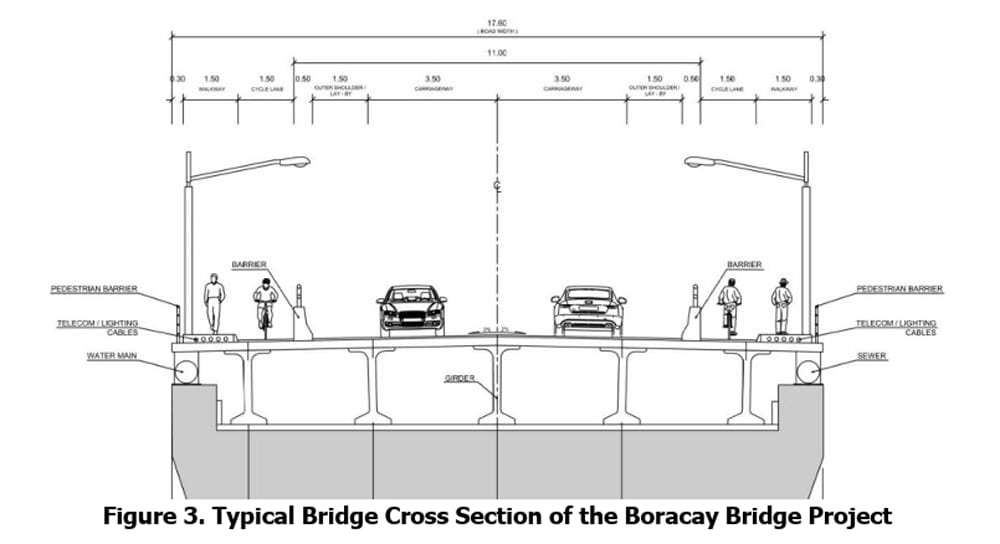
Typical bridge cross section of the Boracay Bridge Project, according to the Project Information Memorandum (Department of Public Works and Highways; March 10, 2025)
Bridge foundation options, with the 'drilled shaft' as the recommended foundation type
‘It won’t be an island experience anymore,’ our ferry boat captain told us in Tagalog when one of us asked why he opposed the project.
The risks extend beyond overcrowding, coral reefs, and marine life. A bridge would also threaten the livelihoods of hundreds who depend on the ferry system: boat crews, ticketing agents, and dock workers. Not too many people appear willing to discuss the economic displacement, or the reality that once those jobs are gone, they are unlikely to return.
For an island that once had to shut down for what was called 'island rehabilitation,' the idea of subjecting it to a project on the scale of a bridge can seem reckless. It’s no wonder that for anyone who has been to Boracay, the prospect of a bridge bringing in larger crowds, more cars, and everything that comes with them makes the sign on the captain’s door feel less like a protest slogan and more like a warning.
The topic about the bridge was also tackled during the press conference that followed the ribbon-cutting for Boracay’s new LezzGo ticketing system. The 10-year contract between the Aklan provincial government, the Department of Tourism, and the system’s creator, Topline Hi-Tech, prompted a fellow member of the media to ask whether the long-term agreement signaled that the bridge is on its way to being shelved.
Governor Jose Enrique Miraflores’s answer was cautious but telling. “The bridge project is not yet approved, especially for us here in Aklan,” he said, noting that further consultations were required. “We’ll have to go through the necessary stakeholders’ meetings and participation, and San Miguel (Corporation) has not yet done that with us.” Several months ago, a Facebook post went viral comparing the ferry terminal to Penang, Malaysia, with the Jetty Port in Caticlan and Boracay. It pointed out that, aside from having a well-designed terminal with ample passenger space, Malaysia’s terminals also boasted a seamless digital ticketing system.
Today, Boracay finally has its own digital ticketing system in place, thanks to technology developed by Topline Hi-Tech. Hopefully, improvements to the Caticlan Jetty Port and the other ferry terminals on the island itself will follow soon. Who knows? Perhaps the only thing that could finally close the door on the proposed Boracay bridge would be a complete transformation of the passenger experience for travelers bound for the island.
Editor's note: The 'Boracay Bridge Project: Project Information Memorandum' by the Department of Public Works and Highways (March 10, 2025) is available on the DPWH website. The earlier Project Briefer issued by DPWH on March 25, 2024, is also available online.
