
Unveiling Budapest: A Journey Through Hungary's Capital

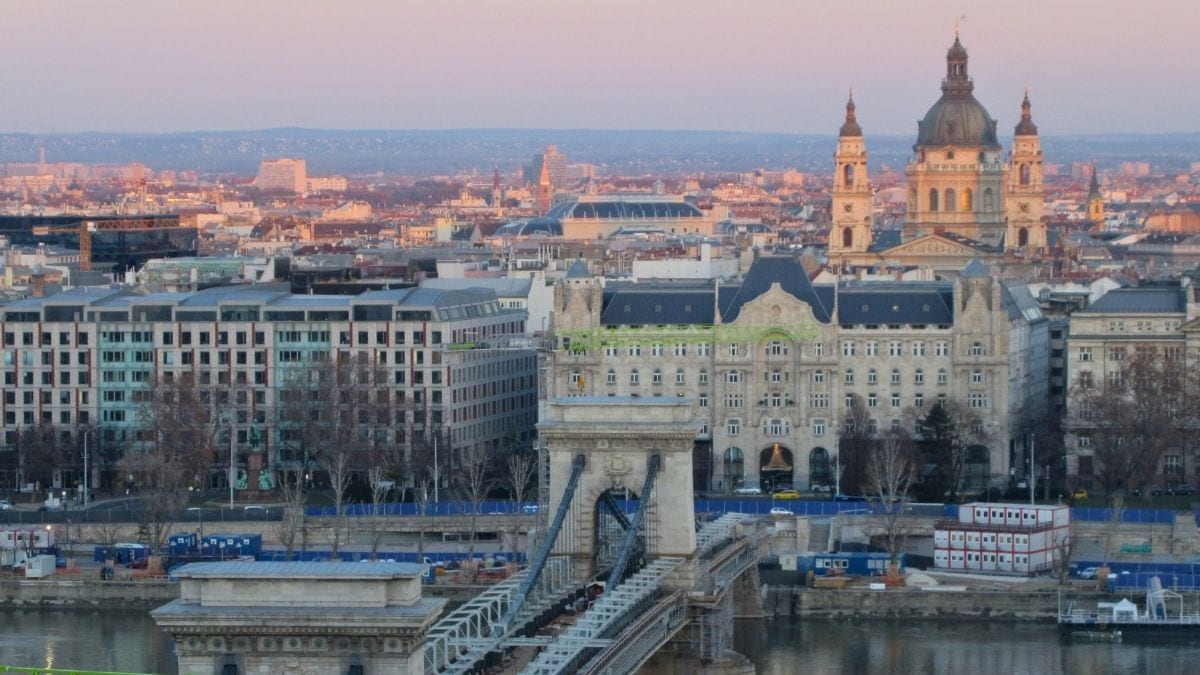
Budapest is the bustling capital of Hungary. The "Queen of the Danube" is the country’s commercial, political, and industrial heart. It has ancient roots dating back to the times of the Romans. Its modern iteration is a byproduct of the Austro-Hungarian Empire. The unification of Buda, Pest, and Obuda led to the creation of what is now known as Budapest on November 17, 1873. The Széchenyi Chain Bridge is not only a physical link but also a symbolic one between Buda and Pest. You’ll see the collision of modernity and history while exploring the city. Vestiges of its imperialistic past, Communist occupation, and the reimagining of spaces into ruin bars, museums, cafés, and other establishments make Budapest a must-visit.
ALSO READ:
Discovering Czechia: The Land of Castles, Literary Legends, and Beautiful Cities
All the Things You Can Do on a Dream Trip to Tuscany
The Historic Buda
Before unification, royalty lived in the enclosed walls of Castle Hill. Béla IV oversaw the establishment of the municipality in the mid-13th century. It is now home to many of the city’s most popular attractions. You could spend an entire day or half a day exploring Buda to learn more about its history.
Buda Castle
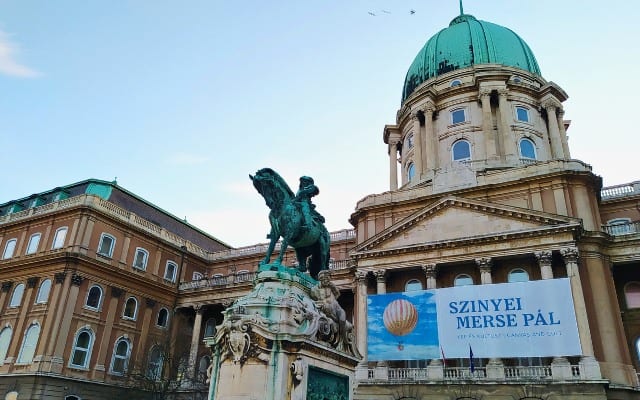
Perched on Castle Hill and overlooking the Danube, Buda Castle is one of a few iconic structures dotting the city’s beautiful cityscape. This historic structure and complex will take you back to Hungary’s imperial days. The castle dates to the 13th century and has undergone numerous reconstructions and architectural evolutions that marked the changing of the times from Renaissance influences to Baroque. Heavy bombings that took place during World War II inflicted substantial damage to the castle. However, the Hungarians knew the symbolic and historical significance of the castle. They had it restored and maintained over the years. A walk around the castle district provides a glimpse into days gone by.
Fisherman’s Bastion
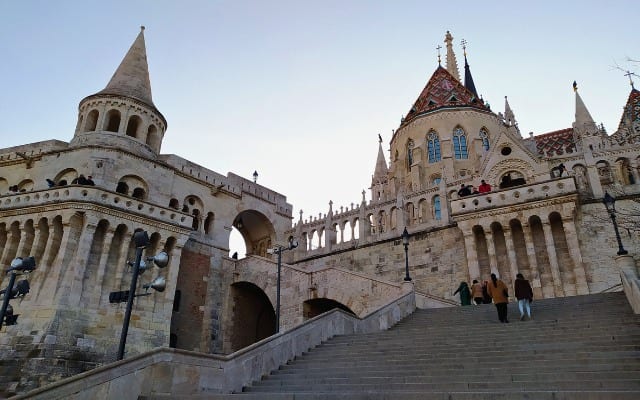
A short walk from Buda Castle, Fisherman’s Bastion is another attention-grabbing architectural wonder. The structure’s construction took place between 1895 and 1902 to commemorate the country’s 1,000th anniversary. One of the statues you’ll see in the complex is that of St. Stephen, Hungary’s first king. Architect Frigyes Schulek designed Fisherman’s Bastion as a viewing terrace. Fast forward to today, it provides visitors with beautiful bird’s eye views of Pest, most notably the stunning Hungarian Parliament Building.
Matthias Church
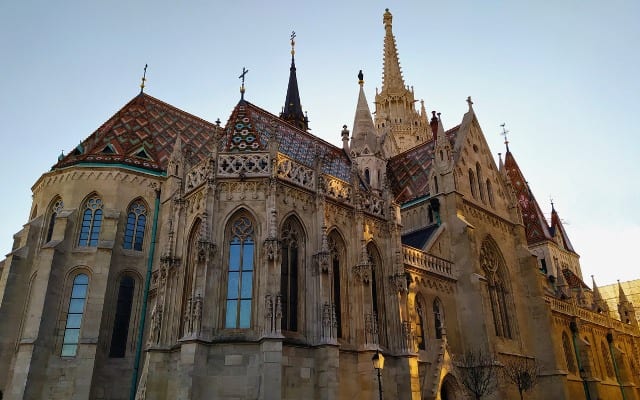
Budapest’s prominent structures are not just linked to its past but also tell the story of the country. The Matthias Church is part of the city’s narrative that weaves its present to its past. The Turks used Matthias Church as a mosque during their occupation in the 16th century. Like the Fisherman’s Bastion, architect Frigyes Schulek restored the church following the Neo-Gothic aesthetic.
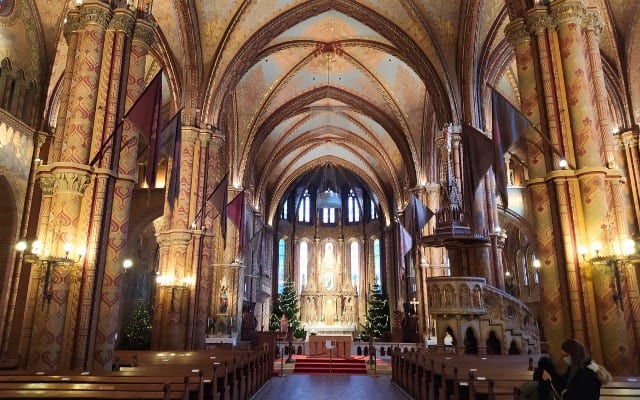
Buda Castle, Fisherman’s Bastion, and Matthias Church are legendary and iconic architectural and historical landmarks that showcase Budapest’s glorious past.
Amid the Old and New in Pest
Pest used to be part of Austria’s Habsburg empire. This district lies on the Danube’s eastern side. Its counterpart on the other bank was home to the nobility, while the gentry populated Pest. After centuries of war, reconstruction, and development, the unification of Buda and Pest took place. The latter has undergone extensive urbanization but still has glimpses of its glorious past.
Hungarian Parliament Building
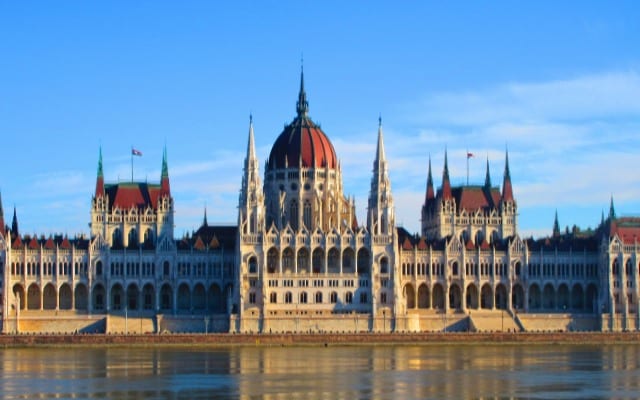
As I walked along the Pest side of the city, the striking façade of the Hungarian Parliament Building immediately caught my eye even from a distance. It resembled a castle rather than a government building with its elaborate exterior, cupola, and spires. Imre Steindl was the architect behind the design of this grand structure. The Hungarians had this building built to assert their identity and independence within the Austro-Hungarian Empire. It is home to the country’s National Assembly and has become a popular tourist attraction. The area surrounding it also has a slew of beautiful buildings. The Parliament Building is lovely at night. The best place to view it is across the Danube River.
St. Stephen’s Basilica
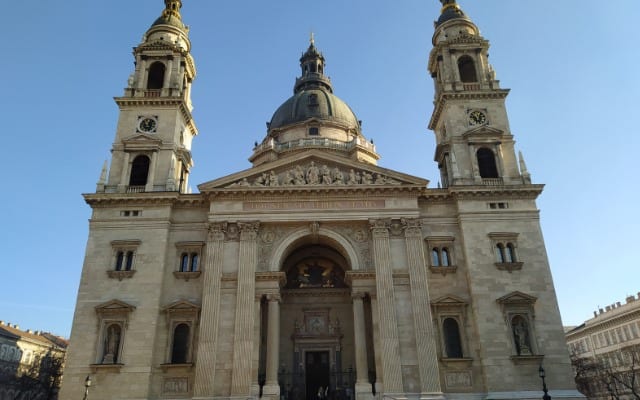
St. Stephen established the country centuries ago. St. Stephen’s Basilica is his namesake and is another striking building to add to your itinerary. Construction began in 1851, and its dedication took place in 1905. A mummified hand of St. Stephen is on display in one of the church’s chapels. The interior of the church is just as beautiful as its exterior, with mosaics, an altar, and paintings.
Danube Promenade
European cities are generally walkable, and Budapest fits this description with its pedestrian-friendly streets and remarkable architecture. I would often spend hours walking from Buda to Pest or vice versa just to experience the city. The Danube Promenade provides you with vantage points that showcase the city’s beautiful landmarks, whether you’re standing on the Buda or Pest side. You’ll find the memorial “Shoes on the Danube Bank” near the Hungarian Parliament Building during your walk. These multiple pairs of steel shoes memorialize the Jews the Nazis killed during World War II.
Central Market Hall
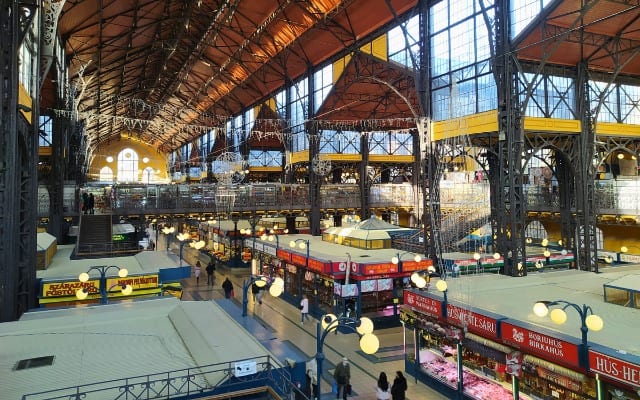
The Central Market Hall dates back to 1897. It is the biggest and oldest market in the city. It resembles a train station and is home to many shops and restaurants where you can catch (and taste) a glimpse of local life. I tried lángos (a deep-fried flatbread with your choice of toppings) after window shopping. You can find distinctly Hungarian or kitschy souvenirs while exploring.
Széchenyi Thermal Bath
One of the first few things that come to mind when you think about Budapest is its thermal springs. The Széchenyi Thermal Bath is the city’s most famous thermal spring. The bath’s initial iteration is smaller and less elaborate. It was called the Artesian Bath and was open to the public in the 1880s. Hungarian engineer Vilmond Zsigmondy designed the well and had it drilled so that the bath would have a continuous water supply. The bath rose in fame and popularity, which led local government authorities to make the decision to build a bigger one. The construction of the Széchenyi Thermal Bath concluded in 1913. The bath grew over the last century or so to its current iteration with pools, saunas, spa and medical services, and massage facilities.
Szimpla Kert
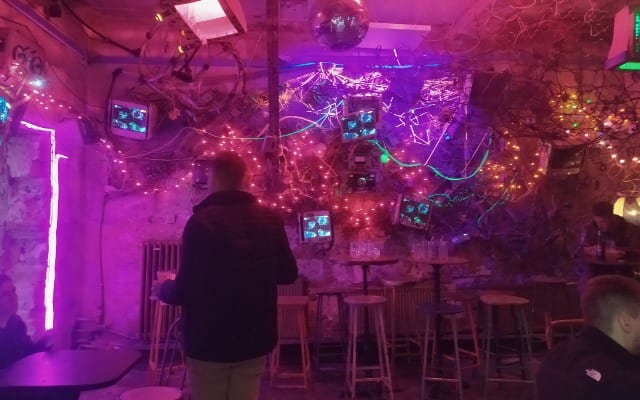
If you want to experience the city’s nightlife, you’d want to check out its ruin bars (a.k.a. ruin pubs). These are reimagined and reconstructed abandoned buildings turned into communal spaces where locals and visitors gather to eat, drink, shop, and be merry, depending on the time of day. The oldest and most famous one is Szimpla Kert. It offers a great vibe where you can eat, grab a craft beer, listen to live music, check out a market, or just hang out with friends and/or other travelers you meet.
ALSO READ: Europe's 7 Most Underrated Food Cities
Café Culture in Budapest
Like in any other big city, you’ll find a Starbucks in Budapest; however, you’ll discover that they have their own vibrant (and historic) café culture. I was unable to visit all the cafes in the city, but I got a chance to check out two of the most famous ones, New York Café and Gerbeaud.
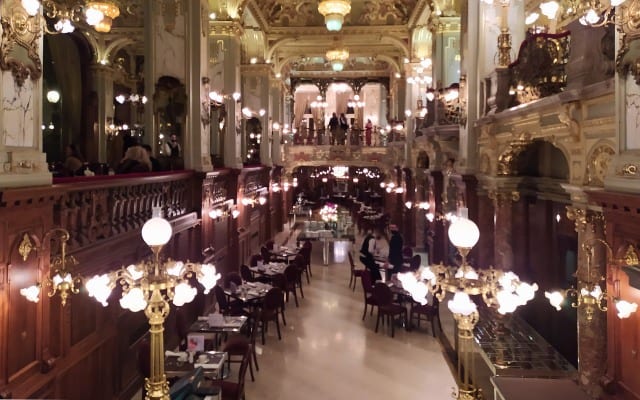
New York Café has a museum-like interior with chandeliers and frescoes and has a history that spans more than a century. Some of the country’s most famous writers, such as Zsigmond Móricz, Géza Gárdonyi, Sándor Weöres, and Mihály Babits, wrote their literary masterpieces or simply met with their contemporaries in the café. As I walked to my table and then waited for my order, I couldn’t stop but admire the “Most Beautiful Café” in Budapest (or some would argue in the world).
Budapest is a marvelous city that mixes the old and new, and much like the bustling metropolis itself, it is in constant evolution and re-imagination. The long walks along the Danube, the visits to the historic sites, spending a relaxing afternoon in the Széchenyi Thermal Bath, coffee dessert or a full meal in New York Café, or any other thing that you fancy doing; the city will impress you and will make you eager to return (which I already have).
