

Austria: A Timeless Escape

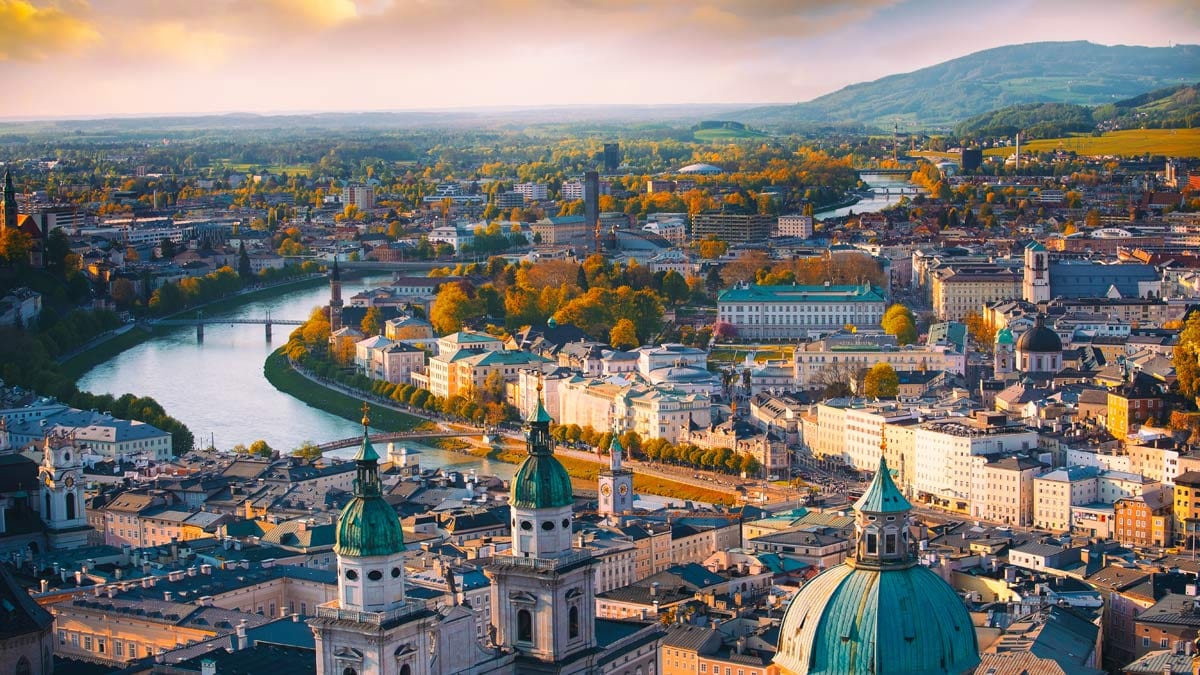
I had the privilege of visiting Austria a couple of times as part of a longer trip around Europe. I would pass through the country en route from somewhere else to somewhere else. Its location in the heart of the continent makes it an ideal waypoint or your main destination. The country offers an eclectic concoction of experiences: enjoying country life in a quaint but historic town, admiring the Alps, or stepping into imperial times whenever you visit a palace in Vienna. The rich tapestry of discoveries you’ll encounter will make you return again and again.
ALSO READ:
Unveiling Budapest: A Journey Through Hungary's Capital
Vienna, Austria, in All its Splendor
Vienna has had multiple incarnations over the centuries. It used to be the sea of the Holy Roman Empire, the Austro-Hungarian Empire’s capital, and was part of the "Greater" Germany that Hitler envisioned. The ravages of World War II left a substantial part of the city in ruins. Extensive reconstruction took place over the decades when the war ended.
Today, Vienna has regained its timeless charm, with architectural influences over the centuries dotting the city. You can catch a glimpse of the imperial lifestyle with a visit to one of the palaces, marvel at artwork from renowned artists in one of the galleries, or listen to classical music in one of the concert halls. You could also just get lost in the city’s ageless allure with its narrow streets, eye-catching architecture, and cafes. Whatever your plans are, there’s plenty to do in Vienna.
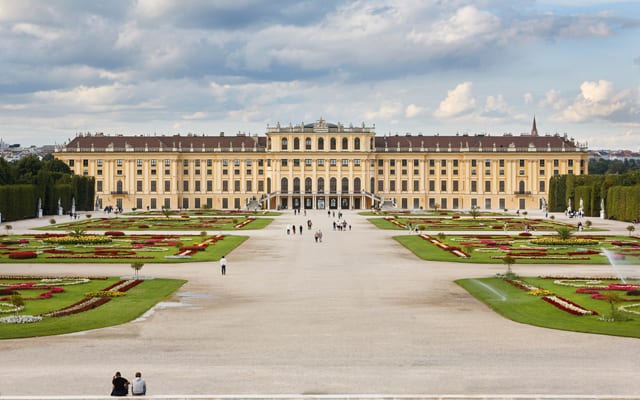
Schonbrunn Palace
The Habsburgs was one of Austria's most affluent and influential imperial families. This 18th-century embodiment of affluence is now a UNESCO World Heritage Site. It has more than a thousand rooms, and the Habsburgs used it as a summer palace. Some of the notable places you’ll see while touring include the Hall of Ceremonies, the Great Gallery, the Walnut Room, the Blue Chinese Salon, and others.
Schonbrunn Palace and Gardens
The Hofburg
Much like the Schönbrunn Palace, the Hofburg traces and aligns its history with the Habsburg dynasty. This palace complex has more than 2,000 rooms, 18 wings, and numerous courtyards; the construction of each one took place over the centuries. The oldest section of the Hofburg is the Swiss Wing. This was where the first Habsburg ruler of the country, Duke Albert, resided. You can visit the Sisi Museum and the Imperial Apartments as part of your itinerary.
Vienna State Opera House
One of the many architectural wonders you’ll find in the city is the stunning Vienna State Opera House. The latter is steeped in music history. Renowned musicians and composers such as Mozart, Gustav Mahler, Richard Strauss, and Richard Wagner performed within the hallowed walls of the theater. I was unable to watch a live performance during my visit (I didn’t buy tickets in advance). If you’re planning to see a show at the opera house, I suggest booking tickets way in advance.
St. Charles Church
“Beautiful” is an adjective you’ll repeat while exploring Vienna. The St. Charles Church, also known as Karlskirche, is an exquisite building you’ll lay your eyes on. Charles VI built this Baroque-inspired structure in the 18th century and named it after St. Charles Borromeo. Its most striking exterior features are the Triumphal Pillars and its dome, measuring around 72 meters.
St. Stephen’s Cathedral
This cathedral is an integral part of the city’s history and has changed over the centuries (most recently, its reconstruction after the destruction caused by World War II). It dates to 1147 and mixes Gothic and Romanesque architecture. It is the tallest church in the country and one of the most prominent structures in the city’s skyline. Many members of the Habsburg dynasty, archbishops, and cardinals are buried within its walls.
Vienna City Hall
Completed in the 19th century, this stunning administrative building is another architectural gem you wouldn’t want to miss (a repetitive theme while exploring Vienna). The impressive building’s square is a go-to venue for Christmas markets, concerts, and other events.
Basking in the Small-town Charm
The Wachau Valley is an arresting landscape with mountains flanking the Danube River and quaint towns along it. I visited Melk on a day trip from Vienna. Its traditional houses and buildings contrast with the big city vibe of the country’s capital. It was a welcome break from the hustle and bustle because it felt like time stood still in this part of Austria.
I made my way up to Melk Abbey, which dates back to the 11th century, but the magnificent Baroque structure you see today dates back to the 18th century. The highlights of the monastery/church/museum were the library and church. The Melk Abbey Church is one of the most beautiful I’ve seen. It is a fine example of High Baroque architecture, with its elaborate altars, chapels, and frescoes. It’s something you’d have to see for yourself. I was one of the last visitors of the abbey before it closed. Despite its small size, Melk has a special and important place in the country’s long history.
Enchanted by Salzburg
Imagine a picturesque city with mountains as its backdrop, a calm river acting like a mirror, and quaint alleys with cafes where you can sip a hot chocolate or coffee after exploring. All these characterize Salzburg. It’s the birthplace of Mozart, its historic center is a UNESCO World Heritage Site, and its combination of architecture and scenic landscape make it one of the most beautiful cities in Europe.
Altstadt
At the heart of European cities and towns I’ve been to is an old town and historic center. Salzburg’s Altstadt, or old town, is brimming with old-world charm, with quaint alleys and streets weaving into each other. Centuries-old buildings, churches, courtyards, shops, cafes, restaurants, and merchant homes line the old town. You can spend hours aimlessly wandering and soaking in the history of the city.
Hohensalzburg
Archbishop Gebhard had this fort built in the 11th century. Since then, it has been renovated and expanded, most notably in the 1500s, when it took on its current iteration. Its primary use was to repel enemy sieges. Perched on a hill, it provides visitors with bird’s eye views of the old town. I walked up to the fortress instead of taking the funicular. It was a pleasant one that gave me different vantage points of the beautiful historic center. The fort has a few museums, such as the Princes’ Chambers, the Fortress Museum, and the Marionette Museum.
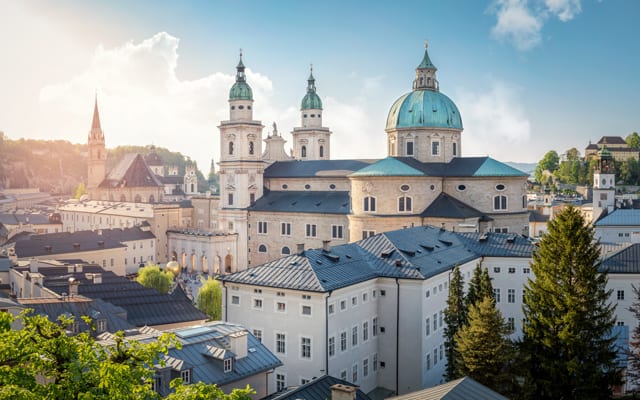
Skyline of Stadt Salzburg with the cathedral in the summer
Salzburg Cathedral
Of the churches you’ll see in the city, the Salzburg Cathedral is the most important and most prominent (with the 79-meter high towers the main feature). Its façade also has statues of the city’s patron saints, Virgil and Rupert, as well as the apostles Paul and Peter. It dates to the 17th century and has withstood the test of time. Notable baptisms that took place within its walls include that of Mozart and the songwriter of "Silent Night," Joseph Mohr.
Mirabell Palace
A trip to Salzburg would be incomplete without visiting one (or all if you’re a big fan) of the filming locations of none other than "The Sound of Music." Mirabell Palace was the location for some of the musical’s scenes. The palace dates back to the 17th century, and subsequent renovations took place that followed Baroque architecture. A highlight of your trip would most likely be climbing up the grand staircase and walking into the Marble Hall.
Mozart’s Birthplace
One of the most famous classical musicians in the world was born in Salzburg. You can visit Wolfgang Amadeus Mozart’s house while in the city. You can visit the rooms and see the mementos of the great composer.
Austria has more to offer, especially for those who want to explore its mountains. If you lack the time (or the interest) to hike, a visit to Vienna, Melk, and Salzburg provides you with a glimpse of the country’s rich cultural heritage and experience its timeless charm.
