

Chasing Dracula in Romania

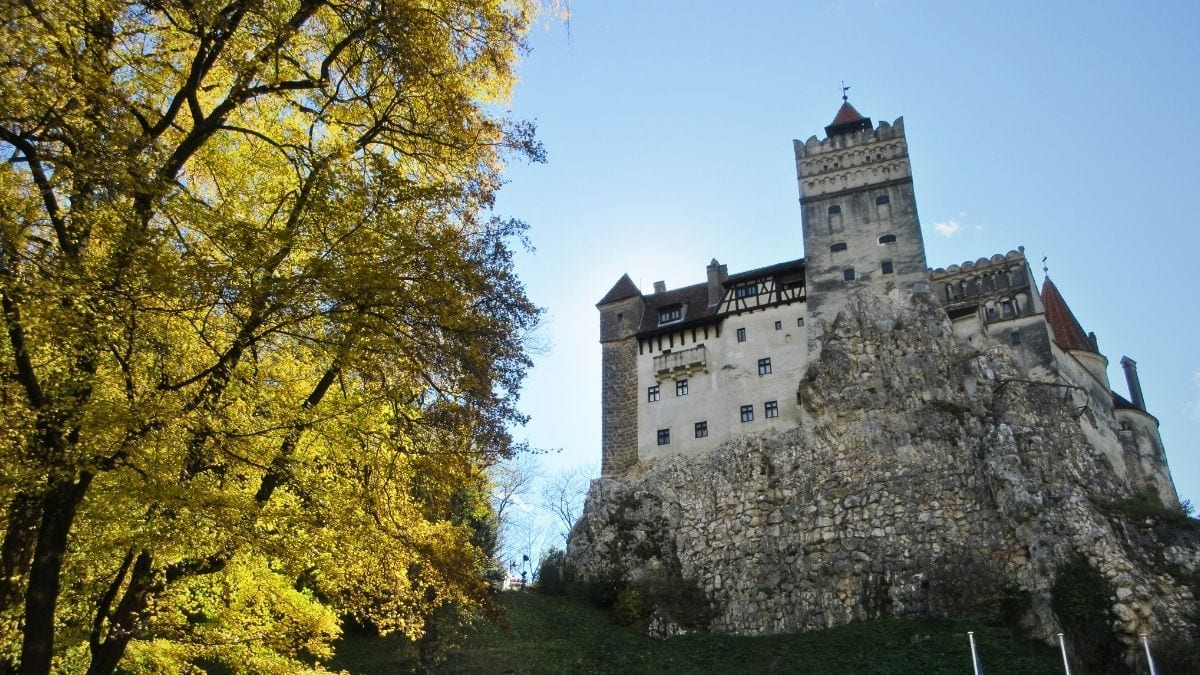
There was one thing I knew about Romania when I was planning my trip: the myth of Dracula. Bram Stoker wrote the mythical figure in the 1890s. It has become a literary and horror classic with many movie adaptations and derivatives of its characters (including Van Helsing). This was enough to make me decide to visit the country; however, there is more to offer visitors who decide to include it in their itinerary.
ALSO READ:
Exploring Poland: A Cultural and Historical Odyssey in Eastern Europe
Discovering Czechia: The Land of Castles, Literary Legends, and Beautiful Cities
The Road to Transylvania
The Transylvanian region used to be part of Hungary and the Ottoman Empire from the 11th to 17th centuries. By the 20th century, it had become part of what Romania is now. The allure of Transylvania revolves around Dracula and the medieval cities that showcase its cultural and historical heritage. When I planned my itinerary, I included stops in Brasov (with a day trip to Bran Castle) and Sighisoara.
The Man, the Myth, and the Legend
"I must have been asleep, for certainly if I had been fully awake I must have noticed the approach to such a remarkable place. In the gloom the courtyard looked of considerable size, and as several dark ways led from it under great round arches it perhaps seemed bigger than it really is. I have not yet been able to see it by daylight. "(from Bram Stoker’s Dracula)
Bran Castle
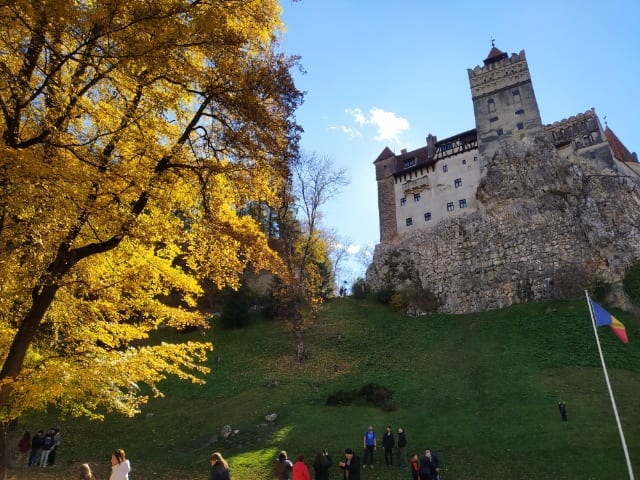
I stayed in Brasov out of convenience. The city was the go-to jump-off point for trips to Bran Castle. There’s a bus that regularly travels to and from one of Romania’s most popular attractions. The uneventful ride took me to an amusement park-like attraction where you’ll find all sorts of souvenirs related to Dracula and the castle. The long queues meant that it would take a while before I could get inside. However, the castle was one of the reasons I decided to travel to Romania.
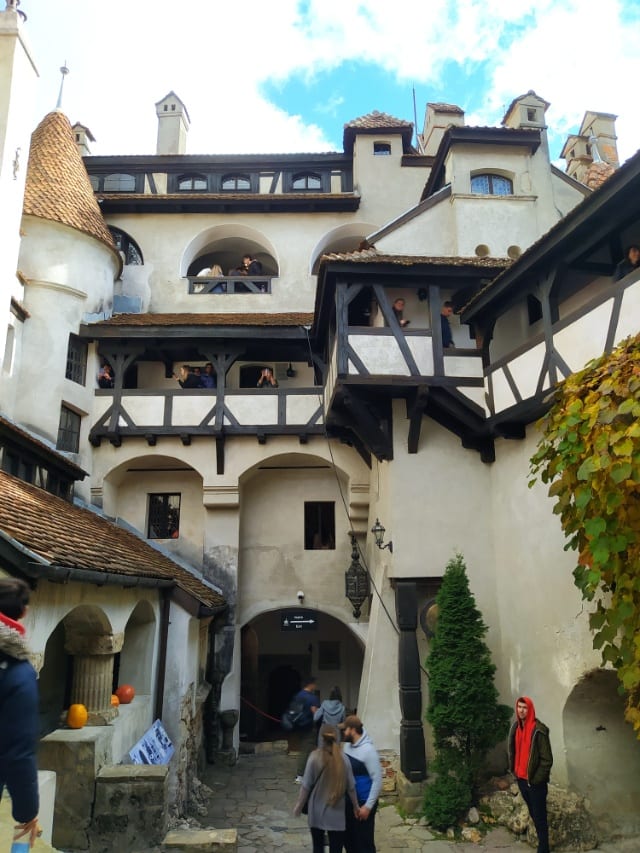
One can trace the myth of Dracula to the imagination of English writer Bram Stoker. Ironically, the author has never been to Romania. He used his imagination to conjure up the mythical Dracula Castle based on a description of Bran Castle he read. The fictitious character first appeared in 1897. After more than a century, many flock to Bran Castle because of its association with the vampire.
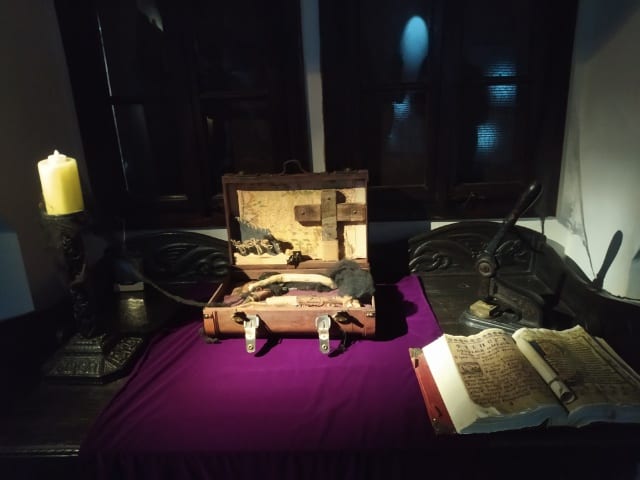
The castle dates to 1211, when the Teutonic Order knights had a fortress built near Bran Pass. Hungary’s King Louis I had a castle constructed in Brasov to prevent further expansion of the rising Ottoman Empire. In the 1920s, Queen Marie of Greater Romania became the owner of the castle. The communists that governed the country turned it into a museum in 1956. In 2009, the Romanian government turned the castle over to Archduke Dominic of Habsburg. You’ll learn more about the castle’s history while exploring it. There are also displays and exhibits related to Dracula and the country’s legends about the occult.
Sighisoara, the Birthplace of Vlad the Impaler
"His face was a strong—a very strong—aquiline, with high bridge of the thin nose and peculiarly arched nostrils; with lofty domed forehead, and hair growing scantily round the temples, but profusely elsewhere. His eyebrows were very massive, almost meeting over the nose, and with bushy hair that seemed to curl in its own profusion. The mouth, so far as I could see it under the heavy moustache, was fixed and rather cruel-looking, with peculiarly sharp white teeth; these protruded over the lips, whose remarkable ruddiness showed astonishing vitality in a man of his years. For the rest, his ears were pale and at the tops extremely pointed; the chin was broad and strong, and the cheeks firm though thin. The general effect was one of extraordinary pallor." (from Bram Stoker’s Dracula)
The myth revolving around Dracula centers on the historical figure Vlad Tepes, more infamously known as Vlad the Impaler. He got the moniker "Dracula" after the induction of his father into the Order of the Dragon. He earned the notorious name Vlad the Impaler because of his proclivity to impale his adversaries until they died. After fleeing from a battle in 1462, he left numerous impaled victims to deter the Ottomans from catching his army.
Vlad Dracul House (yellow) and the Clock Tower
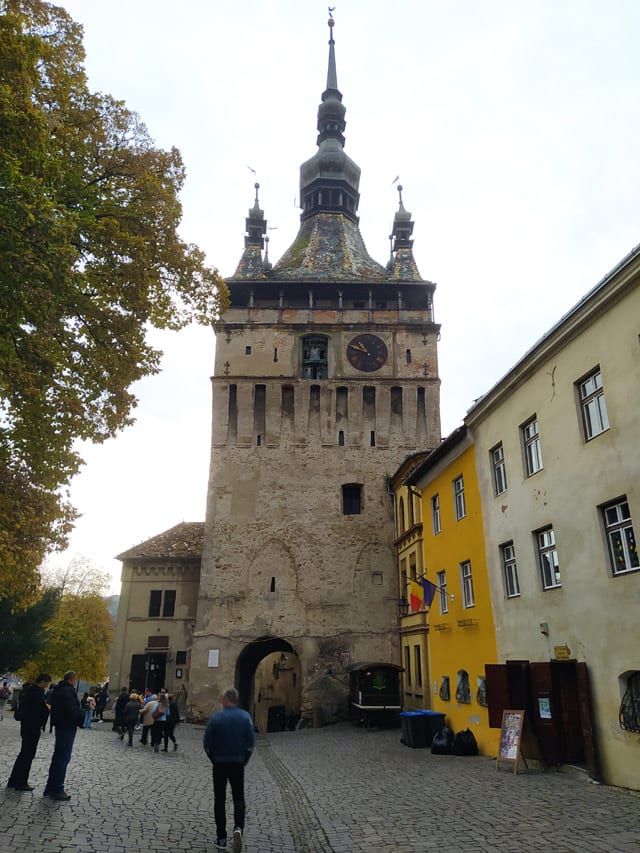
I included Sighisoara in my itinerary because of its relation to Dracula or Vlad Tepes. Visitors can find the Vlad Dracul House near Citadel Square, where the notorious leader was supposed to be born. This UNESCO World Heritage-listed historic center may be small, but it is full of medieval charm. Exploring it feels like you stepped into a time warp.
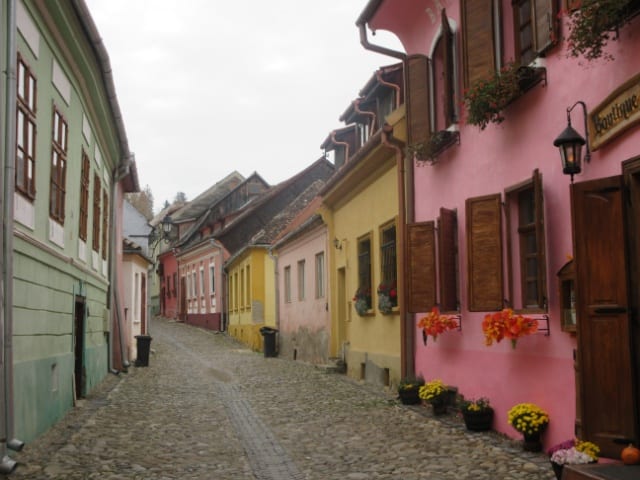
The old town’s centerpiece is the Clock Tower. This prominent landmark dates to the 14th century and serves as its main gate. It has a museum and is a good spot for overlooking views. You can also find a few centuries-old watchtowers scattered all over town, some of which are named after the guild they house. Visitors can see remnants of the Transylvania Saxons that settled in Sighisoara when exploring the square, walking through the narrow alleys, and checking out the shops and colored houses.
Going Back to Medieval Times in Sibiu
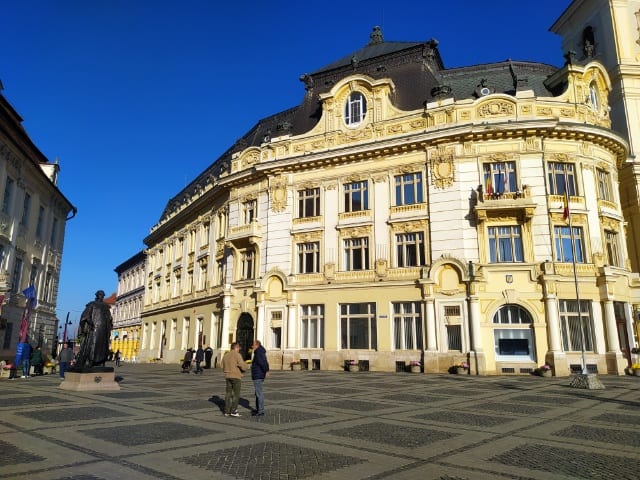
Sibiu is another destination you can add to your Transylvanian adventure. The Saxons constructed a citadel in Sibiu in the 13th century, which was later rebuilt in the 14th century because of the destruction the Tatars caused during their invasion. Sibiu became part of warring powers such as the Turks and the Austro-Hungarians over the centuries. Integration with Romania took place in 1918. It has an upper and lower town which you can explore during your visit.
Sibiu City Hall
Sibiu Council Tower
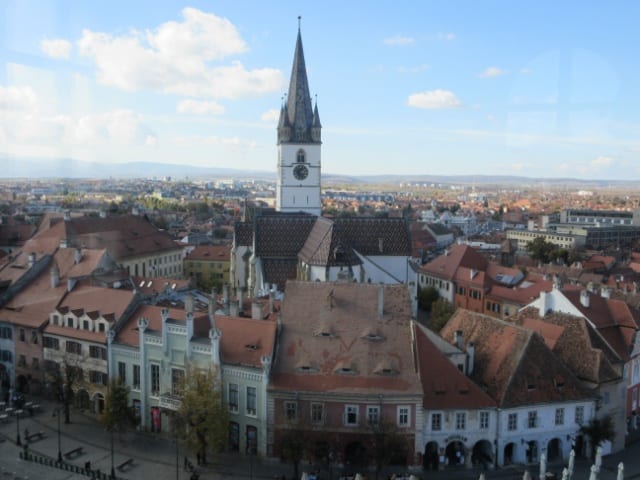
You’ll spend most of your time exploring the upper and lower parts of town. The two most common words you’ll find yourself using are "quaint" and "lovely," as these best describe Sibiu. There are plenty of local restaurants and cafes to hang out in after taking leisurely strolls. If you’re interested, you can check out a few museums as well. A distinct feature I noticed while exploring is that the buildings and houses have eyes-shaped windows. The Stairs Passage is an attractive passageway that links the upper and lower towns; you’ll see beautiful houses and buildings along the way. The Small and Big Squares are where you’ll encounter the local (and touristy) hustle and bustle of Sibiu.
Wandering in Bucharest, Romania’s Capital
I started my trip in Bucharest and ended it in the Romanian capital after exploring some of the well-known spots in Transylvania. The Palace of the Parliament is an architectural wonder which you can visit during your trip. It’s a vestige of the country’s ousted dictator, Nicolae Ceausescu, and his ego. It’s one of the largest and heaviest buildings (it weighs more than four million tons) in the world. You can take a photo of the building from the outside if you are unable to join a tour.
Romania used to be part of the Soviet Union. Once the people had enough of the Communist regime, they overthrew the government. Ceausescu and his wife fled but were later caught and eventually executed. The fall of the communists took place in Revolution Square.
Agricola Fonciera Palace
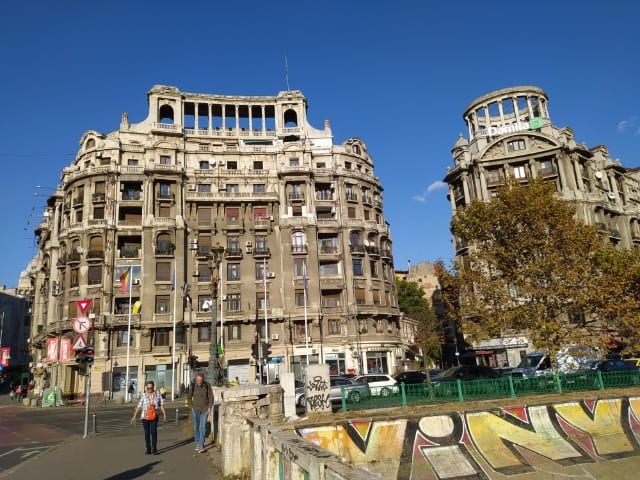
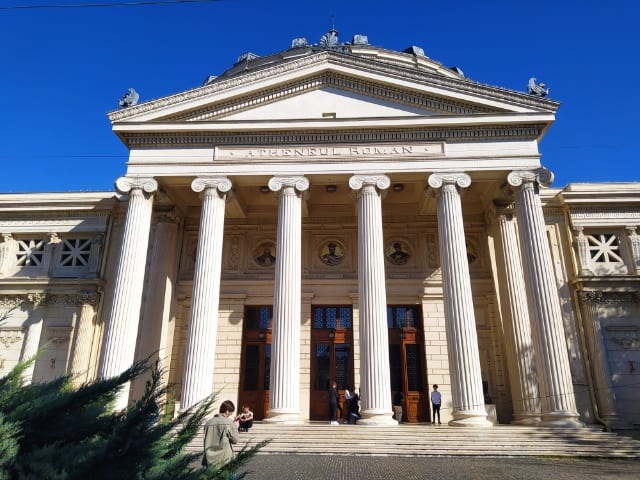
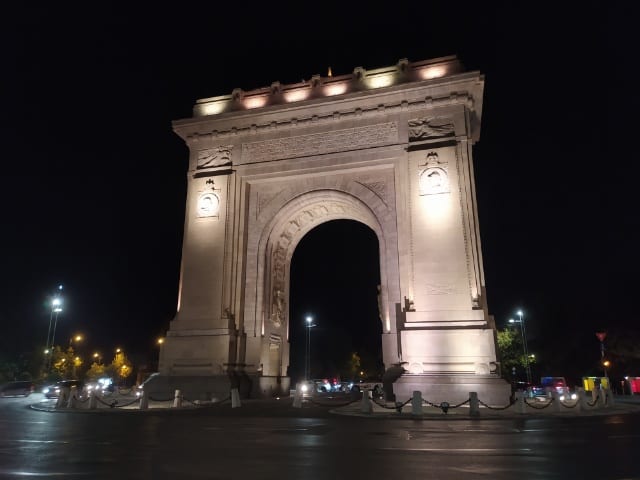
Like in many other European cities, Bucharest has a street lined with some of the city’s most beautiful buildings, high-end shops, and hotels. Victory Avenue is a place where you can take a relaxing stroll after a bit of sightseeing. The street was also at the forefront of the city’s historic events: it was the first street to be paved and have lighting. After the War of Independence, the victorious Romanians paraded up the street in 1878. The Romanian Athenaeum dates to the 19th century and is one of the city’s most recognizable landmarks. It’s a venue of choice for exhibitions, conferences, concerts, and other culture-related events. Staking its claim as the "Little Paris of the East," Bucharest has its own Arcul de Triumf (Arc de Triomphe).
Romanian Athenaeum
Arcul de Triumf
Romania might not be your first choice when you create your itinerary for Europe. However, it’s a destination to consider if you’re looking for a unique country that’s not as popular as the typical stops like France, Italy, Spain, and the United Kingdom. A trip to Transylvania immerses you in the Dracula myth and the region’s medieval charm.
