Grassfire Hits Chocolate Hills in Bohol Amid Dry Weather

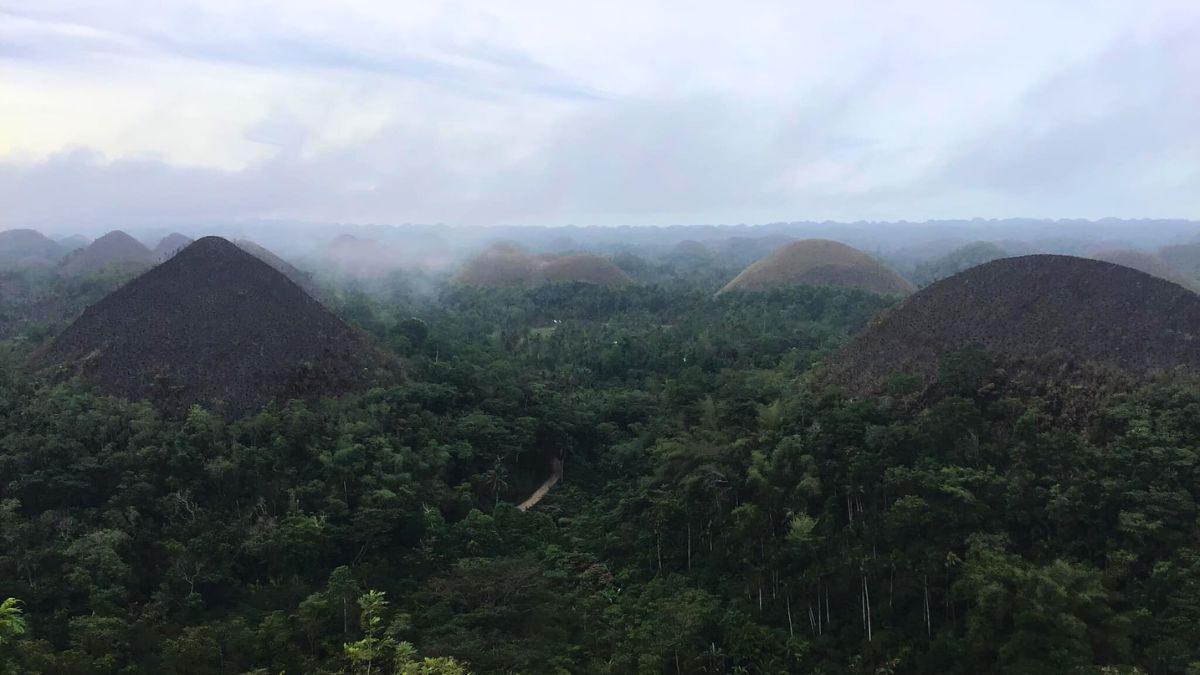
Fire broke out on two mounds of the world-famous Chocolate Hills in Carmen, Bohol, on Tuesday night, April 30.
Reports cite the Bureau of Fire Protection - Carmen's team leader, FO3 Ian Blair Reyes, who said that the fire started out past 7 p.m. with the hot weather seen as a likely cause. The dry grass caused the fire to quickly spread to two hills, which are both facing the view deck in Barangay Buenos Aires.

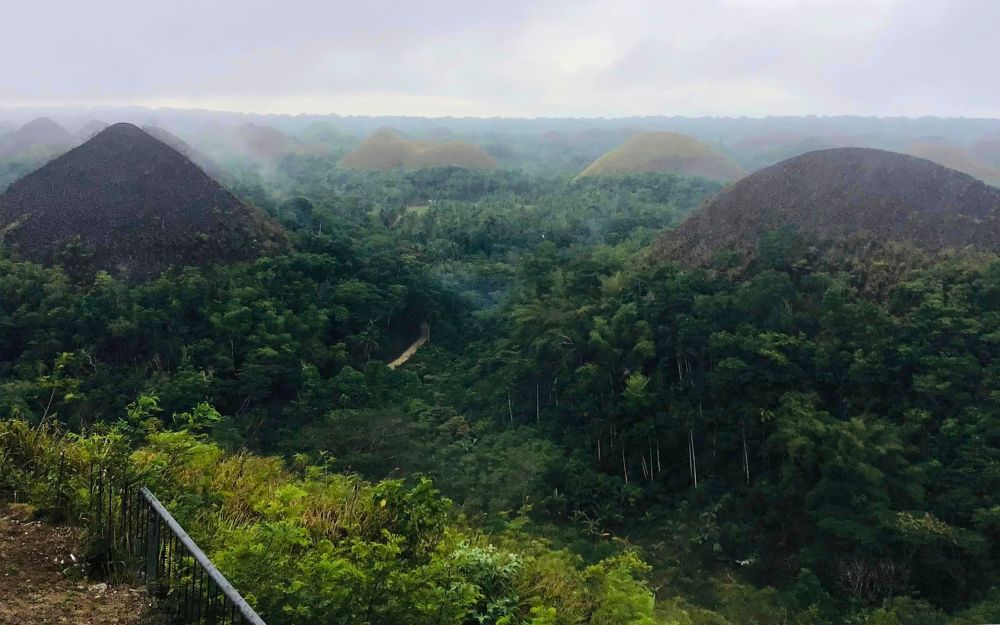
Responders could not enter the area in the darkness, so they had to wait for the fire to subside while making sure that the grassfire would not reach the other hills. It was declared fire out after three hours.
Heat index in Bohol on April 30 reached 39 degrees Celsius, according to PAGASA.
ALSO READ
How Exactly Did the Chocolate Hills Come About?
Yes, That New Resort At Chocolate Hills Is As Problematic As It Looks
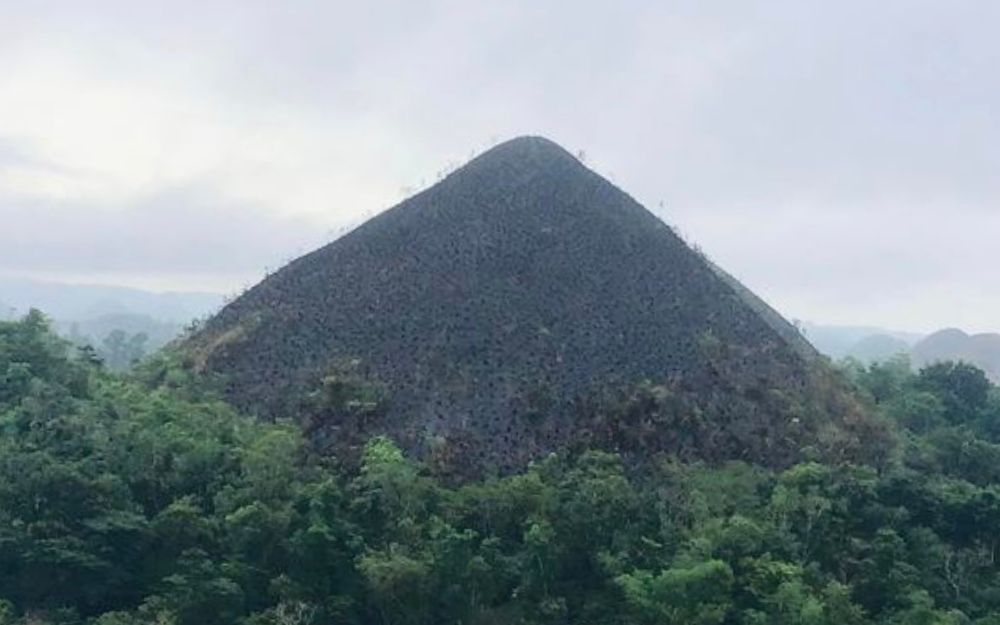

The Chocolate Hills comprise 1,776 mounds spread out across an area of more than 50 square kilometers. Located at the center of Bohol Island, the hills span the towns of Sagbayan, Batuan, Carmen, Bilar, Sierra Bullones, and Valencia. They're called "chocolate" as the grass on the hills turns into chocolate brown color during the dry season, then turns to green during the wet season. This grass is mostly the species Imperata cylindrica and Saccharum spontaneum.

Studies show that the center of Bohol is made of limestone, formed through natural processes over a span of 60 million years. These marine limestones contain fossils of foraminifera, coral, mollusks, and algae from the Late Pliocene to Early Pleistocene periods. With the Philippines being located over several tectonic plates, geological processes like the elevation of sea levels have resulted in the formation of mounds.
The exposed limestone mounds were eventually eroded through rain and water (called karstification), forming the landscape of the Chocolate Hills. While such geological processes are common, the formation of the Chocolate Hills is regarded as a geological wonder because of the regular geometrical shapes that came forth. Each hill is about 40 to 120 meters high, with a diameter ranging from 65 to 80 meters.
Photos used with permission from Adon Orog.