
Of Art, Beauty, and History in the City of Light

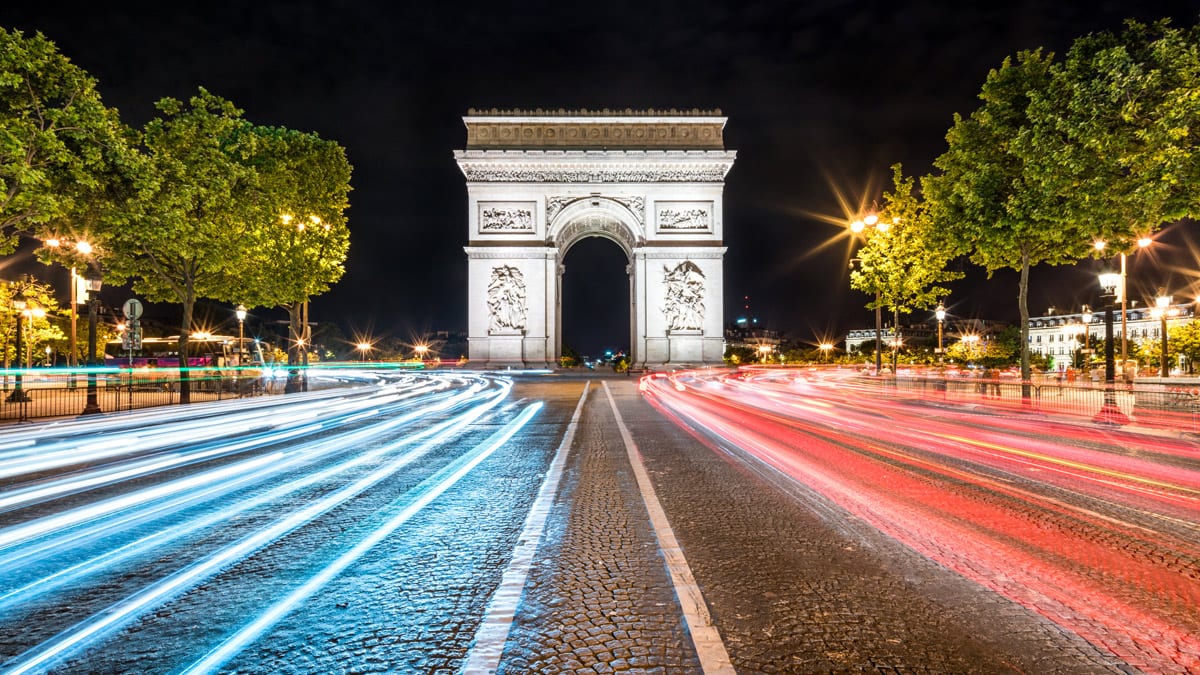
Paris is many things to different people. It's been the backdrop and inspiration of numerous TV series, movies, novels, and various art forms. For some, it's everything they could've imagined: the Eiffel Tower, the Louvre, romantic walks in the evening, and designer brands. For others, they just don't see the hype; they see the pickpockets, dirty streets, pushy street vendors selling souvenirs, and the hordes of tourists blocking the views and crowding the restaurants.
My opinion on the City of Light is somewhere in between. However, I still think it's one of the most beautiful cities in the world. The city elicits a sense of wonder when you marvel at its historic monuments and architecture, and when you consider its rich cultural and historical heritage.
ALSO READ:
The Notre Dame Cathedral Could Be Rebuilt With This Futuristic Design
Will Travelers Choose to Fly AirFrance On Its New Direct Manila-Paris Flight?
Paris' Monuments and Monumental Figures
Like many European capitals, Paris has a long and storied past that has shaped its history and character from the time of the Celts to the Romans, the English, and German occupation. Kings and conquerors have called Paris home, such as Hugues Capet, Henry VI, and Napoleon Bonaparte. Other than being a commercial and political hub, it was (and still is) a center of literature and art. The city was home to the likes of Victor Hugo, Voltaire, Ernest Hemingway, and Oscar Wilde, who lived out their lives and wrote. Paris has a way of inspiring people with its sheer beauty and authenticity, or its honest display (and possibly, acceptance) of its contradictions.
During his time in the city, Hemingway wrote these words from A Moveable Feast, "I would stand and look out over the roofs of Paris and think, 'Do not worry. You have always written before, and you will write now. All you have to do is write one true sentence. Write the truest sentence that you know."
Eiffel Tower
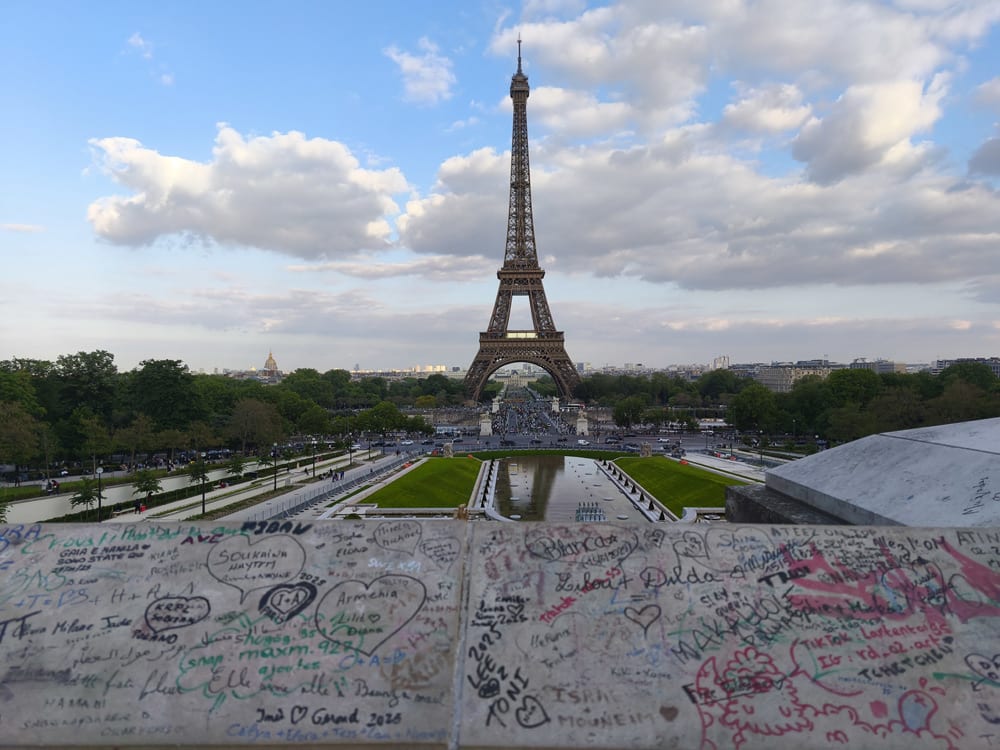
Our own national hero, Jose Rizal, spent some time in the French capital. According to historians (including Ambeth Ocampo), Rizal explored the City of Light on foot and detailed his observations through letters he sent to his family in the Philippines. He would marvel at the boulevards, thoroughfares, monuments, and museums, among other things. He was not only there as a tourist, but he also met and spent some time with prominent Filipinos at the time, such as Juan Luna, Felix Ressureccion Hidalgo, Isabel Tuason, Felix Pardo de Tavera, and Trinidad H. Pardo de Tavera. You'll find photos of Rizal fencing with Luna in the latter's studio in Paris or dining and drinking with his contemporaries. Rizal even has a plaza named after him to commemorate his trips to Paris—Place Jose Rizal in the city's 9th arrondissement.
Here are excerpts from his journals:
"On the first day, I did nothing else but walk and walk. I saw that the Champs Elysées is an extensive park from the Place de la Concorde to the Arch of the Carousel..."
"We passed through Bordeaux, Poitiers, Tours, Blois, and Orleans until Paris … The environs of Paris are very beautiful and very picturesque. There are little houses with gardens and the churches … of Gothic style … form and constitute the enchantment of the traveler..."
"There I saw an exhibition of Japanese paintings and many men and women, principally foreign artists, mistook me for a Japanese, and they approached me and asked me for information about the artworks."
"...one has to pay for transportation, tickets, and tips..."
The days of the fight for independence from Spain are over, but Paris is still often included in Filipinos' travel bucket lists. We may not share the same goals as our national heroes, but a visit to the French capital can at least broaden our horizons. I had the privilege of exploring the city and seeing some of the places Rizal went to.
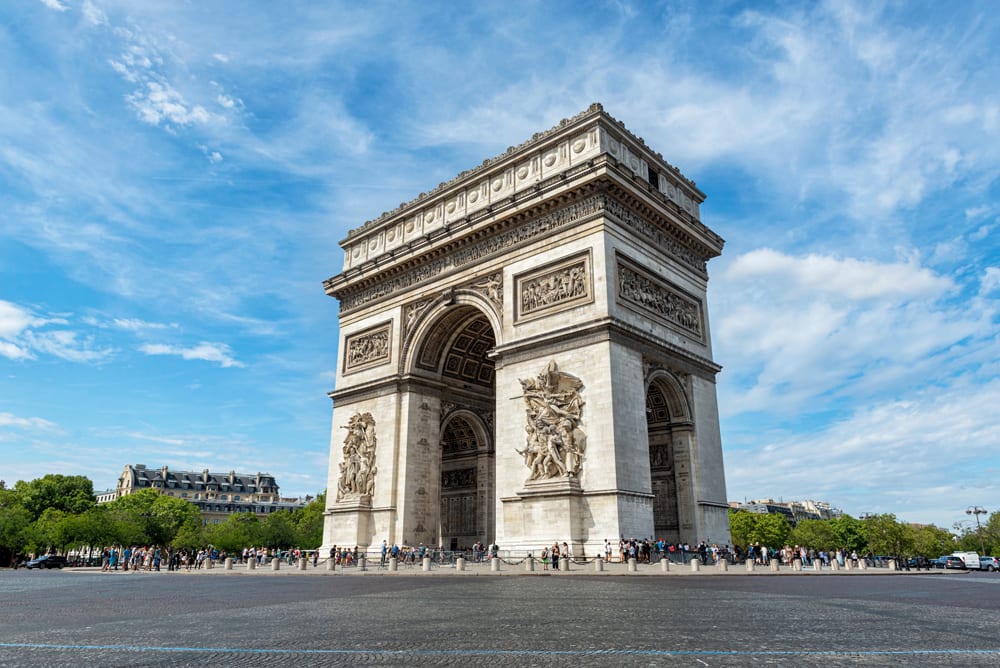
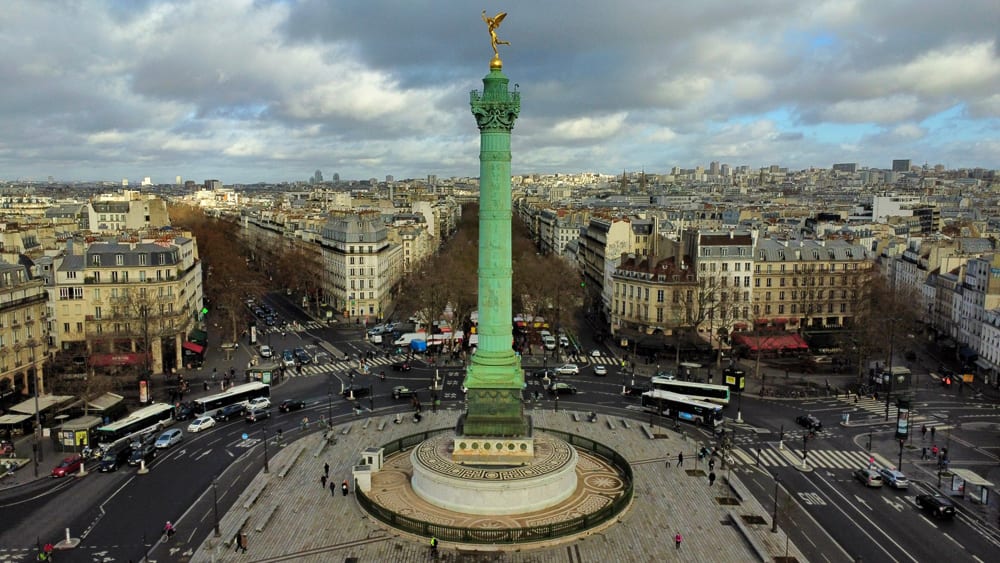
Despite not being as acclaimed before in the 19th century as it is now, the Eiffel Tower is the symbol of not just Paris but of France. Its namesake, Gustave Eiffel, designed and built this monument. It dominates the skyline, making it visible from various spots in the city, such as the Trocadero, Arc de Triomphe, and Haussmann Galeries Lafayette. Depending on where you start from, you can walk from the Champs-Élysées (an attraction in itself) to the Arc de Triomphe. The scenic walk along Champs-Élysées showcases Parisian elegance and architecture with plenty of shops, cafes, and restaurants. The Place de la Bastille is a noteworthy landmark that memorializes the spirit that led to the French Revolution.
Arc de Triomphe
Place de la Bastille
While I'm not an expert on opera, I couldn't pass up on the opportunity to visit the Palais Garnier. Napoleon III commissioned architect Charles Garnier to design and build this opera house that combines Renaissance, Baroque, and Classical architecture. Upon the project's completion, the Palais Garnier garnered the attention of everyone because of its opulence and grandeur.
Palais Garnier
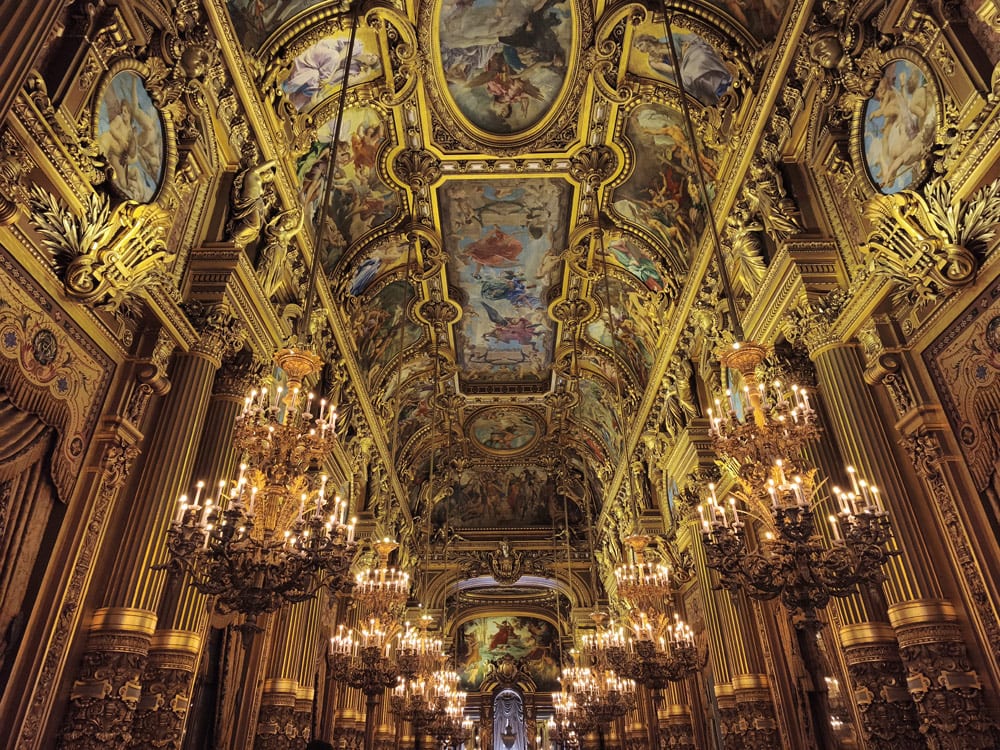
One of the most grandiose elements at Palais Garnier is the seven-ton bronze and crystal chandelier that reportedly costs 30,000 gold francs. On May 20, 1896, one of its counterweights broke free, burst through the ceiling, and into the auditorium—killing a concierge. This later inspired not only the setting but also a famous scene in Gaston Leroux's classic 1910 gothic novel The Phantom of the Opera.
In a country full of monuments and symbols of something, Versailles epitomizes the monarchy's affluence and excess. Louis XIII hired Jacques Lemercier to build a château during his reign. Louis IV expanded the private retreat into a lavish complex with elaborate rooms, halls, and gardens decorated with the finest furniture, statues, and paintings. One of the most famous sections of the palace is the Hall of Mirrors. It would take an entire day (you'd have to start early, too) to explore this UNESCO World Heritage Site.
Even if you're not sightseeing, Paris has plenty of places for local food and drinks. The cafes, restaurants, plazas, parks, and small art galleries dot the city. You won't run out of things to do during your visit.
The City as Muse
Writers and heroes weren't the only ones who either lived or visited Paris. The city attracted artists from all over to paint its cityscape, neighborhoods, and vibrant slice of life. Names such as Vincent Van Gogh, Pablo Picasso, Renoir, and Monet saw the City of Light as their muse. Filipino painters Juan Luna and Felix Resurreccion Hidalgo also drew inspiration from Paris during their stay in the French capital. Luna received a gold medal for "Spoliarium," and Hidalgo received a silver medal for "The Christian Virgins Exposed to the Mob" during the Madrid Exposition of Fine Arts in the late 19th century.
Both would create interpretations of their life and observations in Paris; Juan Luna with "The Parisian Life" and Hidalgo with "La Parisienne." The women in both paintings differ in their depictions. The subject in Luna's painting is believed to be a prostitute, while Hidalgo's work landed on the cover of Sotheby's sale catalogue. I would leave the analyses and interpretations of these works to a more trained eye.
After visiting some of the main attractions of Paris, I made my way to Montmartre, a charming art district where Van Gogh, Picasso, Modigliani, Renoir, and their contemporaries set up their studios. The legends are no longer around, but the aura of Montmartre oozes with creativity. The neighborhood seemed like it was far away from the urban sprawl of Paris, with its village-like atmosphere. Quaint shops and cafes line its winding lanes. You can have your picture drawn when you hire one of the artists in the area. The outcome might not be worth P1 million, but you'll have a unique souvenir to take home with you.
Montmartre
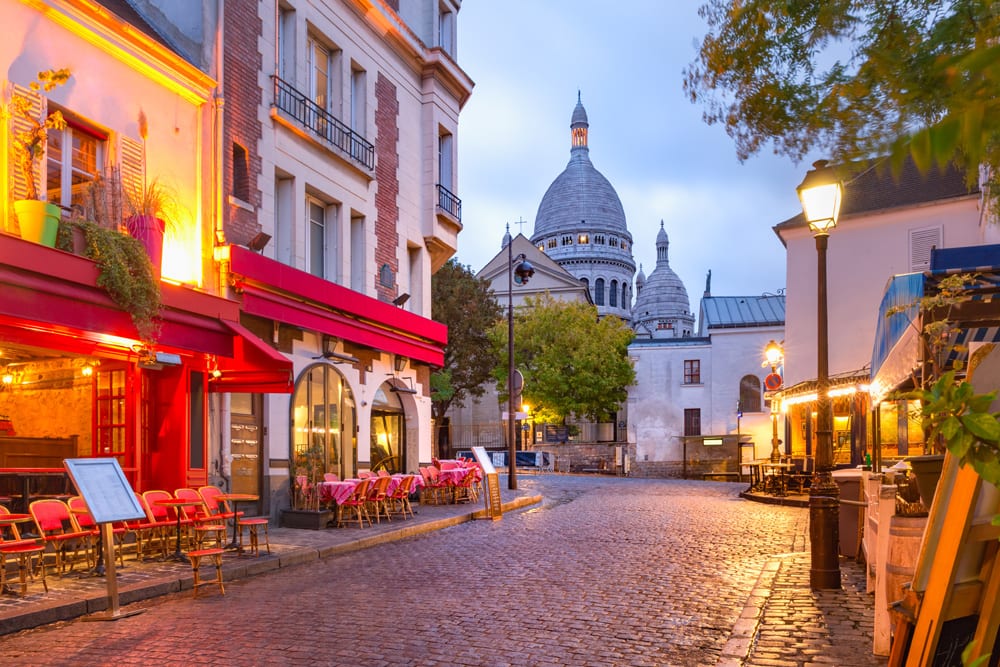
Basilique du Sacré-Coeur
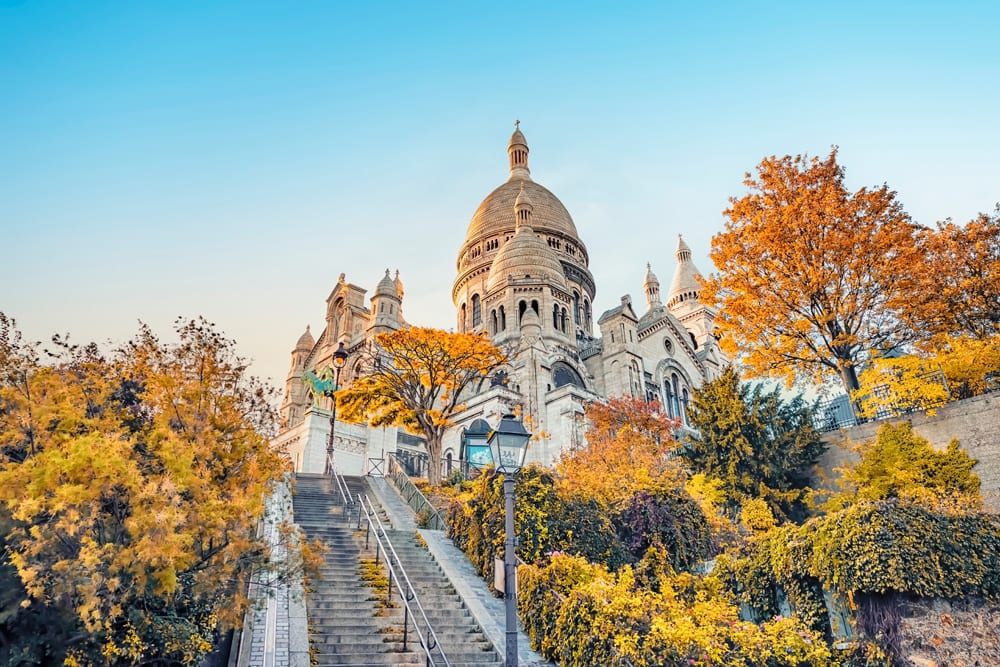
The Basilique du Sacré-Coeur is Montmartre's noteworthy landmark. Plans for the church began in the 1870s. It took a few decades to finish, with its consecration taking place in 1919. The church's location is one of the best places to get overlooking views of Paris. Who wouldn't be inspired while exploring Montmartre with all its cultural and historical heritage surrounding you? It's the kind of place where you might find your Muse.
The iconic Louvre Pyramid
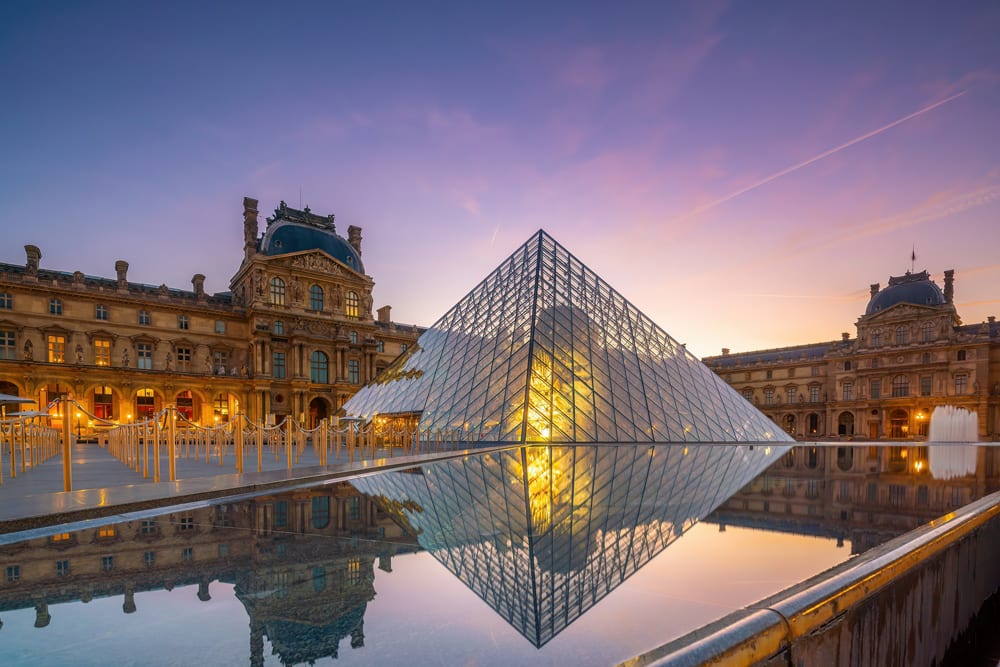
Inside the Louvre
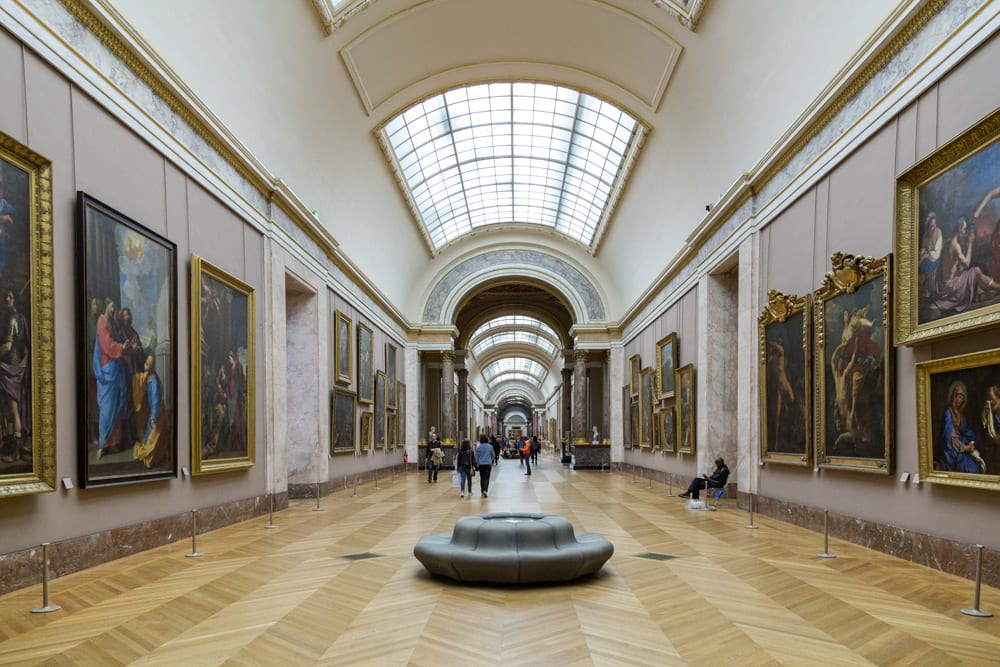
You can't visit Paris without at least seeing the Louvre, whether from the outside with its iconic Louvre Pyramid or from the inside with its extensive exhibits. The history of the Louvre dates back to the late 12th century, when it was built as a fortress to protect Paris. Over the centuries, it evolved from a military stronghold to a grand royal palace, serving as a primary residence for French kings. However, in the late 17th century, Louis XIV moved the court to the Palace of Versailles, and the Louvre was gradually abandoned as a royal residence. The idea of transforming it into a public museum gained traction during the Age of Enlightenment in the 18th century, with the museum officially opening during the French Revolution in 1793. The building's transformation was a continuous process, with various kings, emperors, and governments contributing to and remodeling the complex to create the iconic museum we know today. Some of the most notable pieces in the museum's collection include the "Mona Lisa" by Leonardo da Vinci, the "Venus de Milo" by Alexandros of Antioch, the "Wedding Feast at Cana" by Paolo Veronese, and the "Liberty Leading the People" by Eugène Delacroix.
Fondation Louis Vuitton
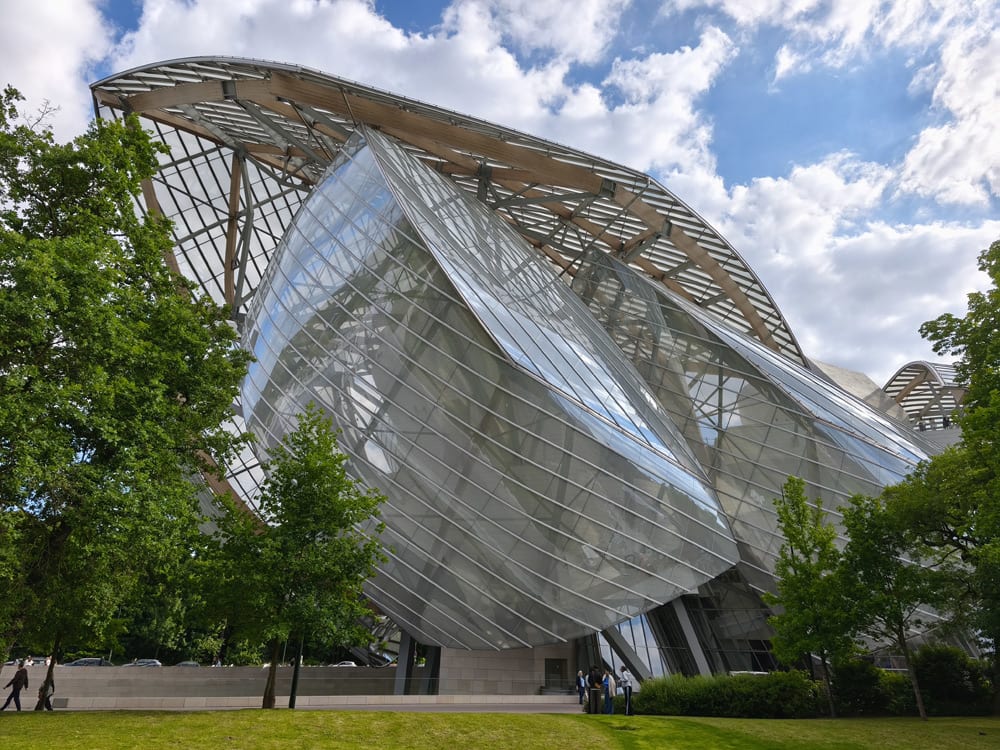
In a city full of centuries-old museums, the Fondation Louis Vuitton is an iconic piece of architecture from the 21st century. The “iceberg” is an attention-grabbing architectural wonder that Frank Gehry designed. His vision for it was to show a reflection of a world that’s constantly changing and evolving. It’s a museum, venue, and art gallery all in one. The building itself is a work of art and embodies Gehry’s vision. The reflection of light, depending on the time of day, curves, non-linear shapes, and the use of space create the illusion of movement and evolution.
Rizal's, Luna's, and Hidalgo's Paris is quite similar to its modern iteration. It's both old and new, mythical and real, a source of inspiration, and it's one of the centers for commerce, politics, culture, creativity, and innovation. It leaves with you (whether the perceptions and experiences are good or bad), once you depart.
