
Conrad Ricamora on Asian-American Representation: 'A Huge Blessing'
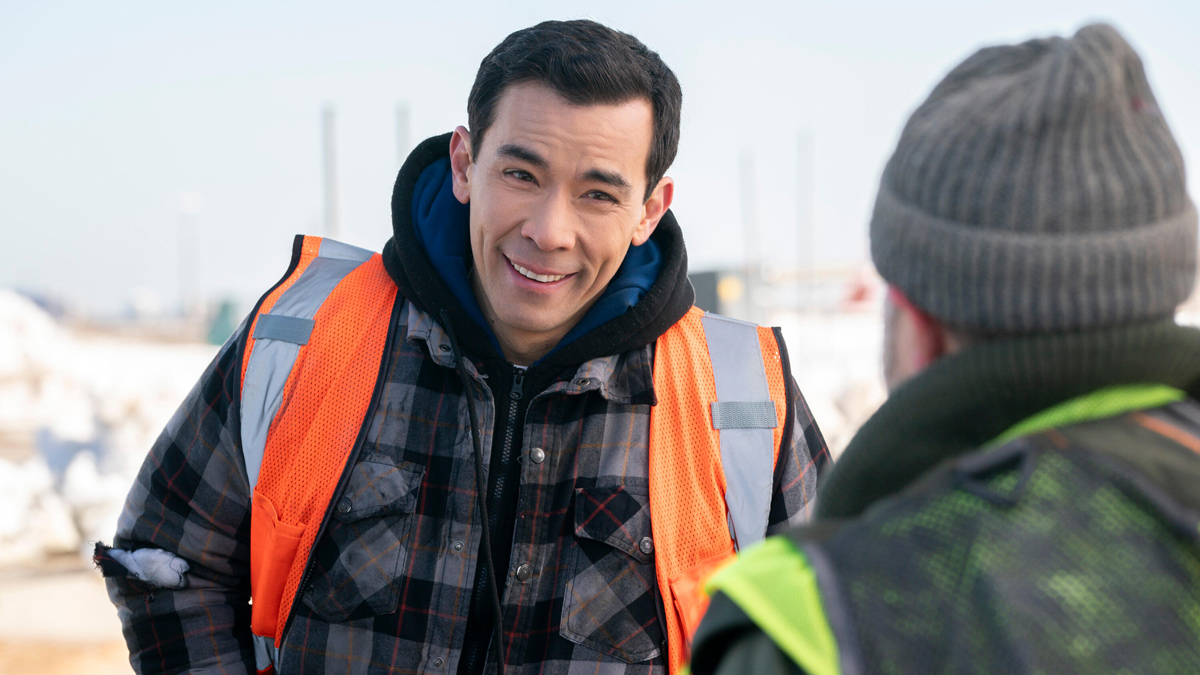
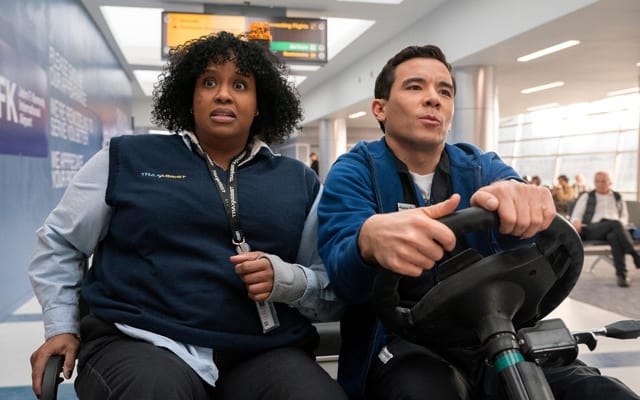
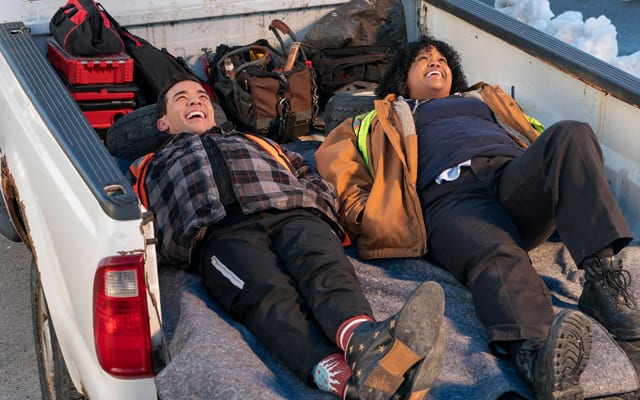
How To Die Alone is a new comedy created by and starring Natasha Rothwell (White Lotus) on Disney+ about an airport worker whose brush with death forces her to refocus her life. Rothwell’s Melissa is single, underpaid, and overweight, navigating the chasm between loneliness and being alone with a little help from co-workers and friends such as Rory, played by Filipino-American Conrad Ricamora.
Esquire Philippines sits down with Ricamora to talk about friendship and growing up Asian-American.
ALSO READ:
Unmasking the Black Noir With Nathan Mitchell of The Boys
Thai Actor Peach Pachara on Religion, Potato Corner, and His New Netflix Show
You’ve worked with some real powerhouses, right? You’ve worked with Shonda Rhimes and Viola Davis (on How to Get Away with Murder), and now Natasha Rothwell. How does it feel to work with and be surrounded by real powerful women of color?
Conrad Ricamora: Especially being an Asian-American growing up in the United States, I know personally what it feels like to be marginalized, having our stories pushed to the side for so long. And so to now be a part of, like you said, first Shonda, Viola, and now Natasha Rothwell, it feels great to be a part of a group of people that are finally getting to tell their story after not being seen and represented for so long. Yeah, it feels great.
And it also feels great because I feel like Natasha is, you know, the place where Shonda was at when she first came out with Grey’s [Anatomy]. I honestly feel like we're seeing Natasha at that point in her career. This is the very beginning of her empire that she's about to build.
I mean, she's developing so many different projects as a writer and as an actor that this show, I think, is going to be the takeoff point for that empire that she's building.
That's great. You spoke about being Asian-American. How does your Filipino heritage impact or influence how you play or approach your roles?
Well, yeah, I think it's inseparable because I got this face. And so it's inseparable from the roles that I play. And I love that Natasha is writing [about] that experience now and including Asian-Americans in her writer's room as well for How to Die Alone.
So, yeah, being able to show that experience and specifically talk about it in-season or episode three of the show, to be able to represent a small portion of that very, very large experience of being Asian-American is something I'm always grateful for because I needed it growing up. So, to provide it for other people now is just a huge blessing.
Yeah. So, I've seen the first four episodes. It's funny. It's fresh. It's different. What do you feel the show brings to television?
Oh, gosh. I mean, besides showing people, a group of people that have been marginalized for so long, besides giving them a spotlight, I do think it captures the natural progression of people finding their authentic selves and finding their authentic voice and how messy that can be. I know that in my 20s and 30s, figuring out who I was as a person, what I wanted from life, learning how to respect and love myself and my friends, and finding the career that I wanted.
I was bumping up against the world in very messy ways. That then led me to those lessons and to becoming the person that I wanted to become. But you can't do that until you make the necessary mistakes in life.
And this show does that beautifully with a lot of heart and with a lot of humor. So I'm just so happy to share that with the world in a very real and not just funny [way], because sometimes things can be funny, but not necessarily true to life. I think our show shows that humorous side while still maintaining the true progression of somebody finding themselves.
Speaking of progression and somebody finding themselves, would you consider Rory to be a good friend? From what we see in the first four episodes, would you consider Rory to be a good friend?
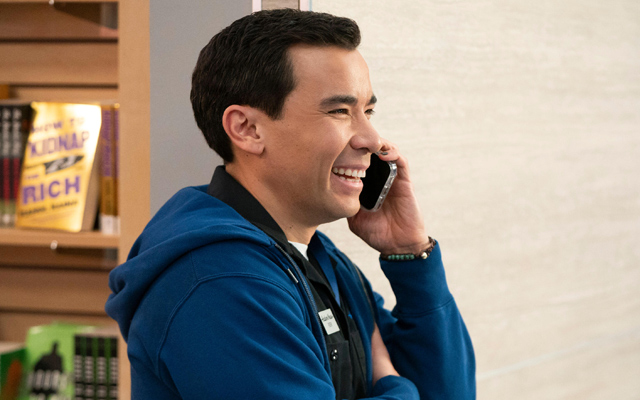
You know, I would. Rory is, I don't want to say good or bad. I think Rory is deeply human and deeply flawed.
And, you know, when you are … when your life is … I'm very much evading the question, you can tell, but it's because I don't think people are good or bad. I think people are … are shades.
There are so many different shades of people. And so, yeah, I think we get to see Rory be a bad friend, and we get to see Rory be a good friend during certain points. But I think that their friendship is at a definite, you know, crossroads—which is a lot of times painful. And I think we’re very honest about showing that.
What would we expect to see from Rory this season?
Oh, well, you know, I do think Rory is in a very messy part of his life and hasn't, up until this point, enjoyed that. But after meeting Bi-Coastal Bae in the first episode, Rory is going to try to navigate monogamy for the very first time. And I think it's interesting to think about somebody like Rory, especially in the gay community where, you know, a lot of gay men want to be open and have freedom.
And Rory, I think, is hiding behind that kind of like facade of like, ‘oh yeah, I can hook up with anyone with no strings attached’. But I think that it comes also from a place of trying to protect himself because he's scared about not being loved. And then all of a sudden, when he's confronted with somebody who wants to love him, that shakes up his entire world.
So I think we're going to see that. I think we're going to see him try to navigate that monogamy and his own fear of being loved.
Last question. As someone who’s devoted as much time to stage as screen, do you prefer television or theater?
Oh, gosh. I can't live without either. I can't live without doing either or seeing either.
You know, I love the nuance that a camera can capture when you're this close to the camera. Because you can't see this, you can't see anybody's eyeballs when you're in the back row of a theater. But theater is such a communal, shared experience.
And I love that about everybody gathering together to breathe the same air, especially after still recovering from the pandemic and not being able to be together. So yeah, I like both. I wouldn't want to give up either.
This conversation has been edited for clarity and length.
