
Pachara Chirathivat (a.k.a. Peach Pachara) may not be a household name in the Philippine entertainment scene—at least not yet, but the 30-year-old Thai actor has carved a niche for himself as a multifaceted artist.
"I'm an actor, an entrepreneur. I'm a musician as well, I'm a photographer as well, and I'm doing social business as well. That's really what sums up all about me," he introduced himself during a sit-down interview with Esquire Philippines.
He made his acting debut in 2011, when—after an accidental audition—he played the character of a young entrepreneur in the comedy film SuckSeed. Peach has since starred in the biographical drama The Billionaire (2011), the thriller film Countdown (2012), and the teen drama TV series Hormones (2013-2015), among others.
As a musician, Peach started out with his own rock band, Rooftop, after SuckSeed. In 2015, he formed a new band alongside musician and producer Pakorn "Beam" Musikaboonlert called White Rose. A composer, singer, keyboardist, and guitarist, Peach is also into film scoring.
As an entrepreneur, he co-founded beauty brands Snailwhite and Oxecure, and has taken things further by co-founding a social enterprise called Ora, which is dedicated to providing nutritious food at affordable prices in an effort to tackle the issue of malnutrition. But his biggest and most popular venture is Potato Corner Thailand, which now has over 100 branches and serves other snacks besides the well-loved fries.
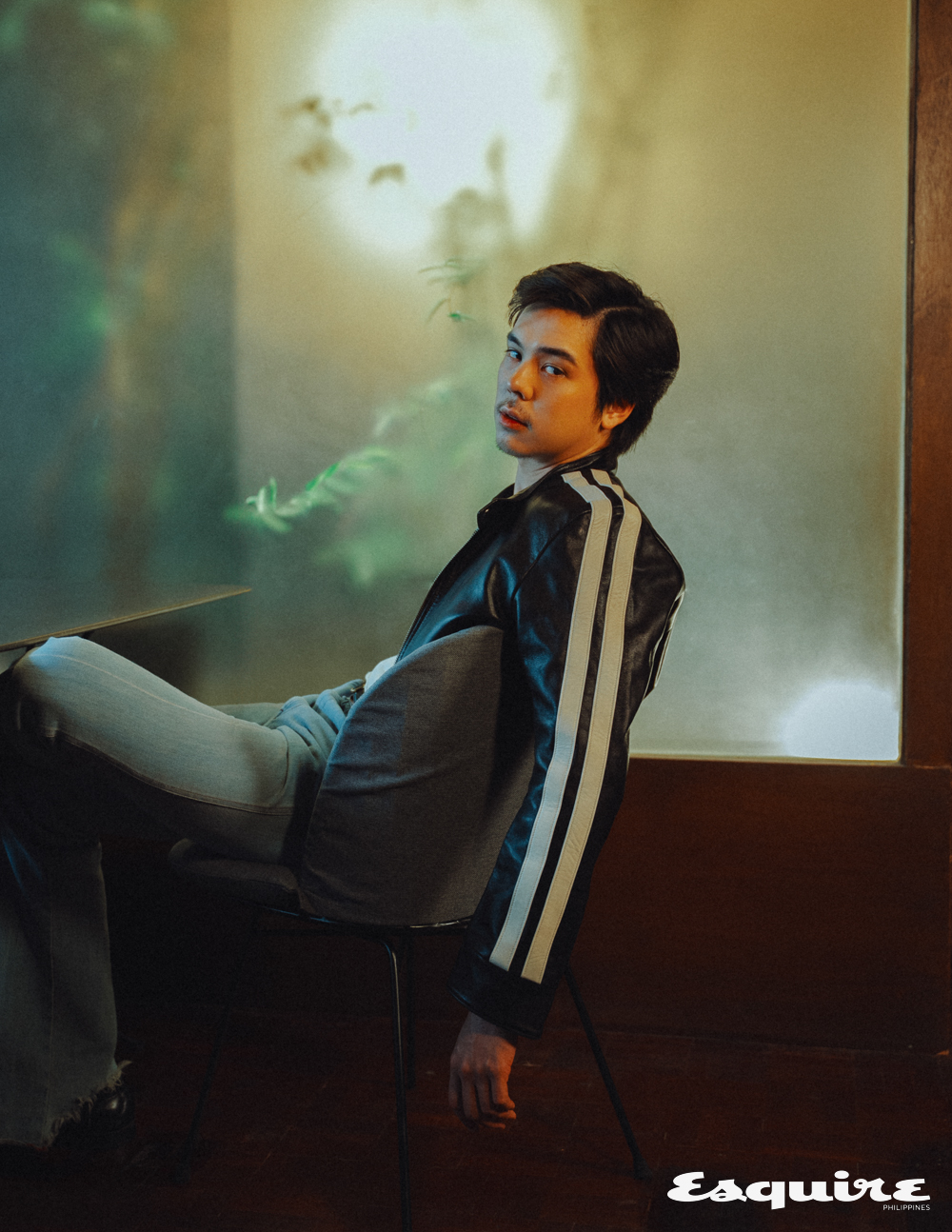
The intersection of Peach's creative and business pursuits is perhaps most evident in his latest project, The Believers, which dropped on Netflix last March 27. The nine-episode series tells the tale of three young entrepreneurs who struggle to pay off their substantial debt to a loan shark after a failed gaming startup. They stumble into a so-called business opportunity that capitalizes on people's religious beliefs, with the narrative essentially delving into the complexities of faith and corruption within Thai Buddhism and encouraging viewers to question societal norms.
Amid his busy schedule, we talk some more to Peach about the importance of questioning the system and thinking critically, his own views on religion, and his journey in the world of arts and business.
ALSO READ
How Apple TV+ Became the Antidote to Netflix Fatigue
An Ode to the Age of Netflix Password Sharing
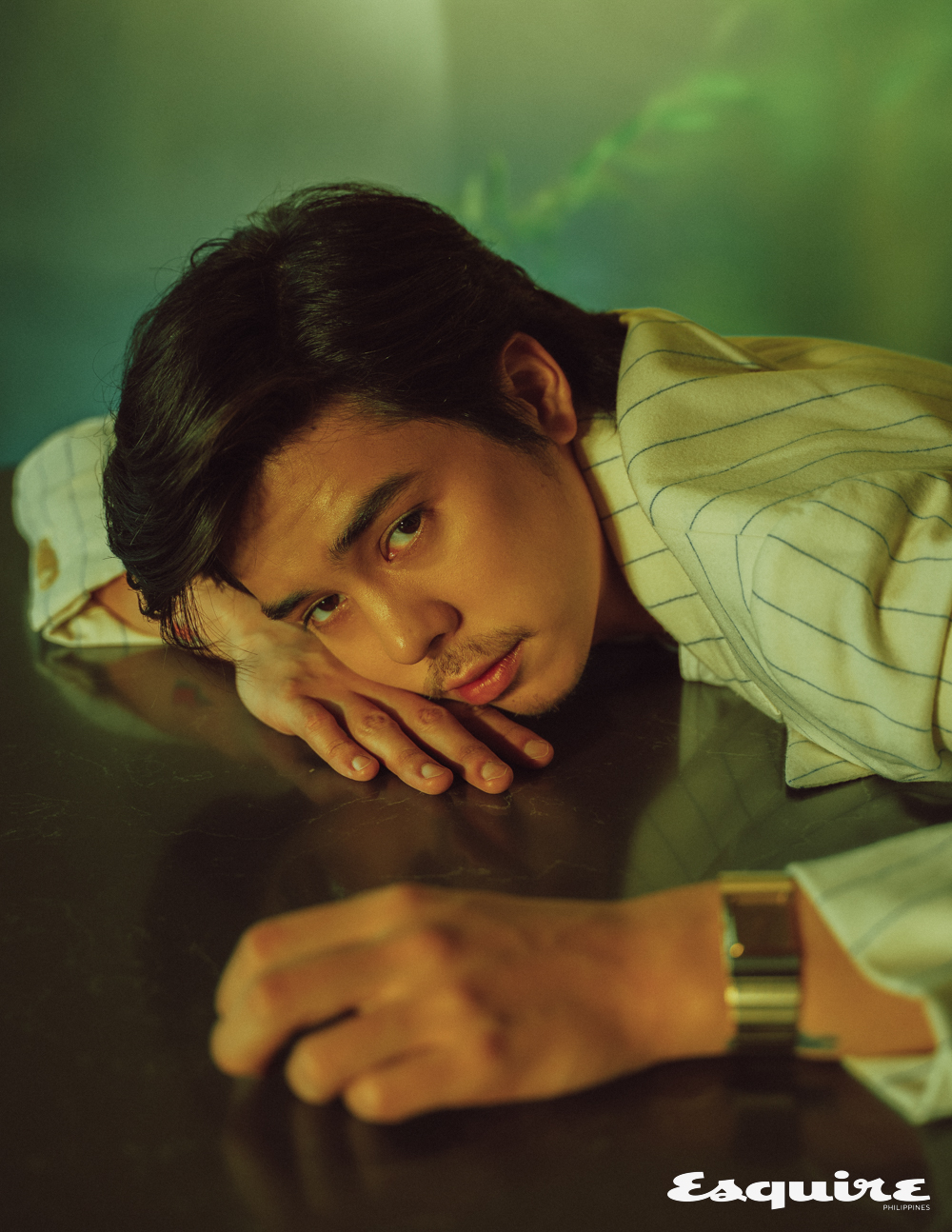
Can you tell us how you ended up becoming an actor?
I didn't plan to be an actor actually. My sister actually was the one who got called to do an audition for a film when I was young, so I had to go with her. She went there after school, and we shared the same car, so I tagged along. I waited for her, and I just sat there while she was doing the audition.
And then somehow the director was asking me, ‘Can you do the video too as well?’ And I was like, ‘Okay, why not, right? Since I'm here.’ So I did it badly; I think I failed. Then, I got a phone call. ‘We have a role for you.’ ‘What? Like, really? Pretty bad at it?’ He's like, ‘Just come and just try it out, whether it [will] work or not.’ And here I am, 13 years later on, still doing acting. That's how I started.
Do you remember what you did for that impromptu audition?
Well, it's actually a scene from a screenplay called SuckSeed. It's a comedy film about a teenage musician. So, it's a scene that the guy talks to the friend, I think. And I did the line wrongly, everything was out of place. But then it ended up that the character was supposed to be a loser guy as well. So that kind of worked out.
How do you think you have evolved as an actor since that audition, and then getting into all these movies and shows?
I think that with that film, I got super lucky because all the cast members were pretty close to me age-wise. You know, they're around 16, 17, 18. So it's like you go hang out with your buddies at the film set. So it's more like you get to see friends rather than work. That helped me transition from just being a student to doing work. You know, you don't feel like you do the thing. You feel like you're playing with your friends, and they capture it, and it works.
And then with that, I gained more experience as well as you do more film. And then I enrolled in a drama school and doing, like, full-on acting school with the first film. And, yeah, that's how I transitioned from that to what I have now.
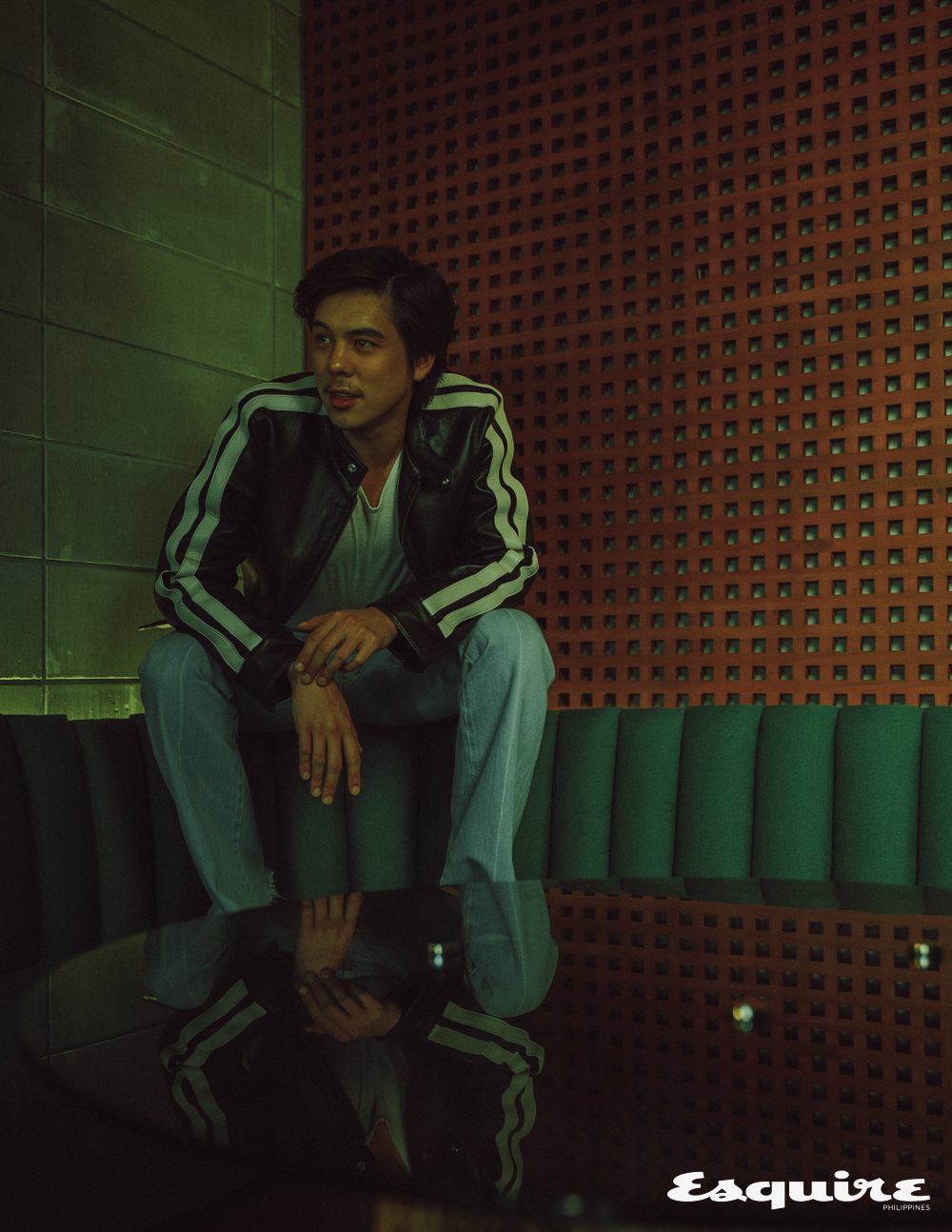
Which do you love more, acting or doing music?
It's different, you know. For acting, it's fun in a way that you portray [another] person, the other perspective. But for music work, it's more of you telling your own kind of story. It's a different viewpoint of telling the story. So I can't really say which one I like more. It's just that you put yourself in a different perspective and you see the world differently. It's kind of abstract, right?
Can you tell us about your creative process in making music?
Normally, I do film scoring. That's my main music work. We start with having the script. We read everything. Then we come up with a concept, like what we want to tell in the film. We work with the director, like, 'Okay, this is what we're going to be doing. This is how we think the screen is.' It's a back-and-forth conversation with directors. And with that, it will dictate how the instrumentation will go. For some of the films, it's more very high-conceptual. So that might be suited for a synthesizer, rather than the classical ways of doing music.
So it actually depends on the concept. We start with having a strong, really strong concept first. And then we'll go from there. Once we've got the concept, once we start doing some of the scenes in the film, we'll pick the key moments of the characters. Like the downfall of the characters or the happy scene. Then we'll try to write something up with that as a template. Then we'll check with directors again, this is how it is. You can put it into the editing process. Just try to put it as a backbone of the film. We'll adapt the rest according to how the actors have been acting and how they've been doing well in that particular scene. They might need more support in terms of the scoring to make it, acting-wise, more powerful. Yeah, that's how the creative process works.
It's a fun collaborative project as well. You know, you have to talk to all the actors, how they see the characters as well. So it's a good and fun way to learn about other people's thoughts.
Is it the same when it comes to your process in acting?
Yeah, I try to be collaborative]with the directors as much as possible, what I can bring to the table. How do I see characters as well? What should we do with it? I see the film as a blank canvas. You know, they each have their own colors. They help each other to paint. That's how it is. So, it's more like an informal process. We also talk on the phone. I talk to the other cast as well when I see something. I'm like, ‘Dude, this might work for you, I guess.’
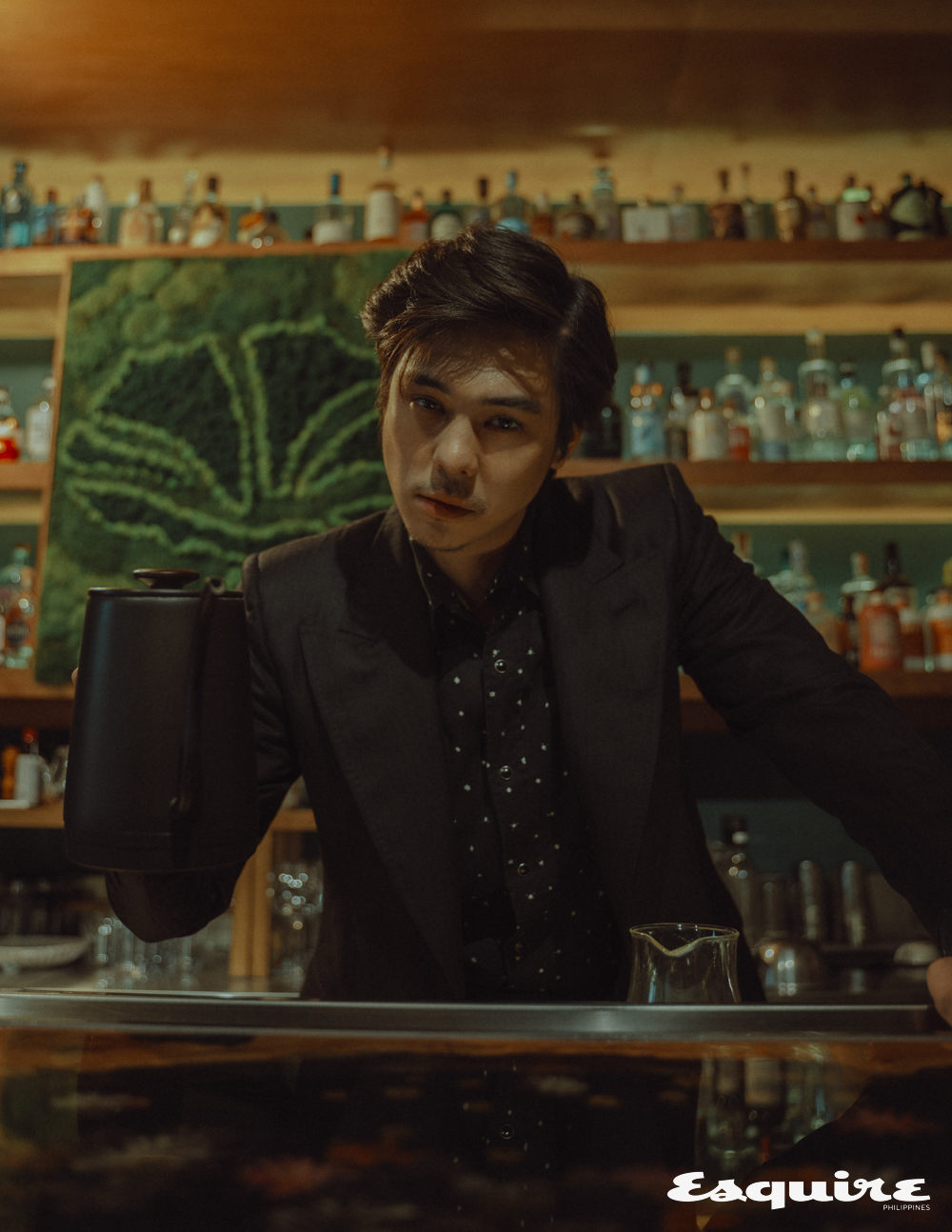
Aside from your creative pursuits, you also have your business. Can you talk us through how you ended up doing that?
Well, I started going to business school out of anger, actually. My dad wanted me to be an engineer, so I did the opposite thing. So I went to the business school without knowing what it is. My close friend co-founded a company with me. He said, ‘You should go to business school.’ And I'm like, ‘Alright, I'm going there as well.’ It's quite a lucky thing for me that I gambled to go there. I learned a lot more about the concept, like accounting and international trade work.
And with that, we found our company as a start, we did Potato Corner. He actually was the one who found the brand. He flew here to do a debate at the university. He called me one day and said, ‘Dude, check this out, Potato Corner. There’s a long queue here.’ I was like, ‘Okay.’ And I booked a flight. And I just flew here, went to the mall. I was like, ‘Okay. It should work for Thailand.’ The product quite matches us] We like the snack as well. Then we got the Potato Corner into Thailand. It's been seven years now, give or take. That's how it all started.
And with that, one of our partners as well, Nicko [Nicardo II Falcis], was talking to us about the beauty brand as well. We were like, ‘Yeah, that's kind of a thing.’ We want to bring Thai products here as well. Because we're known as a manufacturing country for pretty much the whole existence of Thailand. We do manufacturing cars. We're manufacturing everything. But we never get to do branding. We never get to sell our own products. So with that, we start to build a beauty company, a beauty brand. Then we bring it here. Just for people to try it out. That they would make good product as well. Just to let the world know.
Which came first, business school or drama school?
Business school. Drama school, I do it on the side. I officially do business school full-time. Drama school, I do it part-time.
My friend just talked me into doing business school. I'm very easy to get persuaded. The thing is, in Thailand at that time, business school is the one that announces that you get in before any other school. In my head, if I get accepted for the time being, then I don't have to go to school for a year. Without school, then we don't have to care about exams and stuff.
Let's talk about your newest project, The Believers, on Netflix. How was your experience in that show?
I just got a call from the director during COVID, during the lockdown period. He gave me a synopsis. I was really hooked. It's all about the culture in Thailand. It's about Buddhism in Thailand, and how corrupt it is. The religion by itself is not corrupted, but the people who are running it are the ones who are corrupted. We want to tell the stories about these people. We just want to make a film about how to make people question and how to make things transparent. The director himself is a practitioner of Buddhism. He went to a temple and started raising a question. How can we make it more transparent? How can we make it more transparent? How can people raise questions? That things should be as it is, rather than be opaque. After having listened to that, I was like, ‘Okay, let's do it.’ It really [has] good intentions as well. That's how the project started.
It's a good learning curve for me as well because I see a lot of mechanics that I've never seen before in religion as well. People donate, and they get tax deducted, so they add the zero without actually paying for it, and nobody's really looking into it. That's kind of mind-blowing as well.
As a business person, what are your thoughts about how characters in The Believers came up with a very unorthodox way to make money?
I mean, judging from the law in Thailand, they didn't say it's wrong according to the law because you didn't scam people, right? But morally, the thing is wrong. It shouldn't be exploited. People’s beliefs shouldn’t be exploited that way for personal gain. Because in the series, it's talked about how they use the donation money for their own. They have debt problems, so they don't want to pay off their debts, so they use that. So I think how they do it is not faithful. It's not the right way to do things.
That's how I see it, and when I look at it business-wise, I see it as it's not the right thing to do. I believe that, well, money is not wrong. It's just a vehicle to do something, but the intentions of it, that's made different, right? If your intention is wrong, it's wrong. It's all about intention.
As you’ve said, The Believers wants viewers to question the norm. What are the conventional beliefs that you’re questioning yourself?
I question that, in Thailand in particular, you're not allowed to question. I mean, curiosity is kind of wrong in our society in a way, but it started out from the school as well. If you start questioning the teacher, then you get punished for questioning. If there are any other solutions out of whatever the teacher said and if you start questioning that, of course, you get told off. Sometimes they call your parents as well. So you're embedded in a system where you don't question anything.
I think that's wrong in the world. You're supposed to question. You're supposed to figure things out. You're supposed to ask what's actually out there. Because without questioning, there's nothing new out there. And I think as an artist, I'm always trying to figure out how to question better and why we are not allowed to question things.
The Believers is all about faith and beliefs. Do you mind if we ask what is your religion?
Well, according to the ID card, it's Buddhism. I went on to become a monk as well. But as of now, I kind of believe in all kinds of religion. I read the Bible as well. I practice Buddhism as well. I kind of do all kinds of things. Because I think every little bit of this and that is always good. All religion is good because it wants you to become better. So I started to learn little bits about this and that.
For example, I learned from Christianity how to be selfless, how to love other people better, and how to believe in something. And in Buddhism, it's all about how you can be self-aware of yourself and be calmer. And in Islam as well, it's a kind of very selfless way of looking at life as well. So I learned a little bit of this and that and combined it into my own thing.
What should viewers be most excited about in The Believers?
First of all, I think it's a very local context. You get to see how the Thais are. Because as a tourist, when you go to a temple, it's always going to be localized. Everything is a façade. But this is more like at the back of it. We show how it is, how people actually are in that setting, and how the monks actually behave as well. So you get to see an in-depth context of our culture. That's a starting point.
And I think the second thing, which is the most important thing, is you get to start questioning things for yourselves as well. Personally, I believe that all religion is good. The main goal of religion is to make us better as a human being. To have faith in something is not wrong. At least you have a moral compass; you have guidance about the ways of life. But people who ruin that, make things corrupted, make religion kind of shady. There's a lot of news about monks in Thailand as well. I've seen a lot of news about other religions as well. It's the people, not the religion, that is wrong. And I think people will get to have guidelines on how we should question things and how we should monitor them. Because with monitoring, things will become transparent. And that's what we want to talk about: how we get things transparent and how we can make religion good again. So I think you'll get that.
This conversation has been edited for clarity and length.
Creative Direction: Igi Talao
Photography: Stephen Capuchino
Grooming: Miz Raffy
Hair: Gabriel Villegas
Location: Bar Flora
Special thanks to Nicko Falcis, and to Pia Campos and Gerard Gotladera of W Talent Management.
.png)
