
BSP Defends PH Gold Sales: ‘We Took Advantage of Higher Prices and Generated Additional Income’

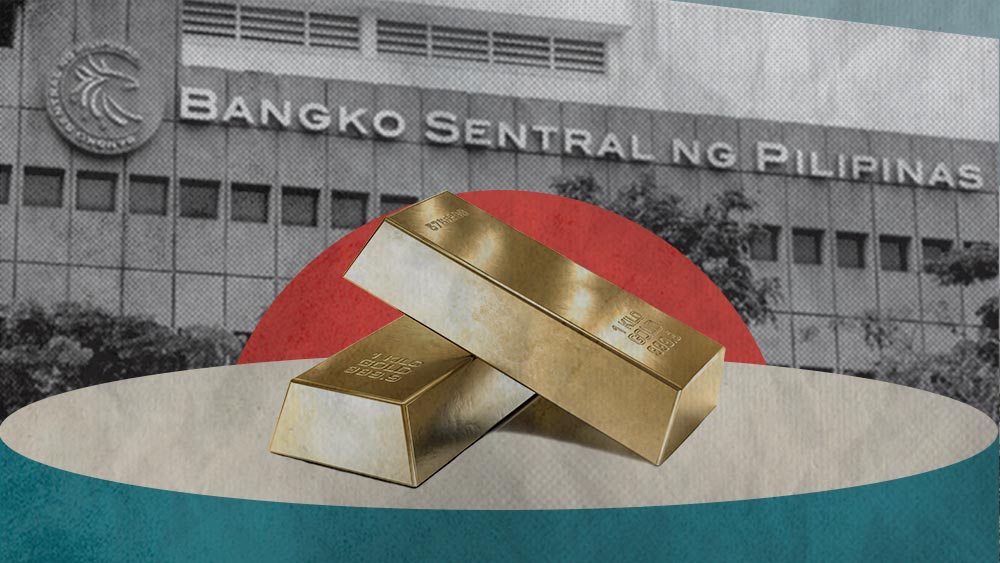
The Bangko Sentral ng Pilipinas has issued a statement defending its gold-selling activities that has led to the Philippines topping the list of countries that have sold the most gold in the world for the first half of 2024.
The BSP said it “took advantage of the higher prices in gold in the market and generated additional income without compromising the primary objectives for holding gold, which are insurance and safety.” The selling was part of the BSP’s active management strategy of the country’s gold reserves.
While the country was found to have sold the most gold in the first six months of 2024 according to the World Gold Council, the BSP said the country’s GIR or Gross International Reserves, which partly includes the country’s gold reserves “has remained robust, with the end-August 2024 figure rising to $107.9 billion from $103.8 billion as of end-December 2023.”
ALSO READ
Today I Learned: One of the Country’s Largest Gold Mines is in Nueva Vizcaya
The BSP issued the statement after Esquire Philippines published the report based on data collected by the brokerage aggregator BestBrokers.com from the WGC. According to the study, while the country’s gold reserves increased by 1.33 tons last year, the country sold nearly 25 tons between January to June, decreasing the country’s reserves by 15.69 percent to just 134.06 tons.
For comparison, the country which placed second on the list, Thailand, sold 9.64 tons of its gold, which represented about 3.95 percent of its reserves, during the first half of the year.
Uzbekistan, which placed third in the list, sold 6.22 tons of gold, or about 1.67 percent of its reserves during the same period.
According to the BSP, the country’s GIR level “provides adequate external liquidity buffer and is equivalent to 7.8 months’ worth of imports of goods and payments of services and primary income.”
“It also represents about 6.0 times the country’s short-term external debt based on original maturity and 3.8 times based on residual maturity,” it added.
An economist weighs in
RCBC chief economist Michael Ricafort also weighed in on the BSP’s decision to sell a portion of the country’s gold reserves, calling it a “prudent investment decision.”
“The BSP is known as an independent and professional institution with integrity,” he said in a phone conversation with Esquire Philippines. “It has had a good track record for many years. It’s also autonomous. Walang ibang branch ng government na pwedeng magdikta sa moves nila. This was purely a business decision.”
Ricafort explained that it seemed only logical for the country to cash in, with the price of gold at record highs, and that the BSP leadership has been talking about this policy of selling gold in the world market for years.
“Compared to how much (gold) was 30 years ago, which was around $600, the price now is, what over $2,000 (per ounce)?” he said. “So this was purely a selling program to monetize (our holdings). Hindi pa man bumubulusok yung price (of gold) meron nang (selling program). And now that gold is at record highs, saying yung kita. And hindi natin alam kung hanggang kailan ito at this price.”
Gold holdings make up about 10 percent of the country’s GIR, which also includes the country’s US dollar value of foreign investments, foreign exchange holdings, contributions to the International Monetary Fund. Ricafort said that, unlike other countries, the Philippines is also a top gold producer, and is believed to be third in the world in terms of known gold reserves (and fifth in nickel reserves).
“The BSP is simply managing its gains,” he said. “Kumita na tayo, now that sobrang taas ng value ng gold ngayon. Who knows, those who are waiting to sell, baka di na abutan yung value ng gold at this level; baka masunog na yung mga latecomer.”
Ricafort further explained that the ongoing conflicts in the Middle East, specifically the one involving Israel and Palestine, as well as the one involving Russia and Ukraine, are helping drive the price of gold up in the world market as investors look to the traditionally “safe haven” asset. The country’s GIR is also currently at levels around six to eight months’ worth of imports, which is double the international threshold of about three to four months.
“Essentially, yung BSP marami silang hawak (na ginto), kaya sila nagbenta,” he said. “They sold because they have plenty of reserves. So it’s not a problem. They’re just managing the success (of the investment). It’s effective monetary policy.”
