

The Origins of Budots and Its Sharply Hypnotic Staying Power

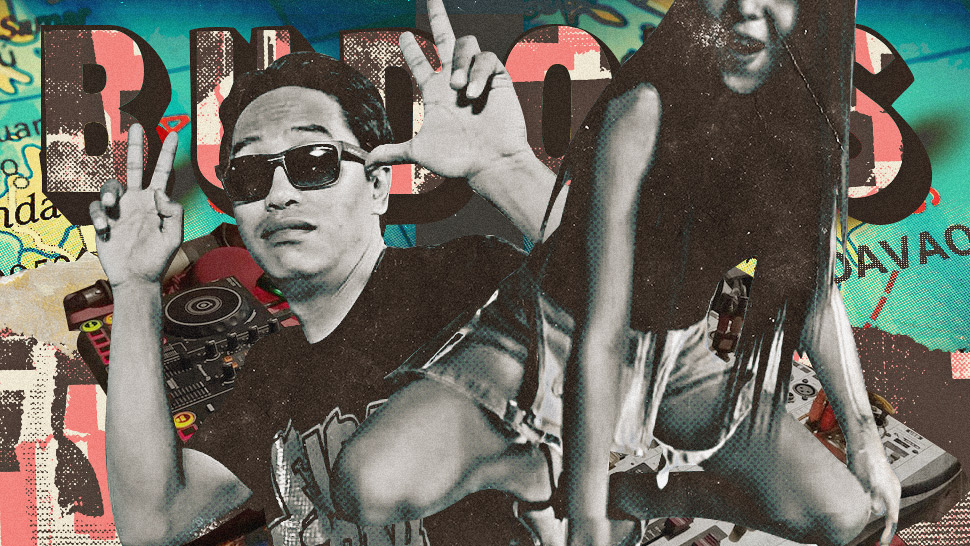
From shattering eardrums during jeepney rides to invading our consciousness via campaign advertisements for certain candidates, Budots has invaded the deepest corners of the Filipino psyche. We oftentimes take the song and dance genre for granted, chalking it up to just another craze like Spaghetti and Otso-Otso.
But Budots is actually a grassroots movement. Some might even argue that it is a successor to the long line of cultural folk dances. And whether we want to admit it or not, it looks like it's here to stay.
Budots first entered mainstream pop culture in 2008, when Pinoy Big Brother Celebrity Edition 2 grand winner Ruben Gonzaga performed the dance steps on national television. But even before that, the dance can be traced back to its roots in the southern part of the Philippines, specifically Davao. That's probably why it wasn't a surprise when we saw President Rodrigo Duterte and his family dancing to it online.
Residents of Camus Street, Davao City dancing to Budots back in 2018, the place where the phenomenon was arguably born. It was at a computer shop here that Sherwin Calumpang Tuna mixed the sound back in 2006.

According to this undergraduate thesis, Budots reflects Davaoeño self-expression and has become a point of regional pride. In Bisaya, budots is slang for slacker. Its genesis can be attributed to "rugby boy" culture, too. Burot in Cebuano, after all, means bulge, inflate, or puffy.
Budots is its own subgenre of electronic dance music. It can be characterized by its piercing whistle hooks that complement the mesmerizing bass and thick percussion. Blip synthesizers are either tonal or melodic. It's catchy as hell.
Meanwhile, to do the dance, we only need to wriggle our hips, assume a squatting position, and bring our knees closer. The hands and torso should move in a swaying motion that points out from our noses. Of course, there are different variations to it, as it is usually improvisational. Anybody can freestyle it, after all.
Budots gained even more popularity when the Davao-based dance group Camusboyz uploaded a series of their performances on YouTube and Facebook in the early 2010s. While America had "Teach Me How To Dougie" and Korea danced to "Gangnam Style," groups in the southern region of the country had Budots. It would gain national attention when Jessica Soho featured it on Kapuso Mo, Jessica Soho in 2012.
In the 2019 documentary Budots: The Craze courtesy of DaangDokyu and creators Jay Rosas and Mark Limbaga, internet café manager Sherwin Calumpang Tuna, commonly known as "D.J. Love" or "Lablab" is credited as the man behind the legend of Budots.
Tuna had taken from his own environment. He mixed organic local sounds and house music, which eventually became the Budots that we know today. Even now, he consistently uploads new Budots mixes on his YouTube channel. He's also a one-man team, functioning as a musician, director, editor, and promoter.
Unfortunately for him, Tuna has been a victim of plagiarism and various copyright violations. The documentary does a great job of recognizing Tuna's role in the creation of Budots. It was even nominated for "Best Documentary" at the 43rd Gawad Urian Awards.
Also in 2019, we saw brands like Lucky Me! Pancit Canton use the song for its advertisement on the "No Drain Cooking" method. And yes,it can be argued that Sen. Ramon "Bong" Revilla, Jr. won his Senate seat by being a Budots poster boy with a campaign that heavily featured the song. Some might even say it would be hard to deny the fact that Budots didn't have a hand in increasing President Duterte's popularity.
Some ethnographers speculate that the dance movements are derived from the Badjao people's own cultural dances or the Tausug's Pangalay. Even Tuna cites the Badjao as an influence in his work. Others say that some aspects of the motions are reminiscent of our native Filipino martial art practice of Kuntaw. However, these claims are still inconclusive.
As with any trend, Budots has fallen victim to parody and resistance. Nevertheless, we're probably going to hear it for decades to come. If we think about it, Budots is a cultural phenomenon that speaks greatly of Filipino expression and local genius. It's a cultural export from Davao that has been elevated to a national movement of sorts. These aren't crazy proclamations.
A folk dance, after all, can be defined as a celebration of cultural roots of a particular people. Give Budots another 20 years and we might even hear about it being taught in our curriculum. We have Tinikling, Itik-Itik, and Cariñosa. How about Budots?
Sources:
- Budots as a Reflection of Davaoeño Identity by Adrian P. Cortez
- Budots: The Craze by Jay Rosas and Mark Limbaga
- Sherwin Tuna YouTube Channel
