

A Short History of Dogs Playing Poker

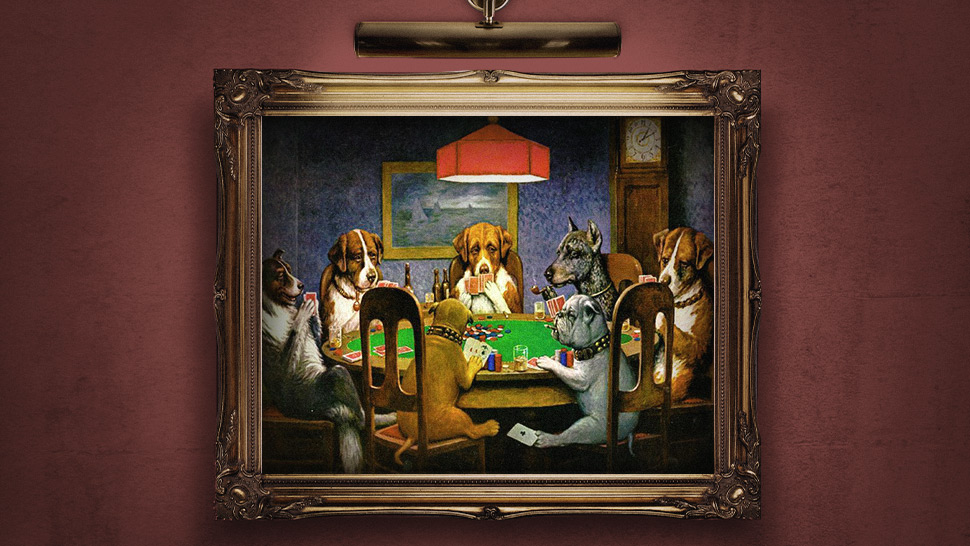
There are a few things we can expect to see in a vast majority of Filipino households: an altar with an image or figure of Jesus or Mary, framed photographs of the family members, laminated diplomas and medals on the wall. And perhaps a wall hanging of some dogs playing poker or pool.
For some reason, the image of canines engaging in very human activities has resonated so much with Filipinos that it’s not uncommon to see a wall carpet or a poster of it sharing space with Jesus or wedding photos of mom and dad on our walls. But very few of us really know anything about it.
Here’s a brief history of that painting so you can impress your friends the next time you encounter it.
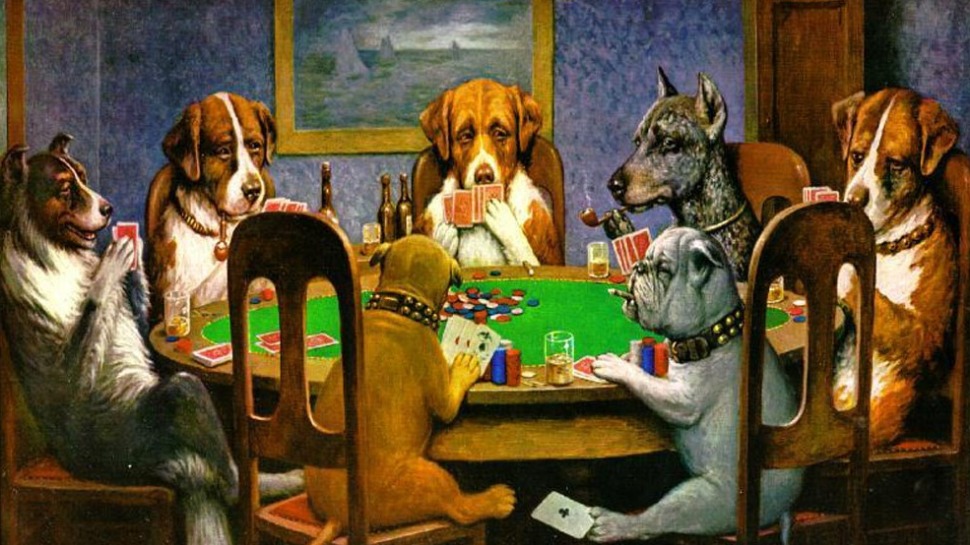
"A Friend in Need" is the most popular of Coolidge's Dogs Playing Poker series
The original artist behind “Dogs Playing Poker” is an American painter named Cassius Marcellus Coolidge. He was born in 1844 and although he never had any formal art training, he was talented enough that he was able to sell his drawings to publications at the time.
Many sources say it was Coolidge who invented so-called comic foregrounds, or those amusement park attractions where you take photos with your face over a funny cartoon body.
In 1894, Coolidge created his first painting of dogs playing poker. No one knows exactly where he got the idea for it, but some say he was inspired by the works of masters like Caravaggio, Georges de la Tour and Paul Cezanne.
Dogs Playing Billiards
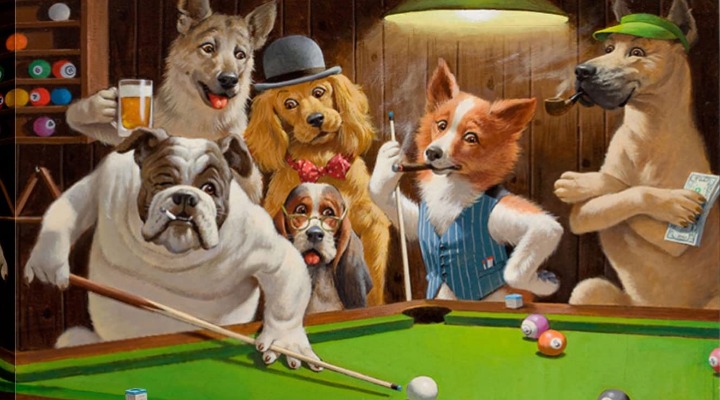
In the early 1900s, Coolidge was commissioned by Brown & Bigelow, a publishing company, to create a series of paintings to advertise cigars on posters, calendars and prints. Going back to his theme of anthropomorphized dogs, Coolidge created a total of 16 artworks for this series, expanding the theme to have the dogs doing everyday, human actions, such as reading the mail, testifying in court, playing baseball, and even ballroom dancing.
But undoubtedly, dogs playing poker was a favorite of Coolidge, who made no less than nine paintings following this theme. The most popular is one entitled “A Friend in Need,” which depicts a bulldog helping his friend cheat by passing a card on to him.
Coolidge’s art became very popular, inspiring countless prints and imitations that have made their way to bars, restaurants, offices, and households worldwide. They’ve also been referenced in many movies and TV shows such as The Thomas Crown Affair, Police Academy 2, The Acocuntant, Cheers, The Simpsons, and many other. However, they were not considered fine art the way the paintings of Da Vinci, Dali, or Andy Warhol are. In fact, they’ve become the ultimate example of “kitsch,” or tacky, garish, humorous art that is accepted for what they are and does not invite critical thinking.
Poker Game

Still, for art that’s pretty much looked down upon, Coolidge’s work does command a pretty penny. In 2006, two of his paintings fetched a record $590,400 (nearly P30 million).
So why has Coolidge’s art endured and been accepted by millions around the world for over a century? Critics and historians seem to think that it’s because his use of animals is the first point; most people like pictures of dogs and cats (which explains our endless fascination with modern-era memes featuring our furry friends). According to some, his art is “weird without being alienating,” and the fact that many of them feature a poker game, where there’s an underlying tension in such a serene scene, also helps connect to many veiwers.

“Coolidge’s poker-faced style is still engaging today,” a 1973 article from American Heritage says. “His details of expression, clothing, and furniture are precise. Uncannily, the earnest animals resemble people we all know.”
Plus, of course, dogs playing poker is just funny.
