
Meet Esteban Luiz Sampzon, a Revered 18th-Century Filipino Carver of Religious Art in Argentina

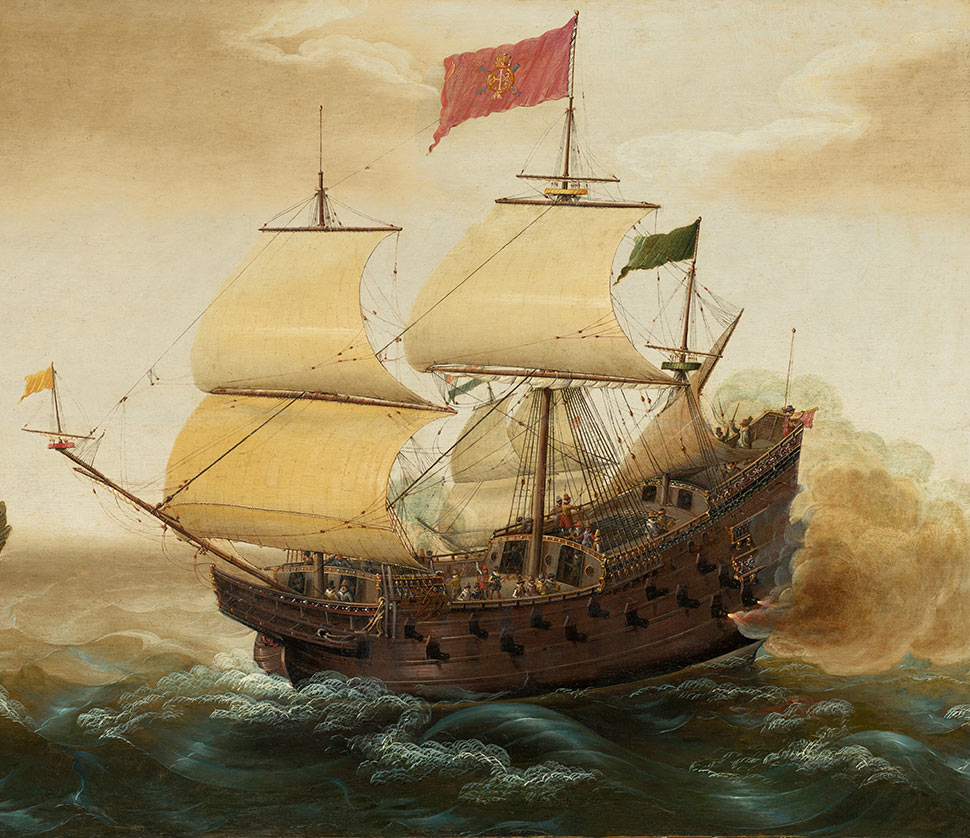
Thanks to the Manila–Acapulco Galleon Trade, Manila became one of the epicenters of commerce in the 16th century. The East and the West were bridged through these routes. Goods and spices were exchanged, and so were ideas, knowledge systems, and customs. Filipinos (or those who were recognized as inhabitants of the islands during what was arguably the infancy of this nation's patrimony) in Manila found themselves situated in what was one of the first global cities during that period.
By this time, Spanish colonization led to groups of Spaniards and Mexicans settling in the Philippines. It wasn't uncommon for Filipino craftsmen and traders to go on long voyages elsewhere, too. However, most of their journeys have either been forgotten, unverified, or undocumented for many years. Unfortunately, many stories of Filipino migrants at this juncture in our history have been lost to time. But there are some of them that we can't just ignore.
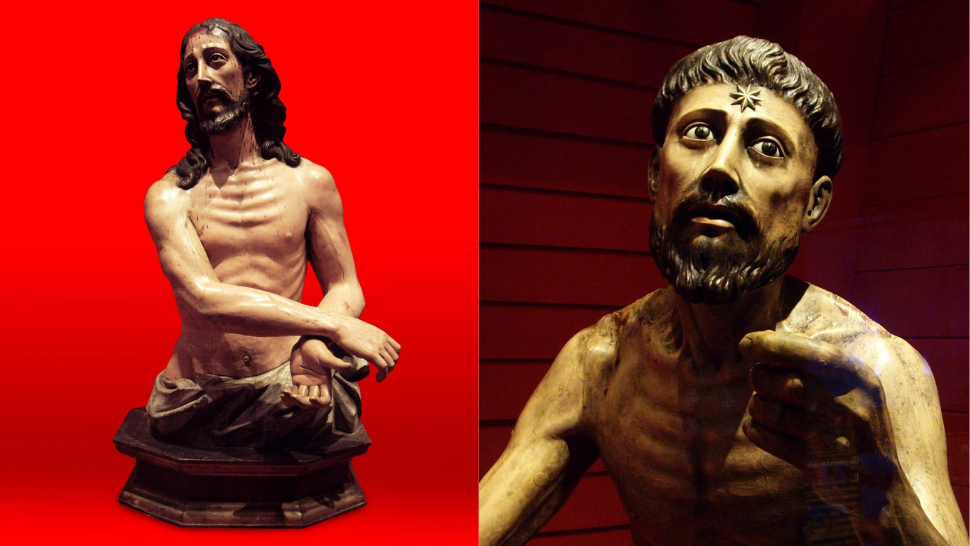
In Argentina, for instance, a certain 18th-century Filipino sculptor named Esteban Sampzon, an early overseas Filipino, made it big as a master carver of religious art. He actually still has a lot of his pieces on display in museums across Buenos Aires and beyond.
As a matter of fact, at the Museo de Arte Hispanoamericano Isaac Fernández Blanco - Sede Palacio Noel, or Museo Fernández Blanco, Sampzon's carvings are displayed among the rest of the best of centuries-old Hispanic art. And yet, most of his history, from his upbringing and eventual move to Latin America, remains relatively unknown.
The Galleon Trade united the Americas, Europe, and Asia.
ALSO READ:
The Anguish of Mythmaking and Entanglement in Julie Lluch's Chronicles on Skin
This Cebu-Based Artist Makes Breathtaking Lifelike Sculptures Out of Driftwood
Esteban Sampzon's Move to and Life in Buenos Aires
Sampzon's work exhibits a topography and calmness similar to carvings that could be found in 17th-century Chinese-Filipino workshops, according to the book Art of Colonial Latin America by Gauvin Alexander Bailey.

Born in Malabon on December 25, 1756, Esteban Luiz Sampzon was the son of Mateo Samzon and Maria de la Concepcion, who were of Mestizo Sangley (Chinese mestizo) background. He was baptized on December 28, 1756, by Fr. Eusebio Polo, with Luis de Aquino as his godfather. His baptismal record can be found in the San Bartolome Parish in Malabon (Book 3, Page 98, Line 14). The family resided in the sitio of Bocaui in Malabon.
From what most sources gather, Sampzon had already been known in Buenos Aires as a carver from 1773 to 1780, under the Convent of Santo Domingo. Much like the journeys of other Filipino migrants in America, he was highly likely to have come to Rio de la Plata through the Manila Galleon.
In the book Arte en América y Filipinas by historian Enrique Marco Dorta, Sampzon was apparently identified as a Filipino living in Argentina through a list of residents in the area. The carver referred to himself as "escultor de profesión y de condición indio de la China" (roughly translating to "sculptor by profession, a native of China"). In this context, “Indio de la China” refers to a Chinese native or someone of Chinese descent, rather than Indo-China, reflecting terminology used during the colonial period.
He was married to the Creole Bernardina Hidalgo once he settled in the city, and had several children with her. The couple would eventually move to Córdoba between 1787 and 1807. Around this time, he had also been hired by the Dominican Order to carry on with his art practice.
It wasn't always smooth sailing for Sampzon in Argentina. In 1788, he was wrongly convicted in a lawsuit. Under the orders of then-Mayor Francisco Antonio González of Córdoba, he was arrested, and a trial followed before the Royal Audiencia. By the Laws of the Indies, he had the right to legal assistance despite the mayor's insistence on the sculptor's caste standing.
Sampzon ended up winning the case, receiving some compensation. The fact that he was a respected carver of religious imagery helped him in the eyes of the court. In colonial court documents, Sampzon was called "Indio de la China." He was also said to have declared himself a Lieutenant of the Mestizos Battalion.
He would spend the remaining years of his life after the ordeal living peacefully between the cities of Córdoba and Buenos Aires. Sampzon continued working on religious art up until his illness and eventual demise in 1830.
Following the Traditions of Baroque Masters
From the Museo Fernández Blanco to the Basilica de la Merced, Sampzon's works possess characteristics of the Baroque tradition, following the lineage of sculptors like Juan Martínez Montañés. His carvings have a rhythmic understanding of anatomy, facial placidity, and fluidity that seemed passé during this period in history. In the face of Neoclassicism, Sampzon adhered to theatrical Baroque principles. His distinctive realistic treatment of the figures was also noted by art historian Héctor Schenone.
Among some of his most famous oeuvres are "Cristo de la Buena Muerte (Christ of the Good Death)"; a half-naked image of the founder of the Order of Preachers, a saint kneeling with a star disciplining himself. At the Basilica de la Merced, we can find pieces like the "Christ of Humility and Patience" and "San Judas Tadeo."
From the museum's late 18th-century collection.

In a travel entry written by MH (the writer's pen name) in the blog, DIPLOMATICA ET CETERA, it talks of the experience of seeing Sampzon's work up close. The author states:
"Perhaps it might not be in evidence to the casual observer, but it is also a face with identifiable 'East Asian' features: the nose is fine, the cheekbones high. This leads me to think that Esteban may have been of Filipino-Chinese descent– after all, numerous missionary chronicles in the days of evangelization spoke about the skill of the Chinese in sculpture. That he is described as Indio de la China by some sources is also telling. This is in no way proof positive; but one is reminded of Bernini plunging his hands into the flame and studying his reaction in the mirror."
In 1947, researchers found a note from the year 1800 that stated that "one hundred and nine pesos was paid to the sculptor" for the image of Santo Domingo in Penitence for the Ante Sacristia.

Sampzon has about 20 works in churches and museums in Buenos Aires, Cordoba, and San Luis.

South America has never had a large Filipino population. In Argentina, it's rare to see Filipinos walking the streets. So it does make you wonder how a Filipino migrant in the 18th century not only found a way to thrive there but also to be recognized by the Dominican Order and art historians alike. While Sampzon's name doesn't get much recognition, he will always be remembered for his contributions to colonial Hispanic art—and by extension, as one of the earliest Filipino sculptors to do so on foreign soil.
Sources:
- "Esteban Sampzon. A Filipino sculptor in the Río de la Plata" in the magazine Eadem utraque Europa, Gabriela Braccio (2009)
- Argentine art, four centuries of history (1600-2000), Jorge Lopez Anaya (2005)
- ART OF COLONIAL LATIN AMERICA, Gauvin Alexander Bailey (2005)
- POWER + FAITH + IMAGE, Ayala Foundation, Regalado Jose and Ramon Villegas (2004)
