
How to Spot a Lie (And Not Just in the Senate Hearings)

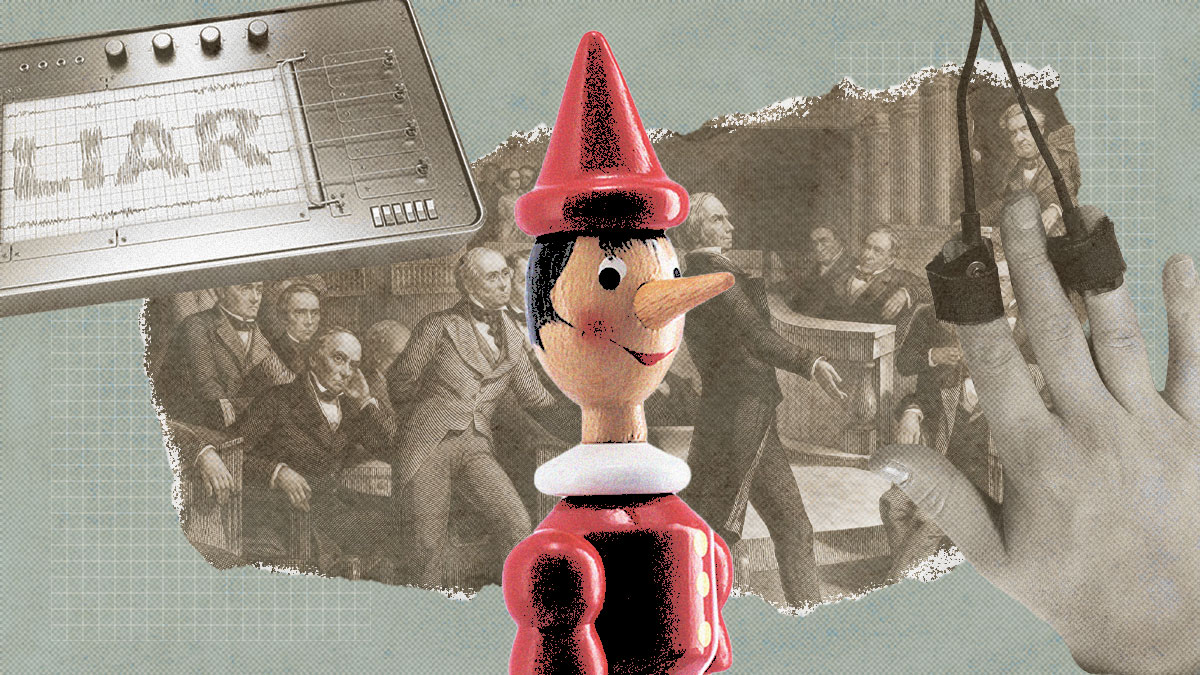
Everyone lies. From the toddler swearing they didn’t touch the cookie jar with crumbs all over their face, to the friend who says they’re “five minutes away” while still in the shower, to contractors and politicians involved in the Department of Public Works and Highways (DPWH) corruption investigations at the Senate and Congress hearings.
But here’s the twist: while words can be rehearsed, our bodies and voices are much more resistant to script. Psychologists call this “nonverbal leakage” — the little betrayals that seep out in tone, gesture, or facial expression. Think of it as the body’s version of a whistleblower.
ALSO READ:
How a Nation's Frustration Found its Voice on the Streets
In Bulacan, Flood Is a Way of Life
So, how do you tell when someone’s lying? Let’s break down the cues — and yes, you can remember these the next time you watch the hearing or when reviewing videos of their speeches.
The Body Doesn’t Lie
Research in kinesics, the study of body motion, shows that liars often struggle to keep their movements consistent with their words. Fidgeting, self-touching, or stiff, unnatural posture are all common giveaways.
Then there’s eye behavior. Contrary to pop myths, liars don’t always avoid eye contact — sometimes they overcompensate, staring too intently to appear “sincere.” In hearings, it’s the difference between the engineer who can’t stop blinking while denying kickbacks and someone who locks eyes with the panel a little too dramatically, like a telenovela villain declaring innocence.
The Voice Betrays
If the body twitches, the voice cracks. Studies on speech prosody — the rhythm and pitch of speech — show that when people try to sound trustworthy, they often raise their pitch and use more vocal variety. But strain creeps in: unnatural pauses, shaky intonation, or rehearsed voices.
That’s why “I categorically deny!” shouted in a trembling voice often lands more like bad karaoke than convincing denial. A confident speaker, whether a whistleblower or a friend telling you they did feed the cat, usually speaks with a smoother rhythm and fewer vocal hiccups.
The Face as a Traitor
Even the most controlled testimonies can’t always hide microexpressions — those fleeting flashes of emotion that slip out before someone has time to suppress them. A flash of contempt, a suppressed smirk, or a flicker of fear can betray more than five minutes of verbal denial.
Watch closely: that tiny upward lip curl right after a testimony or a speech may be the face’s way of saying, “Good luck believing this.”
Cultural Filters Matter
Lie detection isn’t universal. In the Philippines, for example, cultural habits complicate the cues. A downcast gaze, softened tone, or plaintive voice can be signs of respect and humility — or they can be part of a performance that invokes awe or pity.
This is why contractors, engineers, and politicians sometimes sound like they’re auditioning for a teleserye: the delivery is part of the cultural script, and separating sincerity from theater takes careful listening.
Everyday Applications
Before you start side-eyeing everyone in your life, remember: stress behaviors don’t always equal lying. People fidget, blink, or stammer for many reasons — nerves, personality quirks, or because they’re on live television.
The key is inconsistency. Are the words aligned with the body, voice, and face? Does the tone of denial fit the gravity of the claim? Are the gestures natural or overcompensating?
Whether you’re listening to a friend’s excuse, a coworker’s explanation, or an engineer explaining why public funds vanished, the trick is to look — and listen — for when the story and the signals don’t match.
The Takeaway
Humans may never be perfect lie detectors. But we can sharpen our radar by tuning into the body, voice, and face. And when you watch the next hearing, remember: the real testimony isn’t always in the microphones — sometimes it’s in the trembling pitch, the darting eyes, or the smirk that slips before the cameras cut away.
Because in the end, the words may say “no,” but the body often says “yes.”
References:
- Danesi, Marcel. Understanding Nonverbal Communication: A Semiotic Guide. Bloomsbury Academic, 2022.
- DePaulo, Bella M., et al. “Cues to Deception.” Psychological Bulletin, vol. 129, no. 1, 2003.
- Ekman, Paul. Emotions Revealed: Recognizing Faces and Feelings to Improve Communication and Emotional Life. Henry Holt and Company, 2003.
- Ekman, Paul. Telling Lies: Clues to Deceit in the Marketplace, Politics, and Marriage. W.W. Norton & Company, 2011.
- Givens, David B., and John White. The Routledge Dictionary of Non-Verbal Communication. Routledge, 2021.
- Goffman, Erving. The Presentation of Self in Everyday Life. Anchor Books, 1956.
- Maltezou-Papastylianou, Constantina; Reinhold Scherer; and Silke Paulmann. “Human Voices Communicating Trustworthy Intent: A Demographically Diverse Speech Audio Dataset.” Scientific Data, vol. 12, article 921, 2025.
- Vrij, Aldert. Detecting Lies and Deceit: Pitfalls and Opportunities. Wiley, 2008.
Rae Francis Quilantang is a communication faculty member and research fellow at the University of Santo Tomas. He has taught communication theory, research, and media studies for more than a decade and is the proponent of the Human-AI Interaction Outcomes (HAI-IO) Model, a framework for understanding human-AI communication.
Beyond academia, Francis brings practical insights from his years as a news anchor, producer, and director in Philippine media. His work explores human communication in its many forms — from the voices we trust to the body language that betrays us.
