Reclaiming Life After the Marawi Siege Through Dance

Within a month of the Marawi Siege in 2017, around 360,000 people in and around the conflict's epicenter were displaced. More than 17,000 families remain as such even as late as 2022. Most of Marawi's old residents spend their days mostly in transitory sites in neighboring provinces while others have made homes in makeshift residential settings in Mindanao.
Unfortunately, government compensation wasn't enough to cover the damages to the properties caused by the battle. The Marawi Compensation Board's real estate assessment had appraised the homes a little too low, according to dissenting residents. In 2024, roughly 80,000 people, or about 40 percent of Marawi's total population, still cannot come back.
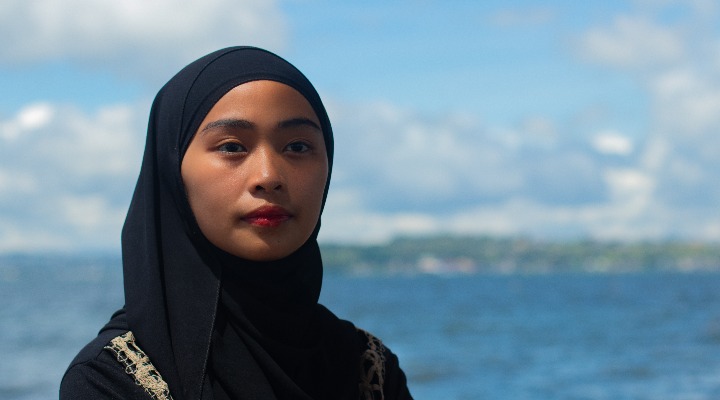
When Islamic State militants laid siege to Marawi, Sanira was just 13 years old. In the middle of that chaos, her family would find refuge in the nearby municipality of Ditsaan-Ramain. At the time, the young girl couldn't fully grasp the severity of the situation nor could she process her emotions.
Recruitment by armed groups. Alarmingly, 11.4 percent of Plan International's respondents reported being approached to join or support armed groups.
"The siege was a nightmare I'll never forget—the explosions, the screams, the cries, the gunshots, the ashes, the destroyed buildings, the blood—it was all so terrifying. Fear and sadness consumed me," Sanira recalled. "But as the eldest daughter, I knew I had to be strong for my siblings. The experience during the siege has shaped me profoundly."
Much like the rest of her family, Sanira is classified as an "Internally Displaced Person," and would learn to adapt to her new environment soon after. Her parents struggled to make ends meet, she lost friends to the battle, and the young girl's education was in peril. Of all things, she had been given the burden of having to carry the collective grief of the family. "I was just a child," she said. "I didn’t know how to cope with the change in environment or the loneliness of having no friends."
In the 2024 State of the World’s Girls report, global child rights and humanitarian organization Plan International estimates that roughly 27 percent of Filipino youth miss school primarily due to conflict. Like Sanira, many young girls in the country are forced to flee their homes and subsequently need to work to provide for their families.
The emotional toll on displaced youth, on the other hand, is just as significant. About 34 percent of the study's respondents say that they have trouble sleeping. On top of that, approximately 34 percent of them experience constant worry while another 33 percent live in a tense state.
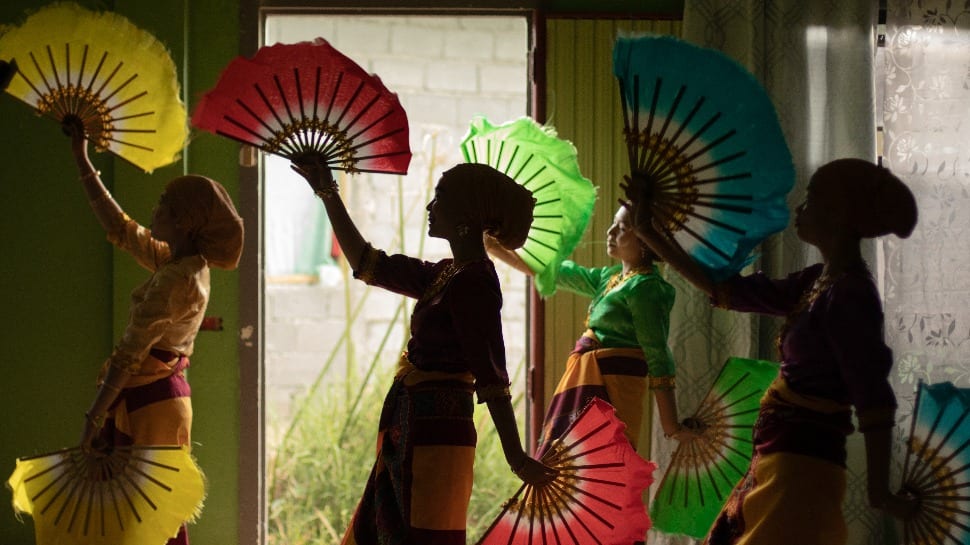
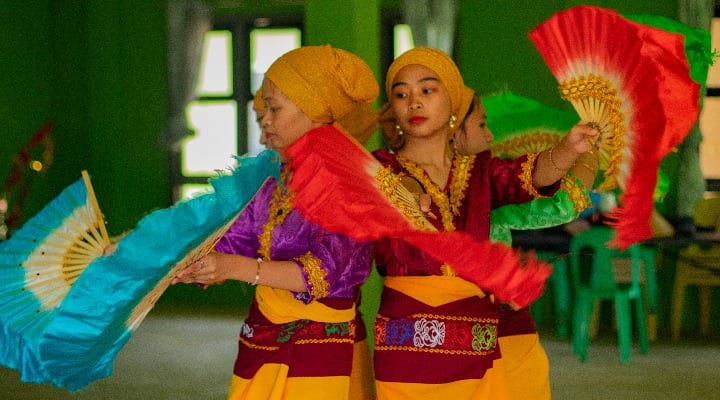
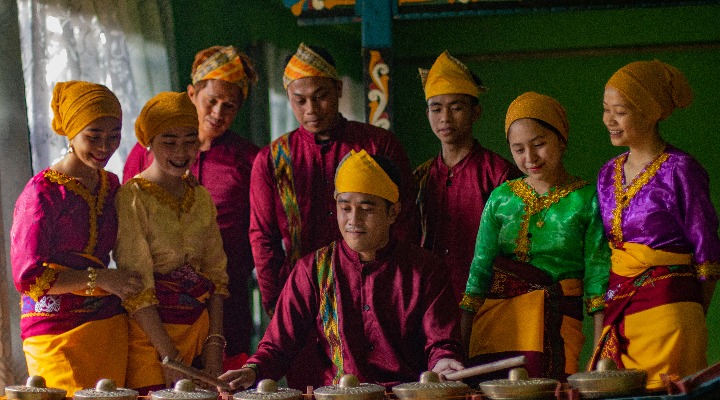
The Kalombayan sa Ramain Meranaw Cultural Troupe.
ALSO READ:
An Unsung Hero: The Sniper of Marawi
In Sanira's case, the drastic shift meant she would also need to build new connections. She inevitably blended into the diverse tapestry of Ramain as both a survival tactic and a means of establishing a new identity, reconciling the trauma of the whole ordeal.
Right in the middle of this movement, she got acquainted with the Kalombayan sa Ramain Meranaw Cultural Troupe, formerly known as the Ogop Ka Youth Organization. Composed of students, out-of-school youth, farmers' children, and IDPs, the organization's donations fund scholarship grants for its members. "Performing has become my lifeline. It helped me cope with the trauma of the Marawi siege," Sanira notes.
She describes joining the cultural troupe as a "game-changer." It's a way to support herself financially, contributing to the family's needs. These groups, after all, raise funds for scholarships for Ogop Ka Youth members all the while allowing them to celebrate their stories.
From dances like apir, malong, sagayan, and singkil to performing with traditional instruments, each artistic expression showcases the richness of Maranao cultural heritage. "I don't want the next generation to be unaware of our past," Sanira says. "Our roots, our history could disappear. I feel responsible for preserving our identity by learning our traditions and sharing them through dance."
"It's now known as the Kalombayan sa Ramain Meranaw Cultural Troupe, a name chosen by our elders to better reflect our organization's goals," Sanira says.
It also helped that Plan International’s Marawi Response Project provided Sanira and the rest of her crew with the Maranao musical instruments needed. Based in Mindanao, the Marawi Response Project, based was a five-year, USAID-supported initiative implemented by Plan International in partnership with local civil society organizations Ecosystems Work for Essential Benefits, Inc., and the Maranao People Development Center, Inc.
Here, Sanira and fellow IDPs have found and continue to nurture this sense of community. "It's been a bittersweet experience, as my displacement has forced me to grow up quickly and understand the realities of life," she says. "But I've realized that challenges are a part of life and that sometimes, they can lead to unexpected opportunities."
These days, the Kalombayan sa Ramain has evolved to expand its offerings. This now includes decorations and musical services. Sanira and the rest of the group think of it as a way to give back to the community. Kalombayan sa Ramain even provides support by hiring local sewers to design uniforms and the like. The troupe teaches out-of-school youth valuable life skills and experiences.
As Sanira continues to grapple with the aftermath of the Marawi Siege, the scars of the siege persist. "I'm still healing, but I'm making progress. Witnessing such horrors at a young age has left a lasting impact. But I'm determined to move forward." The impact of violence and conflict in these young girls' lives endure, but with engagements and expressions, people like Sanira have found newer ways of not only surviving, but pursuing truly enriching experiences.
Stories like Sanira's are spotlighted as part of the International Day of the Girl, a time to bring the world's attention to the realities and lived experiences of girls and young women.
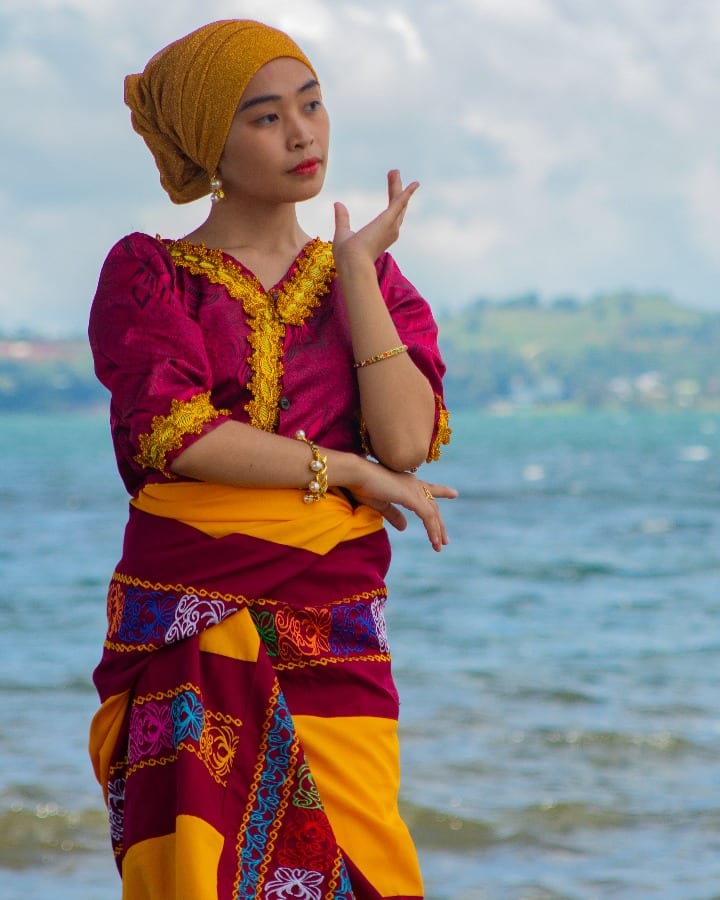
Celebrating the International Day of the Girl last week, she reflects on the future of young women in the Philippines. "I dream of becoming an empowered woman, a role model for others. I want to be able to defend my rights, speak up for myself, and be heard. I refuse to be devalued because of my gender.
"I want a seat at the table when it comes to matters that affect me and my community," she expresses. "To all the women out there, let's share our stories of hope. We can inspire others. By influencing just one person, we contribute to a more peaceful world."