
This article has been updated with a statement from Ateneo De Manila's director for University Archives.
On July 4, 2023, historian and leading expert on Jose Rizal Ambeth Ocampo revealed to the public what could possibly be fragments of the national hero’s brains. The relic was stored in the Ateneo Archives and was only recently rediscovered by Ocampo. Considering how much knowledge he has about Rizal, the relic could be one of the most significant remains of the hero. One can even say that it could be the tangible "birthplace" not only of the Noli and Fili but more importantly, the idea of a Filipino nation.
But how did we rediscover these fragments of Jose Rizal’s brain and why are we only uncovering this now? Ambeth Ocampo shares the colorful backstory of the rediscovery in an exclusive interview with Esquire Philippines.
According to Ocampo, the Saturnina Rizal donation to the Ateneo de Manila University Archives is not well known. Previous Archives directors did not exhibit the items and it was only some time before the pandemic that Ocampo was shown the original Rizal letters donated by the heirs of Saturnina Rizal. At the time, he was not told there were other materials.
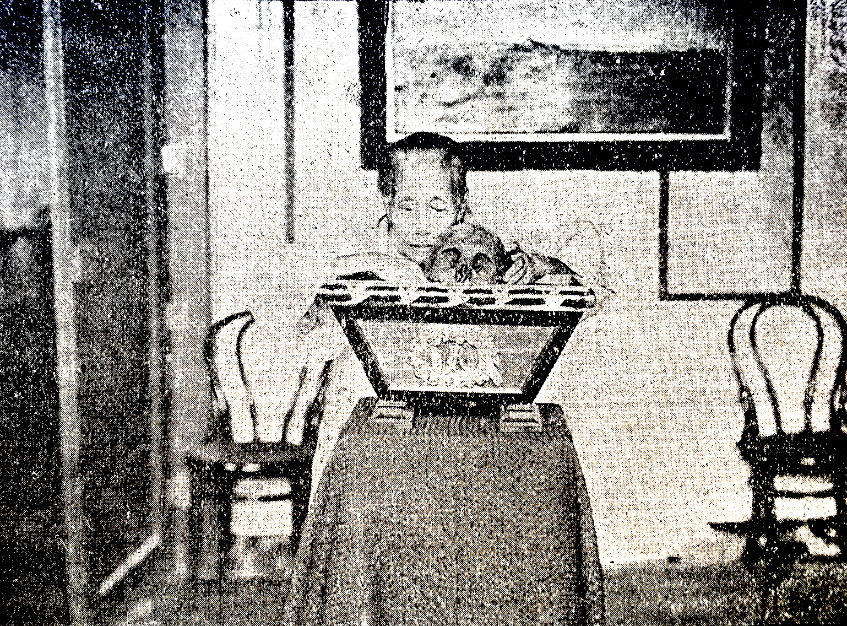
“After Rizal’s remains were exhumed from Paco Cemetery, these were placed in a specially carved wooden urn and kept in the Rizal home in Binondo. Here, visitors of Teodora Alonso would hear about the human side of the national hero, and if she was in a good mood she would open the box and show the skull to visitors. We have at least two photos of Rizal’s mother holding her son’s skull. When Rizal’s remains were buried under the Luneta monument in 1912 the backbone was preserved by the family in a reliquary. This is now in Fort Santiago,” Ocampo said.
Jose Rizal's mother, Teodora Alonso Realonda, embracing her son's skull
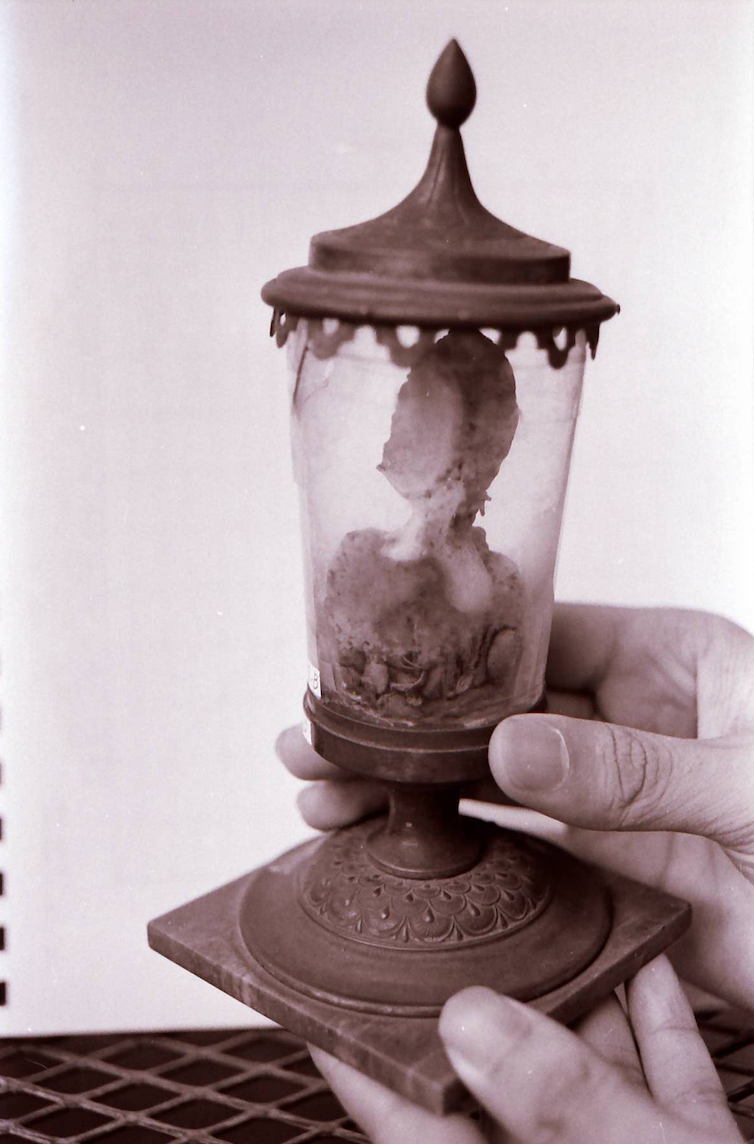
Most of Jose Rizal’s remains are buried under his monument in Luneta Park, except for a piece of his backbone, which is displayed in a reliquary at the Rizal Shrine in Fort Santiago. This piece of his vertebra is chipped, leading historians to believe that it could have been the spot where the fatal shot struck him during his execution on December 30, 1896.
Some accounts say that after Rizal died at the hands of the firing squad in Bagumbayan, his body was hastily dumped in secret in an unmarked grave. His younger sister Narcisa—believed to have been very close to the hero—scoured all the graveyards in Manila to look for his remains in vain. Finally, after much searching, she found freshly turned soil at Paco Cemetery. The doting sister that she was, Narcisa then bribed the caretaker of the cemetery to mark the grave with R.P.J.—the inverse of Rizal’s initials.
In August 1898, Spain ceded the Philippines to the United States of America for the sum of $20 million. Under the rule of new authorities, Narcisa requested for her brother’s body to be exhumed. Permission was granted, and it was found that his body was dumped in the same state he died in—clothes, shoes, and all. The remains were cleaned and buried again at the Paco Cemetery, where they stayed before being transferred to Bagumbayan (now Luneta) in 1912.
How Ambeth Ocampo learned of the alleged brain fragments
“I was in Dapitan for Rizal’s birthday last June 19. After some remarks delivered by me and Dapitan Mayor Jalosjos, I mentioned that Dapitan maintains many traces of Rizal,” Ocampo tells Esquire Philippines.
“One of the guests, Britz Hamoy, asked me to comment on what were allegedly bits of Rizal’s brain in the Ateneo. I have examined most of the Rizaliana in the Ateneo and didn’t know about this. Mr Hamoy showed me a Facebook post by Dr. Chas Navarro, Director of the Ateneo de Manila University Archives that showed what seemed like a silver reliquary and a handwritten caption stating these were parts of Rizal’s brain.”
Ocampo returned to Manila and went to the Archives and asked to see the relic. Dr. Navarro brought out a box containing some of Saturnina Rizal’s jewelry, which prompted Ocampo to mention how Saturnina “Neneng” Rizal had a jewelry shop.
“Then he showed me the crystal bottle with a silver cap that contained what looked more like bone than brain fragments. I presumed that the bottle used to have alcohol to preserve its contents but that had since dried up. I took some pictures and said I would return to look over all the items donated by the heirs of Saturnina Rizal,” said Ocampo.
The crystal bottle with a silver cap that contained Jose Rizal's alleged brain fragments
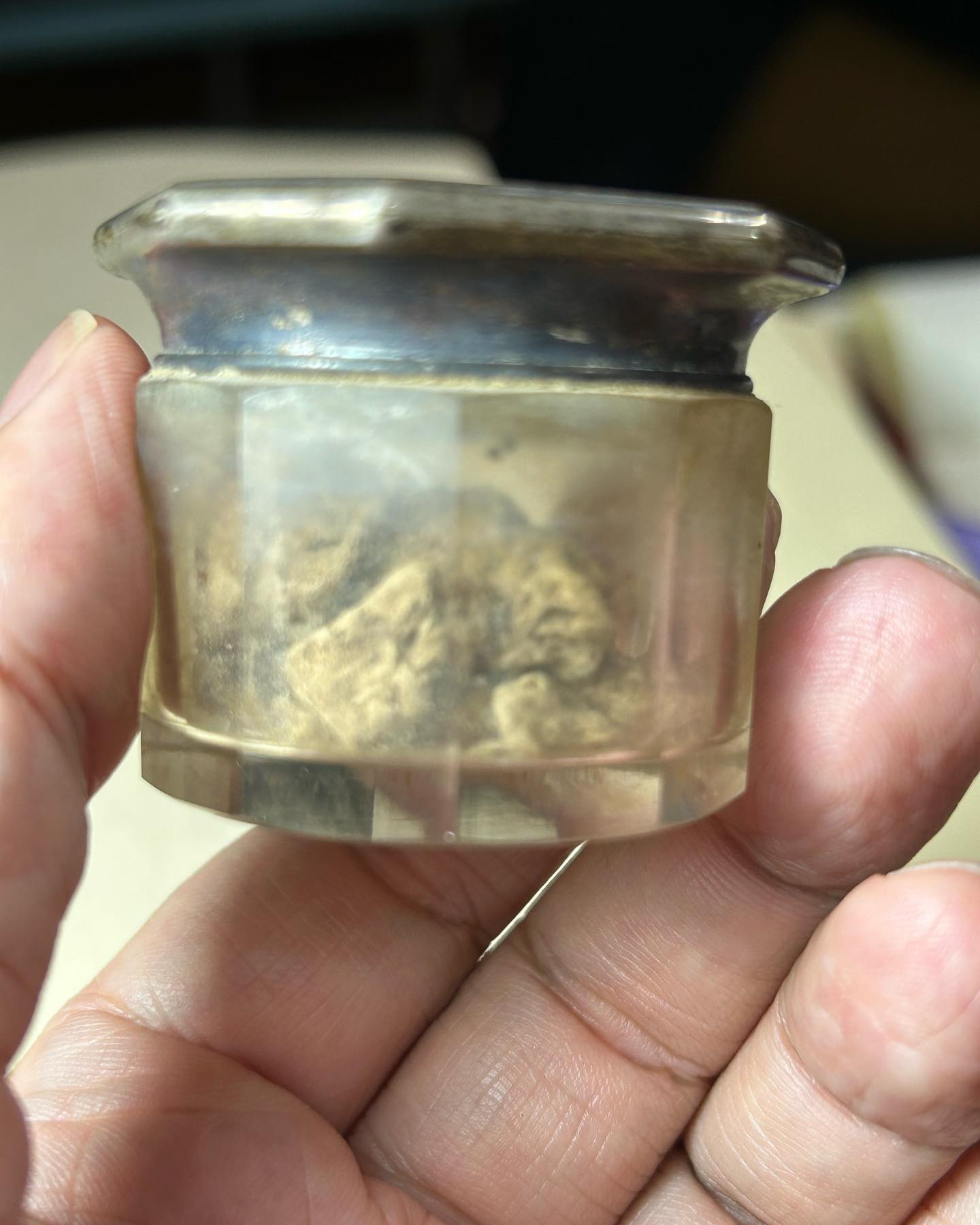
In Ocampo’s hands were what possibly what was left of Jose Rizal’s brains, the mind that birthed the Filipino nation.
“What did it feel like to hold these? Of course, I was curious but a healthy skepticism being part of a historian’s personality I reined in my excitement. We do know that almost all of Rizal’s remains lie under the monument in Luneta, with the exception of a part of his backbone that is displayed in the Rizal Shrine Fort Santiago. The bone is chipped on the side where, according to Rizal family lore, is where the bullet hit him on December 30, 1896,” said Ocampo.
Below is a photo of the backbone that was allegedly chipped by a bullet during Rizal’s execution.
“But now we have a small bottle that contains more human remains. The significance of holding this relic in the palm of my hand is that with proper DNA analysis we will know physical aspects of Rizal that we didn’t know before. I have been studying him for close to four decades now and am surprised that new things still can still be learned from something that is considered old hat.”
A handkerchief stained with Rizal’s blood was washed by a kasambahay
Saturnina Rizal, who originally kept the brain fragments that were donated to the Ateneo, was very diligent in preserving items and relics from her brother Pepe.
“According to family lore, one of Rizal’s sisters—he had nine—went to Luneta with a batch of handkerchiefs. She then went to the spot where her brother fell and dipped each of these hankies in his blood. I was told that each member of the family was given one of these blood-stained hankies as a souvenir,” Ocampo said.
But three dacades ago when Ocampo was interviewing Rizal’s descendants, he inquired if they kept a stained handkerchief in their memorabilia.
“One of the descendants said they had one and when I asked to see it, the maid brought it out proudly saying she had washed it!”
“Ang tindi po ng mantsa niyan kaya kinuskos kong mabuti, at kinula ko pa!” said the kasambahay.
'Kinula ko pa!' The blood-stained handkerchief bleached by the househelp
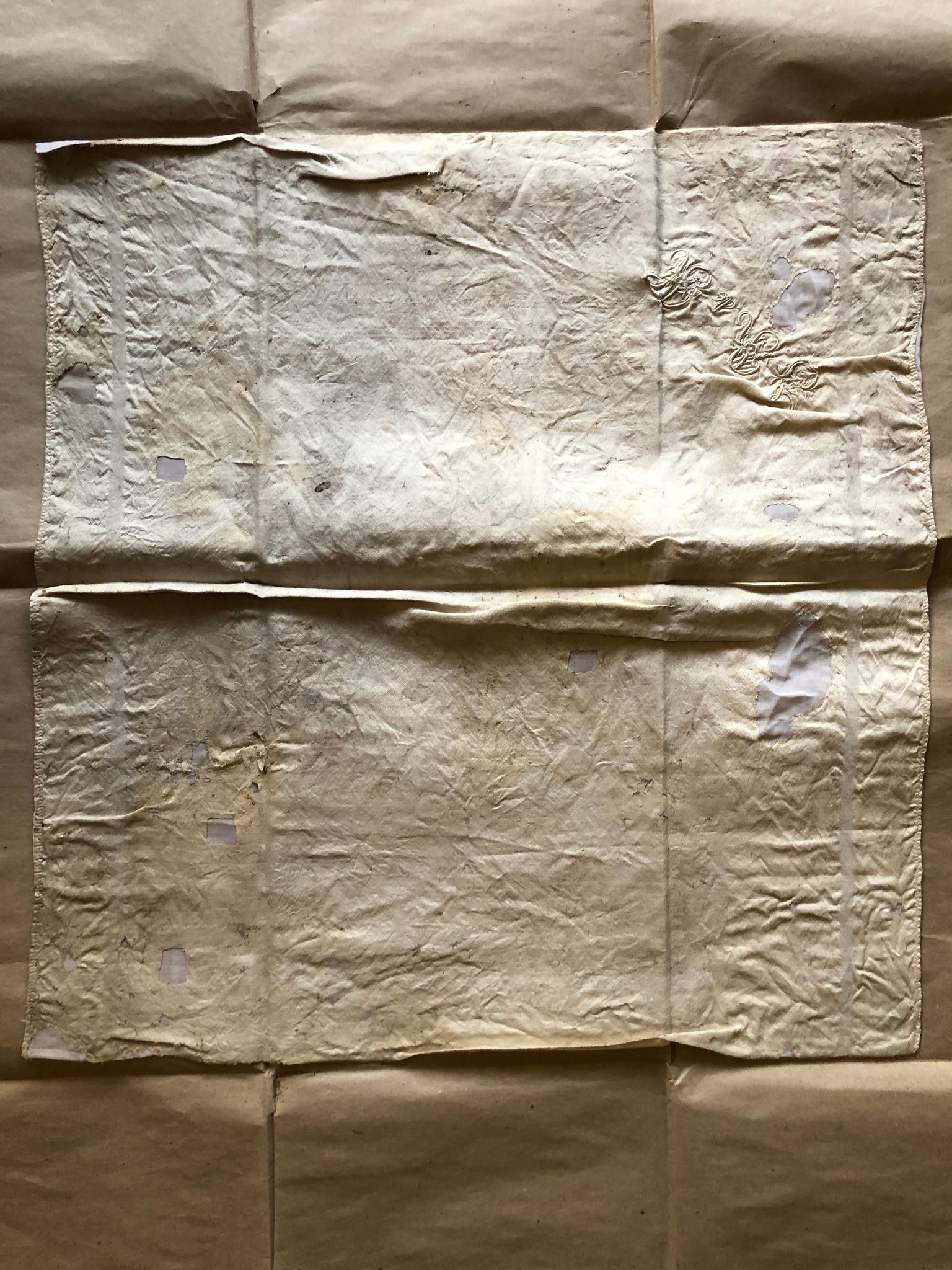
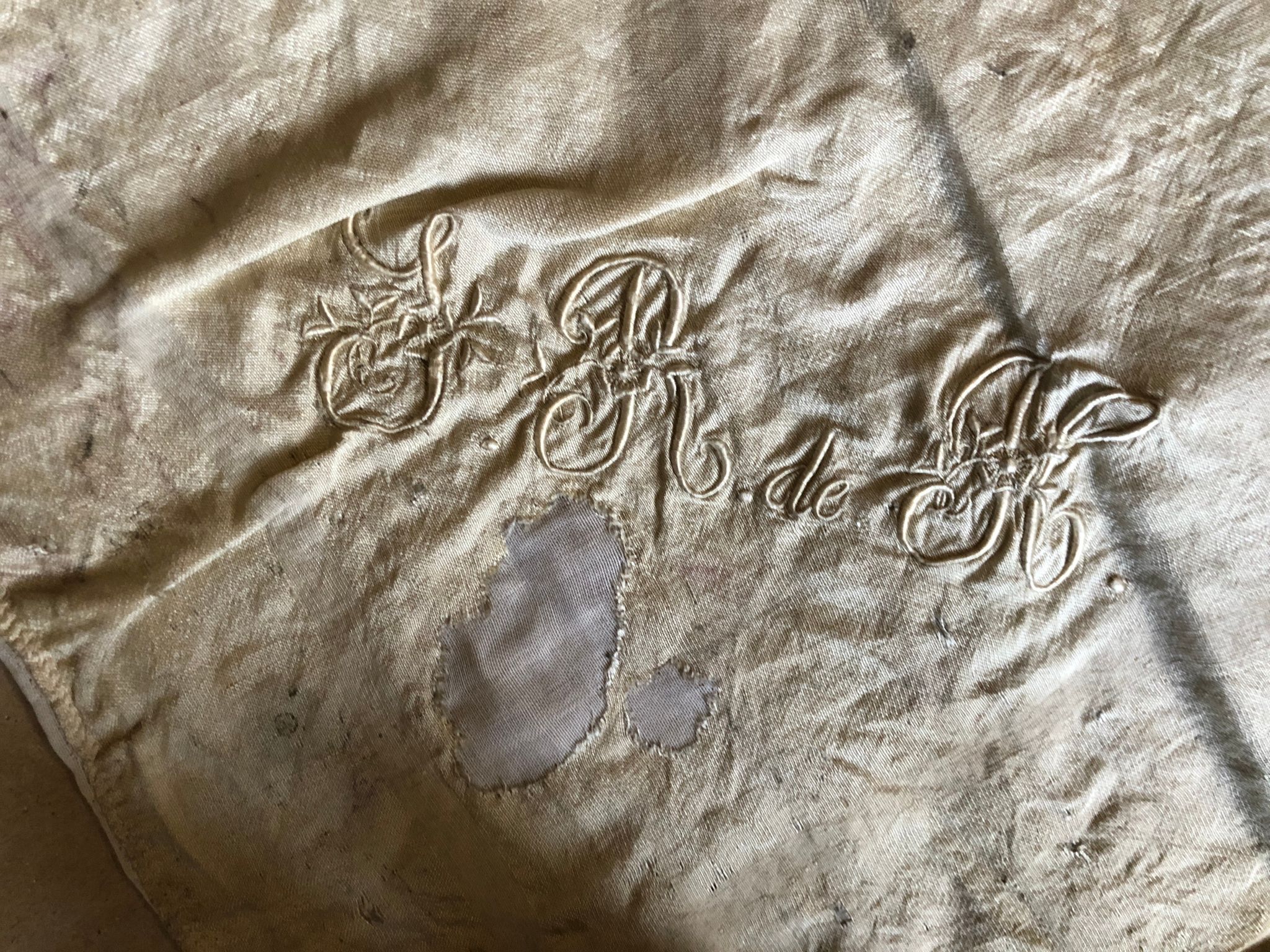
“Rizal’s blood down the drain. I console myself with the knowledge that there must be about ten of these lying around somewhere but have not come to light,” Ocampo said.
Discovering a piece of Jose Rizal’s remains, works, or possessions will always be significant. But how would Ocampo rank the rediscovery of Rizal’s brain fragments among his other discoveries about the hero?
“The late Alejandro Roces used to say that my finding these things were not serendipitous but was fated to be. I’m not one to be superstitious but when I recovered and correctly identified the drafts of Rizal’s third novel, Makamisa, in the 1980s, I found this simply because everyone else thought the manuscript was not important. A librarian’s error made this possible,” said Ocampo.
"Makamisa” is actually the title of the chapter because the novel is unfinished and untitled. When the 245-page manuscript was bound, the librarian mislabelled it as “Borrador del Noli me tangere” or “Drafts of the Noli me tangere”.
In 1987, Ocampo wanted to do a study of the novel from the drafts to the final published version. But when he read through this manuscript, he wondered, ‘How come there are no Noli characters or scenes in it,?’ That's when he realized I held in my hand something else.
“That find made my career,” said Ocampo.
Some time ago, while filing and labeling his Rizal materials, Ocampo found a small note in one of Rizal’s diaries indicating his height. A trivial matter really, but it settled the debate about how tall Rizal was. Ocampo had previously made an estimate of Rizal’s height based on the measurements of his clothing but that was not conclusive.
“Who can be more definitive on his height than Rizal himself?” said Ocampo.
Ambeth Ocampo was belittled by other historians
Ocampo has carved a reputation in the country as the leading expert and historian on Jose Rizal. But that was not the case many years ago when other established professors of history belittled him and told him not to pursue Jose Rizal as a study.
“When I started researching Rizal four decades ago, another historian sneered at me saying ‘Gasgas na yan!’ He tried to get me to research something else. Today, I am only sure about my doubts, and the knowledge that I do not know all that there is to know about Rizal. So these little finds here and there illustrate how much research needs to be done.”
Now, Ocampo is looking for someone to continue his life’s work.
“I am on post-retirement appointment at the Ateneo and in the last years I will be teaching here, I hope to find and train a younger historian who will follow from where I left off.”
Although this discovery was news to Ocampo, the relic has reportedly been in storage at the University Archives of the Ateneo de Manila for quite some time. According to the Director of University Archives, Dr. Francis Navarro, the brain particles came with some jewelry left by the family of Rizal's older sister, Saturnina. Its existence, therefore, has always been known, but only recently shared with the public.
.png)
