The Life and Career of Dr. Juan Salcedo: The First National Scientist of the Philippines

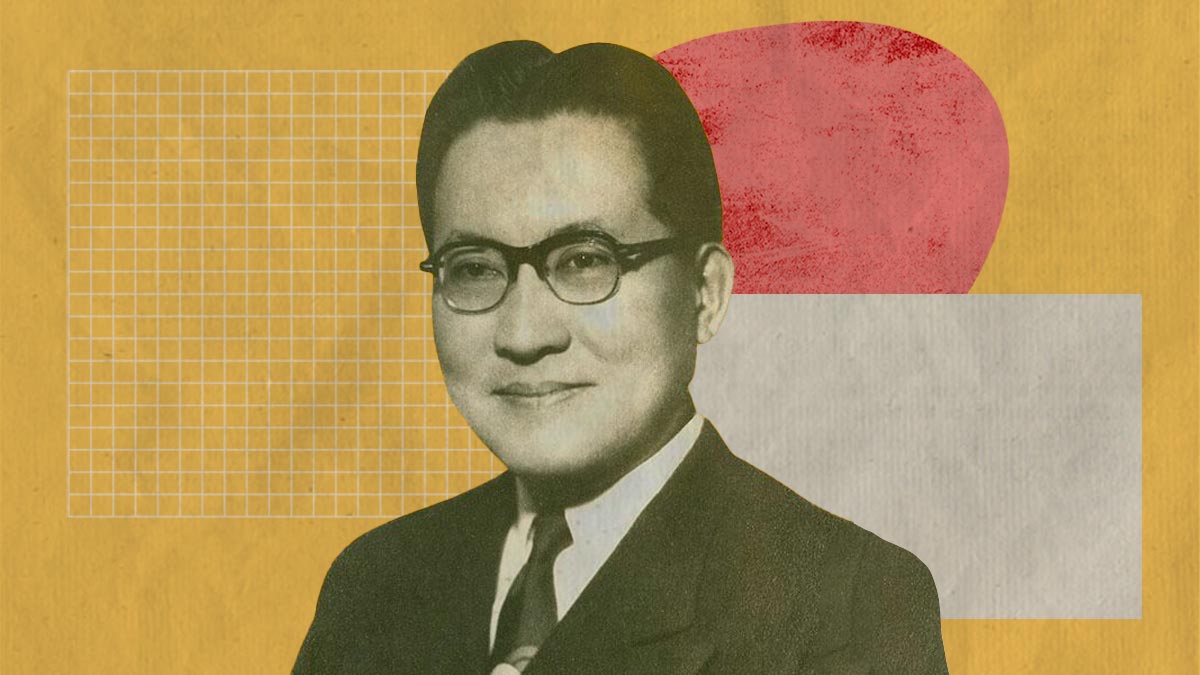
Dr. Juan S. Salcedo, Jr. is often regarded as one of our great Filipino scientists. He was once considered the foremost medical statesman in the Philippines in the mid-20th century. A man of high integrity, he would traverse many routes and disciplines, such as nutrition, public health, biochemistry, nutrition, and physiology.
Through his work, he hoped to eradicate the country's food and disease troubles during his time. His career in public service, in many ways, reflected the kind of quiet brilliance he had been known for throughout his life. Never did he attract controversy or unwanted attention.
He was foremost a scientist, educator, humanitarian, and administrator of the tallest order. No wonder he was conferred some of the highest accolades a Filipino citizen could achieve, including, of course, having the distinction of being the first National Scientist of the Philippines.
ALSO READ:
Teódula Kalaw África: The Unsung Filipina Chemist Behind Nata De Coco
Maria Orosa: The War Hero Who Invented Banana Ketchup
A Man Who Took Supreme Pleasure in Learning
Salcedo wore many hats throughout his professional career. Before all these, however, he had always been an academic achiever.
Born on September 29, 1904 to Juan Salcedo Sr. and Felipa Sanchez, Dr. Salcedo grew up in a well-off family and was said to have always had a strong sense of nationalism as a Filipino living under the American protectorate. His parents would instill in him the value of education.
It's no surprise that he was considered a bright student from an early age. The Pasay City-born Salcedo excelled in school and graduated salutatorian at the Paco Intermediate School. He graduated with second honors from the Manila South High School, as well.
When it was time to attend college, he first opted to pursue engineering before deciding to shift to medicine. At the time, the Philippines was facing its fair share of crises in the health sector, and the young Salcedo wanted to contribute more on that front.
After graduating, he would serve as an instructor in Physiology and an assistant professor in Biochemistry at U.P. When the Second World War broke out, Dr. Salcedo joined the cause, becoming a Captain in the Medical Corps of the Philippine Army.
In between these posts, he pursued his master's. He would further his studies at Columbia University, where he graduated with a Master's degree in biochemistry and endocrinology. He returned to the Philippines after the war to finish his doctorate. Soon, he would obtain his Doctorate in Science with high honors from the Philippine Women’s University. Apart from his academic career in medicine, his law degree from U.P. in 1970 proved he was a devoted public servant.
A Lifelong Public Health Advocate and Medical Authority
Dr. Salcedo was also a researcher in the health and social welfare sector, beginning as a Health and Welfare Officer before transitioning into becoming the director of Public Welfare. Complementing his services here was his work as a consultant in Nutrition and the Director of Field Operations of the U.S. Public Health Office. In 1948, he became the director of the Institute of Nutrition.
The doctor would earn the respect of the public and his peers as a specialist and humanitarian. By the 1950s, he would be elevated to new heights in the public sphere by holding the position of Secretary of Health from 1950 to 1953.
The Institute of Nutrition was transferred to the Department of Health, too, which provided him more power to carry out programs for hunger and disease alleviation. During this decade, he was also named Professional and Head of the Department of Physiological Hygiene and Nutrition at the U.P. College of Medicine. Impressively, in 1952, he was even elected as president of the World Health Organization Assembly, the first Filipino to do so.
President Ramon Magsaysay would also award him Outstanding Public Health Nutritionist in 1957. Other honors, such as the Republic Cultural Heritage Award in Science and the Presidential Pro Patria Award, two of the highest achievements a Filipino citizen can achieve, were bestowed upon him in 1966 and 1969, respectively.
He would go on to work with various presidents in his lifetime, including Elpidio Quirino and Diosdago Macapagal. From 1963 to 1970, Dr. Salcedo served as chairman of the National Science Development Board (now the Department of Science and Technology) all the while he was serving as chairman of the National Research Council of the Philippines. He continued serving under the first Marcos administration. In the latter part of his career, he became president of the Araneta University Foundation from 1970 to 1981. Later on, he was named Dean of the University of the East Medical College.
Dr. Salcedo would achieve the status of National Scientist in 1978 for his work in nutrition and public health. He would officially become the first Filipino to be given the title, in a batch of stalwarts that consisted of Dr. Alfredo Santos and Dr. Gregorio Zara.
Contributions
Dr. Salcedo reportedly published upwards of 200 articles throughout his career, encompassing medicine, science, and technology. Among his most notable achievements was the construction of Rural Health Units as part of the Philippine-American Public Health Project.
As a nutritionist, he would be part of the team that proved rice enrichment by way of thiamine and other nutrients like iron can solve beri-beri, a disease that was a leading cause of death among Filipinos.
He had first isolated thiamine in 1933 and synthesized Vitamin B1 in 1936. The latter was the first vitamin ever isolated in its pure form. This caught the attention of the international community, and was considered a world classic in Public Health Nutrition. It would serve as a model for rice enrichment programs worldwide. His work incidentally led to the Rice Enrichment Law in 1952.
The acclaimed doctor also contributed to the fight against Tuberculosis and Malaria. He launched various campaigns against the, including the introduction of the Bacillus Calmette–Guérin (BCG) vaccination among children. Dr. Salcedo systematized teams to eradicate in various areas in Metro Manila. Rural health centers would also be instrumental to his campaigns in both urban and rural areas.
Dr. Salcedo would meet his demise on October 25, 1988 at 84 years old. It was a monumental loss for the community and the nation. He was promptly given a state burial. Today, his grave can be found at the Libingan ng mga Bayani.