Every year, Esquire Philippines’ Man at His Best honors extraordinary Filipinos who are reshaping society. These are the men and women who are raising the bar for Filipino creatives, athletes, public servants, and professionals.
This year, we’re celebrating eight mavericks and living legends in film, music, business, politics, and entertainment. From National Artists Ricky Lee and Kidlat Tahimik to Mayor Joy Belmonte and tycoon Ramon Ang, here are the 2023 honorees who exemplify what it means to be a Man at His Best.
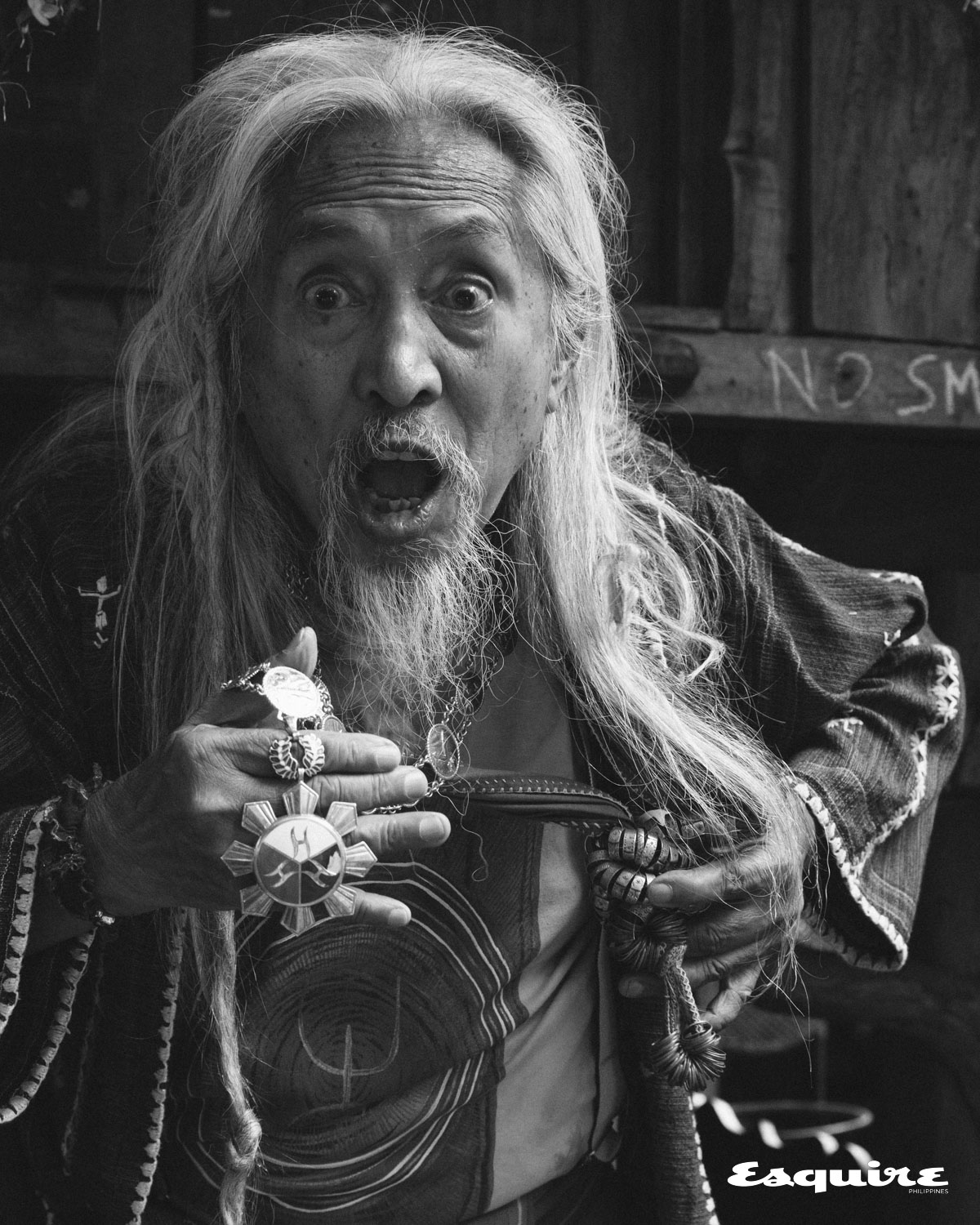
Meet Esquire’s Artist of the Year, Kidlat Tahimik
ADVERTISEMENT - CONTINUE READING BELOW
“Metaphor lang ‘yan. Maybe a spiritual bahag.”
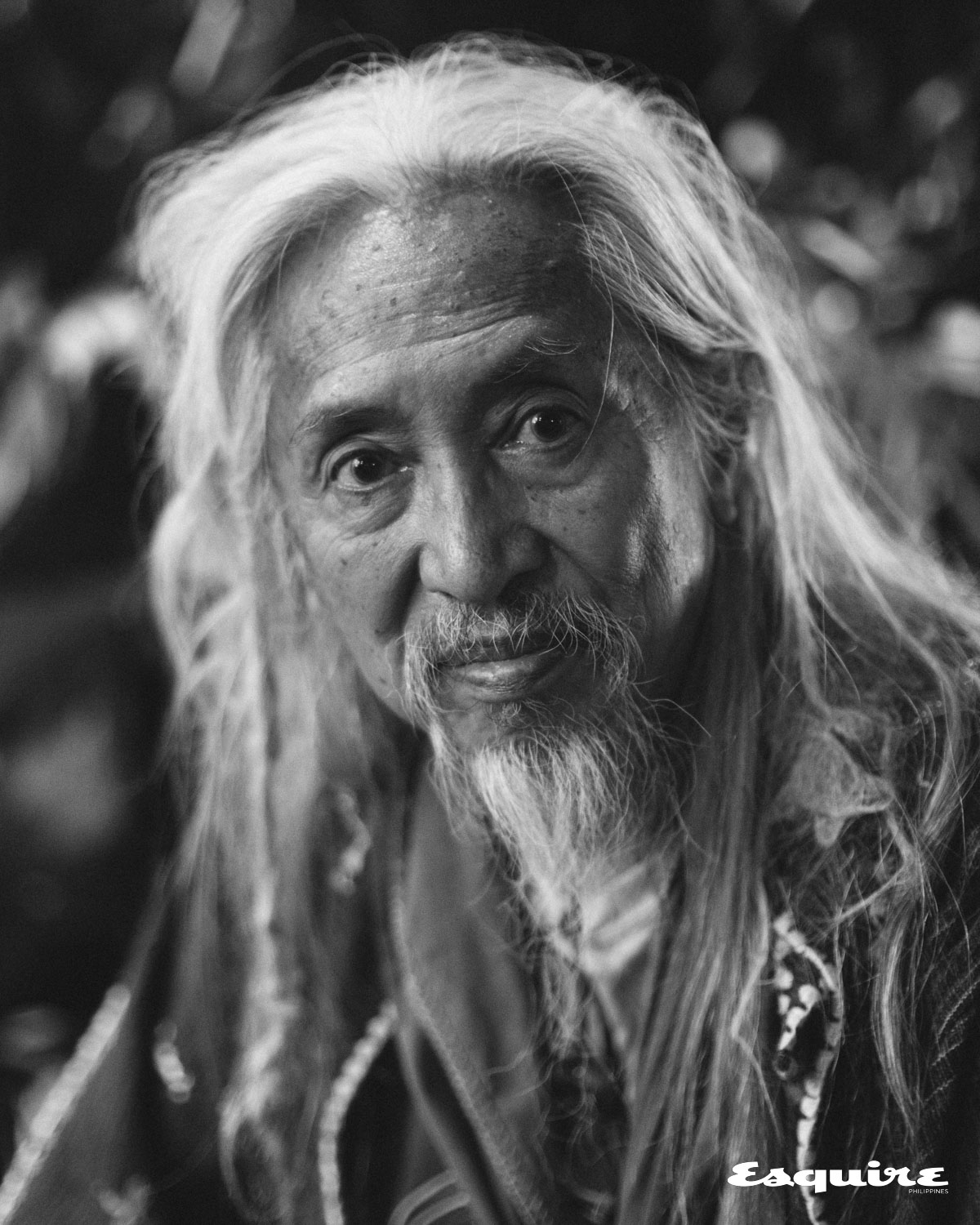
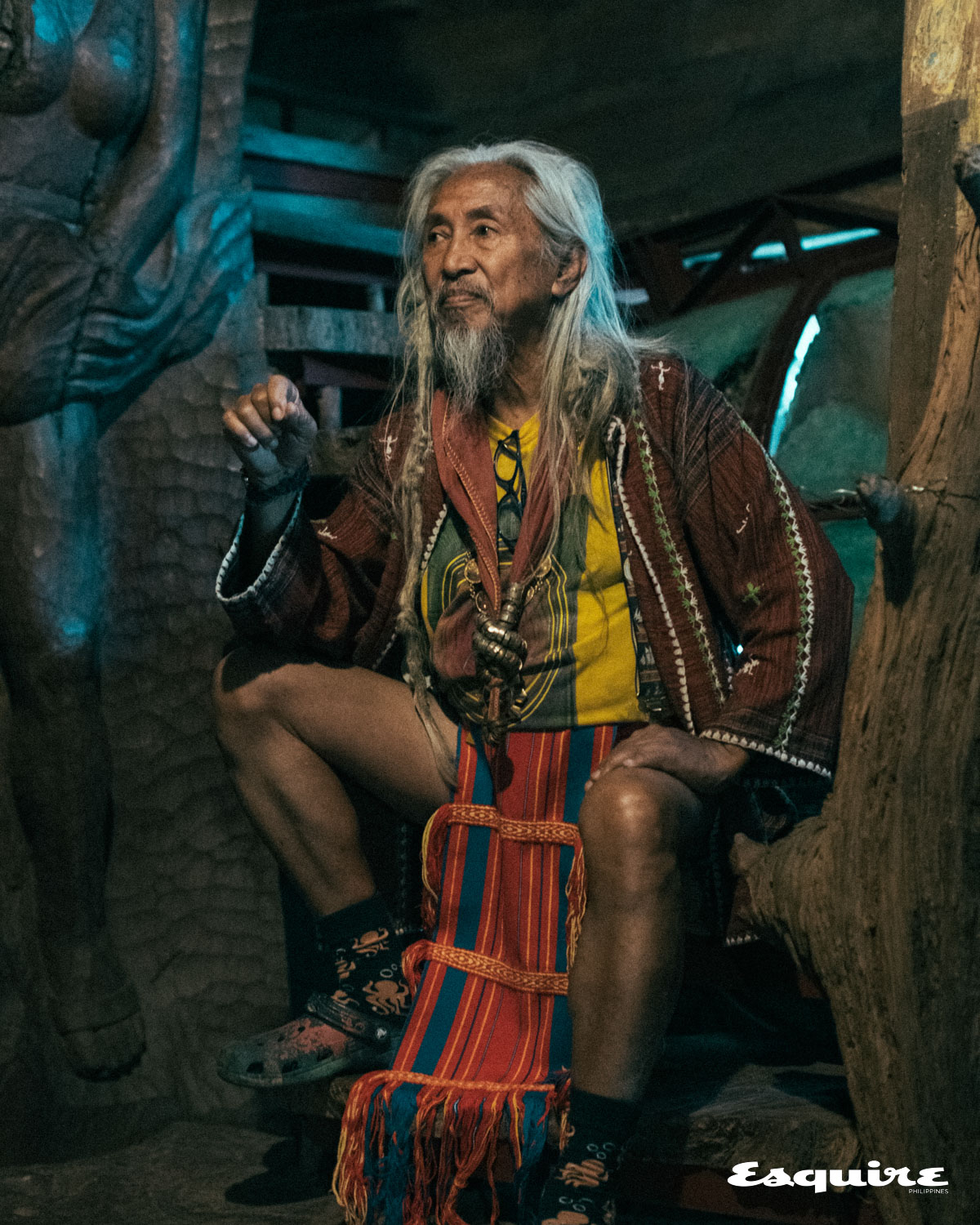
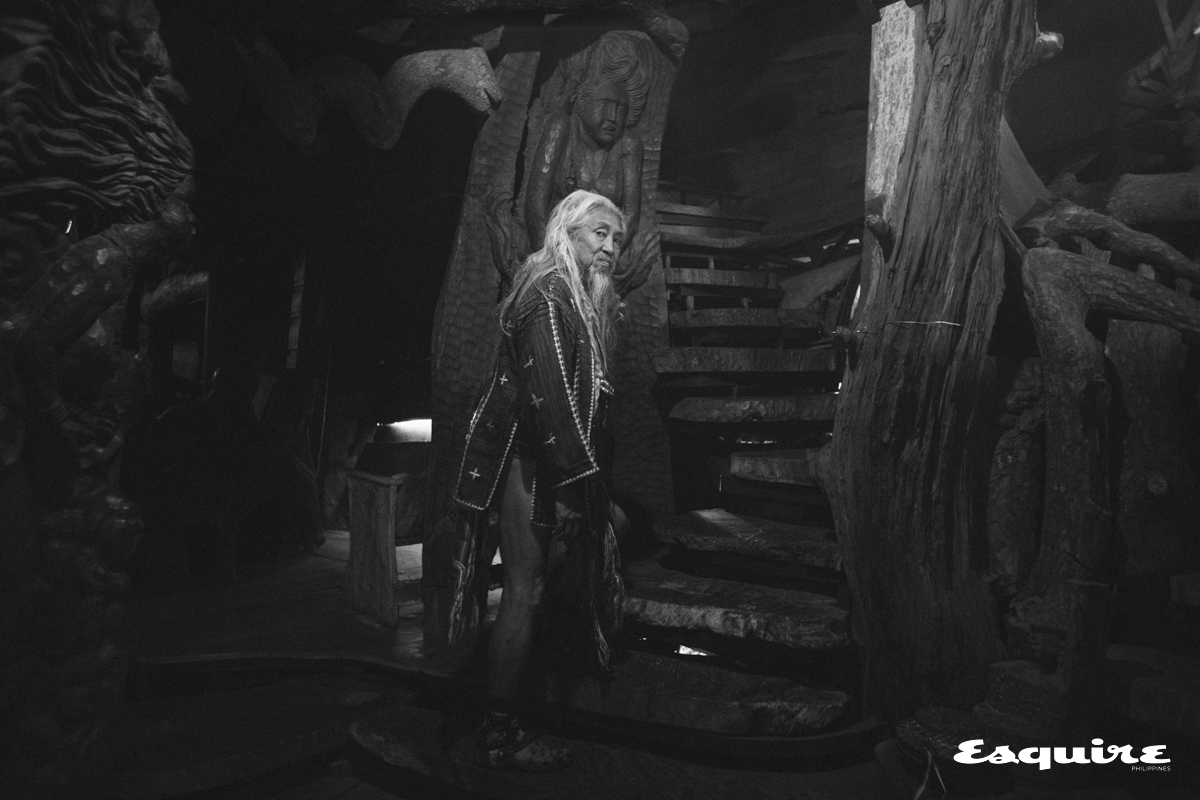
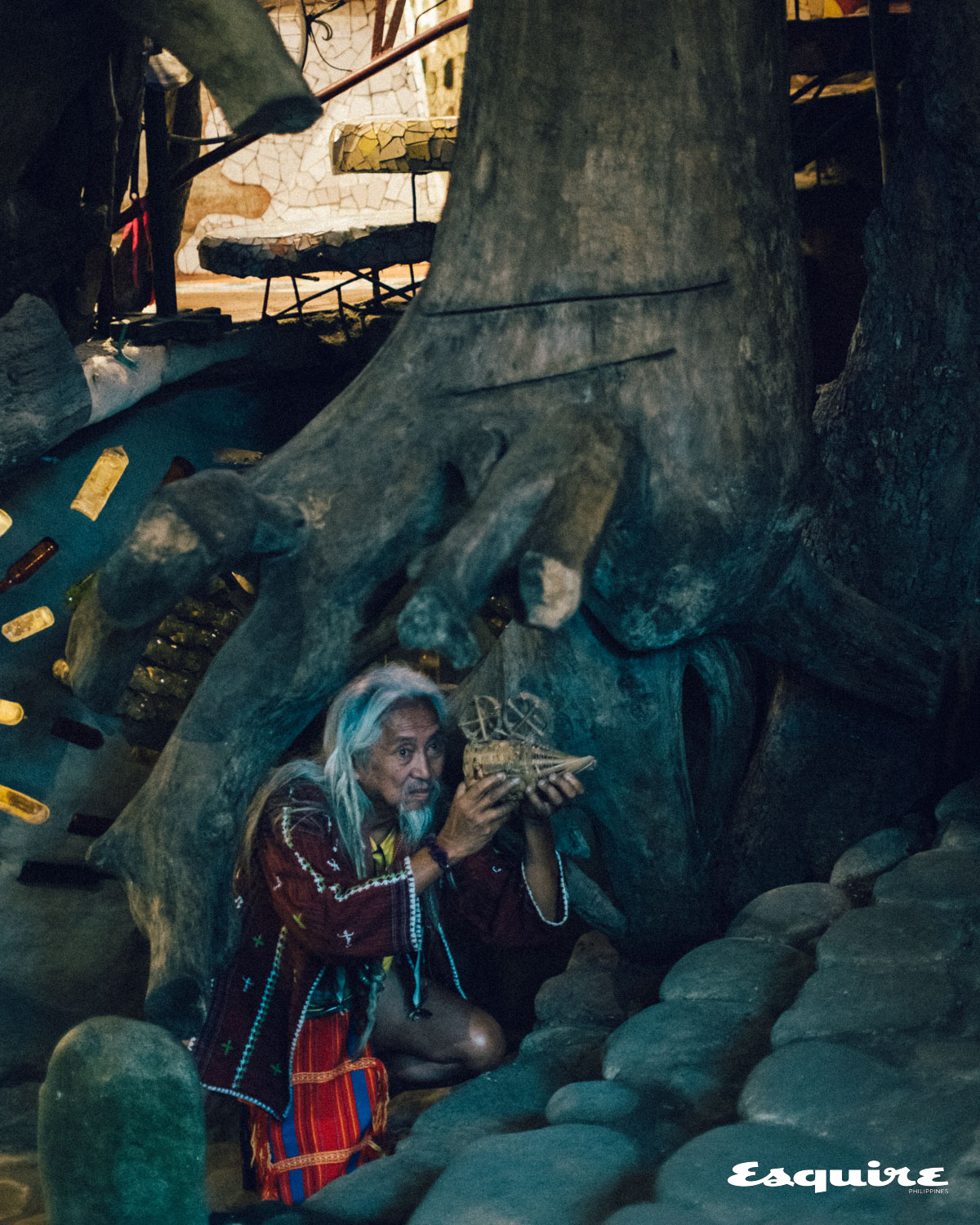
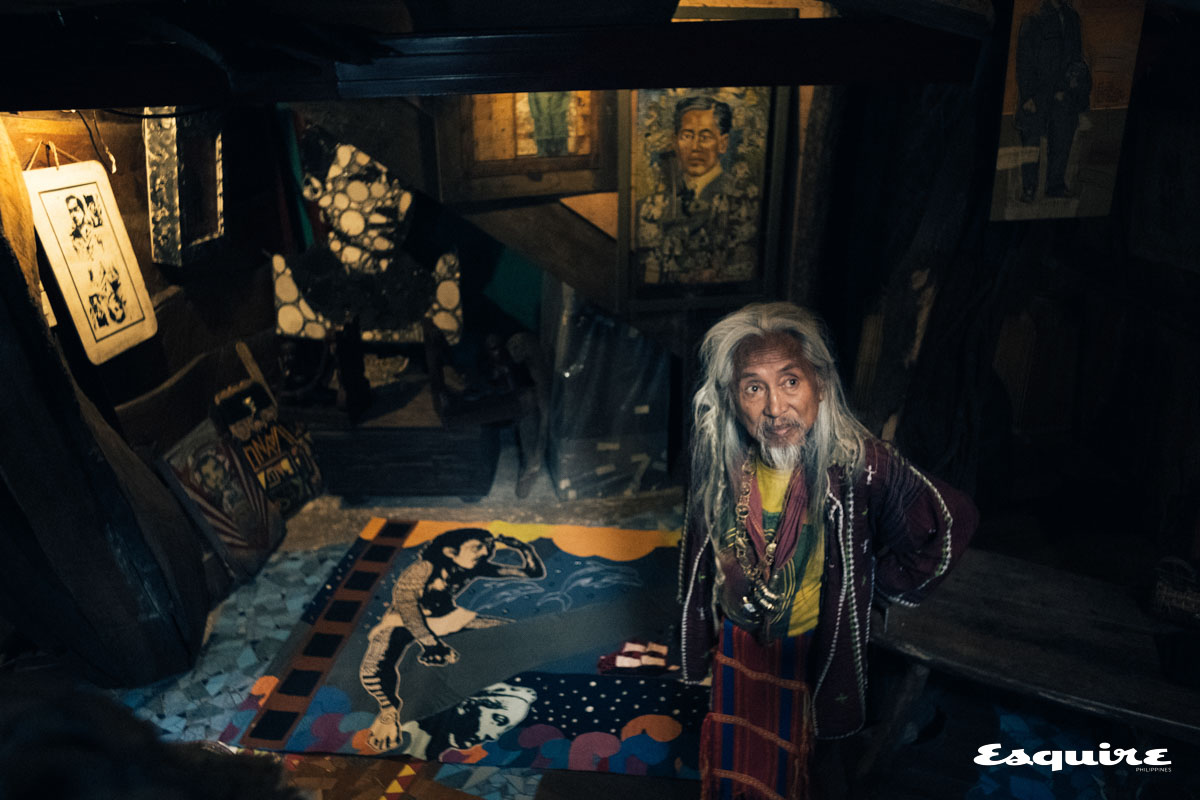
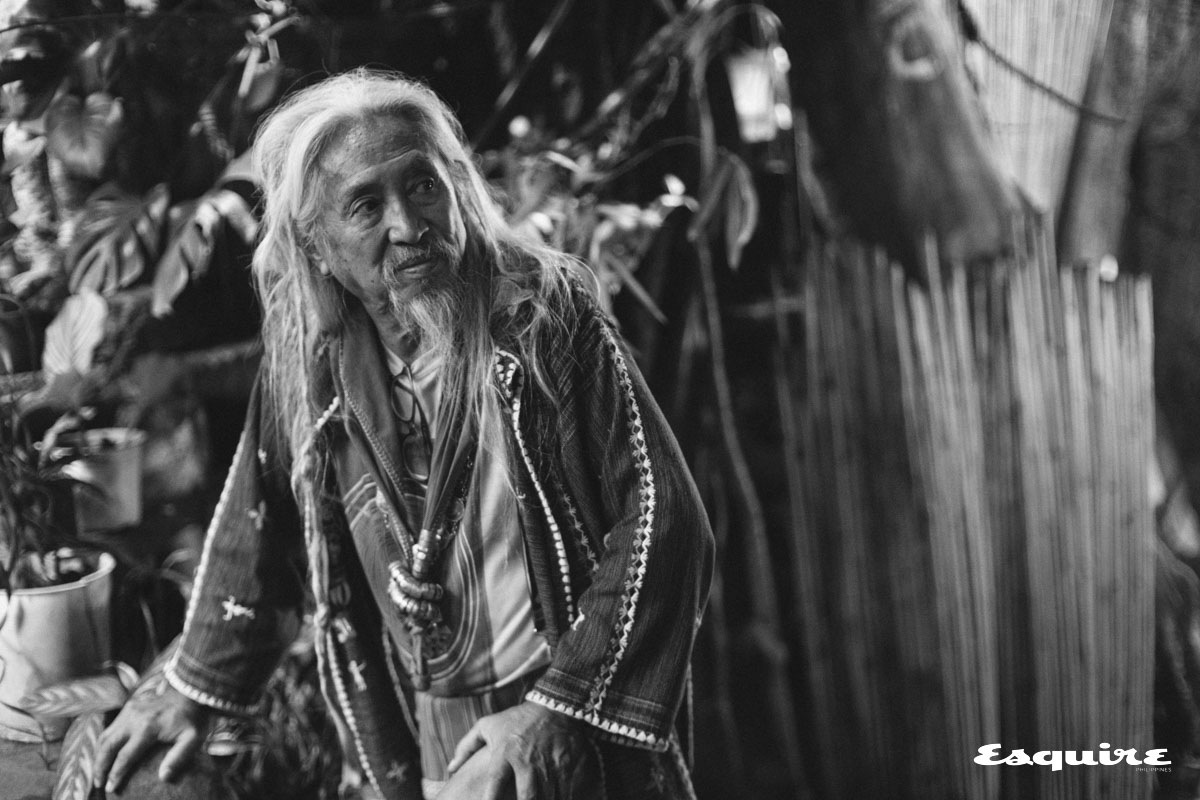
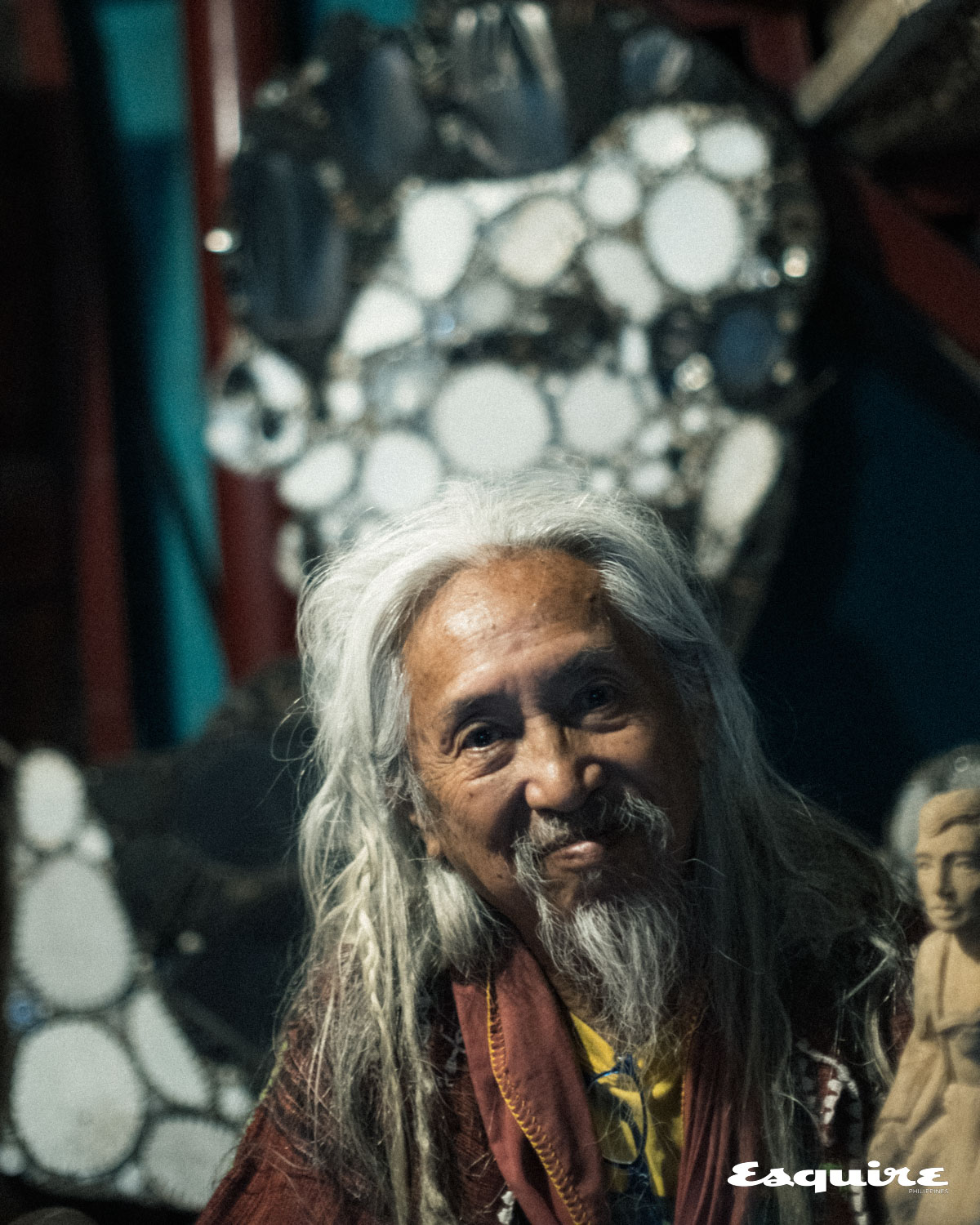
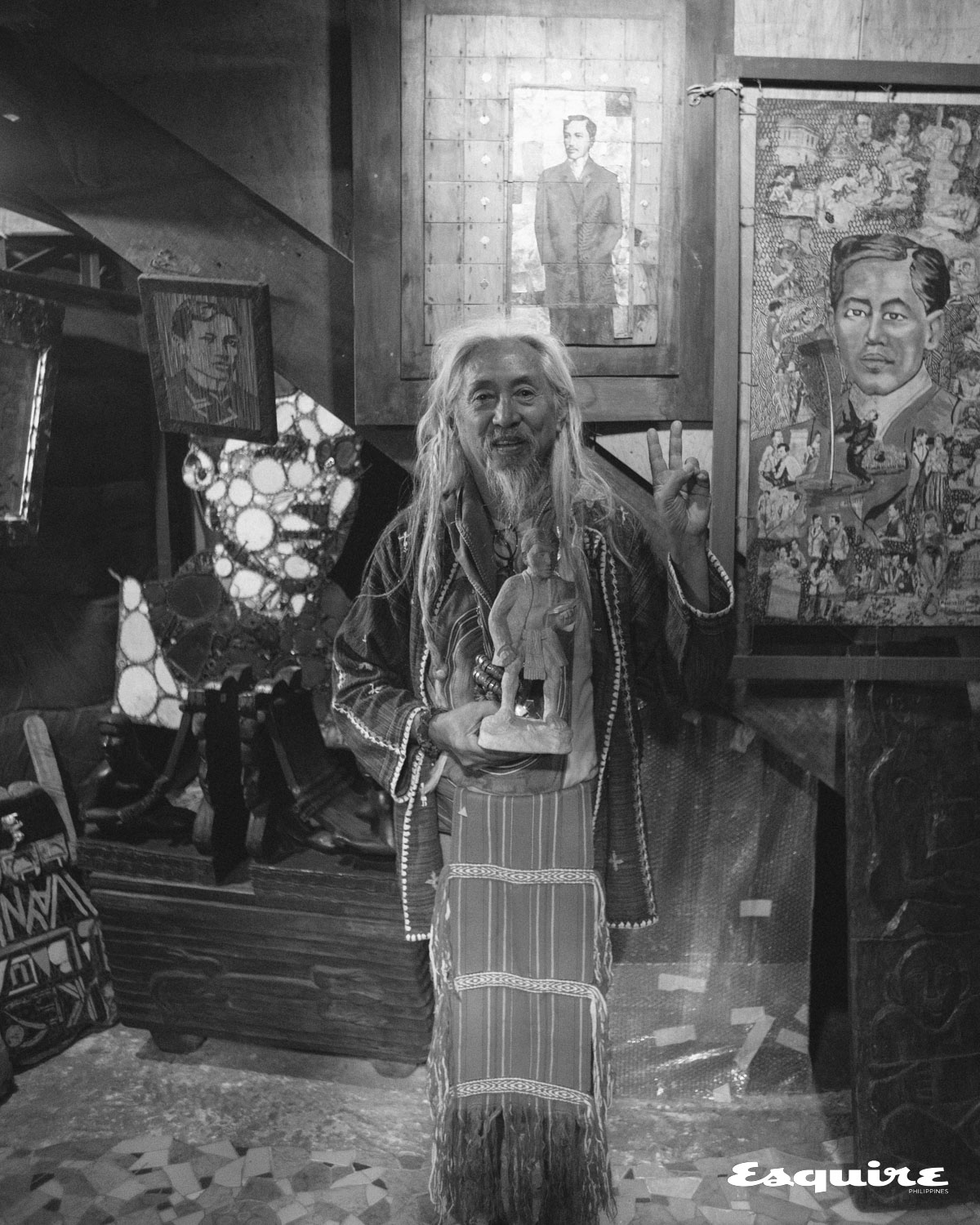
There is a nameless spirit that colors the atmosphere. Inside Ili-Likha Artists' Wateringhole in Baguio City, from the cinematheque to the food stalls to the flower shop to the galleries, this ethos is encoded in the carvings of Enrique de Malacca and Jose Rizal the same way it's indexed in the vibrant mosaic of broken glass and the imperishable wood and collection of bul-uls and paintings around the vicinity. Centuries of the Cordilleras seem to be coursing through these walls. An eternal potency holds all this together. For Kidlat Tahimik, it starts and ends with duendes.
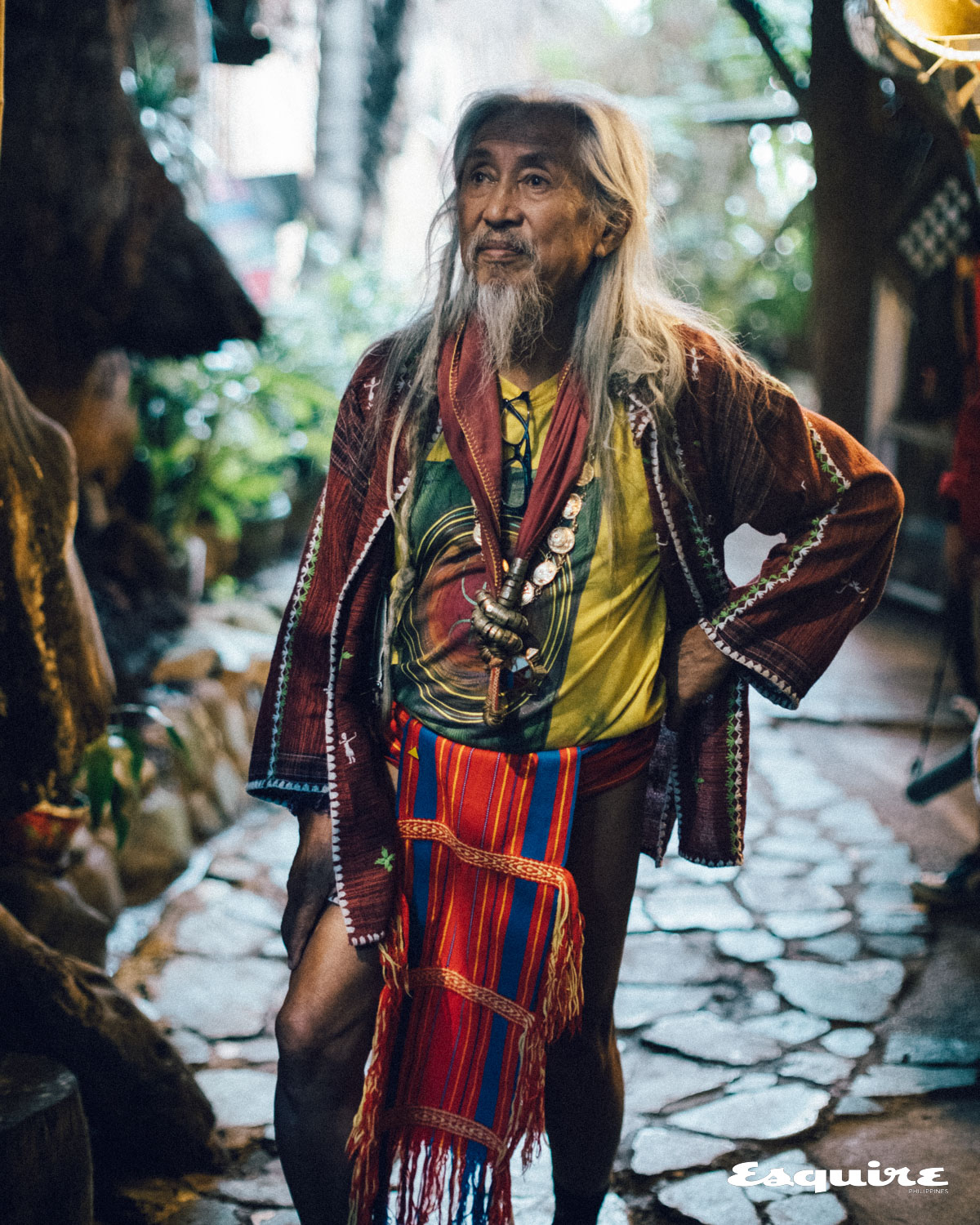
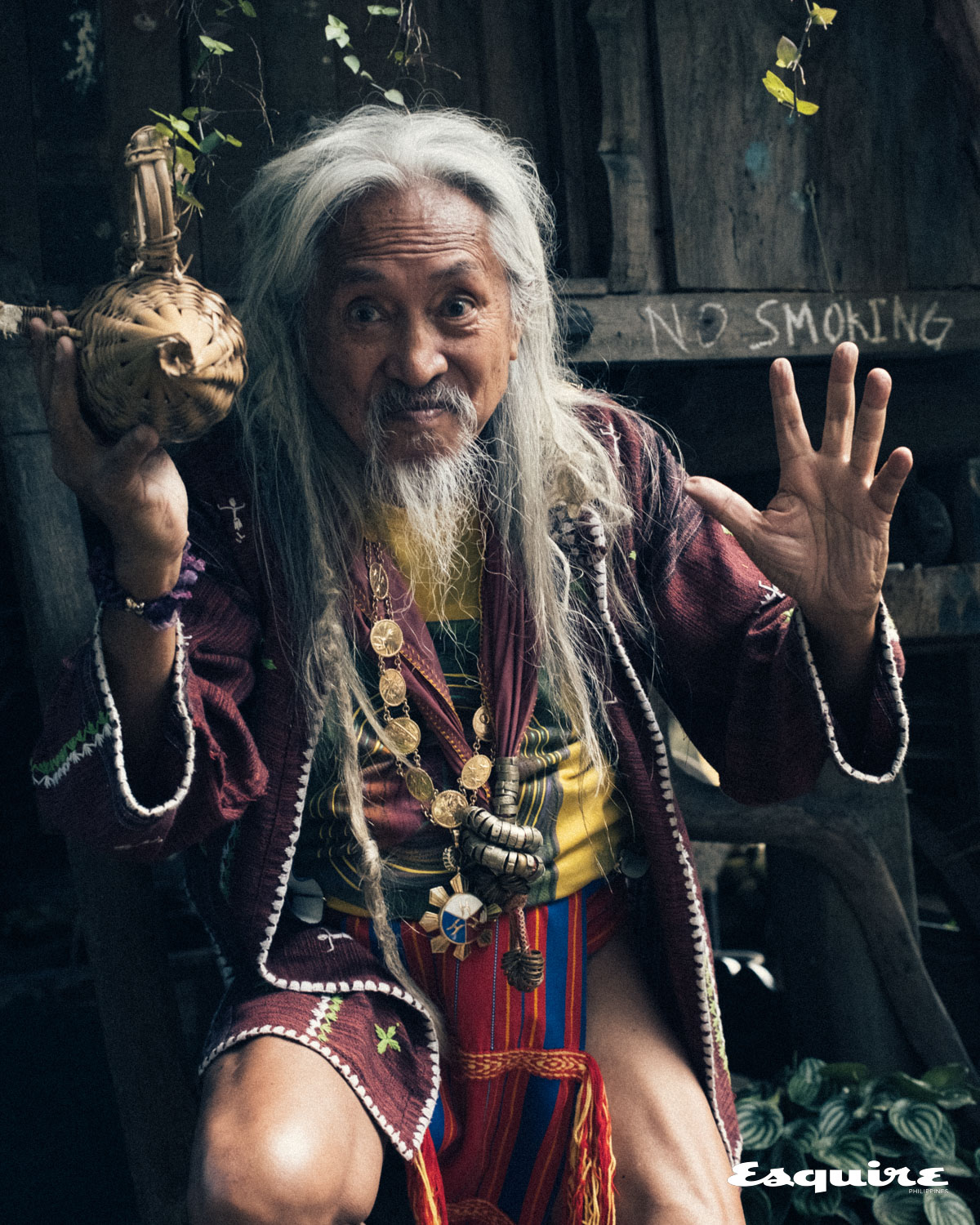
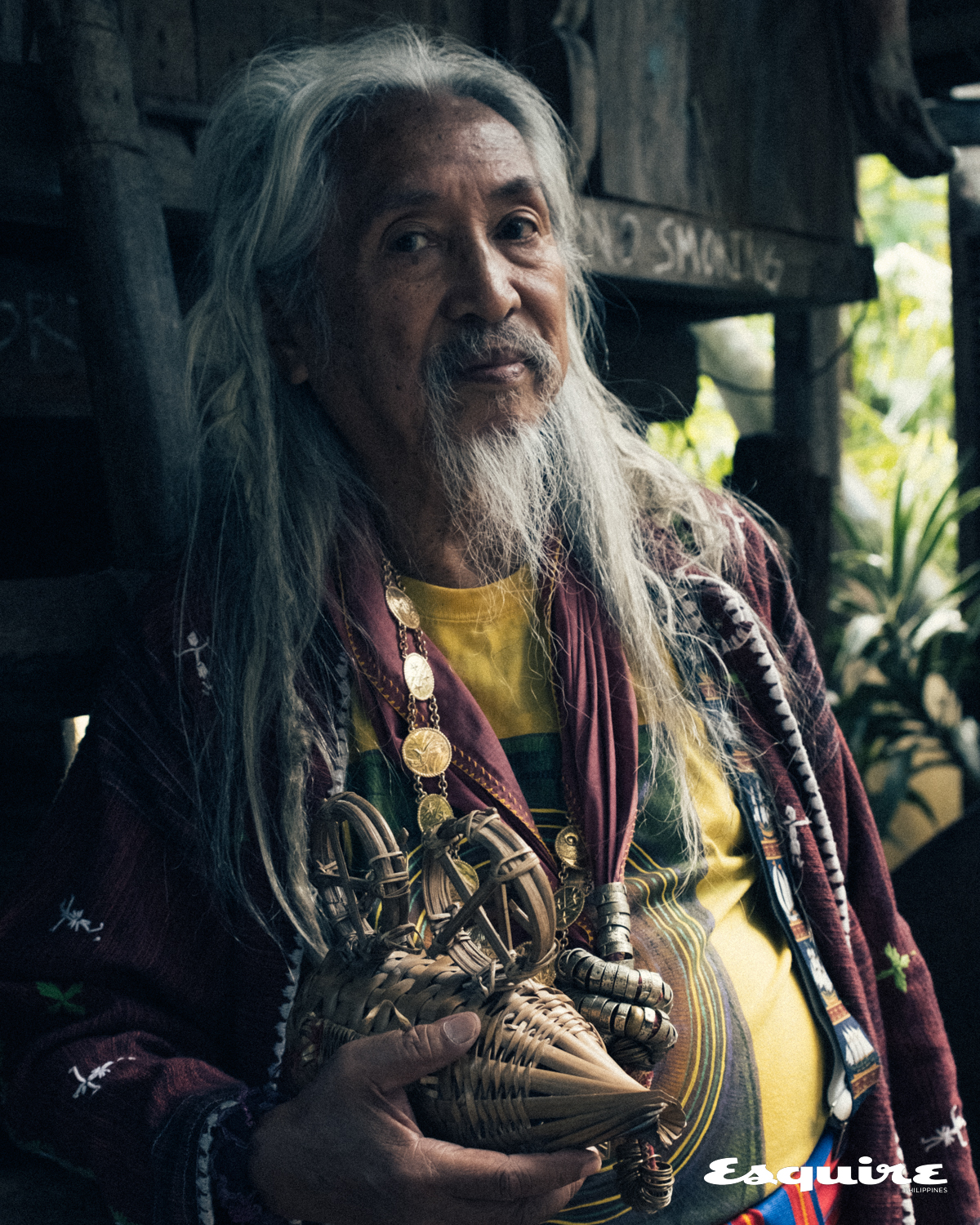
Rare are the forces as powerful as the duende. Looking around Ili-Likha, they can be found everywhere. You just have to know how to look. Holding up his little Rizal statue standing inside this fever dream of a theater, Tahimik is as loud as he's ever been. If Ambeth Ocampo examines Rizal under the overcoat, then Tahimik imagines Rizal without the wooly salawal. To see Rizal in a bahag is an unfamiliar image. But it works as a visual metaphor; an attempt to contend with the ironies of our national hero. "What's really underneath the overcoat?" he asks.
CONTINUE READING BELOW
watch now
Tahimik goes on about all the wrong ways in which we’ve dissected—and reckoned with—the mythos of Rizal. He lists off a few glaring contradictions to me: Rizal, the reformist, mind you, wrote books in Spanish, operated on his mother with knowledge of Western ophthalmology, and built an irrigation system in Dapitan with Western engineering techniques. Snippets, sure. But what do these really say?
ADVERTISEMENT - CONTINUE READING BELOW
“Anong message [ng ideya] ni Rizal sa kabataan kung ito ang ini-istress natin?” A pause comes after to emphasize his point. “Cool na cool si Rizal dahil westernized siya... Basta si Rizal, sa akin, mayroon siyang bahag."
Rizal in a bahag is the perfect starting point when we look at Tahimik's body of work. We rarely think of Rizal's Indio-genius. “Metaphor lang ‘yan. Maybe a spiritual bahag.”
From films like Turumba, Sinong Lumikha ng Yoyo? Sinong Lumikha ng Moon Buggy?, and Mababangong Bangungot (Perfumed Nightmares) to his landmark exhibit INDIO-GENIUS: 500 Taon ng Labanang Kultura, which is currently traveling around the world, the father of Philippine independent cinema has spent most of his life articulating moments of liberation in the face of post-colonial realities. Tahimik has been critiquing these for close to five decades now. And at 81, it seems as though he's barely even scratched the surface. Or so he tells me.
PHOTO: Aris Go
Post a Comment
Bathala na
Tahimik lives, dies, and swears by Bathala na. It has gotten him this far, hasn't it?
It can be egregious to imagine Tahimik being anything else than the wacky artist-filmmaker-cultural-ambassador-indigenous-studies-researcher-shaman-extraordinaire we see today. But before he "strayed farther to the right path," as he puts it, he was an economist in Paris effectively on his way to Wall Street, if he wanted to. But he didn't. Thank Bathala, he didn't.
"I tore it up to burn my bridges kasi sabi ko I wanted to become an artist."
In 1969, he was in Munich, furthering his studies in economics. He ultimately decided to quit to go to a Norweigan farm one summer to start writing. His greatest ambition was to write a play, but he didn't exactly know where to start. That sojourn would be a transformative experience. This was when the man formerly known as Eric Oteyza de Guia started to become someone else.
ADVERTISEMENT - CONTINUE READING BELOW
He had been a drama major at the University of the Philippines in 1963, with fellow classmen, theater pioneer, artist, and activist Behn Cervantes and fellow National Artist for Film Lino Brocka, but would deviate from such because, well, life gets in the way. He was also the son of Virginia “Gene” Oteyza De Guia, the only female mayor of Baguio and a one-time lady of Rogelio de la Rosa, and the nephew of artist Victor Oteyza. At this point, he wanted to see where a route in the arts would take him.
Once he got back to Paris, he couldn't find the time to finetune the script. Then, it hit him: that crisis of the self that pushed him over the edge. He would leave his job and tear up his Master of Business Administration from Wharton, a last goodbye to the life he opted to leave behind. "I tore it up to burn my bridges kasi sabi ko I wanted to become an artist."
He would end up joining a commune comprised of filmmakers, artists, and photographers in Germany. This was where he would meet his future wife, Katrin, and where he learned to handle a 16mm camera from a filmmaking student he was with.
"[That] detour na 'yan [was an] Olympic cosmic event [that] put me on a track that was different. When I look back, I did it my own way. I strayed on track. Sa ‘Bathala na’ nangyari ang detour."
However, what really ended up becoming the greatest act of cosmic faith for Tahimik was not that side trip, but the 1972 Munich Olympics. That economics diploma came in handy, too, as he was trying to raise money to fund his project. Tahimik got a contract with the Munich Olympic Committee to sell capiz-shell Olympic mascot dogs as souvenirs during the games. Finally, some traction, he thought.
Unfortunately, two things were working against him then. The first was that the infamous Typhoon Gloria struck and delayed the boat that carried the capiz-shell dogs. The second, which was when he says "the mood changed," was when two members of the Israeli Olympic team were killed at the hands of terrorists. It would later be known as the Munich Massacre. Few tourists were willing to go back to the Games after that. Of the 25,000 dog mascots Tahimik had made, only 8,000 were sold.
Out of it, nonetheless, came the "cosmic accident" that would come to define the next 50 years of his life. "[That] detour na 'yan [was an] Olympic cosmic event [that] put me on a track that was different. When I look back, I did it my own way. I strayed on track. Sa ‘Bathala na’ nangyari ang detour."
PHOTO: Aris Go
Post a Comment
With the little money he had, he would somehow spend the next few years in an incubator for artists in Munich. In 1974, he appeared in his first acting gig, as Hombrecito in Werner Herzog's prize-winning picture The Enigma of Kaspar Hauser. It's an empathetic portrait of isolation and social psychosis in the eyes of a protagonist caught on the outside looking in. Tahimik, in his small role, made quite an impression on Herzog. Interestingly, Herzog would buy a Sarao jeepney from Tahimik, the same vessel that carried those little souvenir dogs, effectively helping the Filipino filmmaker set things in motion for his debut picture.
Sure enough, three years later came Tahimik's milestone neo-colonialist film Mababangong Bangungot, an offbeat and meditative piece of cinema that addresses the diasporic milieu, globalization, and capitalism through the eyes of a jeepney driver on his way to Europe. It speaks of disillusionment, bewilderment, and the duality of first- and third-worlder identities, satirized in a surrealist fashion. The movie zones in and out of the fragile systems of Western indoctrination in an incredibly sharp and inventive tone. Just a symphony of cheeky paradoxes. The reception, too, was just amazing.
"Somehow, 'yan [ang] ginuhit ng tadhana, I found a way going into accidental nooks and crannies," Tahimik quips. [Gumagawa] ako ng mga low-budget or no-budget films. This led me to coming back home."
Herzog himself would call it "one of the most original and poetic works of cinema made anywhere in the '70s.” The film was also lauded by Susan Sontag, writing, “Perfumed Nightmare makes one forget months of dreary moviegoing, for it reminds one that invention, insolence, enchantment—even innocence—is still available on film." To this day, it remains Tahimik's favorite film of his.
The movie ended up bagging three major prizes after it premiered at the 1977 Berlin Film Festival: the International Film Critics’ Prize (Berlin), the Catholic Jury Prize (Berlin), and the Peoples’ Prize (Rotterdam). It was a triumph of independent cinema that would put him, and the Philippines, on the map.
PHOTO: ARIS GO
Post a Comment
"Para sa akin, indie means staying away from the trending, to do what is relevant—'yung relevant culturally, relevant ideologically, sa kalooban mo. You must do your own story instead of just being stuck in formula films," Tahimik stresses.
He takes years, decades even, to finish his film (Balikbayan #1: Memories of Overdevelopment Redux VII, for example, was only finished in 2023 after nearly 45 years in development). "Somehow, 'yan [ang] ginuhit ng tadhana. I found a way going into accidental nooks and crannies," Tahimik quips. "I just felt it was a pat on the back; na parang, 'Pare, tuloy mo 'yung ginagawa mo. Miski na hindi kumikita.' [Gumagawa] ako ng mga low-budget or no-budget films. This led me to coming back home."
The late cultural critic and Philippine independent cinema advocate Teddy Co once noted that Tahimik was part of the generation of Cordilleran filmmakers who laid the foundation for regional alternative cinema. Tahimik, Pandy Aviado, and Briccio Santos were all leading contemporary voices who revolutionized the craft from the mountain city. In the aftermath of his success came a period where Philippine indie cinema grew. And Tahimik was universally heralded as its wily father.
He acted as a one-man cottage industry. A Bolex camera and a six-plate Steenbeck editing table were all Tahimik needed during those early days to achieve revolutionary work. He shot movies with no script, doing it guerilla-style, creating what he calls a "bamboo camera" (the Filipino Indigenous lens, so to speak).
If we were to sift through parallels in his films, we'd find vestiges of "Indio-genius" everywhere. "Each work is a conglomeration of indigenous energies. It has to be a story that has to be told because 'yung duende mo, wants [you] to tell that story," the filmmaker posits. "The duende is that unique frame of the world that only you have. 'Yun ang sinundan ko all these years."
The international Filipino, internalizing the Filipino
"He kept mispronouncing indigenous... in-di-ge-nous, in-di-ge-nous. He mispronounced it so eloquently."
Tahimik's watershed exhibit INDIO-GENIUS: 500 Taon ng Labanang Kultura is now on its way to Brazil and then on to China for the Shanghai Biennale, and then off to Havana, Cuba. It has now gone from the Museo Reina De Sofia in Madrid to the National Museum of Anthropology in Manila to Latin America and on to God knows where to next. Here, the artist's Indio-genius runs amock. It's the stuff of wily nightmares just as much as it is the stuff of handsome dreams.
The showcase depicts and challenges the spectacle of Western homogenization and the relentless culture wars. It takes 500 years' worth of cultural encounters and neo-colonial memories to indict the history of our politics (or maybe more of the politics in our history). "Sa INDIO-GENIUS, pinaglalaruan ko ang ating mga cultural clashes," he notes.
The term Indio-genius is actually a malapropism. It comes from Tahimik's own experience with a Cordillera indigenous community leader. The story goes that he wanted to learn more about the local indigenous ways in his homeland. So he went to some Ifugao shamans to seek guidance. One of them, Tahimik recalls very fondly for an endearing slip of the tongue. "He kept mispronouncing indigenous... in-di-ge-nous, in-di-ge-nous. He mispronounced it so eloquently."
"One of the strongest tactics [of Western intervention] is patayin ang mga mitolohiya. Patayin ang mga local stories, mga indigenous stories. You're homogenizing them so they're easier to rule. They're easier to exploit."
In the exhibit, one installation that stands out to me is the humongous Trojan Horse, which Tahimik likens to the stranglehold of the Hollywood screen. If we look closely, we can even see Spider-Man lurking in the corner of our eye, as if to signal the intrusion that's about to follow. In front of the giant horse is a battalion of bul-uls adorning the wooden pillar before the Trojan structure, standing maybe 12- or 15-foot tall. Some of the bul-uls are sitting. Some are dancing. Some are standing. Each serves as an agent of resistance. It's placed at the balete entrance marker. How fitting.
Combating homogenization is a constant presence in Tahimik's movies and exhibitions. From pop culture (ehem, Hollywood) to education (how Tomasites and Teacher's Camps were deployed) and nature, the colonial effect has obscured our ways of living, the artist underlines. For Tahimik, decolonization is the inevitable end of the pillaged and colonized. "Halimbawa, 'yung Amazon. Ito ang last bastion of the earth. Tapos may illegal logging. Global forests, even forests here, ay mitolohiya," Tahimik explains.
He adds: "One of the strongest tactics [of Western intervention] is patayin ang mga mitolohiya. Patayin ang mga local stories, mga indigenous stories. You're homogenizing them so they're easier to rule. They're easier to exploit. By killing the culture, they're easier to manipulate. That's 'benevolent assimilation.' That's what the Americans did."
"[I always say to indie filmmakers and artists:] 'Let's try not to be homogenized by the Hollywood message!' Sa installations ko, let's be aware sa legacy natin of [the creativity in our] Indio-genius."
And this benevolent assimilation is achieved through the big screen, too. In the exhibit Magellan, Marilyn, Mickey & Fr. Dámaso. 500 Years of Conquistador RockStars at the Reina Sofia, Tahimik confronts this mess in the form of lost objects, reclaimed wood, bamboo, tree bark, fiberglass, and vegetable fiber, with back-to-back screens reminiscent of a movie theater. The installation "Cinema tonto, cinema indio" portrays the prevailing contrast of perspectives between first- and third-world follies, as well as the history of the oppressor and the oppressed.
"'Cinema tonto' is based on the Lone Ranger sidekick," Tahimik says. "Ang pangalan ng Indian ay 'Tonto.' Alam mo 'yung kanta niya?"
There he goes, singing the old Lone Ranger theme song to me:
"Matapang daw si Lone Ranger... Dalawa-dalwa ang revolver... At ang kabayan niya ay si Silver... 'Hay ho, hay ho,' sigaw ni Tonto!"
A harrowing recollection of early Golden Age mass-produced racism. Its name, of course, comes from a Spanish slur that quite literally means ignorant or bobo. "It was a racial slur in the Hollywood films that we saw as children. Pero noong bata tayo, okay, hindi [natin] na-intindihan that Tonto means that. Kahit pa nag-Espanyol 101 tayo. All this time pala, tonto pala means stupid?"
"Cinema Tonto" has the audience inculcated in images of Spider-Man, Marilyn Monroe, and Mickey Mouse playing on a loop. On the flip side is "Cinema Indio," where a projector flashes a storyteller on the screen, speaking of the heroes and myths of their people. This is said to have been inspired by the Bontoc tradition of Dap-ay, where the Cordillera men would meet in the olden times and sit and discuss issues within the community. It serves as a higher council free of corruption. On this screen is where the Indio fights back.
PHOTO: ARIS GO
Post a Comment
"[Cinema indio] naman is a place of transmission. [This installation is a] contrast of 'yung nakakabobong cinema at cinema na relevant sa atin."Yun ang aking advocacy," he says. "[I always say to indie filmmakers and artists:] 'Let's try not to be homogenized by the Hollywood message!' Sa installations ko, let's be aware sa legacy natin of [the creativity in our] Indio-genius."
Ili-Likha comes from an extension of this same principle. Ili is a Kankanaey word that means "village" and likha is a Tagalog word that means "create." Tahimik thinks of this ethereal complex we're in at the moment as an "anti-mall" or "anti-architecture." When he started working on this in 2008, he says that he did so without any real plan. Bathala na. Tahimik relied on Cordilleran artists and even his own family to work on the mosaics and art pieces. All the pillars here are made from trees broken down by floods, typhoons, and the ruin of time. "I hate cutting trees. They're so much older than us." Local vendors were also offered the chance to sell their merchandise here. It's a Cordilleran extravaganza.
This brilliance extends to the cinematheque, as well, where film screenings and seminars are often hosted. "Sabi ng madre dati, 'Bakit naman ganoon? Walang comportableng mga upuan?' Eh, sabi ko, 'I'm not competing with the Cineplex, soft chairs na may popcorn, and everything!' This is an expression of my Indio-genius: a homely atmosphere for indie films—nang matuloy ang mga kuwento natin."
PHOTO: ARIS GO
Post a Comment
In pursuit of the Indio-genius
Enter Enrique de Malacca, who is a constant subject of fascination in many of Tahimik's most important films and exhibitions, most prominently seen in Memories of Overdevelopment and the boat atop one of the ships in INDIO-GENIUS. Memories of Overdevelopment could be described as a love letter to Enrique, whose lofty presence casts a shadow over this very theater we find ourselves in. In INDIO-GENIUS, Enrique is the medium and the message.
Tahimik echoes the same theory that some historians argue: that the Malay slave Enrique de Malacca was the first person to complete a circumnavigation around the world. "'Yung tatlong examples ko [ng mga Indio-geniuses] ay si Lapu-Lapu, Rizal, and Enrique. These are people who, dahil sa kultura nila, meron silang na-assemble, na-crystallize. Lumabas 'yung magaling nilang mga accomplishments because relaxed sila sa kanilang indigenous influences."
A facsimile: What's splendor to a savage? What's an icon to an indio? "It's the Western training... we're always looking for idols." There's always a savior to be christened with a crown of thorns, an individual to mythicize. "We're looking for geniuses. Pero it is the collective cultural influences that make the genius of their Indio-genius come through..." This prevailing individualistic attitude has always bothered him.
"'Yung Indio-genius natin is what we're going to contribute to the world. [We should be] letting our indio-genius be our engine... It is [how] we can become a truly respectable nation."
Part of what frames the filmmaker's outlook on the world is the Filipino psychological concept of the kapwa. Tahimik learned through the Siklo ng Filipino movement that we can never understand ourselves through an industrialistic point of view. He asks the same question the late Filipino social psychologist and old friend Virgilio Enriquez asks: "How can we understand the Filipino psyche kung we study Filipinos through Sigmund Freud, Skinner, and his rats?"
Kapwa is a lovely thing; a core Filipino value that often gets lost in the contemporary world. It's a recognition of our shared identity, an inner self to be shared with the other, as Enriquez once wrote and as Tahimik, right now, expresses.
"We always include each other. Any decision we make, kinakonsidering kapwa-pamilya, kapwa-barangay, kapwa-alumni, whatever," he theorizes. "Tama na ang 'ako muna, ako muna.' If we are not careful, we are going to lose it."
And we can't afford to either. Kapwa is one small cog in the Indio-genius machine that drives us. Something to inherit, to share, a reminder of how far we've come as a people divided. "What I'm saying," he clarifies, "is that i-combine natin ang recognition ng Indigenous [identity] natin, na galing sa mga ninuno natin, galing sa lolo at lolo natin, at whatever comes [can be a source] of strength. It's more maginhawa. 'Yung Indio-genius natin is what we're going to contribute to the world. [We should be] letting our Indio-genius be our engine... It is [how] we can become a truly respectable nation."
"I think it's because I wanted to be friends with my children."
He remains true to this clause in all his artistic and personal endeavors. It's what he persistently preaches, even to his family, which happens to be comprised of a few Indio-geniuses in their own right.
His wife Katrin is an artist, actress, and an academic herself, a scholar who has been a proponent of Filipino animism and has played some roles in Tahimik's films from time to time. Their three sons, Kidlat, Kawayan, and Kabunian, all ended up becoming artists, too. "I think it's because I wanted to be friends with my children," he says of how each chose to go into creative work. "I always let them borrow my bamboo camera."
Pleasingly, he points to the floor below us. "Look." It is a mosaic pattern done by Tahimik's son and namesake Kidlat, who passed away in his sleep just last year. The younger Kidlat is best remembered for being a visionary filmmaker, photographer, and mosaic artist. "This (referring to the mosaic work inside the complex) is Kidlat's duende." The older Kidlat looks above and says a little prayer. "If you're listening up there, hi, it's me."
He's as warm to his family as he is to his own tree of little Indio-geniuses. Even when he was teaching film at U.P., Tahimik says he'd always tell his students, "Whatever you learned this semester, whether it's technical or artistic, just know that I am tatay, first, artist, second." We can call him kuya, too. We can call him anything, really, just as long as it's not sir. "Parang American military masyado, 'Sir!'"
A complex of perfumed nightmares, a house of dreams, a labyrinth of cosmic accidents, and a manifestation of the at-times elusive Indio-genius Tahimik wants us all to discover for ourselves.
On the subject of metamorphic cinema: We conclude this meeting by discussing Akira Kurosawa's Dreams, which happens to be my favorite film. Coincidentally, his favorite Kurosawa film, as well. Funny enough, Tahimik asserts that he may have had a hand in the making of that picture. In the late '80s (details, he admits, shrouded in haze), Kurosawa and Tahimik were apparently part of a filmmaking workshop where they'd discuss practices and, you know, auteur things. There, he asks Kurosawa, who was notoriously a very meticulous and methodical master of cinema, a question that theRan director couldn't answer straight.
"Your films are always very carefully planned out. Do you ever leave anything to chance?" the Filipino filmmaker wonders.
Tahimik got his answer much later. It took Kurosawa a few years to respond in the form that he knew best: cinema. Dreams debuted in 1990, a film about the essence of recurring dreams and the secrets hiding beyond the consciousness, set in eight vignettes representing all the dreams Kurosawa wrote down during his lifetime. Another cosmic accident, perhaps?
A few years passed and Tahimik bumped into Kurosawa's assistant again, and she immediately recognized his face and said to him, "Oh, look, it's Mr. Cosmos!" Now, facing me, the National Artist smiles, shrugs his shoulders, and kids: "I'm not saying it was because of me, but..."
PHOTO: ARIS GO
Post a Comment
Who knows? It's a pleasant story that captures the stature of a man who's lived a thousand lives, on his way to living a thousand lives more, to be unraveled and eternalized through his cinema, words, and art. It takes time to achieve something immortal. And Tahimik has taken his sweet, sweet time in his films and in his life.
He is no hero. He has enough problems being a man of the third world. The idea of the Indio-genius isn't about igniting a shallow sense of nationalism nor is it about exercising petty breast-beating. Rather, it is the actualization of an eternity's worth of ancestral gifts. Indio-genius is a rallying cry from a Filipino artist whose very existence is an act of defiance, of independence, of artistic freedom. True Indio-geniuses are forged by the centuries, and Kidlat Tahimik, we may surmise, walks that same long, winding road that his forebearers once did.
Sitting down and immersing myself in the entirety of this little village he built, I now recognize a kaleidoscope of Tahimik's living personal history—a complex of perfumed nightmares, a house of dreams, a labyrinth of cosmic accidents, and a manifestation of the at-times elusive indio-genius Tahimik wants us all to discover for ourselves.
"Basta, hanapin mo ang duende mo," he repeats. "Palayain mo ang duende mo."
Story: Bryle B. Suralta Photographer: Aris Go Editor-in-Chief: Paul John Caña Production: Bryle B. Suralta and Martyn Tambis Creative Direction: Igi Talao Design Direction: Igi Talao
We use cookies to ensure you get the best experience on Esquiremag.ph. By continued use, you agree to our privacy policy and accept our use of such cookies. Find out more here.