• Man at His Best 2025
  • Long Reads
  • Style
  • Money
  • Wheels
  • Culture
  • Opinion
  • CORNER OFFICE
Search
Menu
Close
Close
  • Man at His Best 2025
  • Long Reads
  • Style
  • Money
  • Wheels
  • Culture
  • Opinion
  • Style
    • Fashion
    • Grooming
    • Watches
  • The Good Life
    • Pursuits
    • What She Wants
    • Mavericks
    • The Directory
    • The Noble Man
  • Culture
    • Food & Drink
    • Arts & Entertainment
    • Lifestyle
    • Tech
    • Movies & TV
    • Music
    • Books & Art
    • Design
  • Wheels
    • Cars
    • Motorcycles
    • Drive
  • Money
    • Industry
    • Wealth
    • Capital
    • Movers
  • Long Reads
    • Notes & Essays
    • ESQ&A
    • What I've Learned
    • Fiction
    • Features
  • Life
    • Sports
    • Health & Fitness
    • Women
    • Sex & Relationships
    • Travel
  • Politics
    • Opinion
    • News
  • COUPONS
  • About Us
  • Terms of Use
  • Privacy Policy

NPC Seal of Registration

Esquire has been granted the NPC Seal of Registration in recognition of the successful registration of its DPO and DPS

BIR Seal of Registration
© 2026 EsquireMag.ph, All Rights Reserved
Long Reads

The Continuing Struggle of Lupang Ramos

By Justin Umali
Mar 15, 2019
Post a Comment

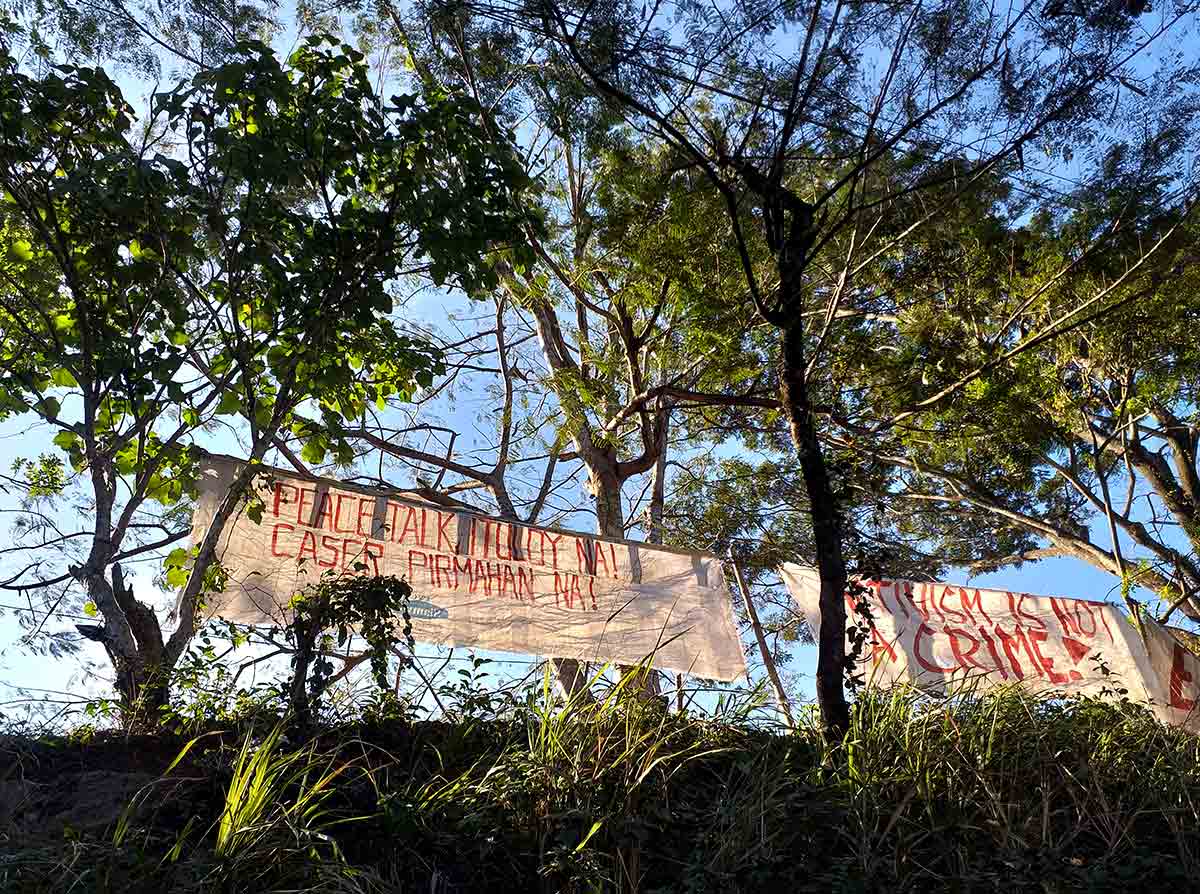
The side road leading off Governor’s Drive in Dasmariñas, Cavite is lined with streamers with messages such as “Tunay na Reporma sa Lupa, Ipaglaban” and “Activism is not Terrorism.” At its entrance is a makeshift barrier made out of bamboo, some rope, and a tire. On the left, someone asks your purpose for visiting and then instructs you to register your details in a record book. This is Barangay Langkaan I, better known as Lupang Ramos.

Security was a bit tight when I arrived in Lupang Ramos. There was an incident the other day, but thankfully, the situation didn’t escalate. I asked Miriam Villanueva, one of the leaders in the community, what happened and, according to her, last February 5, 70 kontras—farmers who would rather be paid off by developers than keep the land—threatened to take some of the land held by the residents. 

The threat of violence was real, but nothing ultimately came of it. As secretary general of the Katipunan ng mga Lehitimong Magsasaka at Mamamayan sa Lupang Ramos (KASAMA-LR), Ka Miriam has worked tirelessly in their fight to till the land that they believe should be theirs. In light of this, some residents jokingly refer to Lupang Ramos as “Miriamville,” but they also stress that if it wasn’t for Ka Miriam, they wouldn’t be anywhere near where they are today.

ADVERTISEMENT - CONTINUE READING BELOW

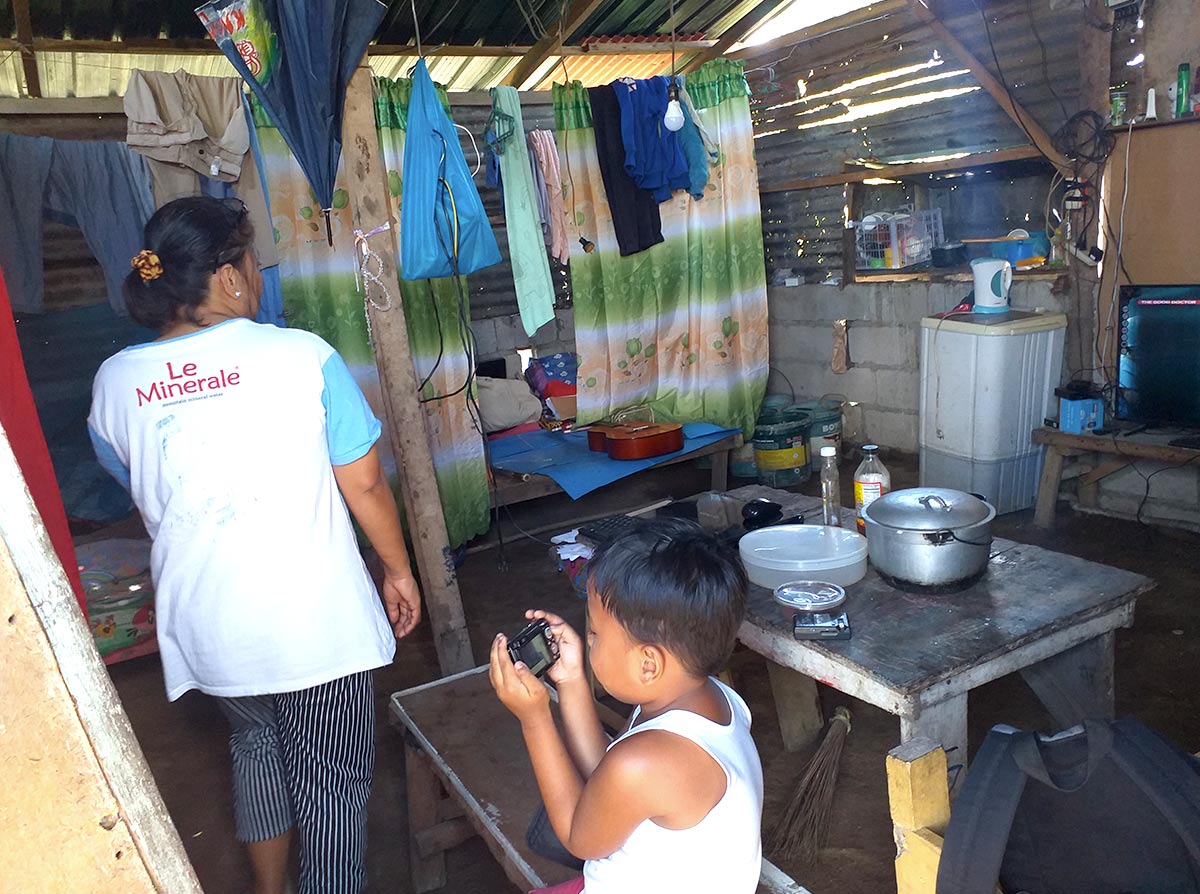
Miriam Villanueva and her youngest son Ken. Ka Miriam is the secretary general of KASAMA-LR, the organization that fights for the residents' rights to the 372-ha. land of Lupang Ramos.
article big image
PHOTO: Justin Umali
Post a Comment

Rice, Corn, and Sugarcane

Gregoria Tapanan, 74 years old, has lived in Lupang Ramos her entire life. She remembers a childhood of helping her parents till the land and sell their harvests. “Hindi ko inisip unahin ang pag-aaral,” she says, “dahil tanging hangad ko ay ang ikabubuhay ng aming pamilya sa pamamagitan ng pagyayaman sa lupa ng mga tanim. Ang araw-araw kong hawak ay itak, kalawit, at asarol.”

Nay Gregoria says she was always told that the land was originally owned by a Tandang Miyanang, who was said to be married to an Ongkiko. Her family tilled the land and was paid a portion of the profits. When Nay Gregoria was seven or eight, she recalls hearing that Tandang Miyanang died and the land was bought by the Americans. The place was then known as Lupang Kano.

CONTINUE READING BELOW
watch now

When the Americans bought the land, it was used to farm sugarcane. The farmers who lived there, including Nay Gregoria’s family, were forced to move to the fringes to make way for cash crops. Families went from farming rice and corn to sell to working the sugarcane fields for wages. Sugarcane was profitable and the processed sugar can be exported all over the world, unlike rice or corn. This arrangement went on for decades until 1965 when Emerito Ramos procured a title for the land.

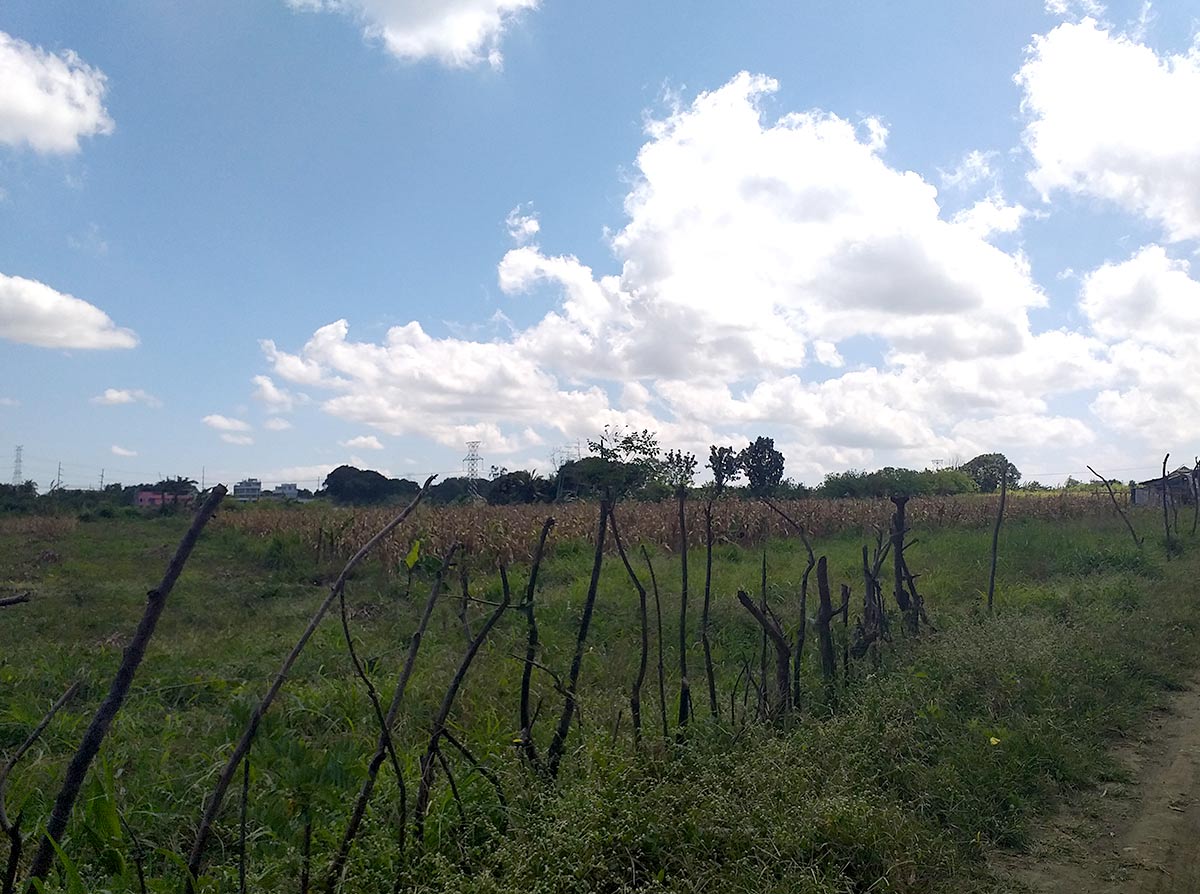
The urban sprawl of Dasmarinas, Cavite looms in the background—a reminder of the disparity between the farmers' land and the rest of the city.

article big image
PHOTO: Justin Umali
Post a Comment

Stuck In Agricultural Limbo

Emerito M. Ramos, Sr. was a businessman and official during the Second World War. His wife, Susana, has a portrait painted by National Artist Fernando C. Amorsolo, and his real estate company, Emerito Ramos and Sons, Corp., technically owns the title for Lupang Ramos. In 1965, Emerito Ramos came to the possession of Lupang Kano, turning it to Lupang Ramos. 

ADVERTISEMENT - CONTINUE READING BELOW

Nay Gregoria can not recall anybody from the Ramos family talking to them in person about the acquisition, but House Resolution 1370 from Congress states that a certain Paciano Gonzales acted as the middleman for the Ramoses, ordering the residents to cultivate rice, corn, and wheat.

This was the arrangement until 1972, when Ferdinand Marcos signed Presidential Decree 27, which stipulated that all agricultural land used for planting rice and corn should be redistributed to farmers. This was done to quell unrest from farmers, who were suffering under tenancy laws in haciendas all over the country.

PD 27 also stated that land used for cash crops was exempt from distribution and only agricultural land will be up for reform. Lupang Ramos just so happened to meet both criteria. 

On July 9, 1972, months before PD 27 was enacted, the city of Dasmariñas, Cavite apparently enacted Ordinance 29-A, which stated that the land of Lupang Ramos was a residential subdivision called “Traveler’s Life Homes.” 

It seemed that Lupang Ramos was destined to be stuck in agricultural limbo.

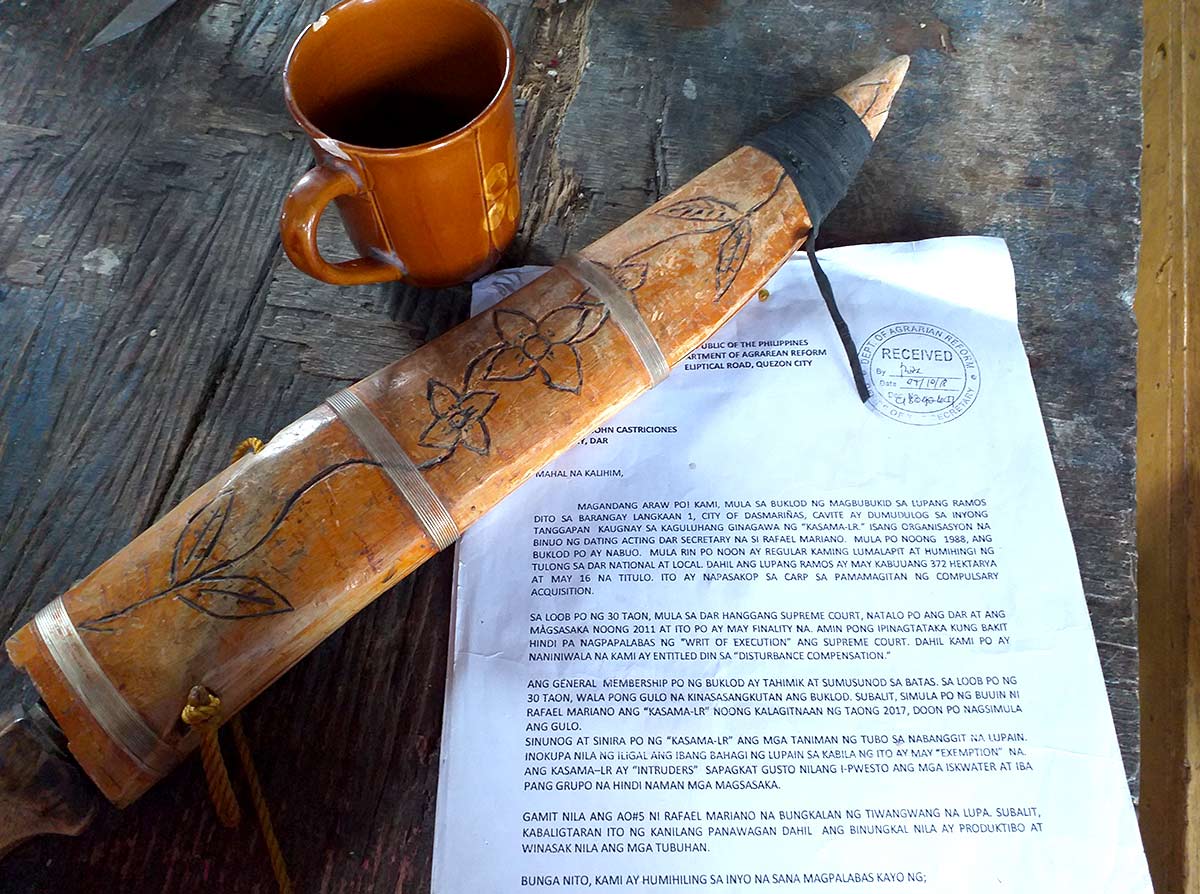
Minutes of the meeting between the Department of Agrarian Reform, KASAMA-LR, and BUKLOD.

article big image
PHOTO: Justin Umali
Post a Comment

Breaking Free with Land Reform

Things started to change in Lupang Ramos after Marcos. With Cory Aquino and new calls for agrarian reform came the hope that the failures of PD 27 might be corrected by Aquino's Comprehensive Agrarian Reform Program. 

Things would take a fateful turn, however, less than a year after EDSA. Ka Miriam was 17 when she marched on Mendiola for land reform. She managed to put herself through college, enrolling at the Technological University of the Philippines in an Industrial Education course, which was being offered for free at the time. When not studying, Ka Miriam went with Christian organizations to help farmers. On January 22, 1987, she marched with 20,000 farmers and other allies as a volunteer.

ADVERTISEMENT - CONTINUE READING BELOW

The events that day unfolded too quickly. “Hindi ko na alam kung ano nangyari,” Ka Miriam recalls. “Hindi pa naman ako mulat noon. Hindi ko mawari kung bakit kaming humihingi lamang ng lupa ay pinagbabaril. Sa mga natira pagkatapos ng Mendiola dalawa lang naman ‘yan. Mananahimik ka na lamang o magtatanong ka ng bakit. Bakit kami binaril? Bakit ganito ang lipunan?” 

An investigation into who started the violence, but the fact remains that 13 farmers were shot dead and 51 were injured. According to Ka Miriam, she herself was struck on the back by the butt of a rifle while trying to escape.

The message was clear: Agrarian reform will not be easy under President Aquino. During this time, the residents of Lupang Ramos organized themselves under the Buklod ng Magbubukid sa Lupang Ramos, Inc. (BUKLOD), with the goal of fighting for their rights to the land. The massacre at Mendiola didn’t deter them; if anything, it only strengthened their resolve to see that agrarian reform come to pass in their community.

First headed by Edgardo Mendoza, with the goal of organizing the farmers of Lupang Ramos and helping them assert their rights as legitimate residents of the land, BUKLOD slowly gained traction, especially after the events of Mendiola.  

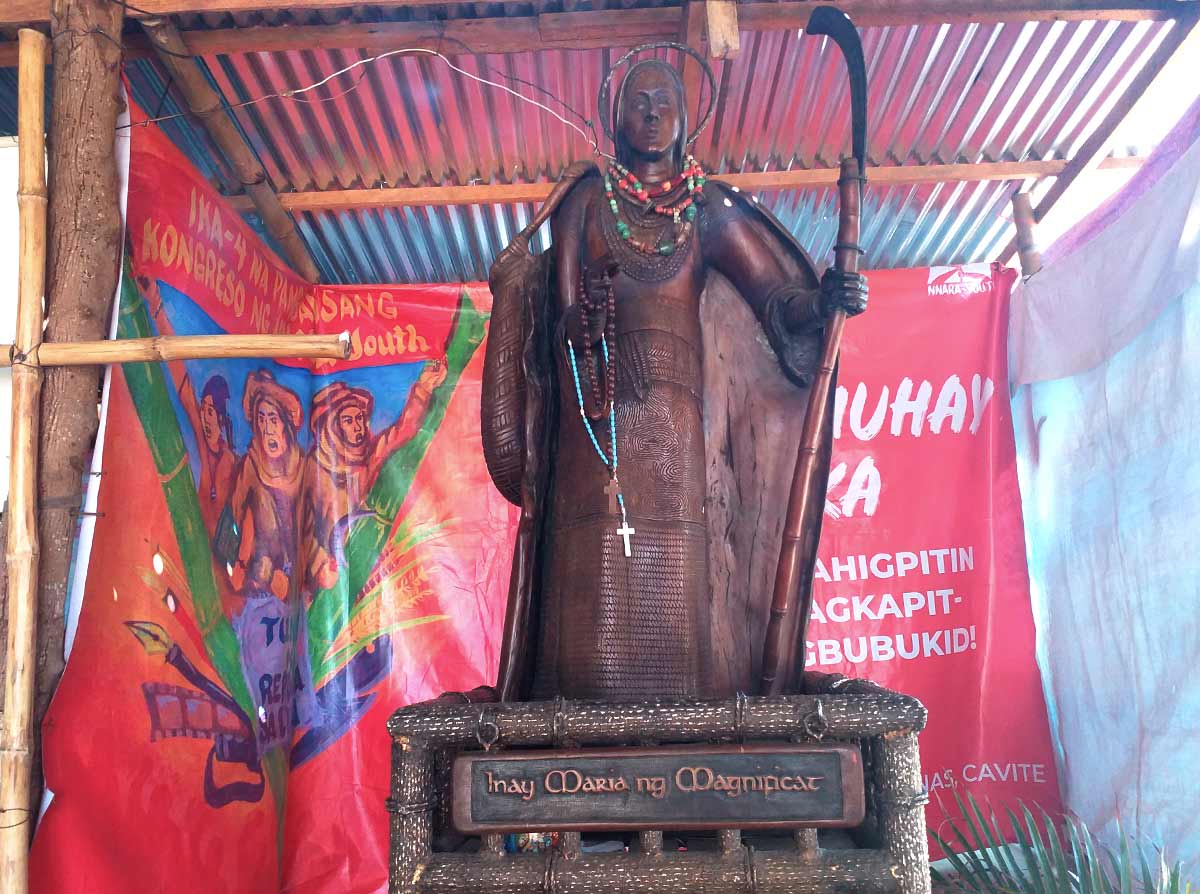
Inay Maria ng Magnificat, the patron saint of the poor. The local church in the nearby Union Theological Seminary provides catechism and basic education to the residents' children.

article big image
PHOTO: Justin Umali
Post a Comment

Taking a Stand in the Midst of Violence

The ownership of Lupang Ramos came under dispute because of the Ramoses' business dealings. Ramos sold the land to ASB Realty and Luke C. Roxas (now the St. Francis Square Group of Companies), while his son, Emerito Jr., entered into a Contract to Sell with Ayala Land. Until now, the residents allege that agents from both Ayala Land and Roxas are trying to claim parts of the 372-hectare land.

The residents of Lupang Ramos would never forget the '90s. The Department of Agrarian Reform exhorted the Ramoses to distribute the land, but were blocked by the family. Non-government organizations, peasant organizations, and church groups provided aid to the residents by donating seeds, equipment, carabaos, and so on. But what the residents truly remember is the violence.

One resident recalls a time when armed guards roamed the land and harassed farmers. This resident was an outsider who had just moved in with his wife, and he was singled out by guards almost continually. Guards questioned him and implied that he was a member of the New People’s Army.

Other residents remember an incident in 1990, when goons tried to run over their crops using a tractor. The women and children, led by Damasa “Nanay Masang” Perez, formed a line to prevent them from destroying the farms. Nanay Masang herself jumped onto the tractor and attempted to choke the driver with a towel.

HR 1370 from Congress notes another episode in 1997 when armed guards put up fences in the southwest portion of the land. The residents set up a barricade to defend the farms, and Ramos responded by involving the local police, who violently dispersed the barricade. Nanay Masang was thrown over a plough by a PNP major, breaking her back. 

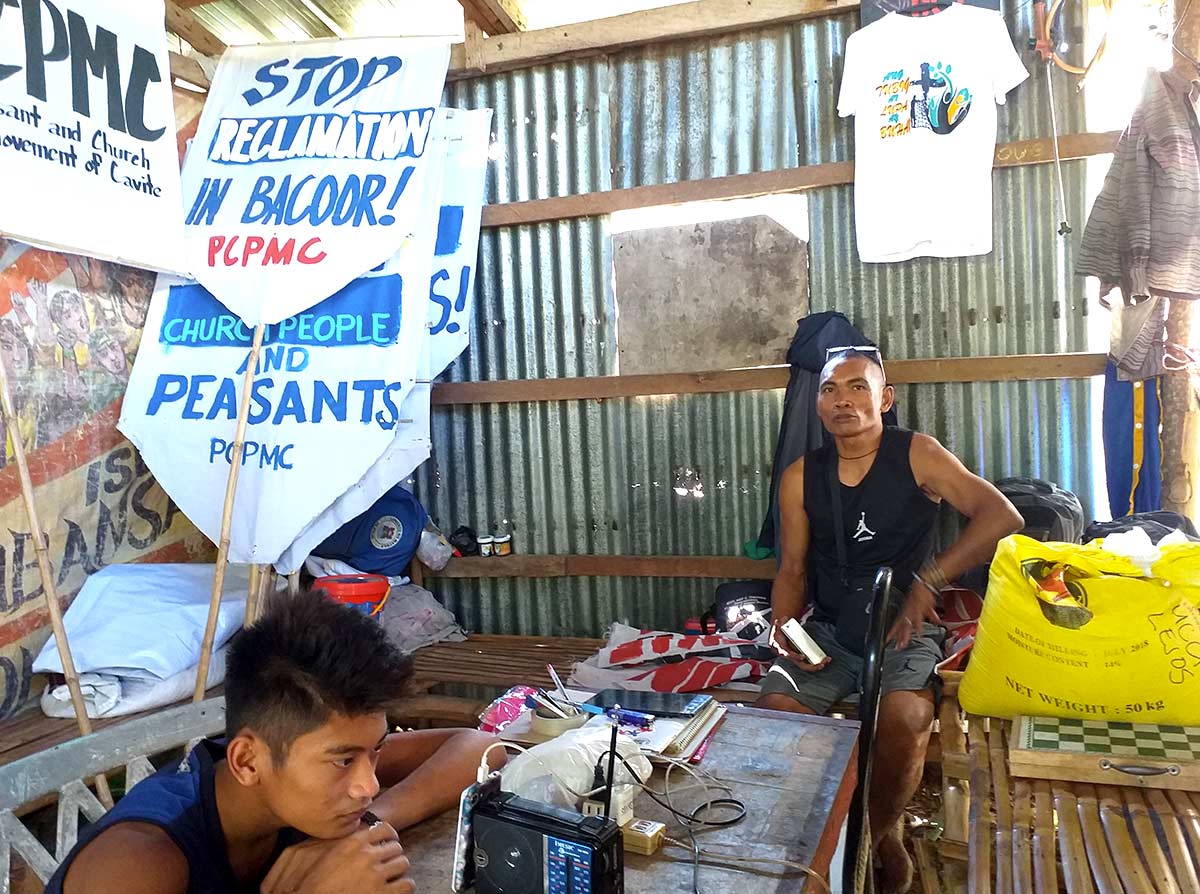
Two residents preparing to join protests against the displacement of fisherfolk in Bacoor due to reclamation projects. The fight for decent living goes beyond the confines of Lupang Ramos.

article big image
PHOTO: Justin Umali
Post a Comment

The Legal Struggle That Divides Families

BUKLOD’s leadership, however, lost sight of their principles and began to take commissions from other farmers. Nay Gregoria recalls, “Lumihis ng landas ang pamunuan ng BUKLOD. Nanguna sila sa pagbebenta, pangungumisyon at pagsasangla ng lupa kahit walang dokumento. Pati mga kagamitan sa pagsasaka na binigay sa samahan ay kanilang binenta.”

In 2011, the Supreme Court enacted with finality an order exempting Lupang Ramos from distribution to farmers under CARP, citing the earlier ordinance designating the land as residential. BUKLOD, realizing the loss, began to wait for the Execution Order, expecting compensation for the land. Not all residents agreed with this.

A year prior, some farmers who disagreed with BUKLOD formed KASAMA-LR to continue the legal struggle. When BUKLOD failed to contest the 2011 Supreme Court decision, KASAMA-LR pored through the case files with the help of lawyers from the Sentro para sa Tunay na Repormang Agraryo (SENTRA), an organization of volunteer lawyers who specialize in land reform cases. 

It took KASAMA-LR six months to find holes in the 2011 decision. The date when the Ordinance 29-A was enacted, July 9, 1972, was a Sunday for one thing. It was also in writing that the city of Dasmariñas did not have any record of the ordinance on file. Slowly, the residents under KASAMA-LR began building the case to revise the Supreme Court’s decision. 

Most recently, KASAMA-LR was able to secure aid from the Deparment of Agriculture, and the farmers now enjoy subsidies from the government despite insistence that the land is designated for residential use. Lupang Ramos is currently in a state where the Executive branch, through the DA and DAR, agree that it is agricultural, while the Judiciary thinks otherwise.

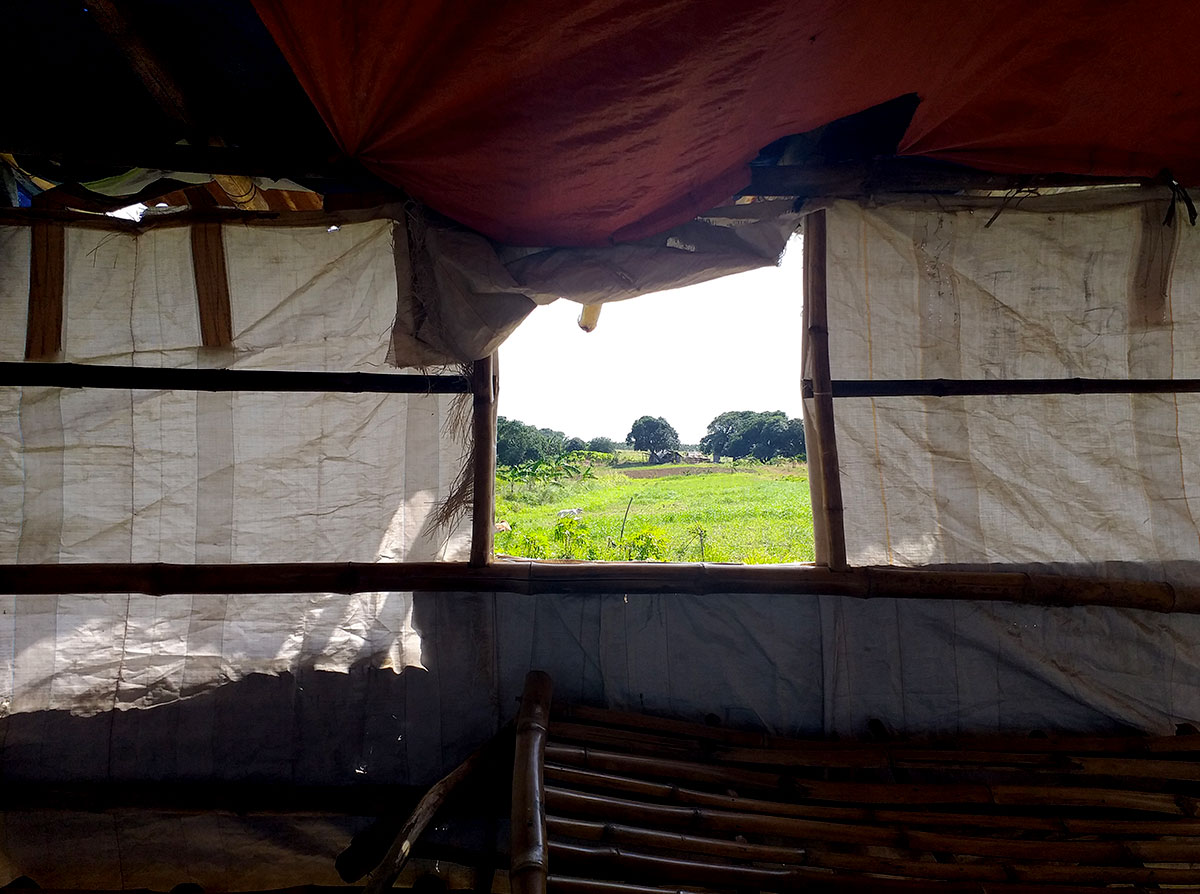
A resident of Lupang Ramos inside a kubol, one of many erected in strategic locations to guard against incursion by kontras. Residents have shift schedules and all huts must be manned at all times.

article big image
PHOTO: Justin Umali
Post a Comment

The formation of KASAMA-LR drove a wedge in the community. While most believed in their right to live on the land, others thought it would be better if they simply got their payment. “Pero isipin naman nila kung mabayaran sila,” Ka Miriam argues. “Saan sila pupunta? Iniisip nila na kada ektarya yung bayad sa kanila, e wala nga silang titulo. Papalayasin lang rin naman sila kapag nabayaran na. Kung magkabayaran nga.”

The story is different if you ask the kontras in BUKLOD. In a 2017 meeting between DAR, KASAMA-LR, and BUKLOD, the group claimed that the members of KASAMA-LR were not legitimate residents of Lupang Ramos, and that they were instigators of violence. They claimed that KASAMA-LR took over land and destroyed crops. 

On the other hand, KASAMA-LR claimed that BUKLOD allowed landowners and developers to take land that was rightfully the farmers’. KASAMA-LR also said they engaged in proper dialogue with any landowner before asking if the land could be farmed communally. 

Currently, DAR and the DA both recognize KASAMA-LR and subsidize part of their farming expenses.

It's hard to fully paint a picture of the story of the residents in Lupang Ramos. Beyond the legal struggle and the unfortunate violence on the ground, there is a layer of familial struggle between the residents and the kontras. Some families are torn by their affiliation.

The older residents would rather stick with BUKLOD. Most members of KASAMA-LR are younger: sons, daughters, cousins. Rudy Herrera, one of the BUKLOD’s leaders, is Ka Miriam’s cousin. A lot of the kontras are related to the residents in some way, making violent episodes all the more heartbreaking.

Despite all of this, there is some normalcy. Though people take turns manning the gate and strategically placed outposts to ensure the kontras don’t try to take any land, life in Lupang Ramos is what you would expect. People go about their day, farming, tending to the crops, doing their laundry, preparing meals, and so on. Children go out to play with tires or sticks. 

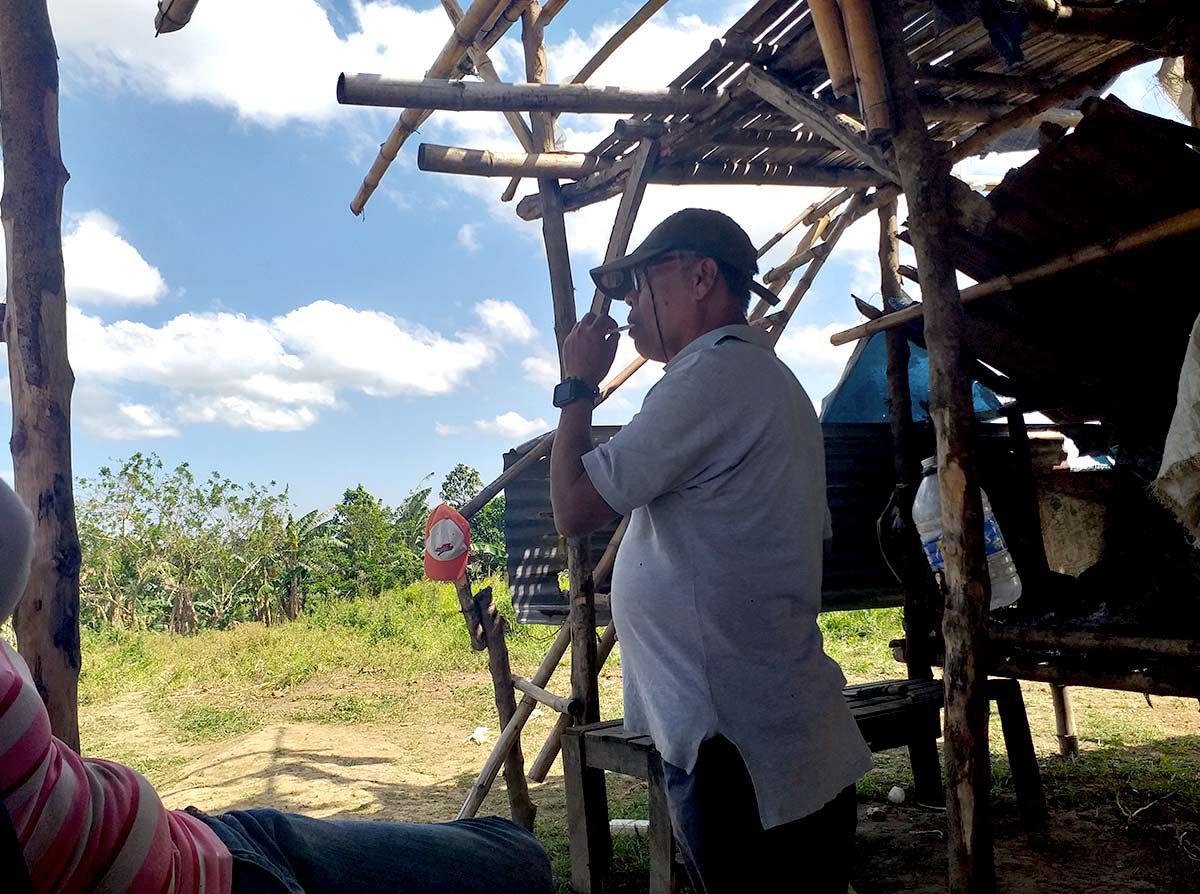
The view from inside a kubol. A parcel of land was taken by kontras last year, immediately after KASAMA-LR's bungkalan activity

article big image
PHOTO: Justin Umali
Post a Comment

The Success of Collective Action and the Future

In 2017, residents of Lupang Ramos reclaimed 51 hectares of land for a bungkalan, a communal farming activity that ensures the land is being used properly and that the residents have enough to eat. One resident recalls that the area back then was practically unused: What wasn’t a garbage dump was dense overgrowth. “Pwede ka magtago at ‘di masisilayan ng araw,” she says.

The bungkalan wasn’t without its problems, though. To get support, KASAMA-LR went through various loopholes with the DA and DAR before they managed to secure recognition, equipment, and funding. The group also engaged the caretaker in a dialogue to ensure that they were willing to allow the land to be used for communal farming. It took months of preparation before things were finally ready. 

During the bungkalan, members of BUKLOD, and even some policemen, tried to stop the residents, but to no success. In one episode, 40 men armed with bolos tried to intimidate the farmers. Gunshots were fired during the night.

Today, Lupang Ramos stands as an example of the success of collective farming and self-sufficiency. What was once dense forest is now fields for corn and other vegetables. What was once a garbage site is land where residents built their homes, permanent structures of hollow blocks and concrete. 

Ka Miriam goes about her day, though sometimes she complains that all the incidents with the kontras leave her with no time to do the laundry. She has three children, two of whom are taking up master’s degrees. Her youngest is five years old.

“Isang beses,” Ka Miriam told me as we were drinking coffee, “may dati akong kaklase, engineer na siya ngayon, nagtanong sa akin kung paano ba naging tama na ipamahagi yung lupa ng libre. Bakit hindi nalang naming bilhin?”

“Ang sabi ko, kung kwekwentahin mo kung magkano na ang kinita naming sa lupa, lampas lampas milyon na iyon. Kung titingnan mo kung gaano katagal na nagtatrabaho sa lupa yung mga magsasaka, lampas lampas na siya sa kung magkano ito. Hindi kami nangunguha ng lupa. Binabalik lang namin yung lehitimong sa amin.” 

“Sabi ko, kasi English siya magsalita, kaya in-English ko rin: It’s not a matter of money. It’s a matter of dignity.” 

Streamers adorn the entrance of Lupang Ramos, calling for a solution to the fundamental problem of farmers: agrarian reform.

article big image
PHOTO: Justin Umali
Post a Comment

Sources:

Buklod Nang Magbubukid sa Lupaing Ramos vs. E. M. Ramos and Sons, Inc., G.R. No. 131481

Department of Agrariant Reform, vs. E. M. Ramos and Sons, Inc., G.R. No. 131624, March 16, 2011 

House Resolution 1370, Directing the House Comittee of Agrarian Reform to Conduct Immediate Investigation, in Aid of Legistlation, on the Agrarian Dispute Between Farmers and Emerito M. Ramos and Sons Property of the 372-Hectare Lands in Brgy. Langkaan I, Dasmarinas City, Cavite, October 3, 2017 

Victims of Mendiola vs. Republic of the Philippines, G.R. No. 84607, March 19, 1993 

Department of Agrarian Reform, Highlights of the July 17, 2018 Consultation-Dialogue with BUKLOD & KASAMA-LR, OSEC Control No. C17060234, July 23, 2018 

Cabico, G. (2018, June 5). Armed men allegedly fire at farmers in disputed Cavite land. Philstar. 

Heraldo Filipino. (2018, May 30). The Farmers’ Struggle. Heraldo Filipino.

Read Next
Encarnacion Alzona, the First Filipina to Get a Ph.D., Fought for Women's Right to Vote
Read more stories about
  • politics,
  • long reads
Most Shared
by author
Esquire Money
Most Popular
Latest Feed
The New Dean of New York University's Faculty of Arts and Science Is a Filipino
Armscor CEO Martin O. Tuason Passes Away at 51
A Fond Farewell to Chocolate Lover Inc.
The 8-Ball of Greatness in Philippine Pool
Tom Cruise Wore an Extremely Rare £70,000 'President' Rolex Watch to Accept His First Oscar
What Can Poetry Teach Us about Natural Disasters?
#InTheLoop
  • Politics
  • Culture
  • MONEY
  • Style
  • Long Reads
© EsquireMag.ph, All Rights Reserved.
  • About Us
  • Contact Us
  • Terms of Use
  • Privacy Policy
  • Sitemap
BIR Seal of Registration
Close

We use cookies to ensure you get the best experience on Esquiremag.ph. By continued use, you agree to our privacy policy and accept our use of such cookies. Find out more here.

Present
Read Cover Story
Read Cover Story
Catfish Image