

Why Did Manuel Quezon Transfer $500,000 to Douglas MacArthur?

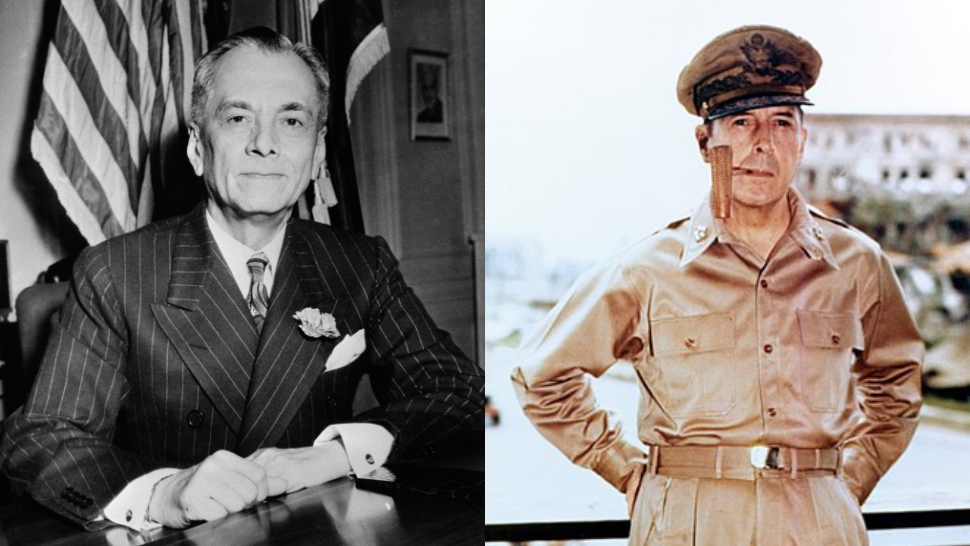
Before General Douglas MacArthur and President Manuel Quezon were evacuated from Corregidor during the onslaught of the Japanese offensive, the American general apparently was slated to receive what we may call a "gift" from the president. He was to be given a sum of $500,000, as it turns out. The controversial mystery gift had been the subject of scrutiny only four decades later, when scholars confirmed this to be true.
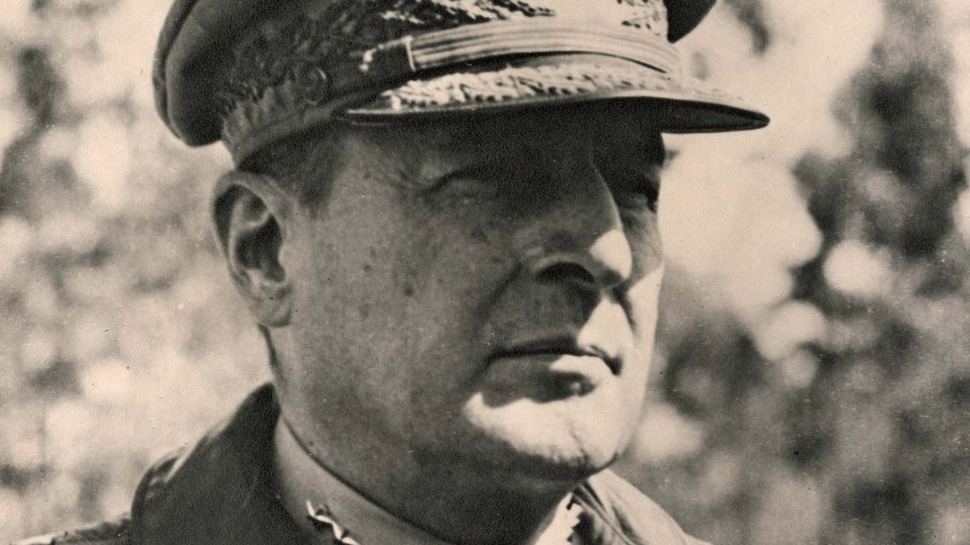
To put things in context, MacArthur fled from Japanese invaders in Corregidor in 1941 to the island fortress that was tasked with guarding Manila Bay. He was said to have radioed Washington for reinforcements but it didn't respond. Quite the dark moment for the war in the Pacific for the famed general, believing it was his last moments.
With MacArthur at the time was Quezon, who was suffering from tuberculosis. A ship was considered for the evacuation but the general thought it would be too much of a risk in the face of Japanese forces. MacArthur was against the idea, and so nothing came of it.
We can't tell the story of the Pacific War without MacArthur.
A Promise Kept
Quezon would eventually issue an executive order on January 3, 1942 regarding a transfer from the Philippine treasury in New York City to the general's personal account. The president at the time said that the money was meant to reward him for his "outstanding service" from 1935 to 1941.
Quezon, being the president of the Philippine Commonwealth, had offered MacArthur the position of being the Philippines' top military advisor in 1935, after all. The president was said to have promised MacArthur a bonus of 46/100 of 1 percent of Philippine defense spending up to 1942 (he actually retired from the U.S. Army in 1937 but continued as an advisor to the Philippines). MacArthur was the Field Marshal of the Philippine Armed Forces during those years, spearheading the Philippine forces during a turbulent time for the nation.
Thus, bringing us to this moment. This led to three of MacArthur's chief aides receiving $140,000 each in their accounts. The following month, February 19, 1942, to be exact, the funds were transferred. Quezon would be taken to safety in a U.S. submarine the following day. And the secret financial transaction was kept as such for years until a certain professor of history unraveled it.
ALSO READ:
This Rare Recording of President Manuel Quezon's 1920s Speech Is More Relevant Than Ever
This Rare Photo of Manuel Quezon Panning for Gold While Wearing Sando Exists
The Discovery of the Secret Financial Transaction in 1979
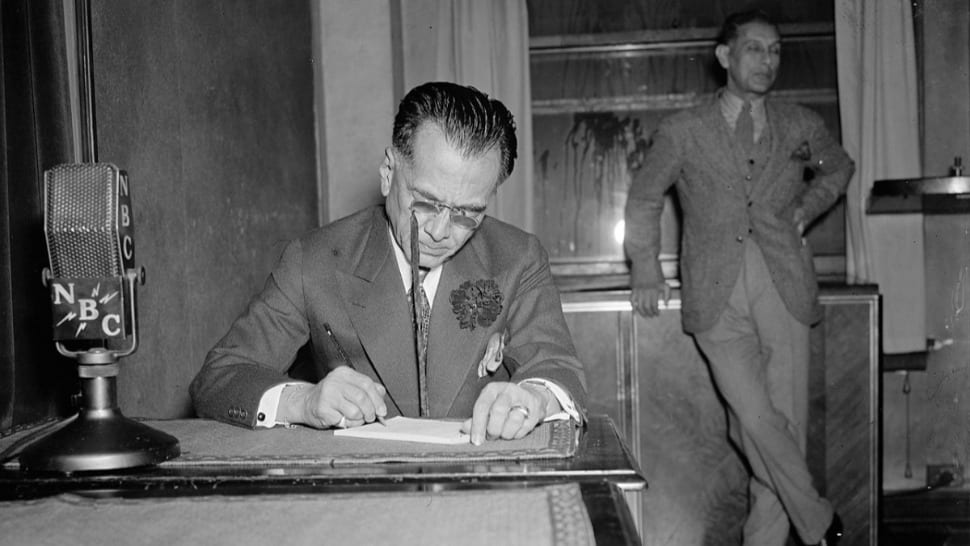
Quezon writing
It was Boston College Assistant Professor of History Carol M. Petillo who discovered this secret financial transaction in 1979. She did so while doing work for her doctorate degree.
Sure, it had been illegal for U.S. officers to receive payment from foreign governments. The rule, however, could be bypassed if it was approved by the War Department, and suffice it to say, it was. President Roosevelt and Secretary of War Henry Stimson knew of the transaction but elected to do nothing about it. Other key officers within circles in Manila and Washington reportedly knew about this, too.
Interestingly, McArthur's staff members, namely, Lieutenant Colonel Richard K. Sutherland, Brigadier Richard Marshall, and Lieutenant Colonel Sidney L. Huff also received money from Quezon for their pre-war service, records show. They were given $75,000, $45,000, and $20,000, respectively. After being appointed Supreme Commander Allied Expeditionary Force, Dwight D. Eisenhower was also offered money (it's estimated that it was $60,000) by the president.
Eisenhower would nevertheless decline. He once said:
"I explained that while I understood this to be unquestionably legal, and that the President's motives were of the highest, the danger of misapprehension or misunderstanding on the part of some individual might operate to destroy whatever usefulness I might have to the allied cause in the present War."
ADVERTISEMENT - CONTINUE READING BELOW
The payments were found to be legal, but its discovery wasn't exactly met with warm regards by the public. At the time of its publishing, which would circulate the following year, the story of the mystery gift of sorts had weighed on MacArthur's legacy in the United States. Quezon would spend the last years of his life in various hospitals due to tuberculosis complications. He passed away on August 1, 1944, at a cure cottage in Saranac Lake, New York.
Was it a bribe? It's not as simple as that, really. Even Petillo claimed that there were many layers to this particular happening. "To call the money a bribe would be simplistic," she told TIME. "President Quezon could have believed that he was acting in the best interests of his countrymen, as perhaps he was."
If it wasn't for a copy of the order Sutherland, one of the general's aides, left, Petillo would have never even found this out. Accusations of MacArthur being "compromised" and "bought off" persisted throughout his life, and the fact that the general never mentioned this, despite listing all of his accomplishments in the book Reminiscences, shows that even he understood that it was problematic to a certain degree. But yeah, as far as legalities are concerned, it was under the guise of aid during the war. Perhaps we can call it an "utang na loob" thing, if you will, from President Quezon.
Source:
- "Douglas MacArthur and Manuel Quezon: A Note on an Imperial Bond" in Pacific Historical Review, Carol M. Petillo (1979)
- Official Gazette of the Republic of the Philippines, Executive Order No. 1, s. 1942
