• Man at His Best 2025
  • Long Reads
  • Style
  • Money
  • Wheels
  • Culture
  • Opinion
  • CORNER OFFICE
Search
Menu
Close
Close
  • Man at His Best 2025
  • Long Reads
  • Style
  • Money
  • Wheels
  • Culture
  • Opinion
  • Style
    • Fashion
    • Grooming
    • Watches
  • The Good Life
    • Pursuits
    • What She Wants
    • Mavericks
    • The Directory
    • The Noble Man
  • Culture
    • Food & Drink
    • Arts & Entertainment
    • Lifestyle
    • Tech
    • Movies & TV
    • Music
    • Books & Art
    • Design
  • Wheels
    • Cars
    • Motorcycles
    • Drive
  • Money
    • Industry
    • Wealth
    • Capital
    • Movers
  • Long Reads
    • Notes & Essays
    • ESQ&A
    • What I've Learned
    • Fiction
    • Features
  • Life
    • Sports
    • Health & Fitness
    • Women
    • Sex & Relationships
    • Travel
  • Politics
    • Opinion
    • News
  • COUPONS
  • About Us
  • Terms of Use
  • Privacy Policy

NPC Seal of Registration

Esquire has been granted the NPC Seal of Registration in recognition of the successful registration of its DPO and DPS

© 2026 EsquireMag.ph, All Rights Reserved
Long Reads

The Secrets of Masungi's Prehistoric Limestones

By Mario Alvaro Limos
Mar 14, 2023
Post a Comment

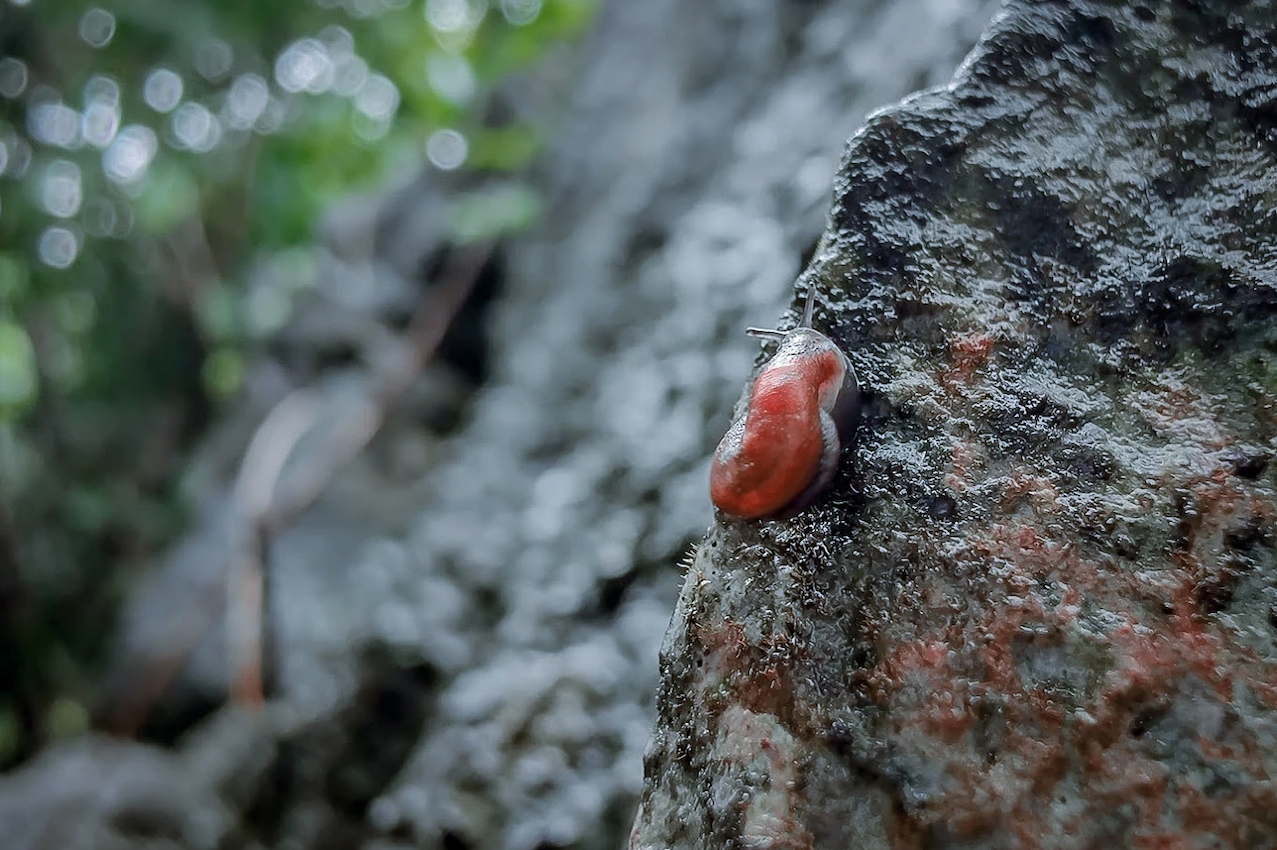
Something tiny and slimy is crawling on the wet and jagged surface of the mountainside: a microsnail, the size of a grain of rice. Measuring just 4 millimeters long, the Masungi microsnail is the newest species of snail in the world. Scientists think it is found nowhere else in the Philippines or the world. 

The Masungi microsnail is just one of the many secrets of Masungi’s limestone cliffs—whose unique ecosystem provides just the right conditions for even more unique species to thrive. The limestones were formed 60 million years ago—a blink in the geologic timescale—just after the dinosaurs were wiped out by a planet-destroying meteor strike. 

A Masungi Microsnail the Size of a Grain of Rice
article big image
PHOTO: Masungi Georeserve
Post a Comment

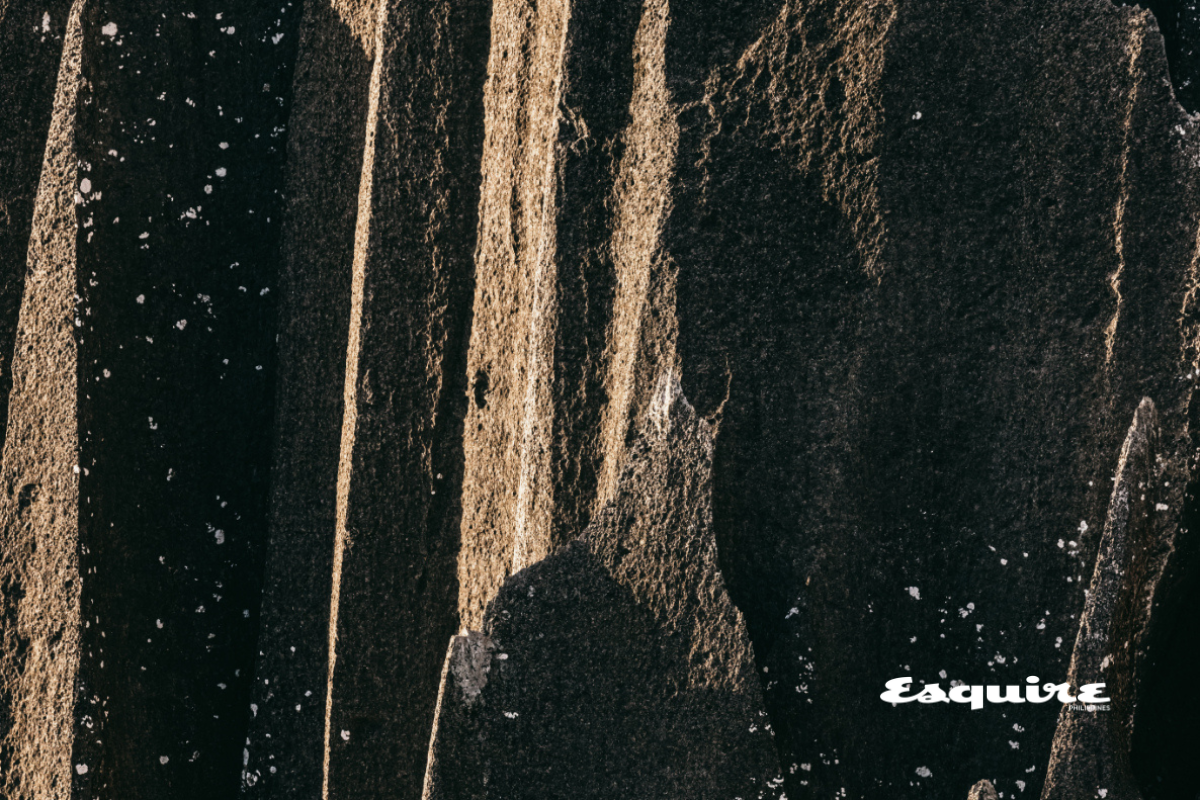
If you look up close, you will see fossils embedded in the limestones of Masungi. They also contain broken pieces of coral, shells, and other sediments from the sea. But the limestones are 600 meters above sea level, why are there shells and corals preserved inside the limestones?

ADVERTISEMENT - CONTINUE READING BELOW

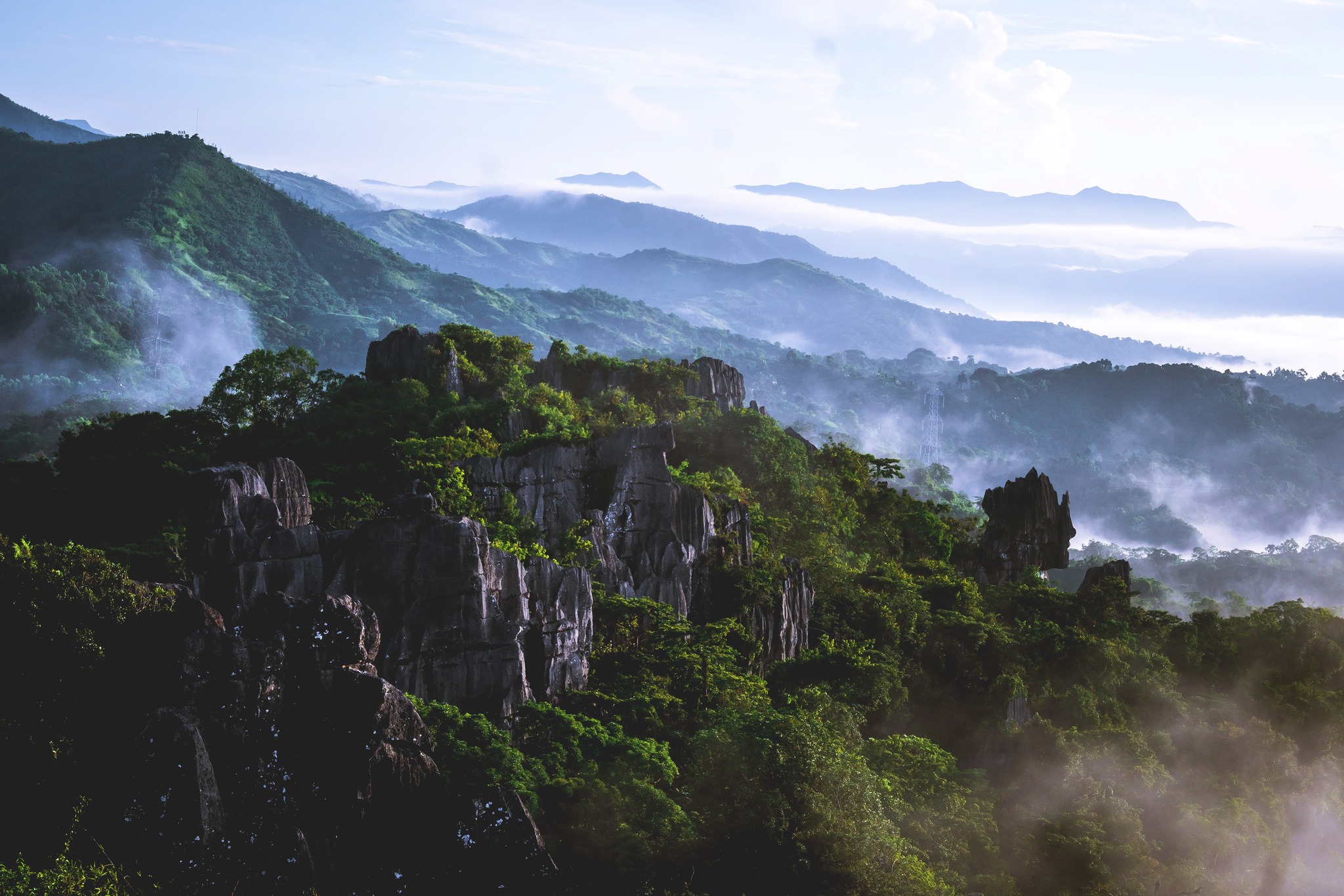
The Masungi Limestones formed mostly during the Paleocene epoch 60 million years ago. These formations rose from the ocean through the meeting of tectonic plates—the same geologic activity that formed the great Sierra Madre mountain range. Masungi Georeserve is actually part of the Sierra Madre. Because of its proximity to the city, the Masungi Georeserve and its limestone cliffs act as Metro Manila’s last-standing shield against typhoons and climate change. 

Up Close: The Masungi Limestones

article big image
PHOTO: jilson tiu
Post a Comment

“By definition, limestone is a kind of sedimentary rock formed with different kinds of minerals, including calcite, corals and other organisms' exoskeletons,” writes Masungi. That means every limestone formation in Masungi contains vast amounts of unique information about the earth 60 million years ago. 

ALSO READ: 

Ann and Billie Dumaliang and Their Fight for Masungi

Why Are Powerful People Seeking to Exploit Masungi Georeserve?

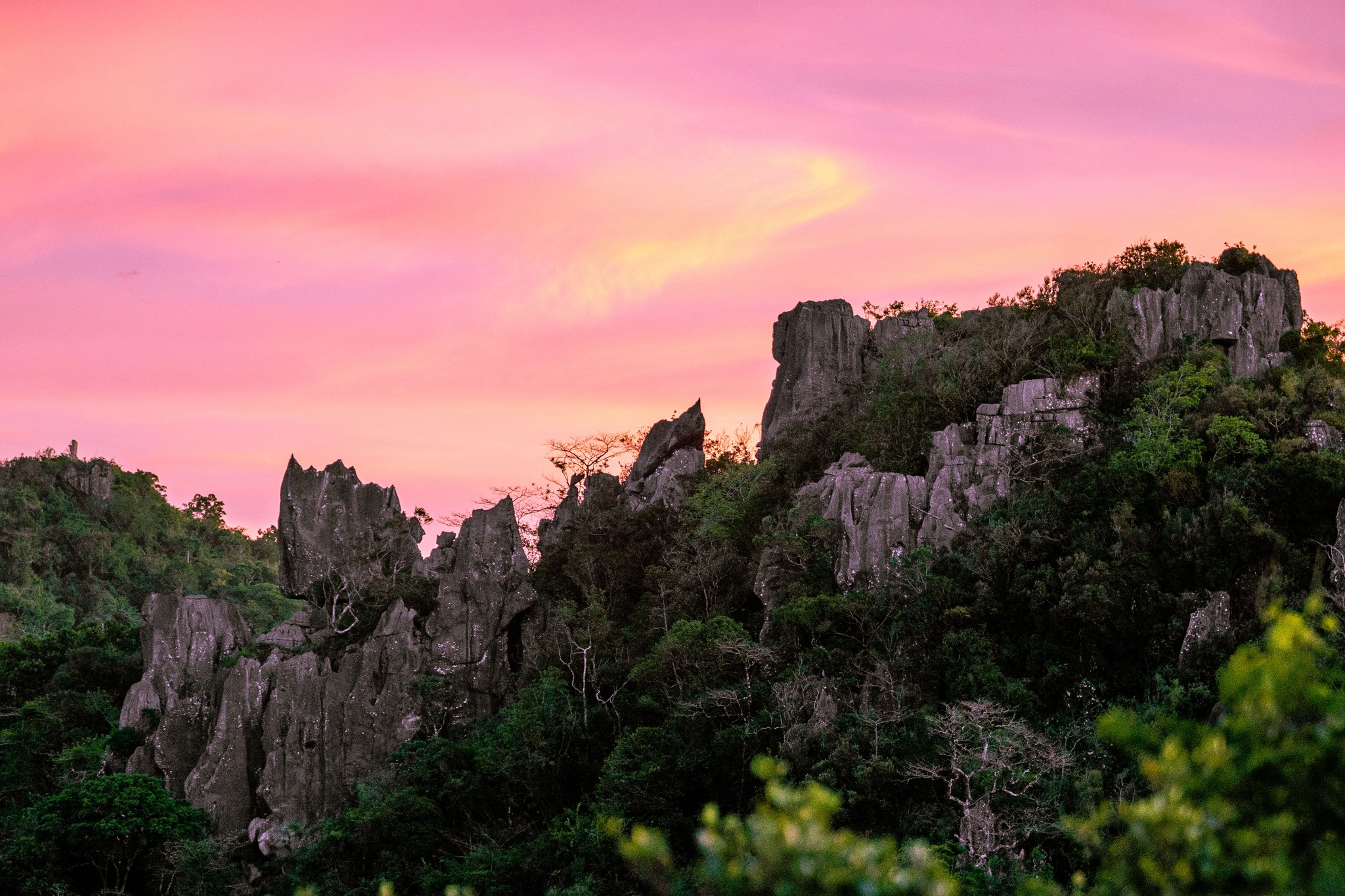
Masungi’s name comes from the ancient Tagalog word “masungki” or “sungki,” which means something sharp and protruding, describing the landscape that features jagged cliffs and limestone peaks. 

CONTINUE READING BELOW
watch now

Throughout its existence, the Masungi Georeserve Foundation has ensured the survival of over 400 species of flora and fauna, protected 60-million-year-old limestone formations, planted 40,000 indigenous trees, and employed over 100 locals who are now helping protect this piece of paradise.

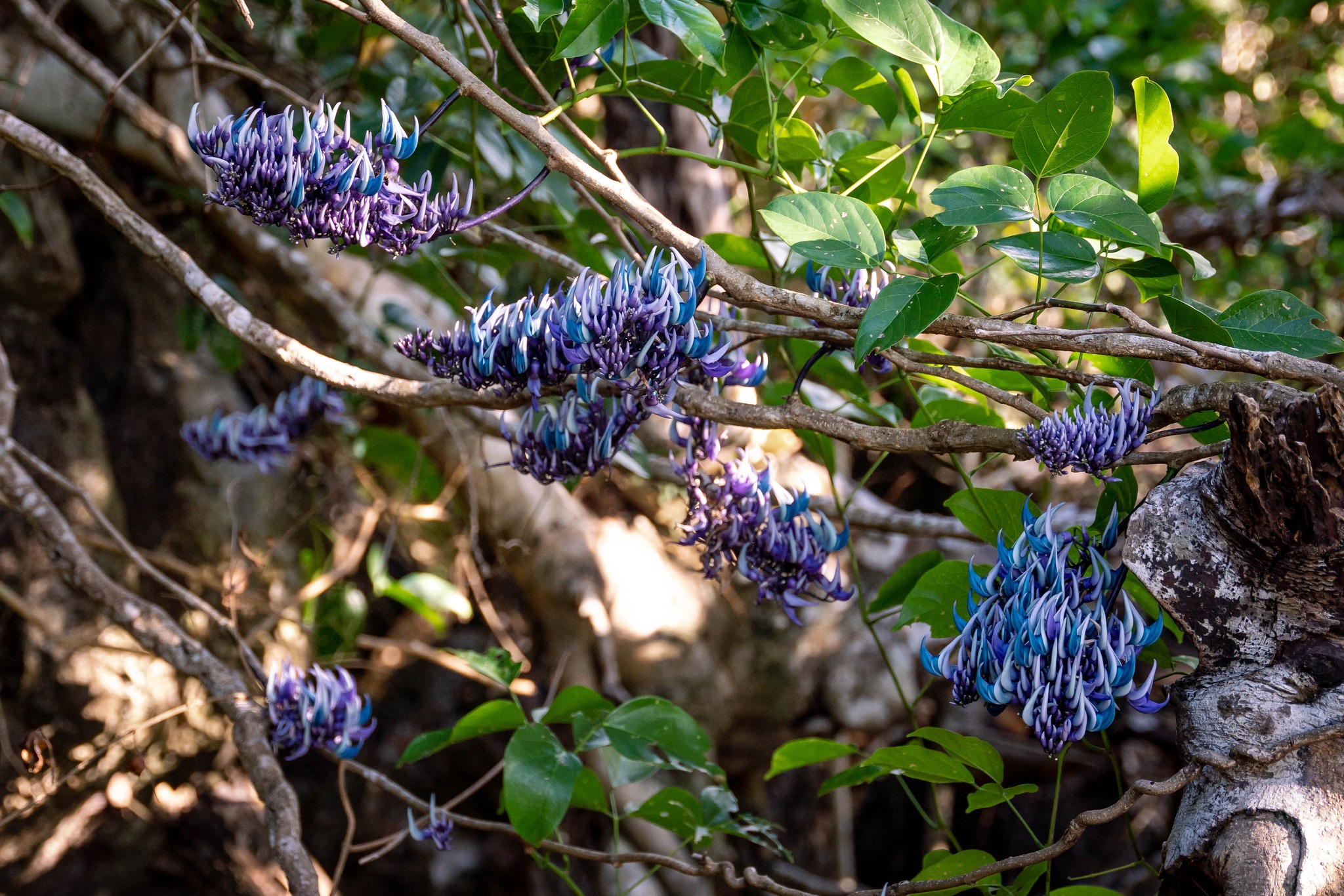
Hidden in the wet forests below the limestones, a very rare gem hangs on tree branches: JC’s Vine, a plant so rare and precious it is found only in four places in the Philippines. Nothing about its presence on the five-peso coin captures the vibrance of its lilac explosion as it blossoms once a year. 

JC's Vine Blooming Once a Year in Masungi Georeserve

article big image
PHOTO: Masungi Georeserve
Post a Comment

But land grabbers and quarrying companies are bent on exploiting the land under the forests of Masungi Georeserve, threatening to destroy the habitat of tens of thousands of plants and animals that seek refuge in this sanctuary. The most recent threat that Masungi had to face was the Bureau of Corrections, whose sudden interest in building its headquarters at the heart of Masungi’s protected sanctuary drew raised eyebrows among senators. 

ADVERTISEMENT - CONTINUE READING BELOW


“Masungi is home to hundreds of native plant and animal species that are part of Filipino natural heritage. Our forest is one of the last remaining forests near Manila and the way we take care of reflects how we care for our forests throughout the country,” Masungi Georeserve told Esquire Philippines.  

According to Masungi Georeserve, the watershed areas around Masungi protect the National Capital Region and Rizal Province from the worsening impacts of climate change. According to the World Bank study on the Upper Marikina Watershed in 2017, in-tact forests can lower flood water volume by 27 percent to 48 percent versus a depleted forest. 

More than fossils, microsnails, and lilac-petalled vines, Masungi’s limestone cliffs are hiding something irresistible to capitalists: minerals and precious ores.

article big image
PHOTO: Masungi Georeserve`
Post a Comment

Masungi is located at the southern tip of the Sierra Mountain Range, a place rich in natural resources. According to the protectors at Masungi, the Province of Rizal itself, where Masungi is situated, contributed the largest output to the mining sector of the entire Region 4A-CALABARZON. 

Based on data provided by the Mines and Geosciences Bureau, Rizal Province is the country’s largest producer of industrial mineral basalt, with a production value of more than P1.7 billion in 2021. Masungi Georeserve could be sitting on top of a very rich quarry that is worth hundreds of billions of pesos. 

For the land grabbers, Masungi is a rich land that is sitting on top of millions of dollars’ worth of quarry. 

For Ann and Billie, it’s a sanctuary for returning flora and fauna, some of which have not been seen in Luzon for decades. The land even hosts prehistoric plants older than dinosaurs. 

article big image
PHOTO: Masungi Georeserve
Post a Comment

Masungi Georeserve is an award-winning geotourism site that began as a simple public-private reforestation project in 1996, in which the government through the DENR awarded the Dumaliang family the rights to develop 30 percent of the forest, while conserving 70 percent of the area. The project involved restoring 400 hectares of denuded forests. 

ADVERTISEMENT - CONTINUE READING BELOW

Today, the georeserve is run and protected by sisters Ann and Billie Dumaliang, who are Masungi Georeserve’s project manager and trustee, respectively.

In February 2021, the Dumaliang sisters were named among the five winners of Vanity Fair’s 2021 Changing Your Mind Travel Awards. Ann is also a National Geographic Explorer and a Regional Finalist for Young Champions of the Earth by the United Nations Environment Programme (UNEP).

“You’re up against wealthy and powerful individuals, it’s a challenge, but based on our experience, we are compelled to say something, to do something, and to fight back,” Billie tells Esquire. 

“Despite harassment and abuse of power, there is hope.”

Read Next
Antoinette Jadaone on the Makings of a Writer-Director and the State of Local Cinema
Read more stories about
  • Nature,
  • environment,
  • conservation,
  • Masungi georeserve
Most Shared
by author
Esquire Money
Most Popular
Latest Feed
The New Dean of New York University's Faculty of Arts and Science Is a Filipino
Armscor CEO Martin O. Tuason Passes Away at 51
A Fond Farewell to Chocolate Lover Inc.
The 8-Ball of Greatness in Philippine Pool
Tom Cruise Wore an Extremely Rare £70,000 'President' Rolex Watch to Accept His First Oscar
What Can Poetry Teach Us about Natural Disasters?
#InTheLoop
  • Politics
  • Culture
  • MONEY
  • Style
  • Long Reads
© EsquireMag.ph, All Rights Reserved.
  • About Us
  • Contact Us
  • Terms of Use
  • Privacy Policy
  • Sitemap
Close

We use cookies to ensure you get the best experience on Esquiremag.ph. By continued use, you agree to our privacy policy and accept our use of such cookies. Find out more here.

Present
Read Cover Story
Read Cover Story
Catfish Image