
What Happened When Noynoy Aquino Watched His First Live Boxing Match at The Big Dome With His Dad Ninoy

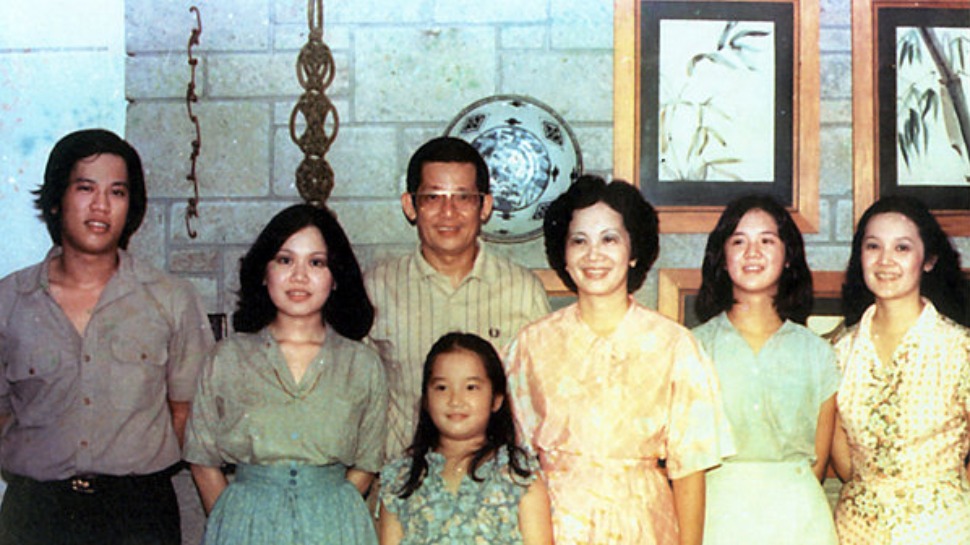
Most stories about the Aquinos mention Ninoy’s career in politics and his tussles with then-President Ferdinand Marcos, which culminated in the family being forced to relocate to the United States in the early ‘80s. And, of course, Cory’s turn as Chief Executive during the turbulent post-EDSA People Power Revolution years. It’s rare to hear about stories involving the family’s regular life outside of the crazy world of politics during those early years.
The Aquino family moved to their house on No. 25 Times Street, West Triangle, Quezon City in 1961. Benigno Simeon Aquino III, or Noynoy, was the lone boy in the brood of five kids of Ninoy and Cory. In one speech when he was President, delivered during the 60th anniversary of Araneta Center in Cubao, Noynoy got candid and talked about growing up in Quezon City.
“Dito na ako lumaki at nag-aral sa Quezon City,” he said. “Bilang isang batang QC, nakita ko kung paano nagbago ang lugar na ito mula nang maitayo ang Araneta Center at mga karatig na negosyo at gusali (I grew up and studied here in Quezon City. As a QC kid, I saw how much this place has changed after Araneta Center and surrounding buildings and businesses were built).”
Noynoy said that, in those days, the City of Manila was still the center of commerce and entertainment, and how “out of the way” Cubao was compared to everywhere else.
“Halimbawa po, doon nagpupunta ang mga gustong manood ng sine. Siyempre sa Maynila lahat ang sinehan. Parang isa, dalawa ang nandito sa Quezon City. Pero nang magbukas ang New Frontier Theater, at later on ‘yung Nation, hindi na kailangang pong magbiyahe ng mga taga-Quezon City papunta ng Maynila (For example, everybody went to Manila to watch movies because that’s where all the theaters were, and there were only one or two here in Quezon City. But when New Frontier, and later on Nation Theater, opened, people from Quezon City didn’t need to travel all the way to Manila).”
Back-to-school shopping
It was a yearly ritual, Noynoy said, for students to troop to Cubao to buy new unforms, bags, and school supplies. People shopped at National Book Store, and then to Shoemart, or now simply SM, or Marikina Shoe Expo to buy new shoes.
“Naaalala ko pa nga ang pagsalita o pagsigaw ng isang sales lady para ibaba ang kanilang mga sapatos,” he said. “Yung iba nga po, binabagsak. Actually, parang may chute. Bata ka, “Uy, mayroong nagliliparan ditong mga sapatos.” Pinapanood mo, hahatakin ka naman ng ibang tindera dahil baka tamaan ka ng mga sapatos. ‘Yung conveyor belt ho yata ginagamit lang ‘ata kapag sinasauli ang mga maling sukat, pero ‘yung nagagamit ‘yung talagang–hindi naman ho binabato, pero binabagsak (I remember one of the salesladies yelling their orders for the shoes up to someone in a hole in the ceiling. I would watch the action, but they would yank me out of the way because I might get hit by the falling shoes. They might have used a conveyor belt to return the shoes that were the wrong size, but they really used the system where they would just drop the shoes (from the ceiling).”
“Pagkatapos ng shopping, ‘yung parang pinaka-incentive ng aking ina, dadalhin kami mag meryenda diyan po sa Marikina Shoe Expo. Nakalagay ‘yung Nena’s bibingka ho yata, mainit na pandesal kasama ‘yung menudo. Ganitong-ganito po mismo ang ritwal namin noon ng aking pamilya kapag pumapasyal sa Araneta Center bago magpasukan (After shopping, my mother would take us to eat merienda at Marikina Shoe Expo, where there was Nena’s Bibingka, and hot pan de sal and menudo. This was my family’s ritual back then when we were visiting Araneta Center before school starts).”
Spectators at a boxing match
Noynoy said he had many other memories at Araneta Center, but one of the best ones was watching his first live boxing match at the Araneta Coliseum. The Big Dome, as many people have since come to refer to it, was built by the Araneta family in the 1950s and opened for the first time in 1960.
“Sa Big Dome, ako po ay nakapanood ng una ko pong live na boxing match,” he said. “Doon ko rin yata nakilala si Tito Nene (Jorge Araneta, chairman of the Araneta Group of Companies) for the first time. Kasama ko po ang aking ama, o siguro ang tama doon ay sinama ako ng aking ama (I watched my first-ever live boxing match at The Big Dome. I think that’s where I first met Tito Nene. I was with my father, or rather, my father brought me along.”
The former President said that during the match, his father dared him to make a bet on the match.
“Dahil galing po tayo sa Ateneo, hindi ko naman ho kilala ‘yong boksingero. Grade school pa po ako noon. Basta naka-blue na trunks, iyon po ang pinipili ko. ‘Yong hindi blue ang trunks, iyon ang pinili niya. Suwerte ko naman ho, sa tatlong magkasunod-sunod na bakbakan, nanalo po lahat ng naka-blue na trunks. At bayad nang bayad ang tatay ko sa akin (I was still in grade school at Ateneo at the time, and of course I didn’t know who the boxers were, but I chose the one wearing the blue trunks. My father chose his opponent. I guess I got lucky, because for three consecutive matches, the boxer with the blue trunks always won, so my father kept paying me).”
Noynoy was quick to add though, that Ninoy was only paying him about P1 per bout, which wasn’t much, but, for a grade school kid in the 1960s, it was a lot. He even said it was almost as much as his allowance.
In the fourth match, Noynoy said his father didn’t ask him if he’d still like to continue the bet. But the boxer with the blue trunks lost.
“Nang natalo po ‘yong naka-blue na trunks, sinisingil ako ng tatay ko,” Noynoy said. “Sabi ko, ‘Hindi mo naman ako hinamon ng pustahan dito.’ Tapos, [sinagot ako], ‘Aba, hindi. Natalo ka. Magbayad ka.’ Sabi ko, ‘Ganoon pala ‘yon ah’ (When the boxer in the blue trunks lost, my father was asking me to pay up. I said, ‘But you didn’t ask me if I wanted to place a bet.’ And he replied, ‘Oh no. You lost. You should pay up.’ And I said, ‘Ah, so that’s how it works.’)
“Noong binabayaran ko na, sabi ni Tatay, ‘Hindi, binibiro lang kita.’ Pagkatapos po noon, hindi na ako sinama ng tatay ko ulit sa boxing. Hanggang ngayon po, napapangiti pa rin ako ‘pag naaalala ko ‘yong mga panahong iyon. Para kaming ordinaryong mag-amang nagpapalipas ng oras nang magkasama (When I was giving himn the money, Dad said, ‘No, I was just teasing you.’ After that, my father never took me to a boxing match again. I still smile whenever I remember those days. We were just like an ordinary father and son spending quality time together).”
A good kid
When he graduated grade school, Noynoy said his parents asked him where he wanted to celebrate. The family ended up at a Japanese restaurant at the old Fiesta Carnival amusement park, where he said he was able to spend time at the rides.
“Naaalala ko rin po na may panahong nakapanood ng rodeo dito,” he said. “Siyempre po, dito ko rin nakita kung gaano katindi ang rivalry ng Ateneo at La Salle. Kahit tapos na ang laban, hanggang sa parking area, meron pa ring tuksuhan. Hindi na po ako sumasali doon dahil mabait akong bata. Umuuwi na po ako agad (I remember watching rodeos there. Of course, this was where I witnessed just how intense the rivalry is between Ateneo and La Salle. Even after the match, at the parking area, there would still be trash talk. But I never joined in any of that because I was a good kid. I went straight home after).”
