
The Origins of Labor Day in the Philippines

How easily we forget the struggles it took to birth Labor Day in the Philippines. Today is the only holiday in the calendar that was proclaimed by workers for workers. We've had working-class Filipinos fighting for independence and better working conditions for centuries. In particular, it was the Filipino labor movement of the early 1900s that would come to shape our present labor legislation, working realities, and the coalitions that followed.
Some Notes on the Filipino Labor Movement in the Early 20th Century
Isabelo de los Reyes is remembered as the father of the Philippine labor movement, as well as the father of Filipino socialism. He stood against imperialism and capitalism throughout his life, advocating for pro-Filipino labor legislation.

One of the country's pioneering protests may have happened in Manila on May 1, 1903. But before this, the building blocks for the labor movement in the Philippines and, of course, the celebration of Labor Day, were already set in motion.
The story starts with the Philippines' first labor organization, Union Obrera Democratica de Filipina (UODF), and its venerable founders.
It was only established a year prior, in February 1902, at Variedades Theater in Sampaloc, Manila. Isabelo de los Reyes was elected president while Hermenegildo Cruz was elected secretary during its first congress.
De los Reyes is known as the father of the labor movement for a reason. He was involved in revolutionary activities dating back to the Spanish occupation. The Ilocano was heavily influenced by European socialists and Marxists during his travels abroad. The former senator carried over these ideas and principles to the Philippines after his imprisonment in Spain. The founding congress of the UODF adopted the principles of Vida e Obras de Carlos Marx (Life and Works of Karl Marx) by Friedrich Engels, and Between Peasants by Errico Malatesta.
One of the group's earliest demonstrations was held in the Philippines in July 1902. A total of 70,000 participants demanded independence in the Philippines on United States Independence Day. Meanwhile, in August of that same year, the UODF called for a national general strike. The protests were held because the then-American-led government refused to increase wages.
Now, organizations such as Kilusang Mayo Uno, Sentro ng mga Nagkakaisa at Progresibong Manggagawa, and the like uphold that same spirit.

ALSO READ:
The Underrated Ilustrado Isabelo de los Reyes was a Filipino Renaissance Man
Joma Sison, Founder of the Communist Party of the Philippines, Has Died at 83
First Labor Day Celebration
The first strike action happened on August 9 the same year, courtesy of the Malabon Commercial Tobacco Factory workers. Walk-outs simultaneously occurred in factories in Manila. The strike led to wage increases in some factories. Unfortunately, authorities arrested de los Reyes for rebellion, sedition, and “conspiracy to raise the price of labor.” Union leaders were imprisoned, as well. De los Reyes was pardoned on the condition that he would stop being a labor organizer. He was released in January 1903.
Filipino ilustrado nationalist and physician Dr. Dominador Gomez, a nephew of Father Mariano Gomez, succeeded De los Reyes. In April 1903, the UODF, led by Gomez, met with then-governor William H. Taft in Malacañang. The trade unionists had made it clear that they wanted May 1 to be recognized as Labor Day. Gomez and Taft butted heads and no resolution came of it. The labor leader was also called a "subversive."
After the UODF's requests to organize were denied, this brings us to the events that transpired on May 1, 1903. Under Gomez, the UODF mobilized roughly 100,000 workers to protest against unjust employment practices, capitalism, and American imperialism on that day. The workers marched from Plaza Moriones in Tondo onto Malacanang grounds to demand fair wages and parity under American rule. Gomez was arrested himself and condemned to forced labor. Like de los Reyes, he would be pardoned, as well, on the same state-brokered conditions.
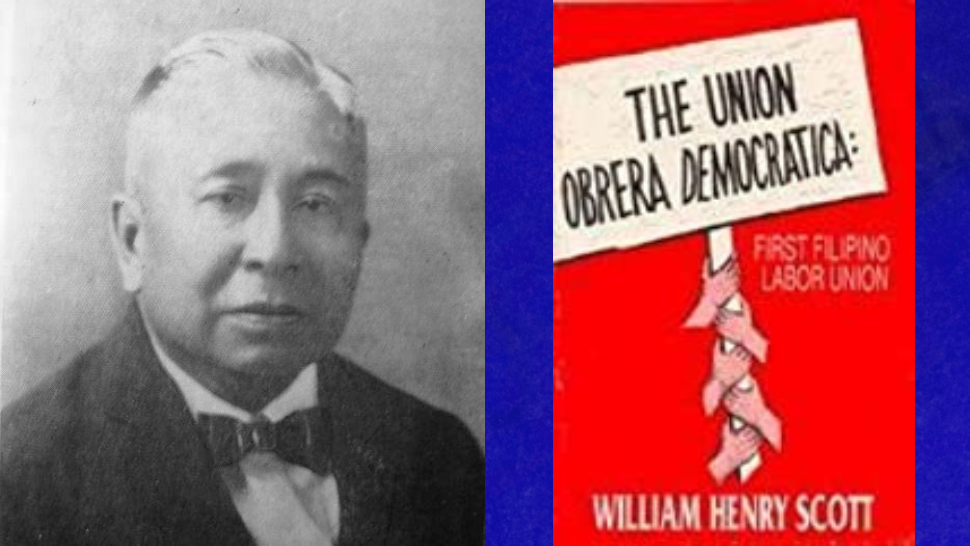
The front cover of the book The Union Obrera Democratica: First Filipino Labor Union, written by the late historian William Henry Scott

Nevertheless, that rally was a sign of things to come for the movement against Filipino worker exploitation. On April 8, 1908, the Philippine Assembly passed a bill recognizing May 1 as Labor Day and declared it a national holiday. The first Labor Day celebration was held on May 1, 1913, a decade after the initial protests.
At its peak, the UODF had 150,000 members. The group was dissolved in 1904. Interestingly, UODF co-founder Cruz formed his own union in place of the UODF. The Congreso Obrero de Filipinas (COF) was a trade union federation in the Philippines that represented various workers from different sectors. There was said to be a total of 155 representatives from 35 organizations that attended its first convention. Cruz was elected president while Primitivo Cruz was chosen as secretary.
In the COF manifesto, the organization hoped to resolve labor problems and questions; write a Labor Code to serve as a guide for workers during strikes or conflicts with management; set up measures that would lend dignity to the Filipino workers; establish defined guidelines on how to form trade unions; and resolve all problems concerning labor and those submitted for its consideration.
Unfortunately, factions and in-fighting spelled its demise. The union found itself becoming a paper organization toward the end of the 1930s.
The 120th Anniversary of the May Day Rallies

This year marks the 120th Anniversary of the May Day Rallies. Regrettably, however, the collective struggles for fair wages, better working practices, and more persist for working-class Filipinos. Labor Day has become a symbol of mobilization and demonstration. We often take for granted the rights we have now that came out of these—from eight-hour work days to the minimum wage law and more. These are rights they fought for.
We tend to look to the past for cues, after all. Much like those of yesteryear, our current set of unions, labor leaders, workers, and allies work tirelessly toward reforms and lasting changes in our labor legislation. And much like them, they are met with a constant barrage of threats: red-tagging, institutional supression, and even state-sponsored violence.
Hopefully, Labor Day serves as a reminder of what we've lost, what we've sacrificed, and what we've gained from our collective efforts. May it also show us how much more we have to overcome along the way. May it honor the brave folks who represent the people's best interests. By doing so, we learn to look past our own privileges and respect the spirit of the movement and the message. This is a day to stand in solidarity with history, as well as a day to stand in solidarity with those at the forefront of the labor movement of our own time.
Sources:
- Melinda Kerkvliet, Manila Workers Unions, 1900–1950
- Guevarra, Dante G. History of the Philippine Labor Movement
- Saulo, Alfredo. Communism in the Philippines: An Introduction (Enlarged ed.)
