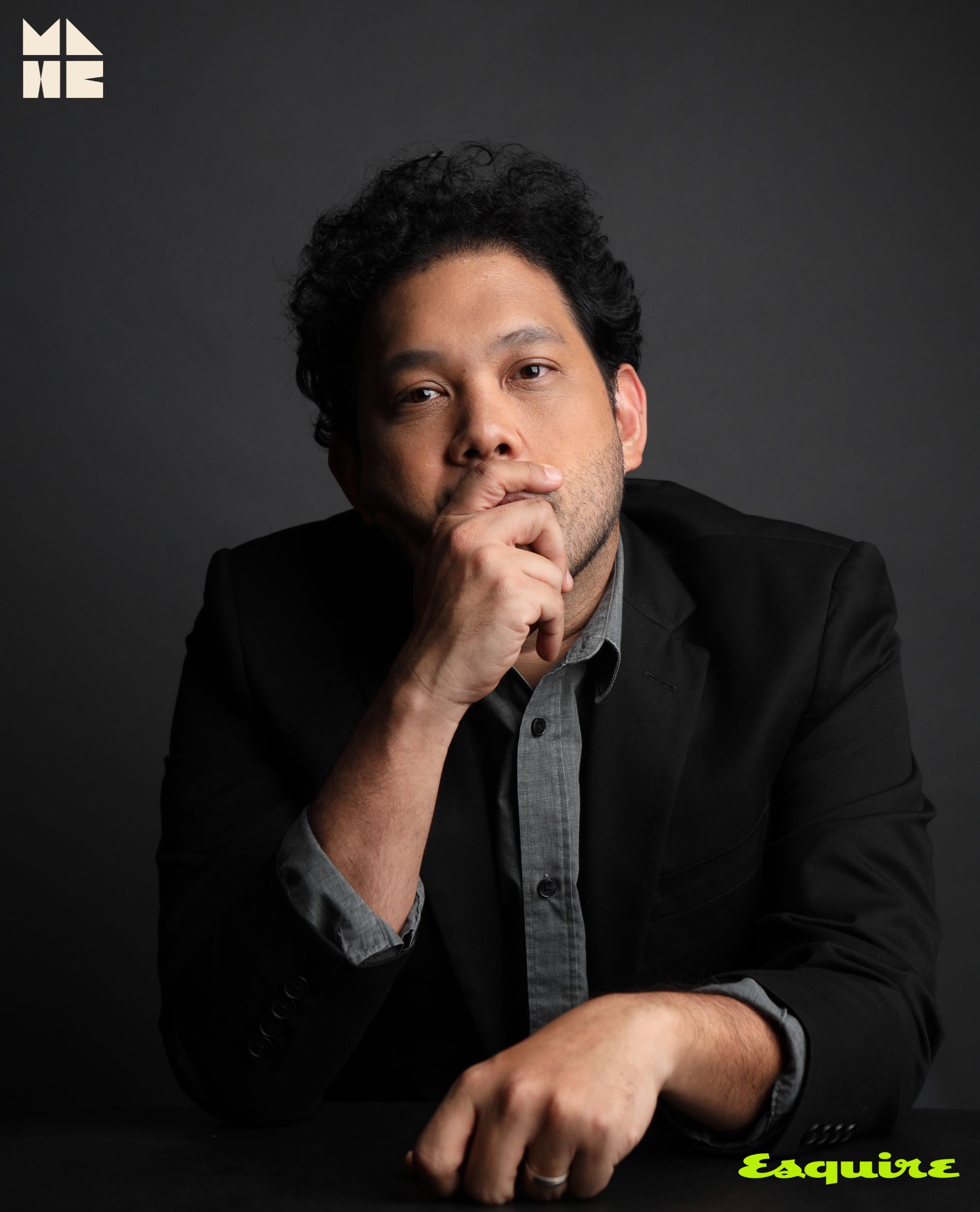
• Man at His Best 2025
  • Long Reads
  • Style
  • Money
  • Wheels
  • Culture
  • Opinion
  • CORNER OFFICE
Search
Menu
Close
Close
  • Man at His Best 2025
  • Long Reads
  • Style
  • Money
  • Wheels
  • Culture
  • Opinion
  • Style
    • Fashion
    • Grooming
    • Watches
  • The Good Life
    • Pursuits
    • What She Wants
    • Mavericks
    • The Directory
    • The Noble Man
  • Culture
    • Food & Drink
    • Arts & Entertainment
    • Lifestyle
    • Tech
    • Movies & TV
    • Music
    • Books & Art
    • Design
  • Wheels
    • Cars
    • Motorcycles
    • Drive
  • Money
    • Industry
    • Wealth
    • Capital
    • Movers
  • Long Reads
    • Notes & Essays
    • ESQ&A
    • What I've Learned
    • Fiction
    • Features
  • Life
    • Sports
    • Health & Fitness
    • Women
    • Sex & Relationships
    • Travel
  • Politics
    • Opinion
    • News
  • COUPONS
  • About Us
  • Terms of Use
  • Privacy Policy

NPC Seal of Registration

Esquire has been granted the NPC Seal of Registration in recognition of the successful registration of its DPO and DPS

© 2026 EsquireMag.ph, All Rights Reserved
Long Reads

Celebrated Filmmaker and Producer Quark Henares on the Future of Entertainment: 'Filipinos Are Ready'

By Sarge Lacuesta
Nov 25, 2022
Post a Comment

Every year, Esquire Philippines' Man at His Best (MAHB) awards honors extraordinary Filipinos who are reshaping society. These are the men and women who are raising the bar for Filipino creatives, athletes, public servants, and professionals.

This year, we're celebrating eight modern-day heroes and icons in film, music, sports, business, politics, and journalism. From music legends Eraserheads to award-winning journalist Atom Araullo, we present the 2022 awardees who exemplify what it means to be a Man at His Best.

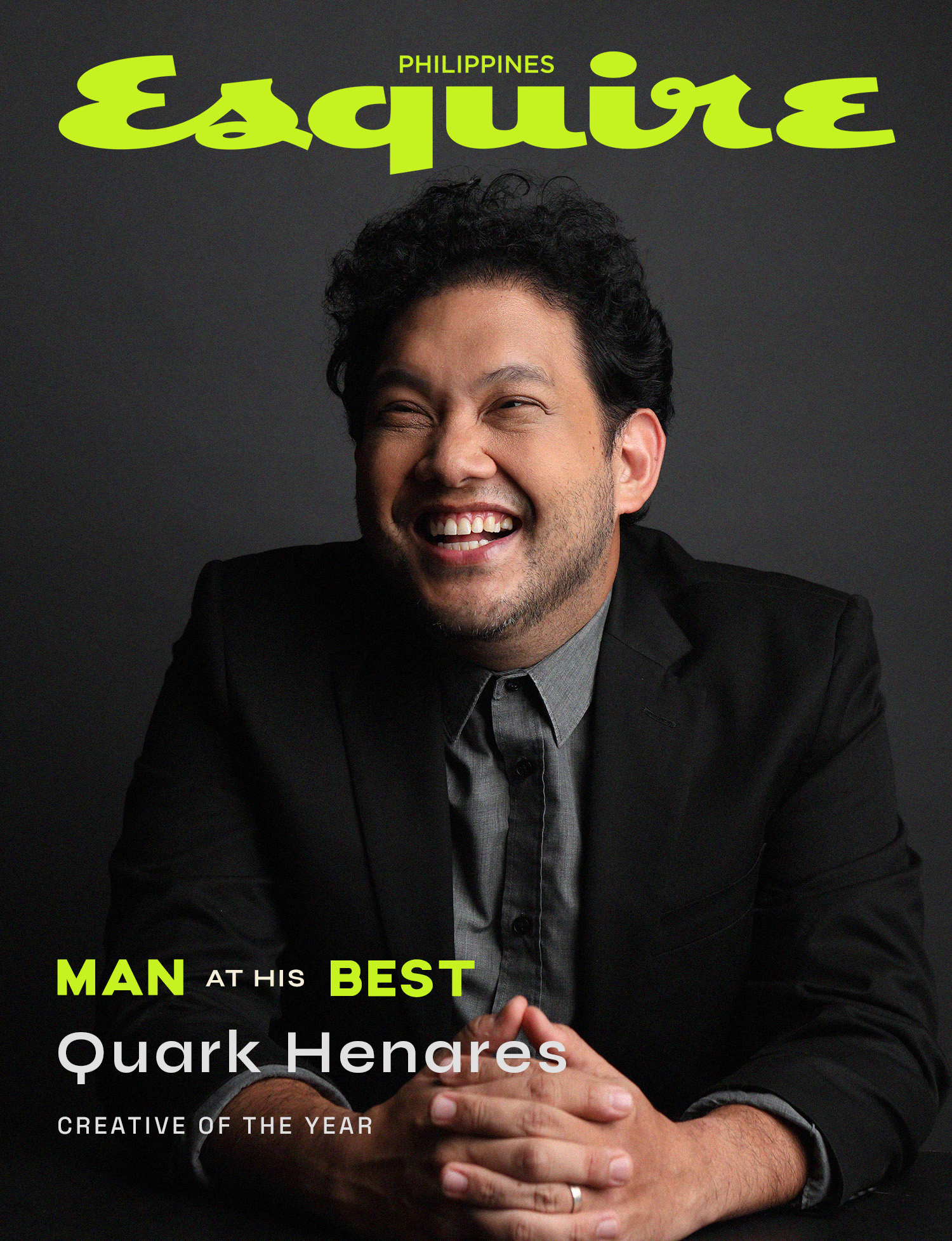
Meet Esquire's Creative of the Year, Quark Henares.


ADVERTISEMENT - CONTINUE READING BELOW

Anyone who's made a film—good or bad—will tell you: making a movie is a struggle and a journey. But in the streaming age, conflated by the pandemic years, the movie itself has taken a journey all on its own.

From being a destination activity at the theaters and the festivals, audiovisual entertainment seems to have fled to its final nesting place—one’s personal screen, where the viewer has never enjoyed more control over what he consumes and how he consumes it. In today’s attention economy, the screen has become precious real estate property, fought over moment by moment by platforms, channels, and content.

It is a journey closely mirrored by Quark Henares, celebrated film director and producer.

Today, Quark seems every bit the same as he did when he wrote and directed his early movies, including the fun, smartly wrought Keka (2003) and the even more fun Rakenrol (2011)—a curly-haired kid with a head full of movies and an extremely high energy quotient. Maybe even earlier than that, when his college thesis, a script for a short film entitled A Date with Jao Mapa, won him a Palanca Award.

CONTINUE READING BELOW
watch now

In other words, he’s still very much that kid, uncannily alive to that pulse we all wish we were connected to but really wouldn’t know what to do with if we had. To wit: in the middle of the pandemic, Quark was WFH out of Los Angeles.

As head of Globe Studios, he had already been responsible for a string of hometown hits that won critics and local audiences, among them films like Heneral Luna and the HBO miniseries On the Job. In LA, he clocked in at 5 p.m. and checked out at 2 a.m. He watched matinees and biked around in the daytime, and enjoyed a newly-married life.

But the thing about being a creative plugged into the pulse of the global zeitgeist is that that pulse will sometimes take over. It will take you where it wants you to go because it knows better than you—and because it sometimes knows you better than you know yourself.

ADVERTISEMENT - CONTINUE READING BELOW

This is why a small series of events and personal connections led him to where he is today, as Head of Originals, Philippines at Prime Video & Amazon Studios. The company contains its own content production and distribution channel, through its own streaming service, which is one of the largest in the world today. There’s a lot of extreme energy in that, too—after all, it’s owned by the same Amazon that can afford to send multiple rockets into space on a whim, and on their own dime.

Quark’s position in Prime Video places him squarely in a corner office of the Asian streaming platform industry, but more importantly, it also puts him in a quarterback position in the global-facing aspect of Filipino entertainment.
article big image
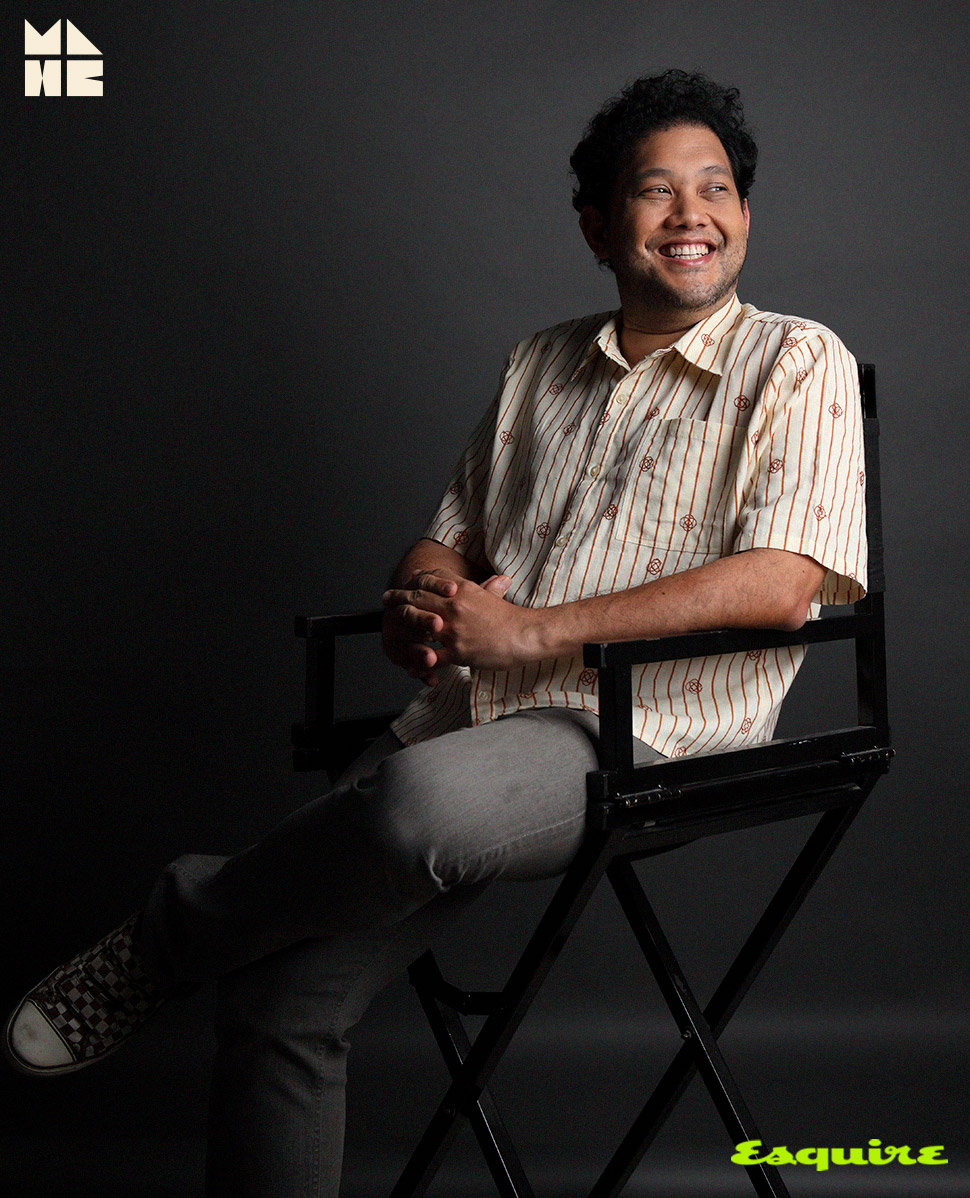
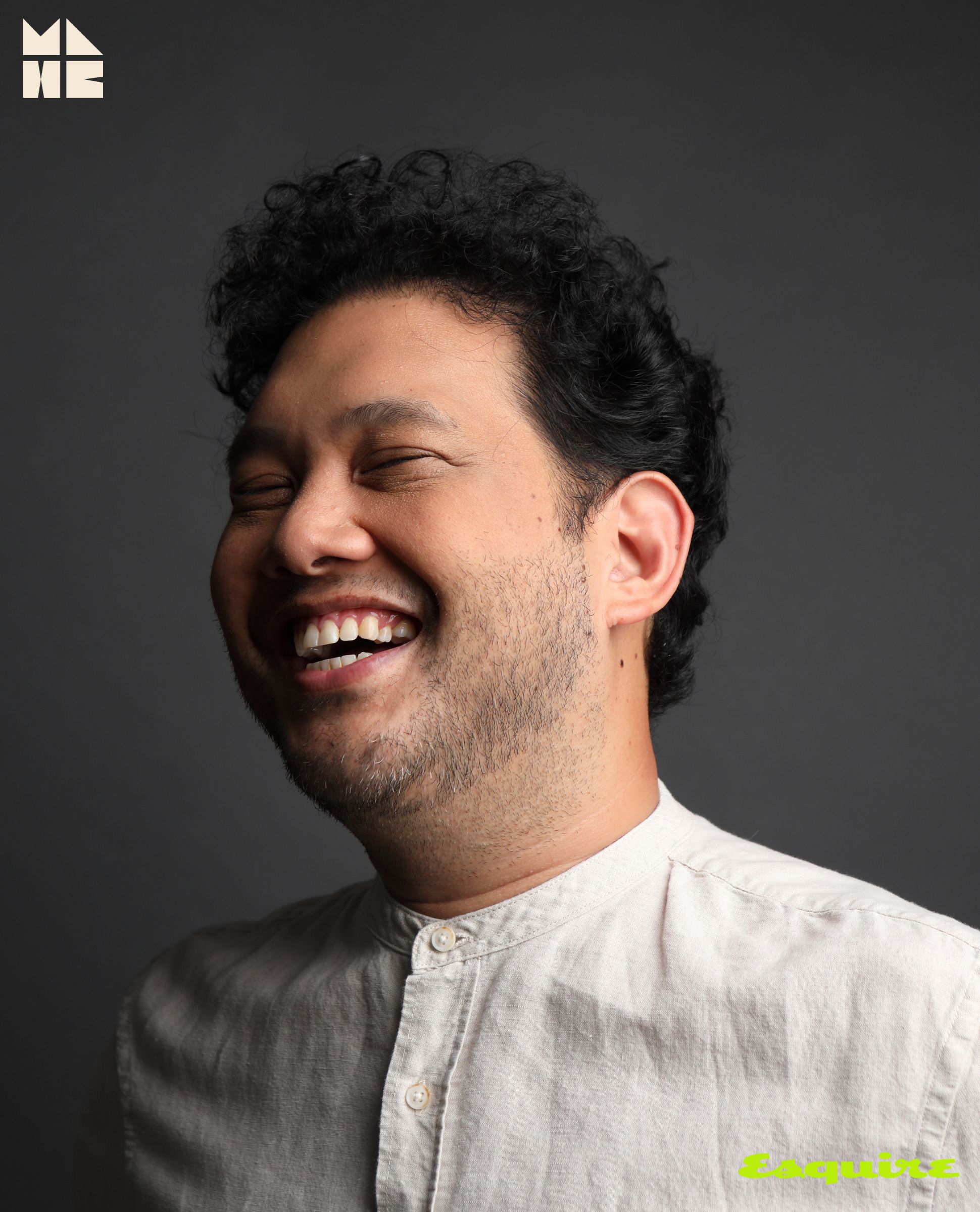
PHOTO: Cyrus Panganiban
Post a Comment

“I want to empower Filipino filmmakers and storytellers to work on a bigger canvas,” Quark says, and poses a question that is also a challenge: “What have our creators been wanting to do but couldn’t?”

The challenge comes at a particularly precipitous moment in Philippine cinema history, when the visibility of Filipinos in cinema has gained sharper detail than ever.

Recently, actors like Dolly de Leon, Chai Fonacier, and Soliman Cruz have garnered widespread recognition and acclaim on the world stage. Directors like Lav Diaz, Erik Matti, and, most recently, Martika Escobar, are helping shape a new signature. The sudden attention had also compelled global critics and audiences to cast a longer and deeper look back into our cinematic pedigree; the Museum of Modern Art in New York recently held a retrospective of films by Mike De Leon.

For many of these recent instances, it is Quark himself who is partly responsible. You’ll see his name in the opening credits of a large clutch of Filipino films that have achieved foreign acclaim, from On The Job and Dead Kids, to Leonor Will Never Die.

ADVERTISEMENT - CONTINUE READING BELOW

For Quark, his new post comes with longstanding pressure: he remains intent in proving a thesis statement he’s harbored since his days as a Communications student in college, arrived at through a personal awakening.

Quark remembers a particular moment at the beginning of his career as a film director, when he fell into a conversation with a director who was roundly regarded as one of the Filipino greats. Quark asked him what he was working on, and the director told him that he was doing one of those dime-a-dozen variety-show spin-off movies.

“You’re always thinking, the Philippines needs better writers,” he says. “Or that we need better directors and creatives.”

He adds: “And then there’s the old “Aling Bebang” speech: “Kelangan lowest common denominator, kelangan gets ni Aling Bebang ‘yan! So it became a limiting thought, that the Filipino could not aspire to create more complex storylines or characters.”

“And then I realized we don’t need better writers. We don’t need better directors. We need better producers who are willing to bet money and effort on the projects that matter.”


Any tired old salt in the film industry will tell you that entertainment is, first and foremost, a producer’s game, as much as it is the director’s or the writer’s. The creative aspect of making a film heavily depends on the producer’s trust, and their ability to protect the process of creation from a considered distance.

To illustrate, Quark quotes David Fincher, one of the executive producers of the critically acclaimed series House of Cards: “How do I get directors for House of Cards? I always tell them, I got you for a reason. And yes, I do know how to go fuck myself.”

Which is, perhaps, what the move to Prime Video really is—a singular fuck you opportunity to create more opportunities for Filipino talent to prove their reasons. And to prove that they can be part of that moving pulse as well.

For example, the tightly conceived, precisely engineered limited-run TV series is something relatively new to the Filipino creative.

“I think the idea of the showrunner is completely new to us,” he says. “Here, they’re still called ‘headwriters.’ So a lot of my work now is about creating processes.”

At megaplatforms like Prime Video, the processes are tighter, the hotseat is hotter, and the shots called are bigger, and there’s more of the world that will be watching if something fails.

The fact that it has always succeeded in Quark’s case only adds to the pressure. A global platform with larger production budgets to burn inherently puts itself at risk when it produces content for more localized audiences.

“Why do we even need to localize, right?” he says. “A lot of streaming platforms have that mindset—the Filipinos watch superhero films and Kdramas anyway.”

But the fact that Prime Video is willing to risk creating localized content for a relatively smaller subscription population, right at a Filipino sweet spot in the age of shifting entertainment, gives Quark a spark of hope—something he hasn’t quite fully felt in a while.

article big image
PHOTO: Cyrus Panganiban
Post a Comment

“I will always remember the Metro Manila Film Festival of 2016. The Best Picture winner was a documentary (Sunday Beauty Queen, dir. by Baby Ruth Villarama). One of the highest grossers was a film about a transgender woman. And another of the biggest hits was something about two people talking on a trip to Sagada.”

He mentions the emotionally complex Fangirl, or as philosophical as That Thing Called Tadhana. “These are not niche art films. They broke through.”

Perhaps the pandemic is also partly responsible for ripening the opportunity. Quark notes that Filipino audiences have been the most sluggish in returning to the theaters. To add to that, cinema ticket prices have gone as high as P400—an atrociously exorbitant price that makes choosing a streaming subscription a no-brainer for the average Filipino.

The numbers bear this out: Prime Video’s growing subscriber base in the Philippines comes lockstep with the surge of subscribers for local streamers such as Vivamax. And the very recent availability of Disney Plus to Filipino subscribers signals that our audiences have widely accepted this new transactional model of entertainment access.

Quark’s job shift also carried with it a paradigm shift. All of a sudden, he isn’t just managing individual projects. He’s managing a platform that’s directly connected to the customer.

The customer, of course, is that quantifiable entity that Prime Video arguably knows about. But the Filipino—as a creator and a viewer—is someone Quark will always understand more.

“Filipinos are ready,” he pronounces.

In this story

Photographs by Cyrus Panganiban, assisted by Michael Angelo Pabon • Grooming by Muriel Vega Perez

Man At His Best (MAHB) is Esquire's annual celebration that honors the life and work of inspiring men and women throughout the year

Read Next
What I've Learned: Alden Richards
Read more stories about
  • Man at His Best,
  • Quark Henares,
  • mahb 2022
Most Shared
by author
Esquire Money
Most Popular
Latest Feed
The New Dean of New York University's Faculty of Arts and Science Is a Filipino
Armscor CEO Martin O. Tuason Passes Away at 51
A Fond Farewell to Chocolate Lover Inc.
The 8-Ball of Greatness in Philippine Pool
Tom Cruise Wore an Extremely Rare £70,000 'President' Rolex Watch to Accept His First Oscar
What Can Poetry Teach Us about Natural Disasters?
#InTheLoop
  • Politics
  • Culture
  • MONEY
  • Style
  • Long Reads
© EsquireMag.ph, All Rights Reserved.
  • About Us
  • Contact Us
  • Terms of Use
  • Privacy Policy
  • Sitemap
Close

We use cookies to ensure you get the best experience on Esquiremag.ph. By continued use, you agree to our privacy policy and accept our use of such cookies. Find out more here.

Present
Read Cover Story
Read Cover Story
Catfish Image