
Dangerously Beautiful: Take a Peek Inside the Wild World of the Sea Urchins of the Philippines

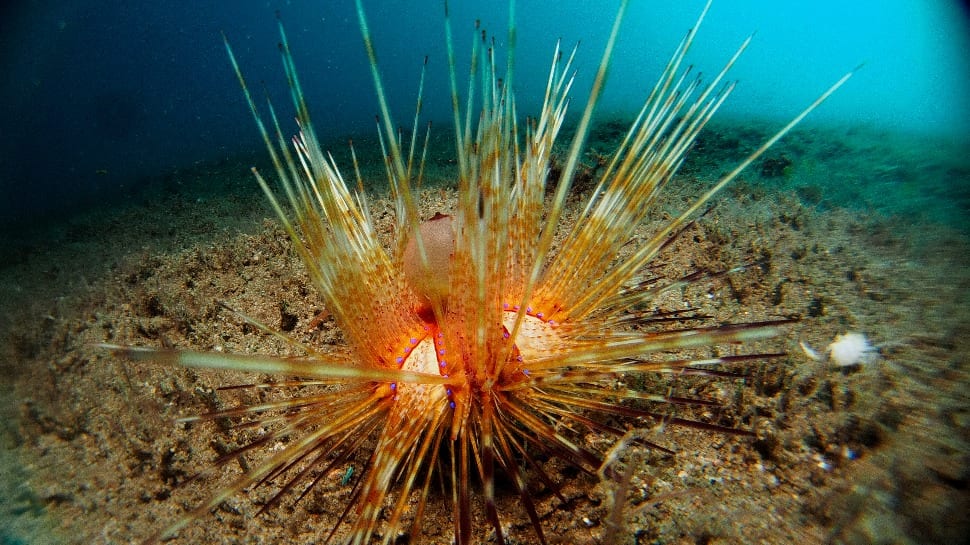
The warm, clear waters of the Philippines are very inviting for anyone who wants to go for a swim, but bathers often fear one creature: the sea urchin. Lurking behind a rock or under a layer of seagrass, these marine invertebrates have a well-deserved reputation for inflicting painful stings on people’s feet. But there is so much more to these fascinating animals than just their spiny exteriors.
Heart urchins, a species specialized to feed on detritus in-between the sand grains underwater
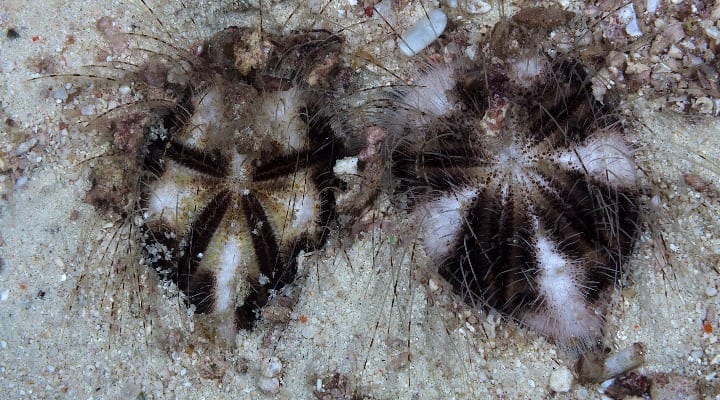
To begin with, sea urchins are a part of the echinoderms, the “spiny skin animals,” to translate their name from classic Greek. They are in this group together with the sea stars, sea cucumbers and feather stars (Crinoids), which ocean lovers will also often see. These are all animals with bodies which show a five-fold symmetry, when looked at from above. Sea stars typically have five arms, and while the sea urchins are roundish animals, their inner workings are divided into five sections.
Juvenile red snappers are among the fishes which use the dangerous spines of urchins for protection
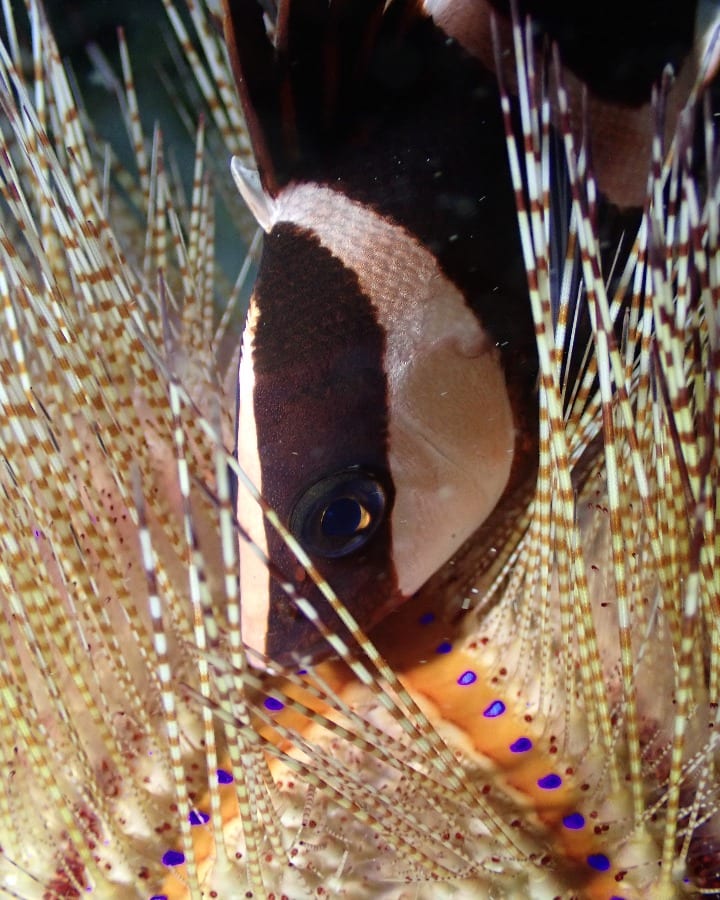
The spines are, of course, the main distinguishing features of sea urchins. They are actually dangerous, but if you know which spots along the coastline to avoid (usually the rocky ones, but ask the locals!) and if you tread carefully, you’ll spare yourself unpleasant encounters. The spines of some species are simply sharp and should be removed from the skin in the case of a painful encounter. In other species, the spines are also laced with venoms.
Fire urchins’ pines are not just sharp, but also quite venomous
The spines of the flower urchin, which occurs in seagrass meadows in the Philippines, contain a venom which causes very unpleasant respiratory problems; as far as I know no deaths have occurred because of someone stepping on these, but it surely is a good idea to be careful. The original scientific report on the venom by a Japanese scientist in the 1930s states that he felt a “cocainization of the face.” Don’t try this at home, on the beach, or anywhere else.
ALSO READ
PHOTOS: These Rare and Fascinating Sea Slugs are Found Right Here in the Philippines
These Cute Bobtail Squids are Hiding Just Beneath the Surface of Philippine Oceans
Sea urchins up close
But I certainly don’t want to scare you: What makes sea urchins a rather manageable risk is that they move very slowly and are hard to overlook. You won’t be surprised by one running into you. Hence, when snorkeling or diving, it’s quite feasible and low-risk to observe them fairly up-close. Some species have one type of spine, while others have two types, which differ in their thickness and the pattern of their stripes. The spines can move: when a sea urchin feels threatened from a certain side, it can aim the majority of its spines to that side.
Sometimes fish manage to find a way to break open an urchin and eat it. This wrasse in Mactan enjoyed its meal
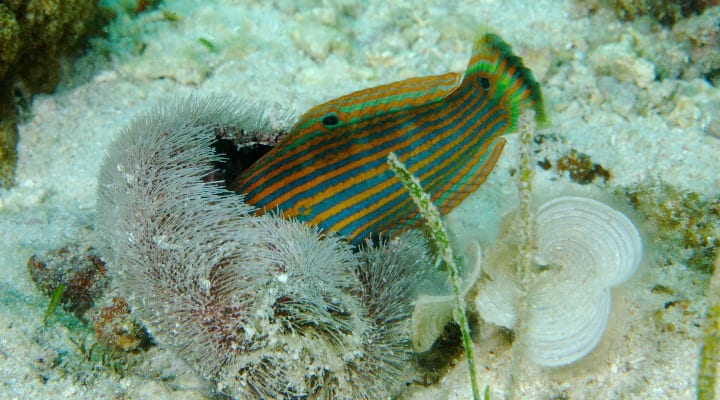
You will also notice that the body surface of these animals isn’t just covered in spines: There is also a multitude of tiny, flexible tube feet, which are the appendages the urchins use to move along the ocean floor. These are fascinating little devices, which essentially work like a biological hydraulic system. Each one reaches out into the environment of the sea urchin in a seemingly uncoordinated manner, but together they move the animal in one direction.
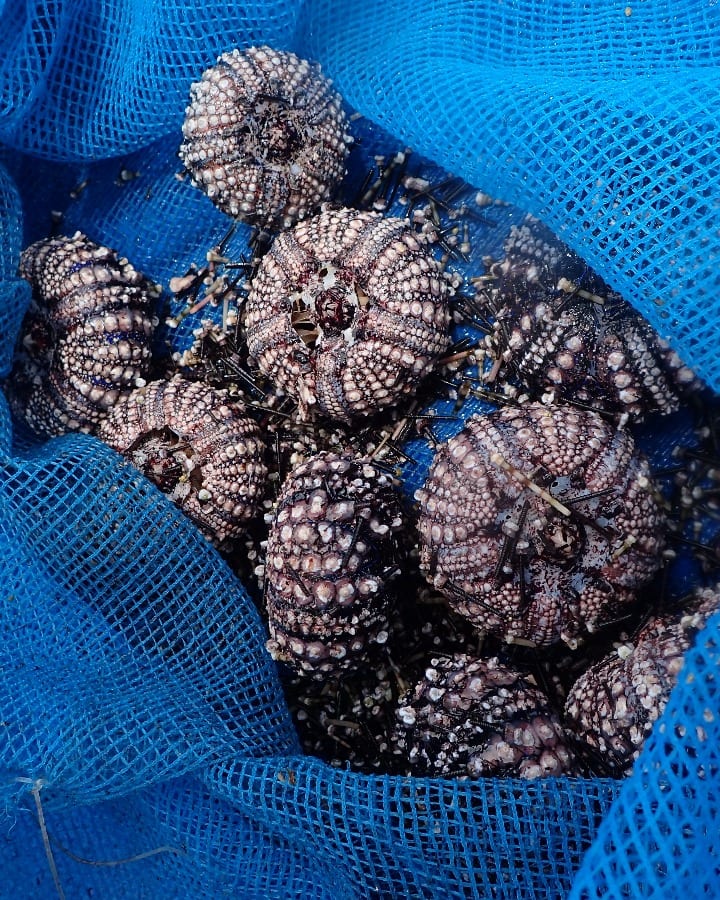
Urchins, caught in Bolinao, Pangasinan, ready to be eaten
And, if you have really good eyes, you’ll also be able to see minute claspers all over the urchins. These claspers are mainly functioning to remove detritus and parasites from the surface of the urchins. In sea urchin evolution, the claspers evolved from sets of three spines.
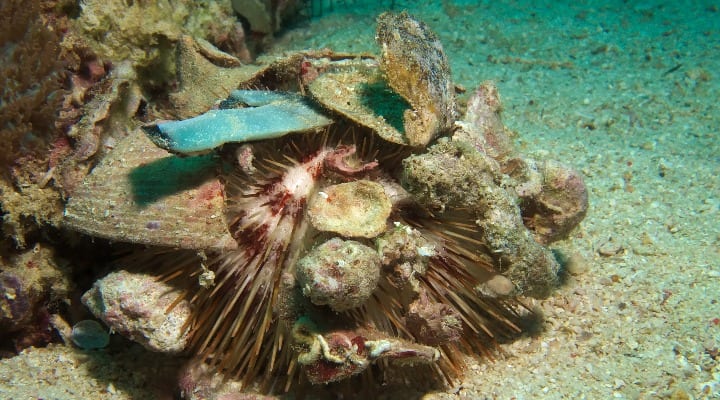
A decorator urchin, with material collected and stuck to its body for protection
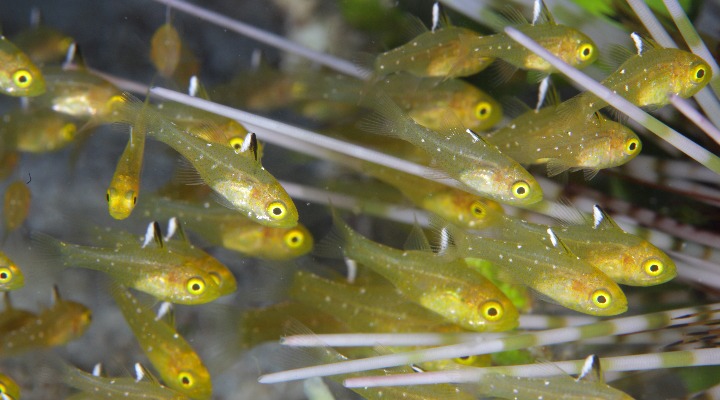
Another striking observation which can be made by everyone who scuba dives in the Philippines is that sea urchins have a lot of friends. Around them many tiny fish hover, protected between the arrays of urchin spines. On the surface of the sea urchin bodies a few species of crabs and shrimp like to perch, equally happy about the safe space created by the echinoderms.
A zebra crab, safe in its urchin home
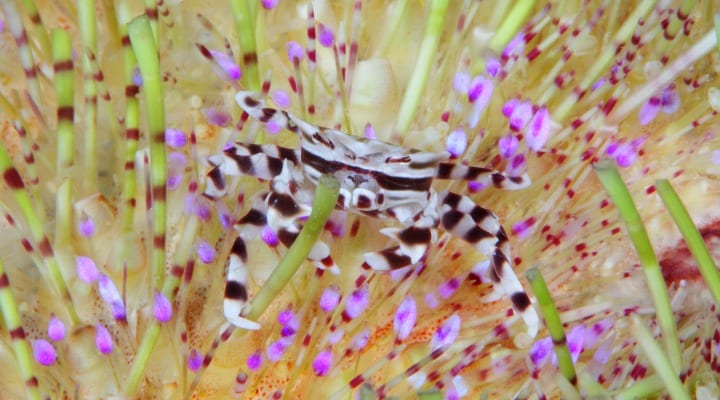
It’s quite striking to observe how these small critters navigate the confined spaces between the spines without getting entangled or impaled. Some of the crabs and shrimp live all of their lives on the sea urchins, while many of the small fishes which use urchins as hiding places only stick around during the day then venture out to feed at night.
Decorator urchins
Once in a while when snorkeling or scuba diving, you will see a sea urchin with a lot of material stuck to its body. These might be pieces of seagrass, or coral rubble, or, bizarrely, even small chunks of plastic trash. This material hasn’t gotten stuck on the urchins by chance, rather the urchins have picked it up and placed it onto themselves quite deliberately. Sea urchins that show this behavior are called decorator urchins. The purpose of this behavior is varied: the material can weigh smaller urchins down and protect them from being tossed around in the surge in shallow water; or it can camouflage the animals.
In addition, leaves of seagrass act as sunscreen for sea urchins which live in very shallow water. Everyone who has done a shallow scuba dive in a t-shirt only in the tropics will remember that a few meters of clear seawater absorb sunlight only very weakly; it’s not uncommon to end up with a tan or a sunburn after a shallow dive. This impacts the sea urchins who spend all day in shallow waters. A few leaves of seagrass cleverly placed on top of them protect them from aggressive sun rays.
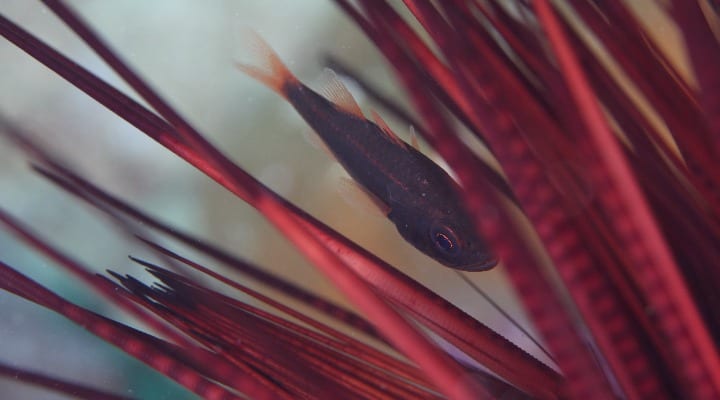
This cardinalfish hides between the spines of an urchin during the day, and then forages for small shrimp in the moonlight
As an interesting side note, the Sapir–Whorf hypothesis which has gone in and out of fashion in linguistics, states that a language will have more words for objects or creatures more frequently encountered by its speakers. In English there is only “sea urchin,” and “urchin” can also mean hedgehog, the spiny mammal, as well as “decrepit child.” Bisaya has more words that are exclusively reserved for sea urchins: “salawaki” denotes a short-spined urchin, whereas “tuyom” is a long-spined urchin. I am not very familiar with the languages of the country’s north, so if the language you speak has different, and more, terms for classes of sea urchins, please leave a brief comment on Esquire Philippines’ social media pages with these terms.
Cardinal fish also seek out the safety of a sea urchin’s spines
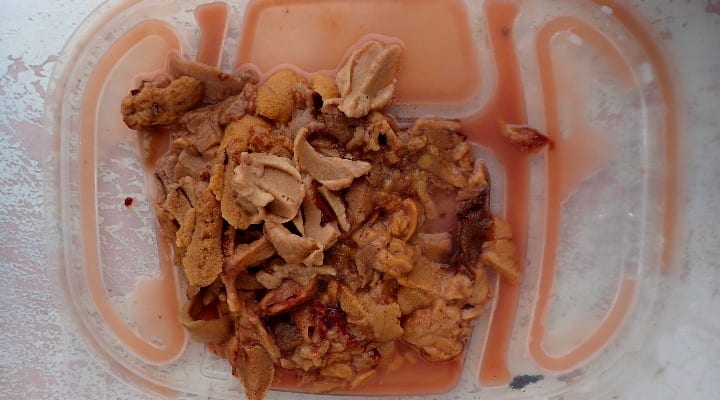
Also worth noting is that in many coastal areas of the Philippines sea urchins are considered a delicacy. The innards, mostly the gonads, of many urchins taste somewhat like caviar, and are considered a libido booster. Given their high protein content, there might be something to this claim. The urchins are picked up from the seafloor, tumbled to remove their spines, and then opened up from below to get out the edible parts. Sometimes vinegar is added to the dish.
Protein-rich sea urchin innards, ready to eat. “Filipino Viagra” according to the boatman who prepared this
So, don’t step on them. Observe them, photograph them, or even eat them; but never overlook the sea urchins of the Philippines.
