• Man at His Best 2025
  • Long Reads
  • Style
  • Money
  • Wheels
  • Culture
  • Opinion
  • CORNER OFFICE
Search
Menu
Close
Close
  • Man at His Best 2025
  • Long Reads
  • Style
  • Money
  • Wheels
  • Culture
  • Opinion
  • Style
    • Fashion
    • Grooming
    • Watches
  • The Good Life
    • Pursuits
    • What She Wants
    • Mavericks
    • The Directory
    • The Noble Man
  • Culture
    • Food & Drink
    • Arts & Entertainment
    • Lifestyle
    • Tech
    • Movies & TV
    • Music
    • Books & Art
    • Design
  • Wheels
    • Cars
    • Motorcycles
    • Drive
  • Money
    • Industry
    • Wealth
    • Capital
    • Movers
  • Long Reads
    • Notes & Essays
    • ESQ&A
    • What I've Learned
    • Fiction
    • Features
  • Life
    • Sports
    • Health & Fitness
    • Women
    • Sex & Relationships
    • Travel
  • Politics
    • Opinion
    • News
  • COUPONS
  • About Us
  • Terms of Use
  • Privacy Policy

NPC Seal of Registration

Esquire has been granted the NPC Seal of Registration in recognition of the successful registration of its DPO and DPS

© 2026 EsquireMag.ph, All Rights Reserved
Long Reads

Sometimes It's Better to Plead Guilty: Standing Trial for Illegal Drugs in the Philippines

By Audrey Carpio
Feb 23, 2018

Outside the courtroom doors of Regional Trial Court 31, on the second floor of a 75-year-old building which still bears the name National Waterworks and Sewage Authority, stands a line of yellow-shirted men, handcuffed together two-by-two.

Post a Comment


A group of similarly configured women shuffle into view a few minutes later, accompanied by young men in maroon uniforms that identify them as Criminology Interns. The chain gangs are detainees of the Bureau Jail Management and Penology, and are here this morning to await their arraignment.

The entire building, which was designed with an open courtyard in the center of four floors, is a stately, if worn, heritage structure that is sometimes still called the old Ombudsman’s office, but currently seats the Regional Trial Court of Manila, which has 56 branches or courtrooms each presided over by an individual judge.

Branch 31 has been specially designated as drugs court, and every single day since she was appointed to Branch 31 in January 2015, Judge Sophia Solidum-Taylor has been tackling drug-related cases, which can number up to the hundreds each month. This day’s crop of detainees, transported from the nearby Manila City Jail, are not much different from those that came the day before, or will come the following day: some of them have been caught with a small amount of drugs, others have been arrested in buy-bust street operations for selling drugs. Whatever they may have done, their futures will be decided for them inside these courtroom doors (Judge Solidum-Taylor is my second aunt and has agreed to let me observe the proceedings).

ADVERTISEMENT - CONTINUE READING BELOW


Branch 31 has been specially designated as drugs court, and every single day since she was appointed to Branch 31 in January 2015, Judge Sophia Solidum-Taylor has been tackling drug-related cases, which can number up to the hundreds each month. 


By 9 a.m. the small courtroom, curtained on the front wall with shiny purple cloth, was crowded with the accused, police witnesses, lawyers and clerks. Early on during the hearing, the judge asked who among the accused would like to plead guilty to the lesser crime of Section 15 under RA 9165.

Several detainees raised their hands, a few hesitantly, perhaps unsure of the implications. Only those arrested for drug possession of under 5 grams are eligible to enter a plea bargain for the lesser offense of drug use, which carries a penalty of a minimum of six months at a rehabilitation center, compared to imprisonment of 12 years and one day to 20 years. If you were some poor guy who was brought in for being disorderly on the streets and then found to have a tiny bit of methamphetamine hydrochloride in your pocket, you would probably take the plea bargain too. The group of detainees who agreed to plead guilty to drug use were to be re-arraigned, and dealt with personally by the judge later.
CONTINUE READING BELOW
watch now


article big image
ILLUSTRATION: Jasrelle Serrano
Post a Comment


Case number 20 was up next. PO1 Vidalla, a rookie cop from the Manila Police District Station 9 took the stand to testify that he was involved in a buy-bust operation last September 12, 2017. The public prosecutor began by asking the cop to walk the court through the events of that day. The witness said that a Regular Confidential Informant had told the Station Drug Enforcement Team about a certain alias Bong who sells shabu. They organized a simple sting where the 26-year-old Vidalla will pose as a buyer and meet Bong, a man described in his 50s to 60s, at the corner of Adriatico and Sampaguita streets later that evening.

“'Tol, magkano iskor mo?” Bong allegedly said upon meeting the poseur buyer. “Dos lang 'tol,” Vidalla had replied, indicating P200 worth, which he gave Bong in pre-marked bills. Vidalla put the shabu in his pocket and gave the pre-arranged signal, which was removing the towel on his shoulder, after which his fellow operatives arrived on the scene and arrested Bong. At the end of his testimony, he positively identified the alleged pusher Bong by placing his hand on the shoulder of one of the men in yellow shirts inside the courtroom. 

ADVERTISEMENT - CONTINUE READING BELOW

Judge Solidum-Taylor followed up with several clarificatory questions. How were you introduced to the target? Which pocket did you put the shabu in? Which pocket did you put the recovered P100 bills in? She grilled the witness particularly when it came to identifying the evidence. What markings did you put on the sachets?

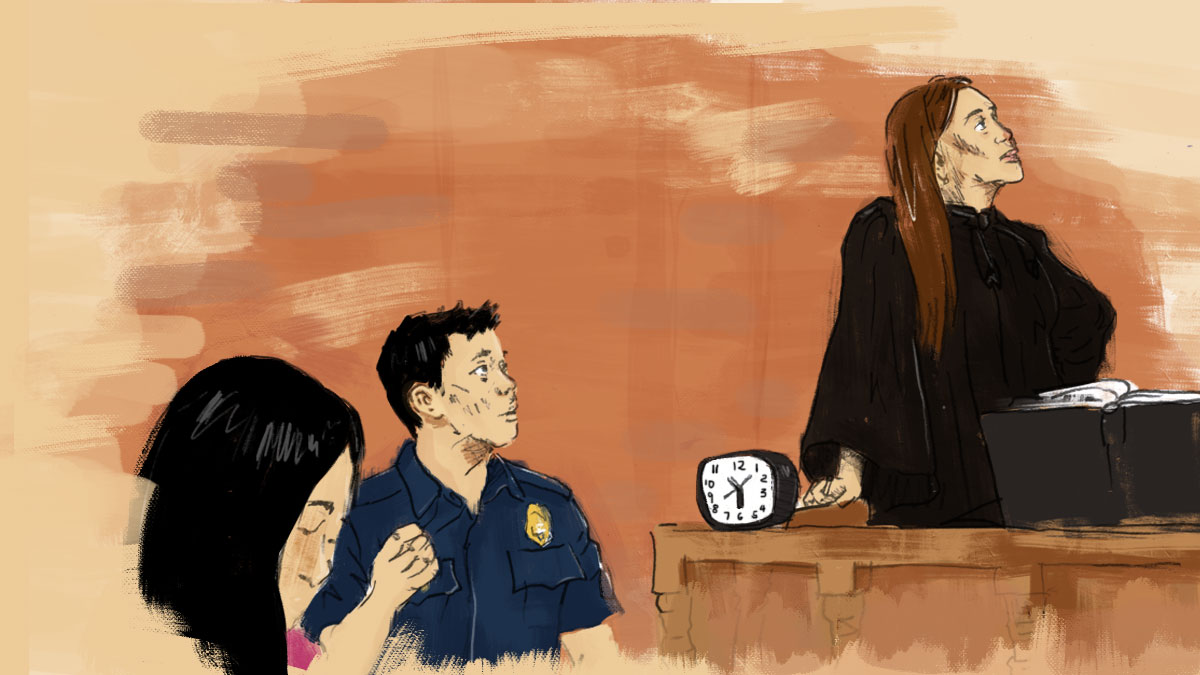
Here, Vidalla started to slip. His verbal answers did not correspond to the markings on the sachet he subsequently picked out from a mixed container of sachets—the date written was 9/12/17, whereas Vidalla said he had written it as 12/9/17. It may seem like a small detail and the nervous Vidalla could’ve just forgotten how he had labelled the evidence a few months back. However, this little bag containing a few crystals of shabu is the corpus delicti of the offense, and its immediate and precise marking by the poseur-buyer with his signature and date is the first stage in the chain of custody rule.

In drug cases, the most important requirement is to be able to establish a chain of custody when it comes to the evidence. This means that from the moment the contraband is seized, to when it stored, analyzed, and transferred, the entire trail must be documented and accounted for in order for the evidence to be admissible in court. If a police witness cannot show an unbroken chain of custody, the case can be thrown out or the accused acquitted, since they also cannot prove that the evidence hasn’t been tampered with. 


article big image
ILLUSTRATION: Gian Louis Sapitanan & Jasrelle Serrano
Post a Comment


The hearing was to be continued at a later date, but one can already anticipate the possible outcomes. In the history of buy-bust operations, the circumstances Vidalla and Bong find themselves in are certainly not unique, and similar cases that have reached the Supreme Court (which are accessible online) present an all-too familiar narrative: police officers engage in a drug entrapment operation and arrest an alleged pusher, who for his part denies everything and claims to be a victim of kidnapping/extortion/bribery/kotong. The pendulum of justice has swung both ways for the accused; in cases where they were acquitted, it was typically because of an irregularity in the buy-bust operation. Whether the procedural lapses in the chain of custody are due to honest police incompetence or something more sinister is not for the court to decide; what’s relevant here is that in the absence of an established “body of crime,” there is insufficient evidence to convict the accused beyond reasonable doubt.

ADVERTISEMENT - CONTINUE READING BELOW

After Judge Solidum-Taylor adjourned her courtroom, she gathered together only the group of plea bargainers for a little huddle she calls a seminar, before they get bussed back to jail and then sent off to serve their time at the Mega Drug Abuse Treatment and Rehabilitation Center.

Who has experienced visual hallucinations? she asked in Tagalog. Who has had auditory hallucinations? Who has ever felt like something was crawling on their skin? A few raised their hands. “Those are the effects of drugs. Who wants to share?” Someone answered, you don’t feel hungry or sleepy, which elicited some chuckles.

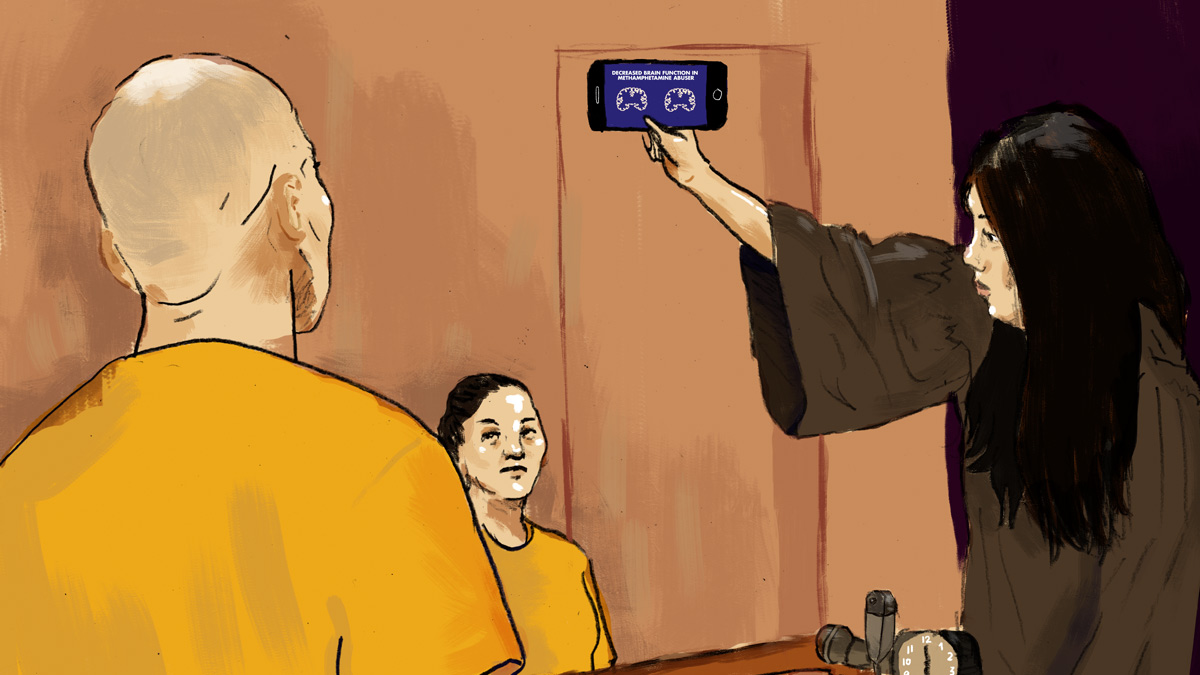
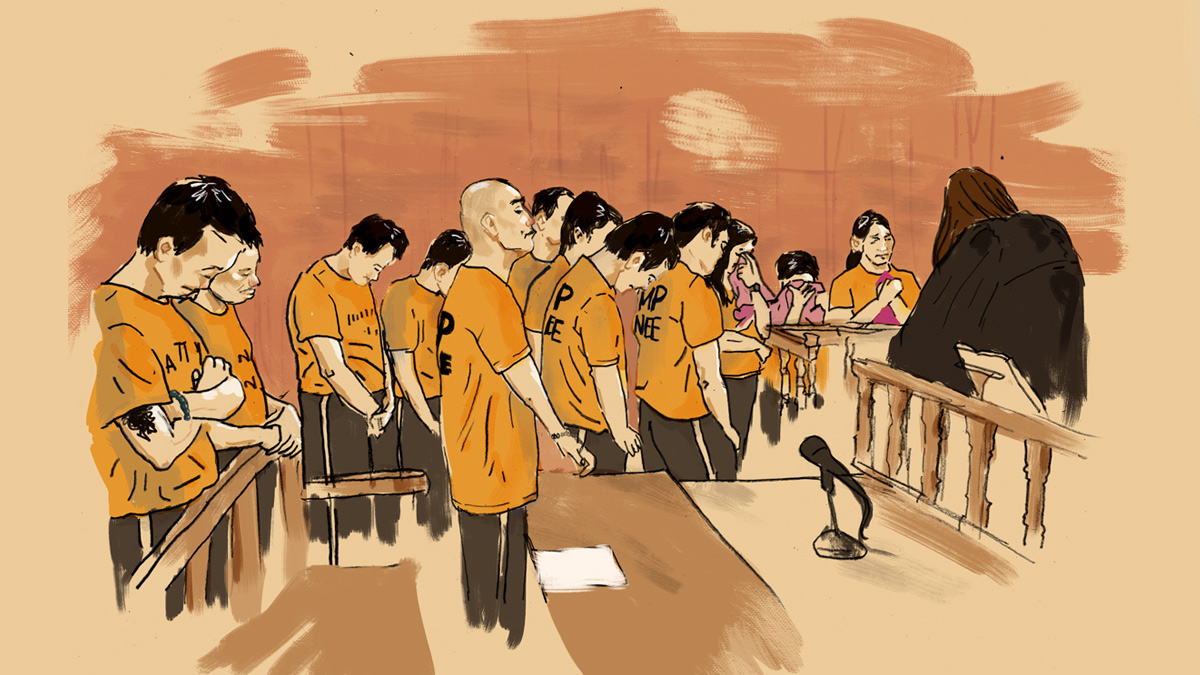
The judge pulled out her phone and showed them a side-by-side scan of a healthy brain and one damaged by drugs. She talked to them about dopamine receptors and why it’s hard to fight addiction. She talked about the body being a temple of the Holy Spirit. As she did, her tone changed from a scolding aunt to a sympathetic friend to a teary-eyed mother. “Do you think you can fight shabu addiction on your own?” She asked. “Many of my inmates fall back on drugs after leaving jail.” Everyone bowed their heads, and the three female detainees cried into their face towels. “That’s why I pray for you.”


article big image
ILLUSTRATION: Jasrelle Serrano
Post a Comment


“I never wanted to be a judge. I never wanted to be a prosecutor, or even a lawyer,” Judge Solidum-Taylor tells me. “And I definitely didn’t want to be in the drugs court.” And yet here we are—after twenty years of being a prosecutor, where almost all of her assignments were in the drugs court, she was appointed to Branch 31, which was notorious for its heavy caseload. She considers it destiny then: what she always wanted to be was a pastor, but her feisty personality kept pushing her toward the courtroom. As the presiding judge over a bunch of drug abusers and repentant criminals, she now in a way has her own captive flock. The irony is not lost on her. 

When Solidum-Taylor started the position she was already faced with a huge backlog, with some cases dating back several years. Just prior to President Duterte’s oath-taking in June 2016, there was a sudden spike in drug cases. Even before he was sworn in, Duterte declared that his administration would launch a bloody war against drugs, and he famously vowed to kill 100,000 criminals and dump their bodies in the Manila Bay. Docket congestion got so bad that in July 2016 the Supreme Court ordered that all regional trial courts nationwide, except for family courts, could hear newly-filed drug cases. “Even the commercial courts were given drug cases,” she says. “The judges did not know what hit them.”


Docket congestion got so bad that in July 2016 the Supreme Court ordered that all regional trial courts nationwide, except for family courts, could hear newly filed drug cases. “Even the commercial courts were given drug cases,” she says. “The judges did not know what hit them.”


The recent allowing of plea bargaining is helping cases get disposed of faster, but Solidum-Taylor considers the decision a blessing because she believes the drug law is unduly harsh. Before RA 9165, or the Comprehensive Dangerous Drugs Act of 2002, was passed—with Sen. Tito Sotto as a principal author—the Drugs Act of 1972 combined the terms “possession and use” of illegal drugs, for which the penalty started at six years of imprisonment.

When Congress convened to pass RA 9165, possession and use of drugs were separated, and while drug use can be dealt with by a rehab stint, possession gets at least 12 years in prison for anything less than 5 grams of shabu, even for as little as .001 grams (think residue). Life imprisonment is meted out for anything more than 10 grams, and the death penalty, which was still active at the time, was reserved for possession of 50 grams or more.

In what is known as the Estipona case, the Supreme Court in November 2017 ruled as unconstitutional the provision in RA 9165 that barred plea bargaining. Salvador Estipona was a suspect charged with possession of 0.084 grams of shabu, which is the equivalent of the amount of sodium found in one pickle slice. His counsel argued that even those accused of heinous crimes like murder are allowed to enter a plea bargain under the law. As a result of the decision, the Department of Justice ordered that the use of plea bargaining be largely restricted to offenders of Section 11 paragraph 3, or possession of less than 5 grams. Since then, hundreds of small-time drug personalities like Estipona were able to have their cases resolved relatively quickly, instead of languishing for months, even years, in overcrowded jails as they await trial.

In theory, at least. After the morning hearing, the judge and a few of her staff were scheduled to visit the Manila City Jail to see if the plea bargainers have indeed been moving on. She had been receiving complaints that the 10,000-bed rehab facility in Fort Magsaysay, Nueva Ecija, was turning away inmates from the city jail because they lacked certain requirements—namely P980 for a medical exam, as well as a pair of slippers and extra T-shirts.

This incensed Solidum-Taylor. Not only did most of the inmates come from the poorest of the poor, they were mandated by law to be accepted into the rehab. In a decision she wrote, the judge included a strongly-worded paragraph calling out the director of the facility, threatening to place them under contempt if the court orders are not complied with. Additionally, she would report the matter to the Office of the President.


She had been receiving complaints that the 10,000-bed rehab facility in Fort Magsaysay, Nueva Ecija, was turning away inmates from the city jail because they lacked certain requirements—namely P980 for a medical exam, as well as a pair of slippers and extra T-shirts.

article big image
ILLUSTRATION: Gian Louis Sapitanan & Jasrelle Serrano
Post a Comment
 

The Manila City Jail, or Old Bilibid Prison, lies smack in the middle of Quiapo, a stone’s throw from Quiapo church, the busy marketplaces, several universities and the MRT2 line. It was built in 1865 as the first national penitentiary, with an original design of a center panopticon and several long barracks radiating from it, forming a circle.

Nearly half of the property has been taken over by informal settlers, leaving 5,651 inmates to be cramped into a space with a capacity of less than 1,000. The jail is one of those detention centers often pictured overflowing with inmates stacked on top of each other, a grim sign of human rights violations.

Since the BJMP were expecting a visit from RTC Branch 31, they prepared a program. A group of singers and a guitarist—all inmates, or residents, as they are called—performed a few forlorn songs with clear themes on injustice, like Imelda Papin’s “Katarungan,” which goes: 

Wala akong kasalanan
Bakit pinagbibintangan
Dapat kayang kamuhian
Ang tulad kong mahirap lang

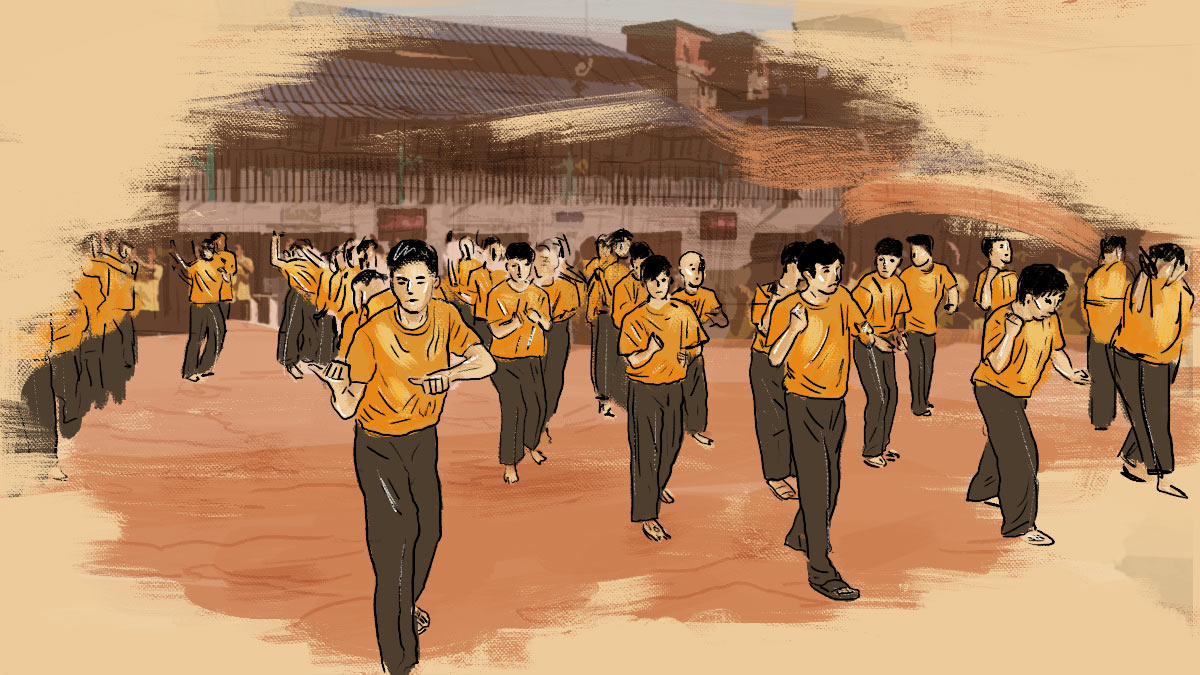
Outside in the open court, a troupe of young men danced acrobatically to upbeat music before they were joined by hundreds more, all dressed in the regulation uniform of yellow T-shirts and red pants, for a choreographed number to an originally composed song about daily life in the jail. Called Galaw-Galaw, the program functions as a fitness regimen as well as a psychological booster, which the residents practice daily to gain Good Conduct Time Allowance. 


article big image
ILLUSTRATION: Gian Sapitanan & Jasrelle Serrano
Post a Comment


Because many of the residents were outside in the yard, the cells did not look overly cramped, although there were still way too many persons per square foot of space. They literally had no room to do anything but sit or stand elbow-to-elbow. At night, everyone piles in and sleeps on pieces of cardboard on the floor. The women are kept in a separate compound, but 98 percent of the total population are detained here on drug charges. The spread of tuberculosis is rampant and inmates have died waiting for their day in court. Warden Superintendent Randel Latoza has acknowledged that the drug war only aggravated the already heavily burdened city jail, which is severely lacking in resources, manpower, and basic living necessities. But the warden tells Solidum-Taylor, “Because of your threat, we don’t have a problem anymore [with the rehab center]. As long as there is a court order, the inmates will be accepted.” The subsequent problem, however, was that of transportation: the BJMP didn’t have enough buses to ferry them all to Nueva Ecija, and so delays were inevitable.

“None of us were prepared for this,” Solidum-Taylor agreed. “Everything is a work in progress.”

Before the jail visit was over, the judge talked separately to the plea bargainers who were assigned to Branch 31. She imparted a message of hope, assuring them that after six months in rehab they will be released, that they deserve a new lease on life. She also told them that if they ran into any more problems, they can personally call her office. She also promised she would find a bus to take them to the rehab center, so they wouldn’t have to spend a day longer in the city jail. 

Is it the responsibility of a judge to see to the welfare of the defendants after a decision has been handed down, outside the facts of a case and beyond the realm of the courtroom? With the number of drug cases that come through a court each day, it would be easy to regard each as just another number, another target who had it coming for them in this brutal war on drugs—considering the thousands who have been killed without due process, they are fortunate to be alive. In a recent headline, Sen. Tito Sotto wondered whether drug pushers and users are part of humanity. Maybe the senator should spend a day in jail and see for himself, after all, he is partly responsible for them being there. To see a member of the judiciary respect the humanity of these drug suspects, convicted or not, is to believe that the justice system can work. It just takes a few good women.


Read Next
What It's Like to Be a Modern Man of Modern Faith
Read more stories about
  • long reads,
  • features
Most Shared
by author
Esquire Money
Most Popular
Latest Feed
The New Dean of New York University's Faculty of Arts and Science Is a Filipino
Armscor CEO Martin O. Tuason Passes Away at 51
A Fond Farewell to Chocolate Lover Inc.
The 8-Ball of Greatness in Philippine Pool
Tom Cruise Wore an Extremely Rare £70,000 'President' Rolex Watch to Accept His First Oscar
What Can Poetry Teach Us about Natural Disasters?
#InTheLoop
  • Politics
  • Culture
  • MONEY
  • Style
  • Long Reads
© EsquireMag.ph, All Rights Reserved.
  • About Us
  • Contact Us
  • Terms of Use
  • Privacy Policy
  • Sitemap
Close

We use cookies to ensure you get the best experience on Esquiremag.ph. By continued use, you agree to our privacy policy and accept our use of such cookies. Find out more here.

Present
Read Cover Story
Read Cover Story
Catfish Image