Located in the southeast corner of Spain facing the Mediterranean, Cartagena was once the country's most important naval port. Today, thanks to its strategic location as a defensive port, it's still a major naval station for Spain. In fact, the headquarters of the Spanish Navy's Mediterranean Maritime Zone is located here.
Right beside it is a production facility of Navantia, the state-owned naval design and shipbuilding company. A major shipbuilder in Europe, Navantia's history stretches back 300 years, to the days of the Real Arsenal de la Carraca, or Spain's first modern shipyard. The company we know today bears significant interest for Filipinos—it's the company that is vying to become the official supplier of the Philippines' first-ever submarine fleet.
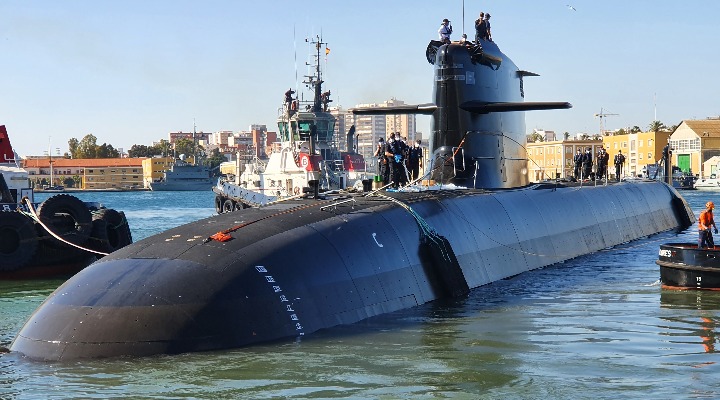
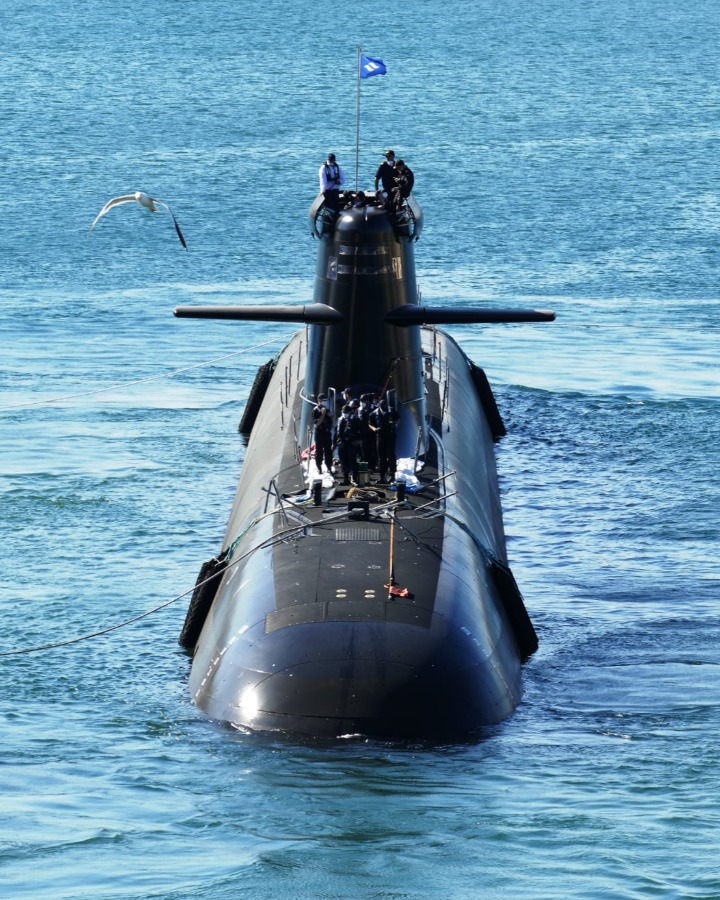
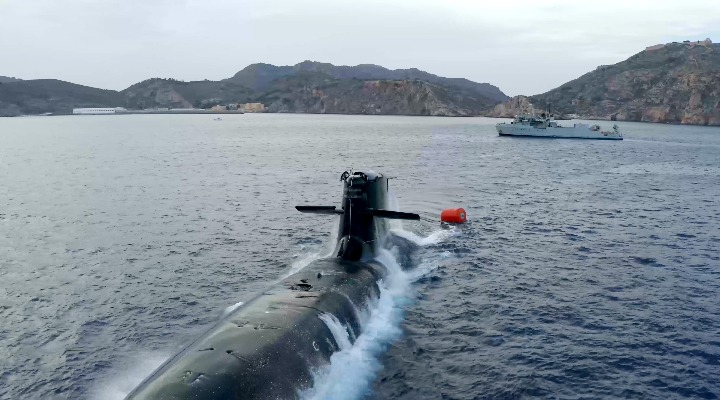
Navnatia's S80 class submarine
ADVERTISEMENT - CONTINUE READING BELOW
Specifically, Navantia is proposing the delivery of two units of its state-of-the-art S80 class submarines; providing training of Philippine Navy officials and staff that will operate and maintain the high-tech watercraft; the establishment of a submarine base, including training facilities, for the new units in the country; the transfer of knowledge and technology to ensure self-reliance in naval activities and operations; and providing the Philippines with a loan facility with flexible payment terms worth 100 percent of the contract amount, guaranteed by the Spanish government.
The total contract amount Navantia is proposing is worth $1.7 billion (or just under P100 billion).
At least two other countries have expressed their intentions of fulfilling the Philippines' desire for a submarine—France and South Korea—but Spain's bid, through Navantia, has several things going for it.
"We think it's the best offer in the market available," said Guillermo Zamarripa, Navantia's commercial and business development division key account commercial manager for Asia said during a media briefing in the company's other facility in Cadiz, about five hours northwest of Cartagena. "We know competitors have already submitted a…bid. We haven't so far. But we have responded to a proposal."
CONTINUE READING BELOW
watch now
Navantia's submarines are produced in the Spanish city of Cartagena
PHOTO: Navantia
Post a Comment
Zamarripa explained that it was the Philippine Navy that asked Navantia to submit an initial proposal in line with the Philippine government's armed forces modernization program.
In Southeast Asia, these countries currently have submarines: Indonesia, Malaysia, Singapore, Vietnam, and Myanmar. Thailand is reportedly also in negotiations to acquire its first submarine. That leaves the Philippines as the only major country in the region without a submarine program.
With ongoing territorial disputes, particularly with China, the Philippines has come under intense pressure to beef up its defense capabilities. President Ferdinand "Bongbong" Marcos has said he is open to the idea of the Philippines having submarines but has stopped short of actually setting a timeline for the acquisition. However, submarines were on the wish list of military officials for Horizon 3, the third segment of the Armed Forces of the Philippines' modernization program, which is slated for 2023 to 2028.
ADVERTISEMENT - CONTINUE READING BELOW
"They are not in Horizon 2," Zamarripa said. "Now they are launching the Horizon 3 since January this year. And we were told that they are beginning the whole process again. We believe we will be asked again (to submit a formal bid) soon."
The S80 class is 81 meters long and its pressure hull measures 7.3 meters in diameter
"There is a plan," President Marcos said in May about acquiring submarines. "But it's still being developed because the commitment to operate submarines is not a small commitment. It is a very large commitment because of the training that is involved, the equipment that is involved and the operational requirements that are involved, they are quite significant. So, it is still part of our plan. But right now, we are in the middle of developing mostly our anti-submarine capabilities. So, that's what we'll focus on first, and then, hopefully, when the time comes and the conditions are agreeable, then we might be able to acquire those submarines."
President Marcos also brought up the possibility of naval production facilities for the submarines to be built here in the country, which will spur economic activity and generate livelihood for local communities.
"If they are built here and we can actually build submarines here and provide those submarines to other countries, then that's another source of jobs, and of income and increased capability for our Navy," the President said.
ADVERTISEMENT - CONTINUE READING BELOW
While the Navantia proposal does not mention manufacturing the subs outside of its own facilities in Spain, it does include a provision for the construction of a fully operational submarine base here in the country. After careful study of the country's geography and topography, Navantia and its local partners have identified Ormoc, Leyte as the ideal site to host such a submarine base.
"That is not a bad decision," Zamarripa said about building the submarine base in Ormoc. "You cannot put everything near Manila."
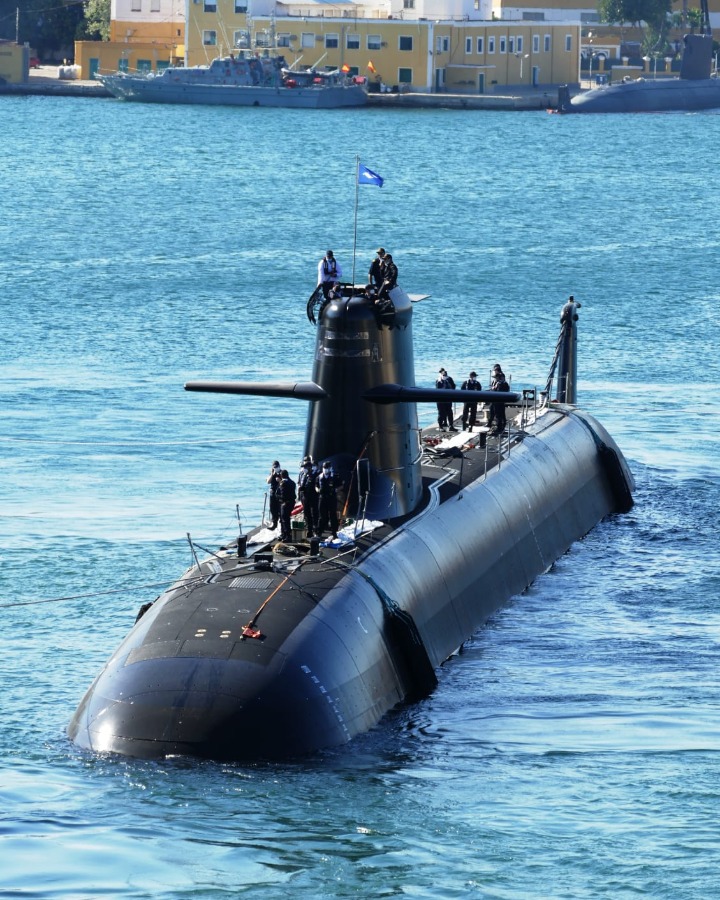
The S81 can be fully operated by a full crew of 32, although as many as 8 additional special forces crew can be added
PHOTO: Navantia
Post a Comment
Besides having a natural harbor with deep water that is one of the first requirements of a submarine base, Ormoc's edge, according to Navantia, includes its existing harbor activity that will contribute to the base's logistics needs, geographic protection against heavy seas, low seismic risk, and its proximity to Romualdez Airport.
Navantia also cites Leyte's other advantages based on the diversification strategy of deploying naval assets throughout the Philippines, the area's readiness for quick deployment on any Philippines jurisdictional waters, and the government's own policy of industrial development out of the capital, particularly the potential of economic growth in the Visayas region.
Already Navantia has laid out plans to develop the port in Ormoc, proposing to build infrastructure to support the submarine base, including syncrolift and yard facilities, as well as buildings for administrative, maintenance, and training. By the company's estimate, the base will create direct employment for about 1,500 highly qualified staff (engineers, technical staff, administrative workers, etc.) as well as 3,000 indirect hires. It will also generate about $900 million (about P51.11 billion) in in-country expenditure throughout the lifespan of the submarines and bring in about 50 percent return on investment through sustained economic activity in the region.
For comparison, the French government's bid through the company Naval Group proposes building the submarine base in Subic Bay in Zambales.
Spain's submarine: the S80
Navantia was a joint venture partner of France's Naval Group in the development of the Scorpene-class submarine, which the French is now offering to the Philippines in its own bid. However, Navantia has given up export rights for the project and it is now exclusively offering its own class of submarines, the S80, to the Philippines. Navantia is deep into the production process of the first four units under the S80 line, all of which was ordered by and will be delivered to the Spanish Navy.
The S80 has a standard speed of about 20 knots
Esquire Philippines was invited to visit the shipbuilding facility in Cartagena where the S80 submarines, as well as other ships and marine crafts, are being built. The Navantia compound in Cartagena houses the shipyard, systems and engines factory, and the ship repair facility. There is also a factory where gearboxes are built, a critical component of the ships. (The Navantia facility in Cadiz also has shipbuilding and repair facilities, while another shipyard in Ferrol specializes in maintenance, repair, and dry dockings).
Navantia has supplied the Spanish Navy with nearly every single one of its ships.
"We are also building submarine rescue vessels, which are important in terms of equipment to ensure that the crew is backed up in case of any failure," Zamarripa says.
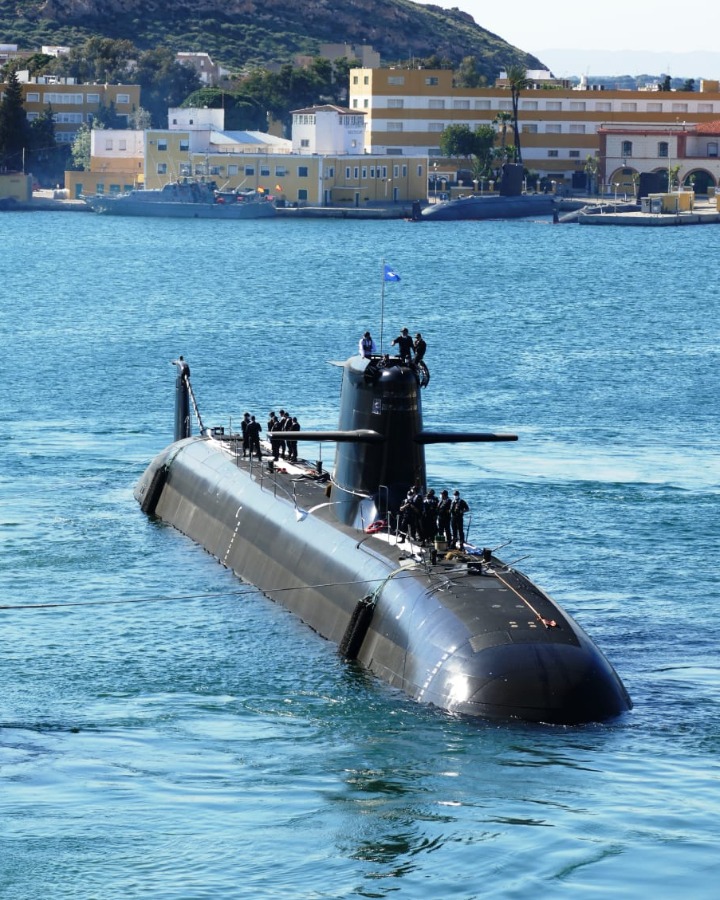
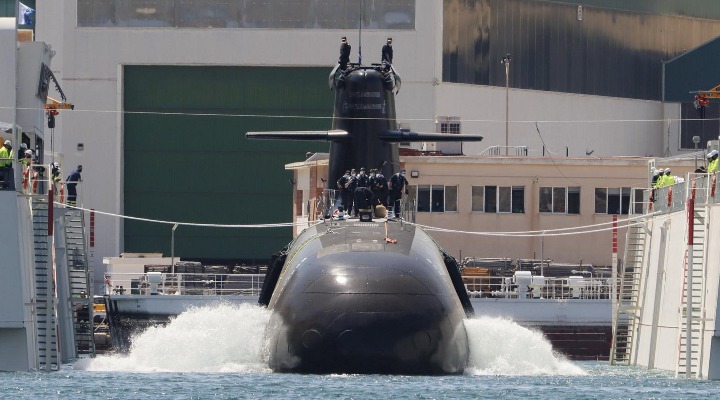
The S81, which is named Isaac Peral in honor of a 19th century Spanish engineer, naval officer and designer of an early submarine, was dry docked at the time of our visit in preparation for the next part of its testing process, which is testing at different depths—from around 20 meters to maximum operating depth, in September 2023. It is scheduled to be delivered to the Spanish Navy at the end of 2023 after several delays. For this reason, a visit inside the actual completed submarine was not allowed.
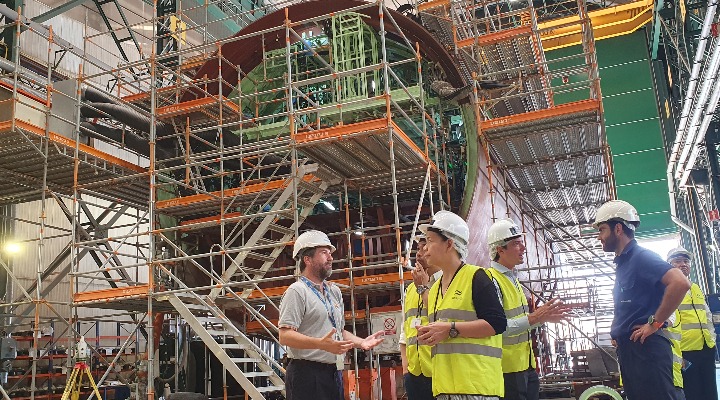
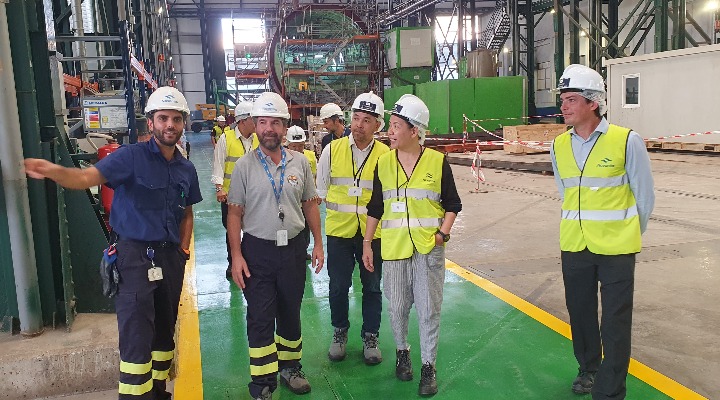
Touring the submarine production facility in Cartagena
Instead, we were granted access inside the submarine production facility, which is as big as an airplane hangar. Here, workers were busy with the second unit in the S80 class, which is named Narciso Morturiol, after another engineer and artist who is credited for inventing the first air independent and combustion-engine-driven submarine. S82 is scheduled for delivery in 2024, S83 (aka Cosme Garcia) in 2026, and S84 (Mateo Garcia De Los Reyes) in 2027.
The S80 class submarine is 81 meters long, with its pressure hull measuring 7.3 meters in diameter (versus the Scorpene, whose pressure hull is only 6.2 meters), and with a submerged displacement weight of 2,965 tons. Because it is largely automated, the S81 can be fully operated by a full crew of 32, although as many as eight additional special forces crew can be added. Its main function includes anti-submarine warfare; anti-surface warfare; land attack capability; missile attack; intelligence, surveillance, reconnaissance (ISR) activities, and deployment of special forces.
Officials declined to say just how deep the S80 can go as this information is classified, although they did say that it is capable of being submerged for up to three weeks at a time versus other comparable submarines, which can last for only a few days. The S80 can do this through its air-independent propulsion (AIP) system technology.
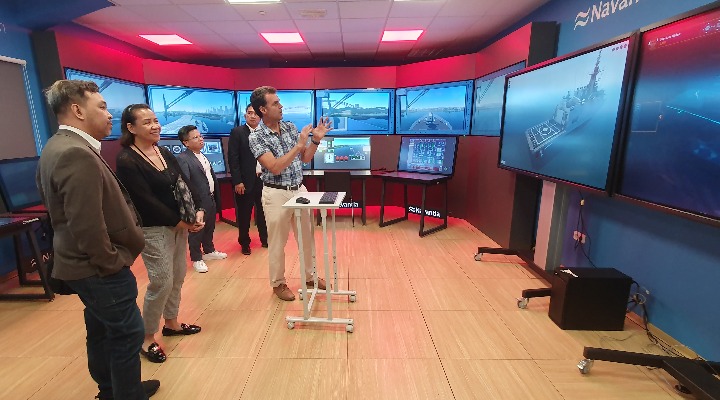
Officials demonstrate the simulator for ship crew training
"With the AIP system, we can generate hydrogen, which is fed into the submarine's fuel cell, which produces energy that goes to the battery," said Jaime Diaz, engineering manager of Navantia's Cartagena Shipyard.
"This is the closest feature to a nuclear submarine without being nuclear," Zamarripa added.
The submarine has three diesel engines rated at 1,200kW each with three alternators, which enables the submarine to reduce the time needed to charge the batteries underwater. It also has a 3,500kW main electric engine, and the AIP reactor rated at 300kW.
"And because we have three diesel engines, we can charge very quickly," Diaz said.
The submarine can turn a mix of oxygen and bioethanol into a stream of 75 percent pure hydrogen, and this hydrogen is fed into the fuel cell, officials explained. Essentially the equipment was designed to produce hydrogen from bioethanol, which they say is a milestone in this type of defense tech. The system has two lines: one to get the hydrogen from the alcohol, and the other to oxidize the carbon monoxide into carbon dioxide and to pump it outside into the water. Designers and engineers even had to think about reducing the size of the bubbles in order to reduce "noise signature." Translation: the smaller the bubbles, the more discreet and "invisible" the submarine is.
With a standard speed of about 20 knots, the S80 also has a DSRV or Distress Submarine Rescue Vehicle on top, which can be used to rescue people in emergency cases. This feature is certified by the US Navy, Diaz said, so it can essentially be attached to any American submarine.
Throughout the briefing, one word that kept popping up was "interoperability." In essence, this means that the S80 is compatible with defense systems of its allies and partners. To illustrate, Navantia officials revealed that the S80 is capable of deploying Harpoon and Tomahawk missiles, both of which are used by the US Navy.
The facility in Cartagena is currently working on S82, the Narciso Morturiol
"The Tomahawk is one of the most advanced missiles for ground attack and has been used in a number of conflicts," said Diaz. "It can get up to 50 to 55 kilometers inland. For coastal objectives, you can use the subharpoon missiles, but if you want to go further, you can go with the Tomahawk. It's a gamechanger."
The submarine is also fitted with mod4 Atlas torpedoes as well as the Mark 48 torpedoes.
The officials casually pointed out that the Scorpene class submarines do not have this weaponry capability. They added that Navantia combines the systems and technology of many different companies across multiple countries, including the U.S., the U.K. Germany, Italy, Portugal, the Netherlands, and France.
"The Scorpene design is very French, while the S80 is very international," Zamarippa says. "That's why we can incorporate almost any manufacturer."
A cultural advantage
In addition to the hardware and the commitment of support after-sales—including the training of crews that will operate the submarine using proprietary simulators that will prepare them for the real thing without actually stepping on a ship or submarine yet—the Spanish bid also comes with one other soft advantage: the cultural ties between the two countries. As a former colony, the Philippines has deep ties to Spain that simply does not exist with other European nations. It might seem inconsequential at first, especially since this is about a multi-million-dollar deal involving defense equipment and capabilities, but the Spanish side is counting on this cultural connection to tip the odds in their favor when it comes time for the-powers-that-be to choose a submarine supplier.
The S80 is capable of being submerged for up to three weeks at a time
PHOTO: Navantia
Post a Comment
It's also worth noting that, according to Navantia, the French themselves do not use the Scorpene submarines that it has sold to countries like Chile, Malaysia, India, and Brazil. While the Scorpene is non-nuclear, France currently has six nuclear-powered attack submarines on active duty.
While Navantia is waiting for the Philippine government's move on the submarine program, it is also working on another contract to supply the Philippine Navy with close-range weapons systems. This includes two portable 35-millimeter Millennium Guns that can be mounted on almost any surface, vessel, or vehicle.
If and when the Philippines does finally decide to go ahead with a submarine order, don't expect it to arrive in the country anytime soon. Production time on an S80 submarine is about seven to eight years, so the earliest we can expect our own sub, barring any lengthy delays and supposing a contract is signed within the year, is in the early 2030s.
We use cookies to ensure you get the best experience on Esquiremag.ph. By continued use, you agree to our privacy policy and accept our use of such cookies. Find out more here.