
In This Part of La Union, They Have Baby Turtle Release ‘Parties’

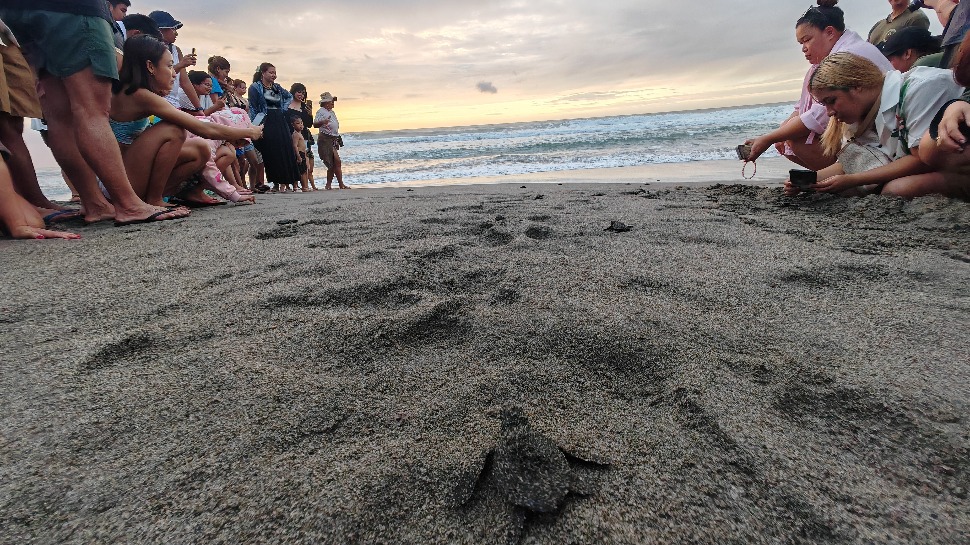
As recently as 2009, sea turtle eggs were freely sold in the markets of La Union. In the beaches of San Juan and Bacnotan, specifically, poachers would routinely harvest the eggs laid by the reptiles and sell them for as low as P3 apiece.
There are actually existing laws that penalize the poaching of turtles, an endangered species that have long made the coastlines of La Union their nesting and hatching home. Those caught risk paying fines of up to P1 million and jail time of up to six to 10 years. But, as Carlos Tamayo, the director of Project CURMA (Coastal Underwater Resource Management Actions) says, enforcement wasn’t all that great.
Box full of baby turtles about to be released to the sea
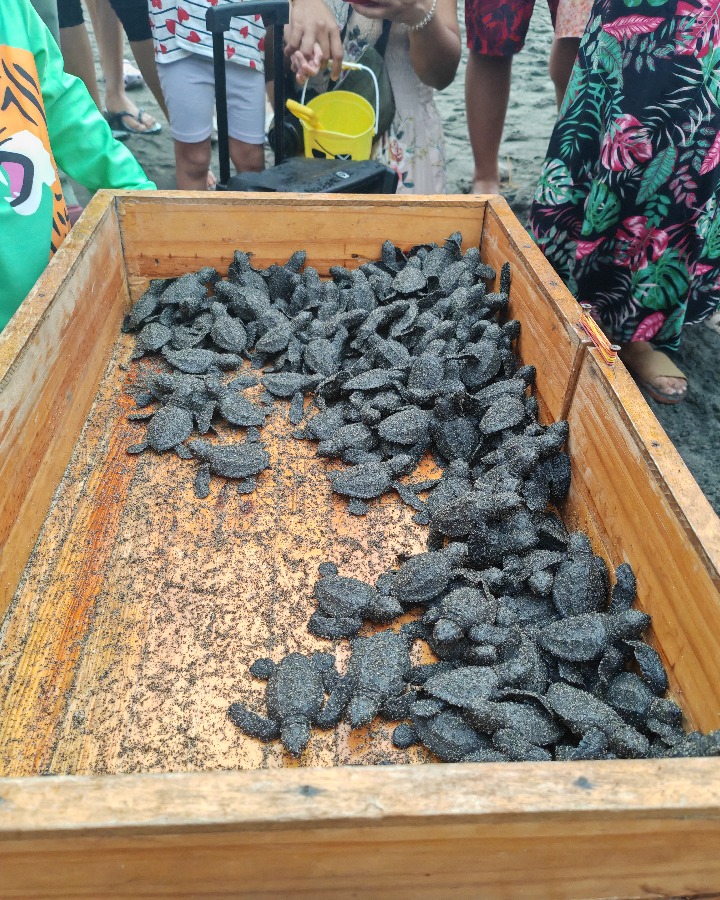
“The fisherfolk, syempre uunahin nila yung pamilya nila,” he tells Esquire Philippines. “And so what we did was offer them livelihood opportunities, including an incentive program where we offer them P20 for each egg they find. That’s a lot higher than the P3 they used to earn.”
ALSO READ
See Photos of the Turtles of Apo Island Up Close
More Areas in the Philippines are Starting to Experience Coral Bleaching
Coupled with an extensive campaign to educate fisherfolk, residents, tourists and the rest of the local community in La Union, the efforts of Project CURMA, which Tamayo helped found in 2010, began to bear fruit. From around 12 to 15 nests in and around the area in the early years, the non-profit reports that it has so far identified as many as 70 nests in 2024.
Baby turtles start making their way to the sea
The current nesting season has also yielded as many as 7,000 eggs, which he says is the most he and his team of volunteers have been able to locate and gather so far.
And what happens to the eggs they gather? They wait for them to hatch and release them back into the sea. Turtle season, according to Project CURMA, usually starts from the end of August, and lasts to around March and sometimes as late as April and May.
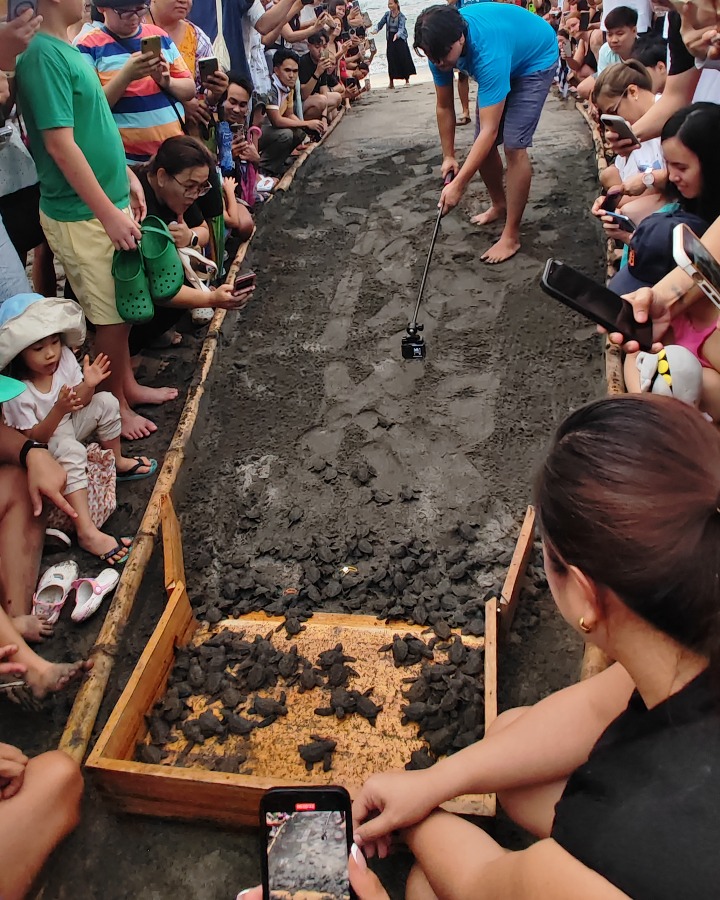
Spactators take photos as the turtles crawl toward the sea
On Saturday (December 28), I was fortunate to have witnessed one of Project CURMA’s turtle release “parties” here in La Union. A small crowd gathered in the beach near Project CURMA’s headquarters in Brgy. Ili Norte, San Juan, La Union. Many of them were tourists who heard about the release party from social media and from friends and acquaintances within the community. Armed with their mobile phones, the spectators gathered on either side of a makeshift pathway right on the beach between a small box and the sea. The box contained about 200 newly hatched turtles all restlessly crawling on top of each other.
Tamayo, who addressed the crowd with a microphone, said the turtles have a short burst of energy right after they hatch that lasts for only about an hour, which they use to crawl back into the sea. When he gives the signal, a volunteer opened one side of the box, and the turtles start making their way the short distance into the ocean. Many of them instinctively know where to go, although some who are a bit slower or find themselves creeping outside the pathway need a bit of help.
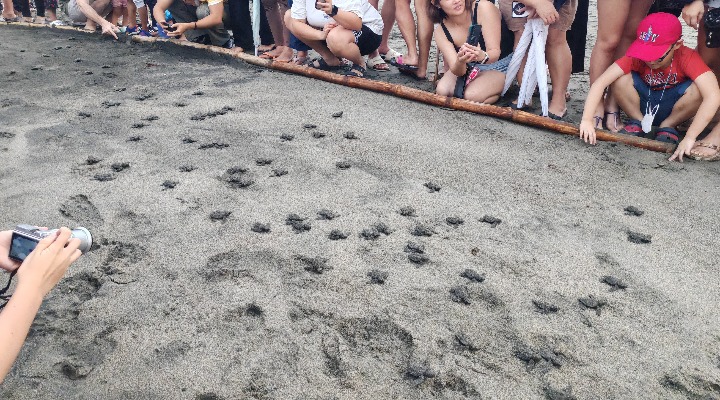
Almost there
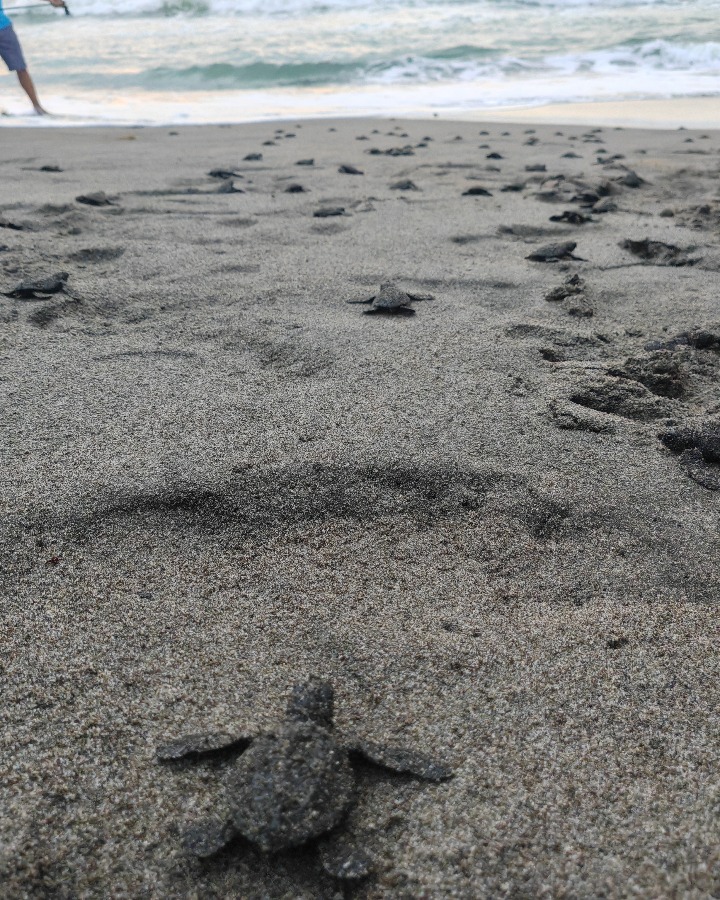
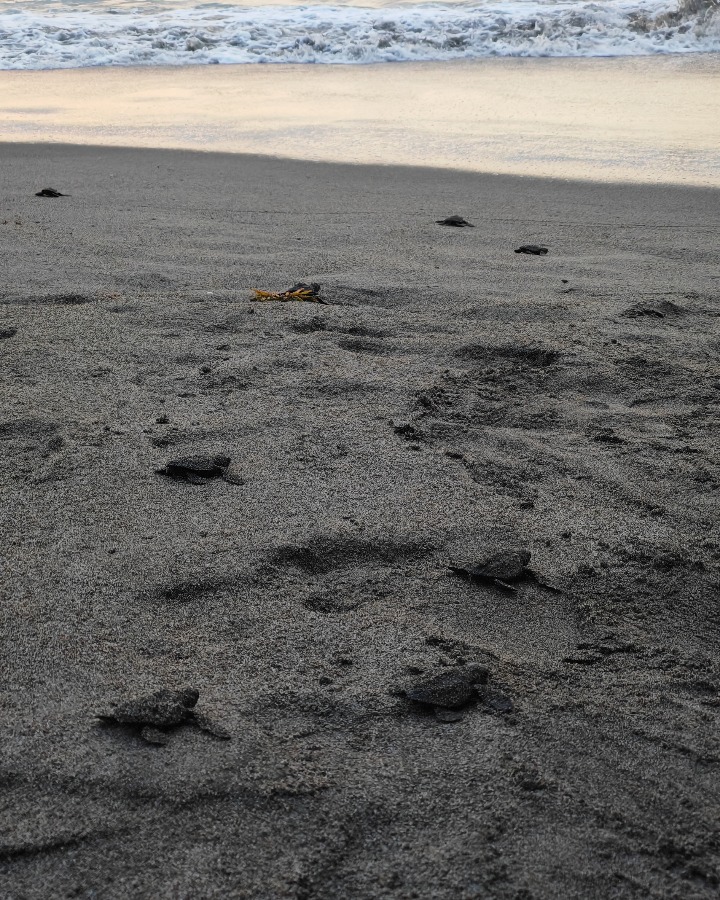
Eventually, the waves start claiming the first of the turtles who reach the edge of the water. It takes about 10 to 15 minutes, but eventually all the hatchlings get there and they start making the first swim of their lives. Tamayo said many will encounter predators in the ocean, but those who make it to maturity will eventually find their way back to the shores of La Union and lay their eggs here, but that won’t happen for at least 10 or so years.
In total, since 2010, Project CURMA has released over 45,000 turtles into the sea and also assisted in the livelihoods of over 45,000 fisherfolk.
The turtles finally make it to the water
Tamayo and his group of volunteers stress the importance of education in their campaign to protect the sea turtles. Despite their efforts, data show that sea turtles are still under threat, with all seven species classified as endangered according to the Convention on International Trade in Endangered Species of Wild Flora and Fauna.
“Initially, our challenge was the poaching, and we dealt with that with education and livelihood opportunities,” he said. “In recent years, since the tourist boom here in La Union, the challenges have been mostly in the tourism side.” Tamayo said that last year, for example, they recorded six incidents where excited tourists approached a mother sea turtle who came up on the beach to lay her eggs to take pictures, touch and basically interrupt the nesting process. Turtles are also extremely sensitive to light and noise, both of which there have been more of as tourism numbers continue to go up in the province.
Project CURMA's Carlos Tamayo (right) receives a citation from the local government of La Union
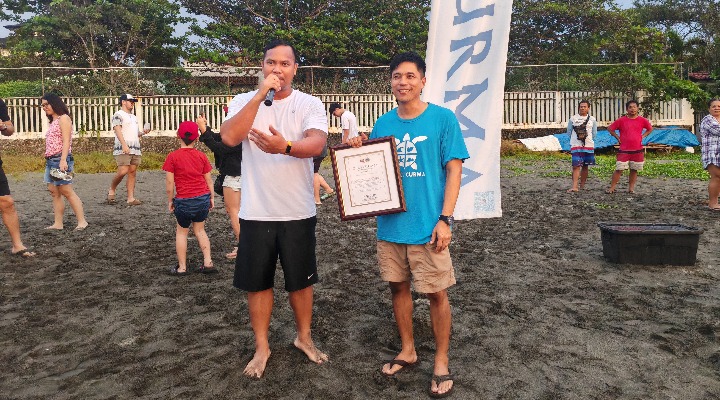
“Right now we're working with our provincial government to create different policies,” Tamayo says. “We have ordinances to protect the nesting sites. What we want is the natural setting during turtle season—that means madilim and tahimik, so the turtles can do their business.
“And yung ganda ng La Union is yung ganda ng area, and the sea turtles, they’re our partners in maintaining the beauty of the area and the ocean, and the coastline. So we have to work with nature if we want to make it sustainable.”
To learn more about Project CURMA and how they’re protecting the sea turtles of La Union, visit their website.
