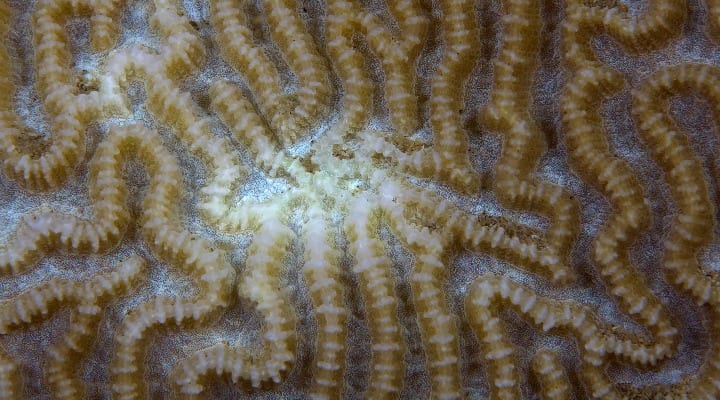
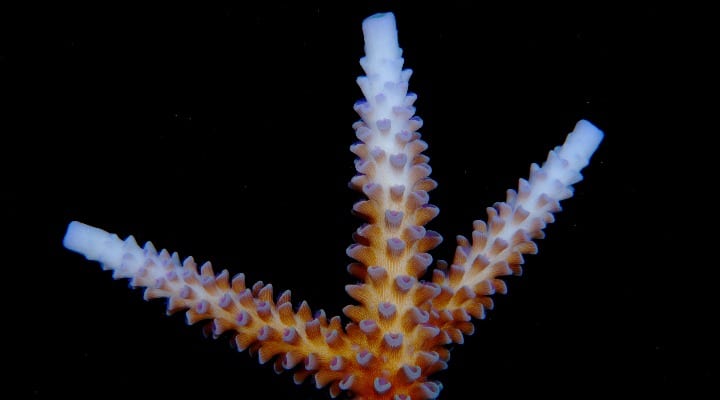
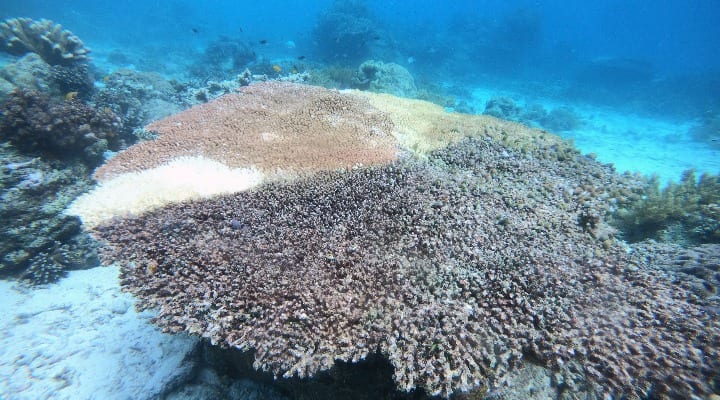
Coral reefs are among the natural wonders that rightfully inspire pride in Filipinos and draw thousands of visitors to the island nation every year. There are indeed fantastic coral reefs to be seen in the archipelago.
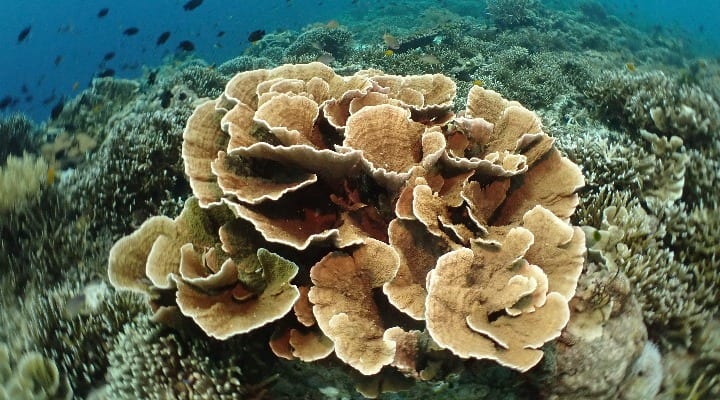
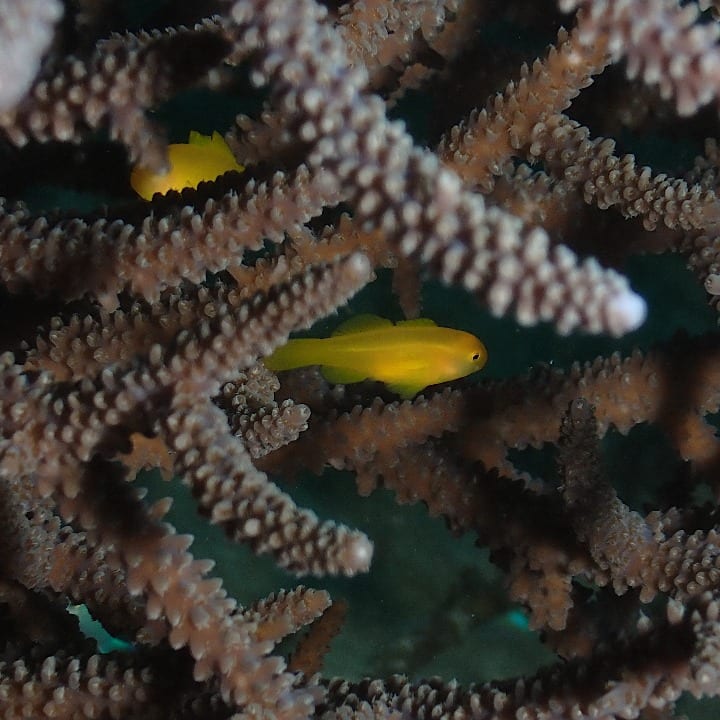
Small coral gobies living on a healthy staghorn coral. The small fishes absolutely rely on the protection by the hard corals
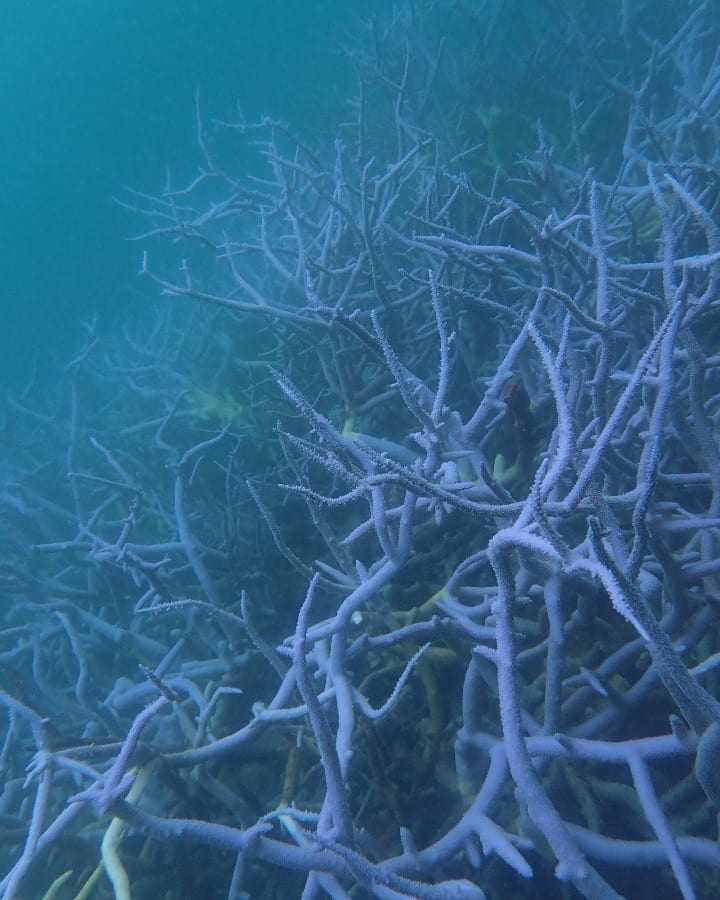
But this year, marine experts have noticed that the corals in an increasing number of areas in the country have started to bleach. Reefs which at health showed a mix of brownish, red, blue and orange colors turned, at least partially, eerily white. This is not a fashion statement by the corals, but a sign that they are in serious trouble.
What is coral bleaching?
Coral bleaching is a failure of the coral-algae collaboration, caused by rising ocean temperatures.
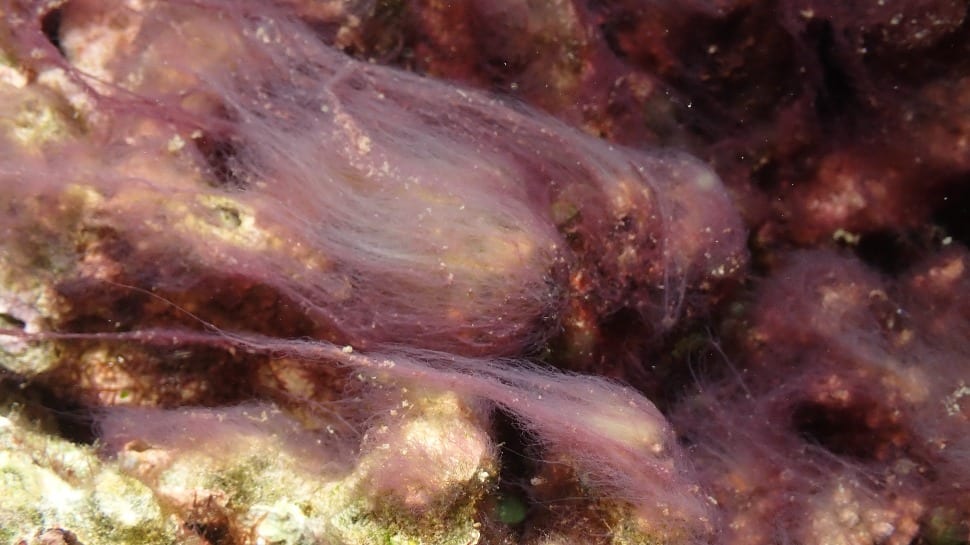
The pink color of this coral is an early sign of bleaching
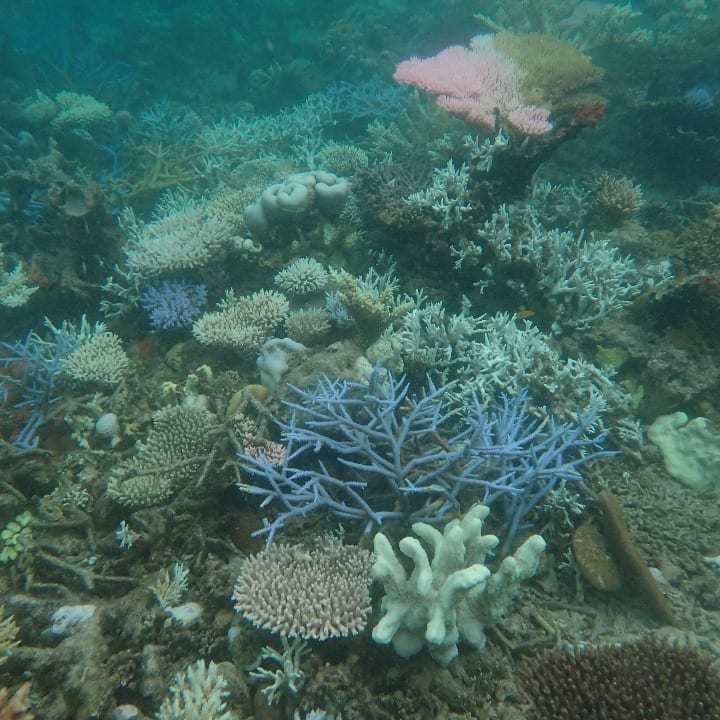
To understand the nature of this trouble, we have to understand that a coral isn’t just an animal, but an “animal-plus.” The corals themselves are invertebrate animals (not possessing a spinal cord like humans, dogs, fishes, lizards and birds) related to sea anemones. But what makes corals special is that they play hosts to countless single-celled algae. The algae find protection in the hard skeletons of the corals, and in turn supply the corals with nutrients. This mutually beneficial relationship is called a symbiosis. Corals are animals plus algae in their bodies: A powerful combination which has allowed them to flourish in the tropical oceans of the world.
ALSO READ
These Cute Bobtail Squids are Hiding Just Beneath the Surface of Philippine Oceans
Dangerously Beautiful: Take a Peek Inside the Wild World of the Sea Urchins of the Philippines
The hard corals, or the ones which build the impressive coral reefs of the Philippines, heavily rely on this symbiosis with the algae. When the algae turn sunlight into biological energy (or what is known as photosynthesis), they produce oxygen as a by-product. This is a good thing, in principle, since all animal life on Planet Earth depends on oxygen. But too much of a good thing can be very harmful; in the case of the algae embedded in the corals: excessive oxygen destroys the tissues of the corals.
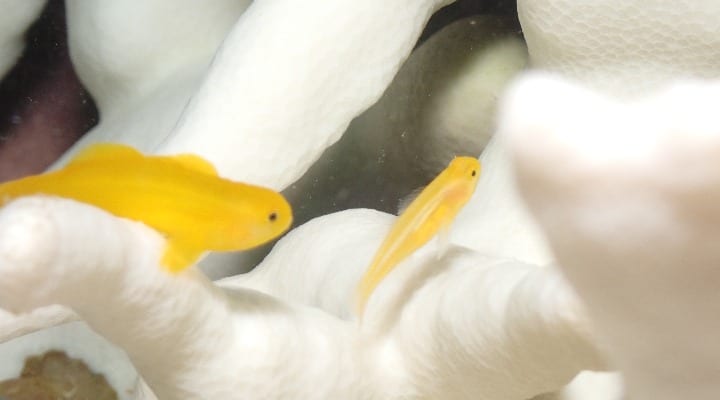
The same species of small coral goby, but this time in a completely bleached coral. As long as the structure of the corals is intact, even the bleached corals provide cover for the small, vulnerable fishes. But sadly the bleached coral will soon die and disintegrate, and provide no more protection for the gobies