• Man at His Best 2025
  • Long Reads
  • Style
  • Money
  • Wheels
  • Culture
  • Opinion
  • CORNER OFFICE
Search
Menu
Close
Close
  • Man at His Best 2025
  • Long Reads
  • Style
  • Money
  • Wheels
  • Culture
  • Opinion
  • Style
    • Fashion
    • Grooming
    • Watches
  • The Good Life
    • Pursuits
    • What She Wants
    • Mavericks
    • The Directory
    • The Noble Man
  • Culture
    • Food & Drink
    • Arts & Entertainment
    • Lifestyle
    • Tech
    • Movies & TV
    • Music
    • Books & Art
    • Design
  • Wheels
    • Cars
    • Motorcycles
    • Drive
  • Money
    • Industry
    • Wealth
    • Capital
    • Movers
  • Long Reads
    • Notes & Essays
    • ESQ&A
    • What I've Learned
    • Fiction
    • Features
  • Life
    • Sports
    • Health & Fitness
    • Women
    • Sex & Relationships
    • Travel
  • Politics
    • Opinion
    • News
  • COUPONS
  • About Us
  • Terms of Use
  • Privacy Policy

NPC Seal of Registration

Esquire has been granted the NPC Seal of Registration in recognition of the successful registration of its DPO and DPS

© 2026 EsquireMag.ph, All Rights Reserved
Long Reads

Benedicto Cabrera, Filipino Artist in Flux

By Bryle B. Suralta
Jul 8, 2024
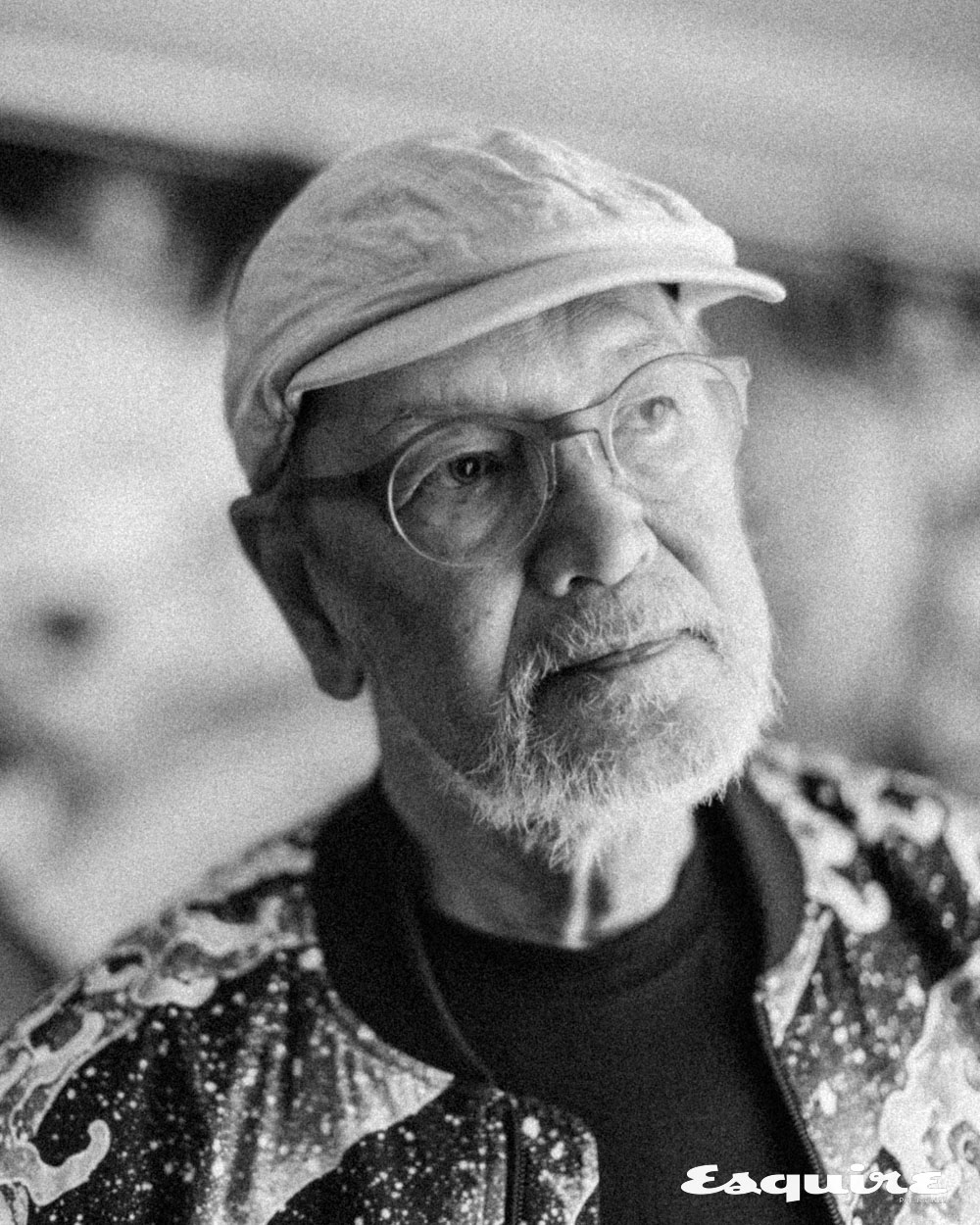
BenCab Esquire July 2024 cover
KIEFFER CARRASCAL

One can't tell the story of Philippine art without mentioning the name of a certain Benedicto Cabrera, better known as BenCab. And one can't even begin to describe his artistic legacy without talking about Sabel. The mysterious woman of the artist's subconscious has come to show many things about the Filipino identity. What those things are, well, is still up to us to unravel.

ADVERTISEMENT - CONTINUE READING BELOW

Sabel has always been a great excuse for a subject matter, the National Artist for Visual Arts says. The artist first saw her in Yakal Street in Bambang, Sta. Cruz, where the Cabrera family lived in the '60s. Each variation of her likeness explores the artist's creative psyche all the while mirroring the realities of a nation torn by centuries of upheaval.

"Sabel was what you call a bag lady. When I first saw her across my window, I saw that she was wrapped around in plastic," he tells Esquire Philippines. "So I started doing sketches of her." He's been conjuring her ever since.

Salvador Cabrera, Paul McCartney, and Baguio

There's a common myth about masters that says that genius stays in the shadows—that he is created in a dark room struck by the glory of Gods to ideate and create all by his lonesome. But in reality, genius is fostered by a wealth of communities, influences, and movements. BenCab is no different.

CONTINUE READING BELOW
watch now

In fact, he wasn't even the first artist in the Cabrera household. "My biggest influence was my elder brother, Salvador. I was the youngest of nine children. That brother of mine was a very good artist and he taught me a lot," he remembers. "We went out together. It was my first exposure to the arts. Seeing him draw and paint led me to draw and paint myself. When I was young, I just realized I could draw and I never stopped."
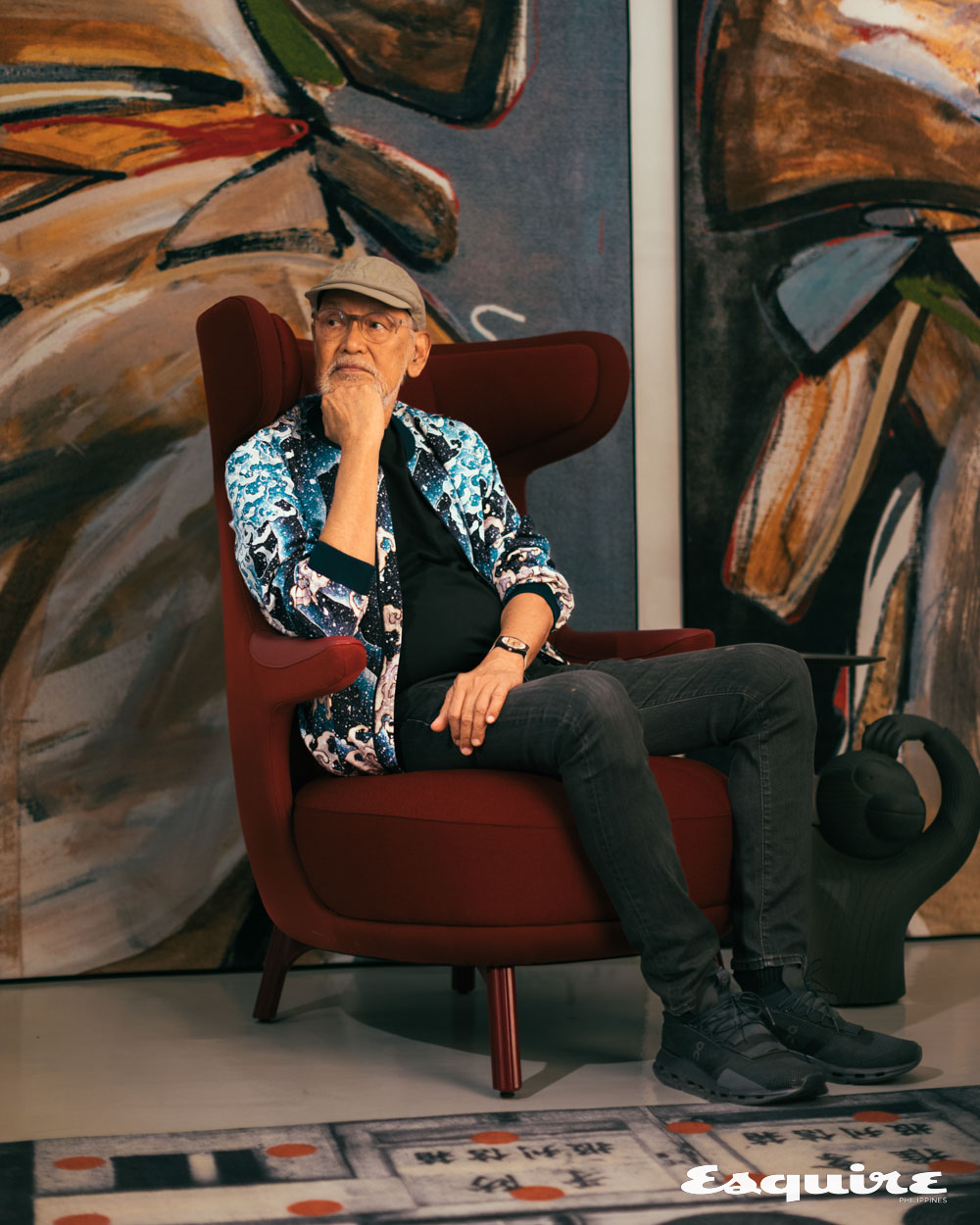
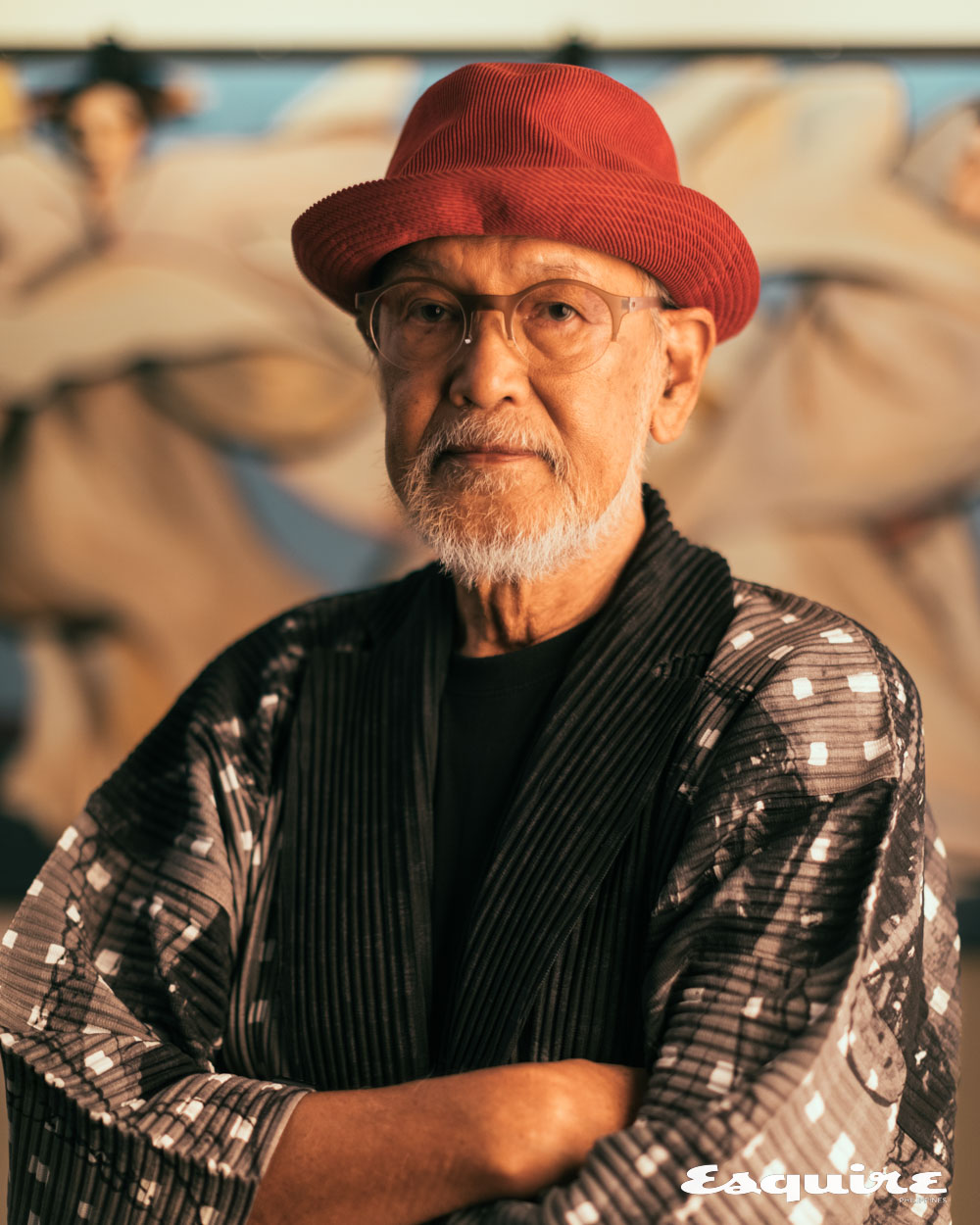
Benedicto BenCab Cabrera
KIEFFER CARRASCAL
ADVERTISEMENT - CONTINUE READING BELOW

At the University of the Philippines (U.P.) College of Fine Arts, Cabrera would first build the foundation for his would-be art career. He was formally trained to draw, paint, and sculpt under the tutelage of titans like Dominador Castañeda, Ireneo Miranda, Carlos Valino, Jose Joya, and Anastacio Caedo. While there, he explored the ins and outs of studio arts, from the academic to the commercial.

But the thing is, he ended up stirring away from painting as a major, leaving the university behind in 1963 without a degree (he would, nonetheless, get an honorary doctorate in the Humanities 50 years later). Toward the end of his days at U.P., he leaned more into commercial arts. He would eventually enter the advertising business as a result, later on becoming an illustrator and layout artist for titles like Liwayway, the Sunday Times, and Mirror magazines. 

In the '60s, BenCab came of age in the midst of the vibrant Bohemian crowd of Malate and Ermita. Salvador was with him, too. A Mabini artist himself, the elder Cabrera ran his own shop in the area back then. "It catered to tourists," the National Artist notes. "I was hanging my early paintings at my brother's shop to sell early on."

"I think I have had some influence [on contemporary artists] because they realize the richness of our culture [in my work]—how this can be exploited in their own art, whether it's in paintings, sculptures, and prints... I've only wanted to show how dynamic our culture is."

Always a fun story to tell, one such tourist who stopped by the space happened to be a Beatle. See, that year, the Fab Four were in Manila for what would be the Beatles' first and only appearance in the Philippines (it was a nightmare for them, by all accounts). During that small window, Paul McCartney was said to have roamed the streets of Manila, passing by Salvador's space. "[McCartney] ended up buying one of my paintings. Wala pa kasing cellphones noon, so nobody took his photos or asked him to sign it." BenCab was paid a decent sum of P70 for the piece.

ADVERTISEMENT - CONTINUE READING BELOW

In preparation for the book, Bencab, the artist would have his son in London reach out to McCartney's group to ask about the piece. "True enough, McCartney replied and sent me a four-by-five transparency. The painting even came with a catalog number. I was so glad he kept that after all those years," Cabrera adds.

By the end of the '60s, he'd find himself moving to the glamorous Chelsea district of London after marrying a British writer. While based in the United Kingdom, he'd have steady patronage well into the '70s and early '80s.
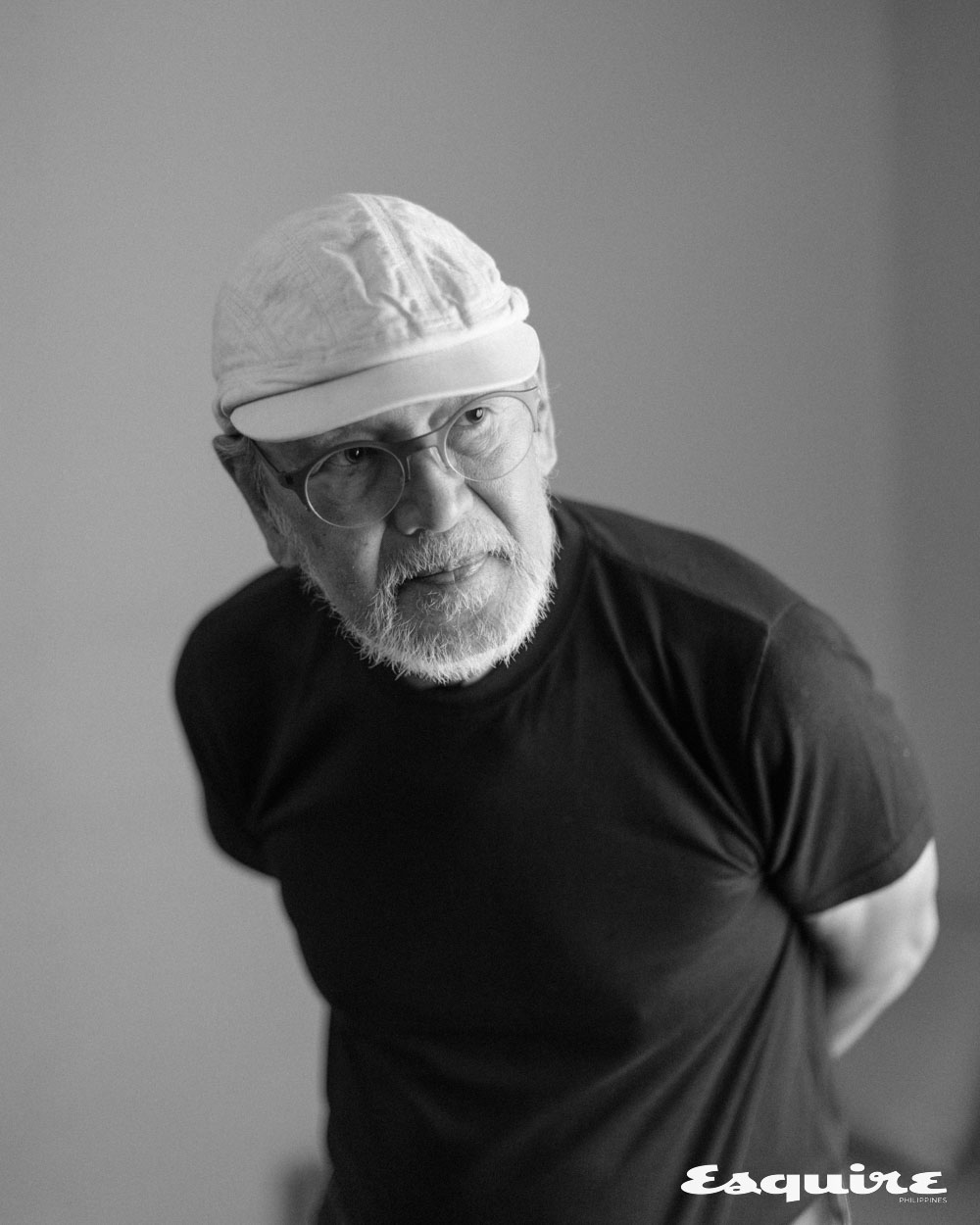
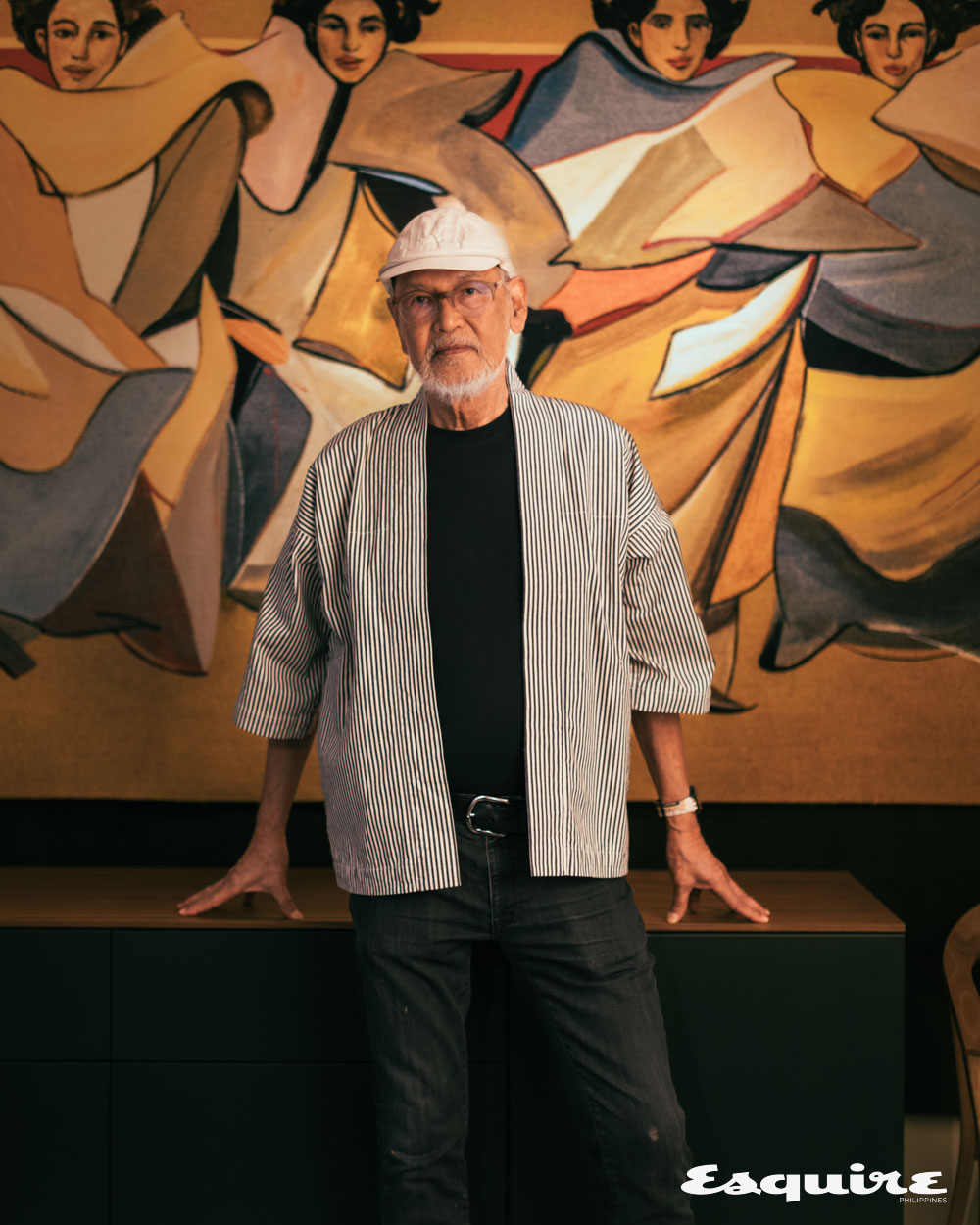
article big image
PHOTO: KIEFFER CARRASCAL

In those days, he associated with fellow Filipino expatriates, writer Jun Terra and artist David Medalla. Jaime Zobel de Ayala, then an Ambassador to the Court of St. James, was a generous patron. BenCab was also heavily influenced by the English artist R.B. Kitaj, who wound up inspiring David Hockney. The Filipino artist sketched, sculpted, and worked his way through the English art scene.

BenCab maintained a strong connection to his homeland. In an interview with the New York Times back in 2005, BenCab reflected on his stint in London, saying: "When I first arrived in London, I was more involved with the trends in Europe. After a while, I decided I didn't want to jump on the bandwagon anymore; I wanted to do my own thing, which is when I started doing Larawan, a commentary on the past."

And so came perhaps the crux of BenCab's art. The inaugural Larawan series would essay the Philippines' colonial roots and subsequent neo-colonial realities during the 20th century. The pieces were especially relevant given the present-day violence and authoritarian conditions in the aftermath of the First Quarter Storm.

"When people think of tribal art, they think of the ones in Africa and Southeast Asia. But ours is just as rich, from the bul-uls to textiles and baskets to betel nut chewing and carvings. Baguio City never fails to pique my interest."

In the '70s, he flourished and succeeded at every turn. It was during that time that Cabrera mounted a one-man exhibition at the Cultural Center of the Philippines (C.C.P.). Meanwhile, Larawan II: The Filipino Abroad at the Luz Gallery and BenCab's Five Years of Life Class at Sining Kamalig would further solidify his status as a premiere Filipino artist.

Throughout much of the decade, themes such as the disillusionment of 20th-century Filipino migrants, the ironies of the Filipino-American dynamic, and the vestiges of colonization in the context of the modern world would persist in his work. These motifs would come to form much of his core as a virtuoso.

article big image
PHOTO: KIEFFER CARRASCAL

By the time the '80s came around, BenCab had exhibited in the U.K., France, Spain, and the Philippines all while based in London. He was widely recognized and accepted as one of Southeast Asia's most important modernists and innovators. So much so that in '84, a major 10-year retrospective in Hawaii was held in his honor. Being Filipino: Paintings, Prints, and Drawings at the Honolulu Museum of Art (then the Honolulu Academy of Arts) ended up becoming one of the artist's most celebrated retrospectives.

"I think I have had some influence [on contemporary artists] because they realize the richness of our culture [in my work]—how this can be exploited in their own art, whether it's in paintings, sculptures, and prints," he emphasizes. "I've only wanted to show how dynamic our culture is."

Back then, a part of him had already considered returning to the Philippines. His divorce, combined with the landmark events that led to EDSA I, would have him strongly reassess his next move. Once his mind was made up, Cabrera finally returned. He settled in Baguio, and ended up rejuvenating the city and vice versa.

"I like to have these challenges of trying different mediums. I use what I know. I represent what I am."

"After my divorce, I decided to move to Baguio. I loved Baguio because of the weather, to begin with. It was also inexpensive to start my life there. Baguio has a rich cultural character. Cordilleran tribal art really is something. It's an underrated aspect of art," he further explains. "When people think of tribal art, they think of the ones in Africa and Southeast Asia. But ours is just as rich, from the bul-uls to textiles and baskets to betel nut chewing and carvings. Baguio City never fails to pique my interest."

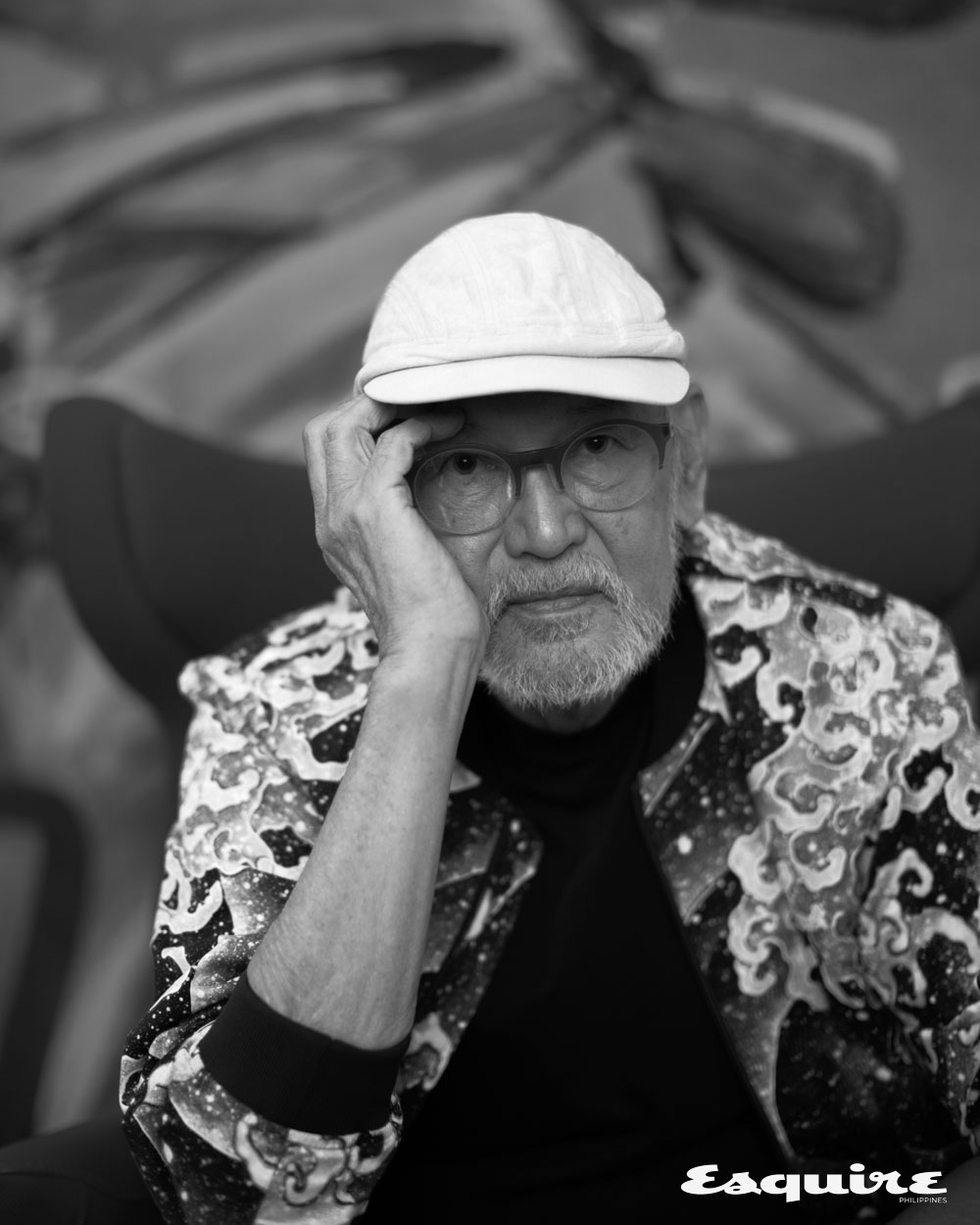
Benedicto BenCab Cabrera black and white portrait
KIEFFER CARRASCAL

Here, Santiago Bose, Roberto Villanueva, and National Artist for Cinema Kidlat Tahimik, together with Cabrera, established the revered Baguio Arts Guild. "That became an example of a community dedicated to the arts. We focused on installations, performances, and paintings. It was great." The guild quickly established Baguio as a creative hub in the late '80s and beyond.

As for the artist, he enjoyed the notoriety of being one of Philippine modern art's greatest triumphs for the next decades, and would subsequently be conferred National Artist in 2006. Three years later, the BenCab Museum in Tuba opened, displaying pieces he'd been collecting since the '60s. These days, the space also regularly showcases the works of the next generation of Filipino artists.

"The young artists in the Philippines now are doing so well, as compared to my early days. Back then, we only had three galleries, one of them was my own in [Gallery] Indigo," he says of the opportunities for artists then and now. "In my days, I had to take on a desk job doing illustrations before I decided to become a full-time artist. Today, there are so many galleries and art brokers. Young artists have more chances to exhibit abroad and get grants. They're very lucky that way."

ALSO READ:

Talking Duendes, Perfumed Nightmares, and the Indio-Genius With Kidlat Tahimik

A Portrait of Ronald Ventura As a Global Phenomenon

Unrelenting Exploration

"I never want to limit myself. I just hope to explore more new techniques. The only thing I'm really bad at is new technology."

BenCab's signature “Larawan” and “Scavenger” paintings might be remembered as two of the most seminal series. The same moody assortment of sepias, siennas, sanguines, blacks,  and grays is reimagined in his latest collaboration with Abitare Internazionale.

BenCab + Moooi Carpets, Edition of 8 is on view at The Lobby of The Peninsula Manila, as part of the famed hotel's “Art in Resonance” global arts program. The tapestries are scattered across the reception areas, entrance doors, and corridors. Inspired by the tapestries of Dutch masters at Milan’s Salone de Mobile, the third edition is a follow-up to BenCab + Moooi Carpets Series 7 five years ago. The carpets are meant to provide viewers with a picture of Sabel and Larawan that goes beyond traditional means.

article big image
PHOTO: KIEFFER CARRASCAL

The images of the paintings that were used on the carpets were chosen by both BenCab and Abitare Internazionale's Filaine Tan and Jeane Wee themselves. Among them are the likes of "Noong Bata Pa Si Sabel," "Farm Boy," "Isadora Dance," and the triptychs.

Each polyamide carpet design was created through massive chromo-jet 800 printing facilities in the Netherlands, creating rich colors and imagery in immaculate photo-realistic detail. The scale and precision of each carpet honors the artist's vision and palette. These carpets were just another approach to what he'd been trying to express all these years. "These are new mediums that I find myself enjoying more," he explains.

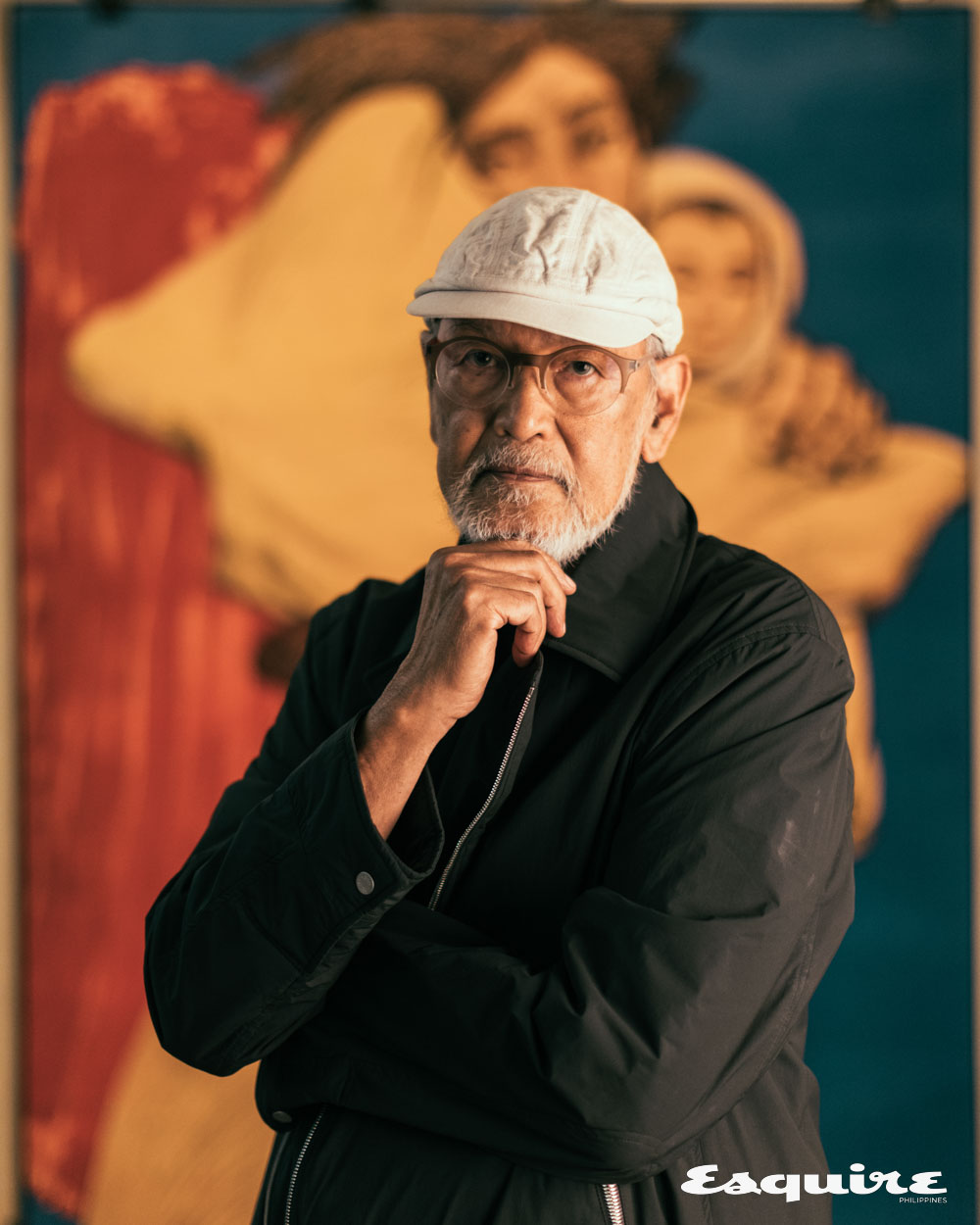
Benedicto BenCab Cabrera Esquire portrait
KIEFFER CARRASCAL

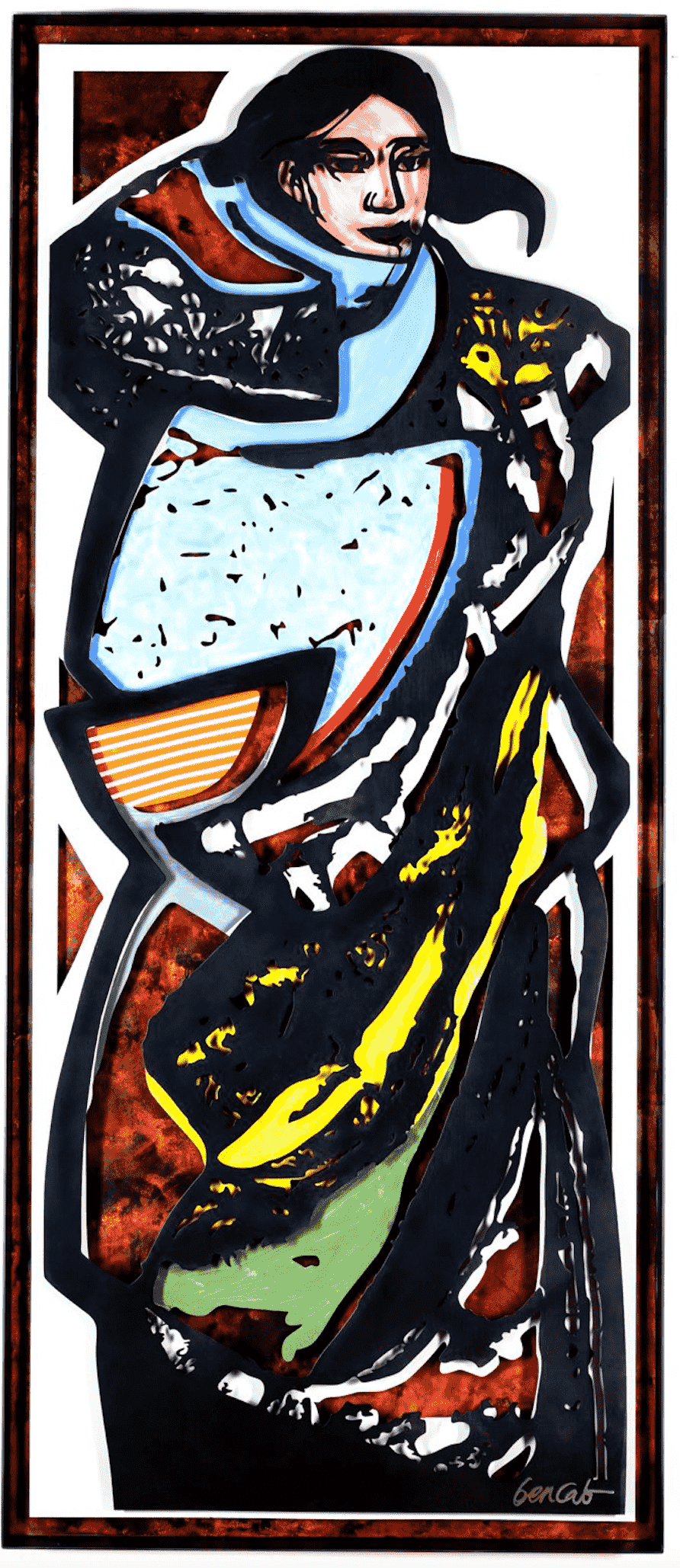
At the age of 82, BenCab still has an insatiable appetite for exploration. In December 2023, he introduced new metal expressions through Abitare Internazionale and Altro Mondo Arte Contemporanea in SERIES 8: The Muses. From the painting "Dance Interpretation" came the idea to transition the figures into three-dimensional concepts. Made by a bespoke metal fabricator in Italy, the metal pieces enjoy unique finishes, generating a symphony of patterns and colors. 

Such exchanges have come to define this later portion of BenCab's career. His other collaboration with Secret Fresh, for instance, led to signature projects like Double Vision: BenCab X Ronald Ventura with Ventura and the BenCab P3 turntables with British audio equipment manufacturer Rega Research. 

"We always have a kind of elusive Filipino soul. I try to catch our nuances as Filipinos in my work." 

The National Artist is nowhere near done with his experimentation. He recently finished some bronze sculptures in Indonesia, which were exhibited at ART SG and Art Fair Philippines (more of them are on the way). "Gajah Gallery has a foundry in Yogyakarta and they want to empower artists like myself to do bronze sculptures. It just happened. In the past, Secret Fresh also asked me to do collectible toys. I never want to limit myself. I just hope to explore more new techniques. The only thing I'm really bad at is new technology," he quips.

The one constant thing, of course, is Sabel. "[She] is one subject that I am trying to constantly transform. It's one way of extending what I know. I like collaborating," the artist says of his process. "I like to have these challenges of trying different mediums. I use what I know. I represent what I am."

Reflections on Sabel, 60 Years Later

"I've been using Sabel now as a subject matter for nearly 60 years now," he says, reflecting on Sabel's own metamorphosis. "In the end, what made her so iconic was how influential her image was to other artists. She represents a lot of things in my art. She can be abstract. She can be oriental. She can be anything. It's always a challenge to explore her in different ways."

"And perhaps that's the true power of the myth of Sabel. One may argue that her image captures the universality of our people's struggle in a sense and the contradictions and collective, cross-generational grief that binds us."

BenCab Sabel
BENCAB MUSEUM

She can be interpreted as pop art, reimagined as shape-specific minimalistic forms, or reimagined even as a dance. National Artist Agnes Locsin did a whole choreography based on her rhythmic quality and contours in Sayaw Sabel. Likewise, "Two Filipinas in the Era of Multinationals" would get its own dance performance at the C.C.P. The Freddie Santos-directed musical Sabel, Love and Passion, on the other hand, would show how we can combine modern and traditional art forms, showcasing the fabled muse in a new light.

Her image is ultimately an open invitation to newer generations of Filipino artists to participate in this discussion. Sabel has been rendered monochromatic, achromatic, colorful, and fluorescent, traversing new mediums, techniques, and applications. Sabel is an idiom, a metaphor, a silhouette, a vague memory, and a vehicle for the frustrating nature of Filipino life. She signals evolution and fluidity. Boundless in her ancestral spirit, much like how we like to think of our own. 

article big image
PHOTO: KIEFFER CARRASCAL

"We always have a kind of elusive Filipino soul. I try to catch our nuances as Filipinos in my work, like how I do Filipiniana materials," he tells Esquire Philippines. "As a Filipino artist, I'm very conscious about how I can capture that (the Filipino soul) in my work. That's what I've always wanted to project."

And perhaps that's the true power of the myth of Sabel. One may argue that her image captures the universality of our people's struggle in a sense and the contradictions and collective cross-generational grief that binds us. She can be an Overseas Filipino Worker carrying the burden of generational grief, that masked vendor you see selling cigarettes over random pavements, a scavenger willing his way to survival, or perhaps a dreamer of all the things the Filipino could still become.

She is, of all things, a symbol, much like any other artistic totem. Mauro Malang Santos and his radiant woman vendors. Or Arturo Luz and his geometric landscapes. Or Charlie Co and his portentous crows. But BenCab and Sabel, it seems, transcend notions of the ephemeral in our Filipinoness. It could be asserted that she is an allegory of Filipino determinism, the way she moves and persists through the shaping and reshaping of her personhood and our people's rampageous history.


Story: Bryle B. Suralta
Photographer: Kieffer Carrascal
Editor-in-Chief: Paul John Caña
Production: Bryle B. Suralta
Creative Direction: Igi Talao
Grooming: Kleng Totanes

Special thanks to Abitare Internazionale, Filaine Tan, Jeane Wee, Annie Sarthou, Ronald Mabanag, and Chris Juan

Read Next
Apayao Province Is Now a UNESCO Biosphere Reserve
Read more stories about
  • profiles,
  • cover story,
  • BenCab,
  • The Standard,
  • Artist Feature,
  • team-00007,
  • lch-00007,
  • Benedicto Cabrera
Most Shared
by author
Esquire Money
Most Popular
Latest Feed
The New Dean of New York University's Faculty of Arts and Science Is a Filipino
Armscor CEO Martin O. Tuason Passes Away at 51
A Fond Farewell to Chocolate Lover Inc.
The 8-Ball of Greatness in Philippine Pool
Tom Cruise Wore an Extremely Rare £70,000 'President' Rolex Watch to Accept His First Oscar
What Can Poetry Teach Us about Natural Disasters?
#InTheLoop
  • Politics
  • Culture
  • MONEY
  • Style
  • Long Reads
© EsquireMag.ph, All Rights Reserved.
  • About Us
  • Contact Us
  • Terms of Use
  • Privacy Policy
  • Sitemap
Close

We use cookies to ensure you get the best experience on Esquiremag.ph. By continued use, you agree to our privacy policy and accept our use of such cookies. Find out more here.

Present
Read Cover Story
Read Cover Story
Catfish Image