
What Exactly Did DLSU's President Mean in His UAAP Victory Speech?

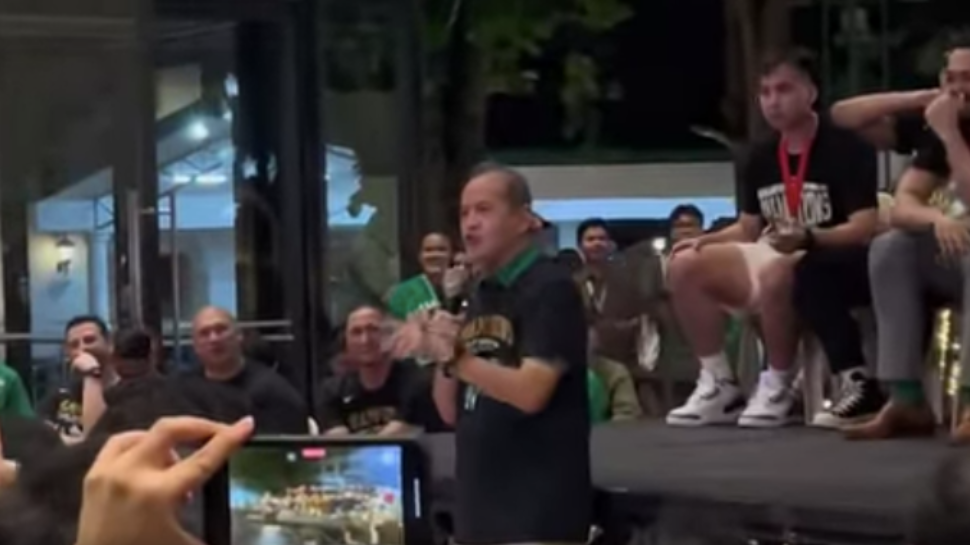
In a speech during the victory celebration following De La Salle University’s triumph over the University of the Philippines in UAAP men’s basketball, DLSU-Manila’s president Bro. Bernard Oca dropped a statement that sounded puzzling at best and inflammatory at worst.
After thanking “the other school”—meaning La Salle’s age-old rival Ateneo De Manila University—for sending its congratulatory message (in the form of its Katipunan campus building lighting up in DLSU’s signature green), he went on to say, “(We want this message to reach our friends from the Ateneo De Manila University)…that we are thankful that we are one together in beating…” and then, almost in a whisper…”U.P.”
The response from the DLSU crowd, many of whom were wearing green shirts and waving green balloons, was loud cheers—choruses of “yesss!” and “woohoos!”
But what exactly did the honorable Brother Oca mean by that?
ALSO READ
'If You're Not With Us, You're Against Us.' Where Have We Heard That One Before?
Selective Outrage: Notes on the Religious Controversy Du Jour
Because to me, when I first heard it, my kneejerk reaction was one of disbelief and disappointment. Taking the statement as is without the benefit of context, it sounded like Brother Oca was expressing gratitude that both schools—Ateneo and La Salle—were in a partnership specifically to deny U.P. the coveted championship trophy. The implication was that it took the two schools working together to stop a third from winning.
Maybe I’m reading too much into it, or maybe it’s naivete, but that doesn’t exactly sound like a ringing endorsement of the values of sportsmanship and camaraderie that collegiate competitions like the UAAP are supposed to uphold. On the contrary, what he said sounded divisive and petty, and with all due respect to the good university president, it reeked of elitism and bullying. It’s a bit like the two self-styled cool jocks in high school picking on the nerdy kid, conspiring to do everything to beat him to keep him in his place.
I get that the Lasalistas were on an extreme high. It was their first win in seven years, after all. (Compare that to U.P's win two years ago that came after several decades). And it wouldn’t have meant anything if it were some random student or even player who mouthed those words. Trash-talking is an age-old tradition in sports, and everybody does it. But I kind of expected differently from the president of a university who’s supposed to set the example for his wards. Was it too much to expect a victory speech that conveyed humility and grace and that sidestepped subtle jabs or crude jokes? When university leaders say mean things about rival schools, you kind of can’t help but furrow your brows, put your hand to your face, and shake your head in embarrassment and disappointment.
To be fair, as soon as he said those words, it seemed like Brother Oca realized his faux pas and quickly backtracked. “Before I get misquoted, though…we’re so happy that we got this championship because we played a team that was excellent, that was good. We showed them the best of ourselves because they were also very, very good.
“And to the U.P. community, thank you very much for the opportunity of playing with you in the championship,” he added.
Nice save, and I’ve no doubt he was being sincere, but I couldn’t help but think that that was partly for his own benefit, too. You know, so that people wouldn’t pile on him for his earlier blooper.
The point is that, after such a contentious and adrenaline-pumped final game (as all final games usually are), supporters of the competing teams are often emotional and impressionable, especially young fans of collegiate basketball. School leaders would do well to choose their words carefully when delivering speeches in front of fired-up crowds so as not to communicate faulty or improper rhetoric. There’s really no need to bring anyone down when you’re already hoisting the trophy.
