What It Feels Like to Be a Filipino Legal Interpreter in Ireland


DUBLIN—In the winter of my sabbatical year, I found myself in Ireland’s highest court.
The Central Criminal Court, located just by Phoenix Park in this city, is where the gravest of crimes are tried, including international terrorism, drug smuggling, and distribution of child pornography. You get the idea.
And contrary to what my friends have anticipated, I wasn’t there to be tried for a crime. I was there to be the legal translator of Filipinos involved in high-profile cases.
For several months, I found myself behind the criminal box, seated with the defendants, explaining legal jargons and answering their questions about the proceedings.
Behind the transparent glass of the criminal box as I stared up at the judges or cowered before the rows of barristers in the courtroom, I often asked myself: How did I even get myself in this situation?
View inside the courtroom of Ireland's Criminal Court of Justice
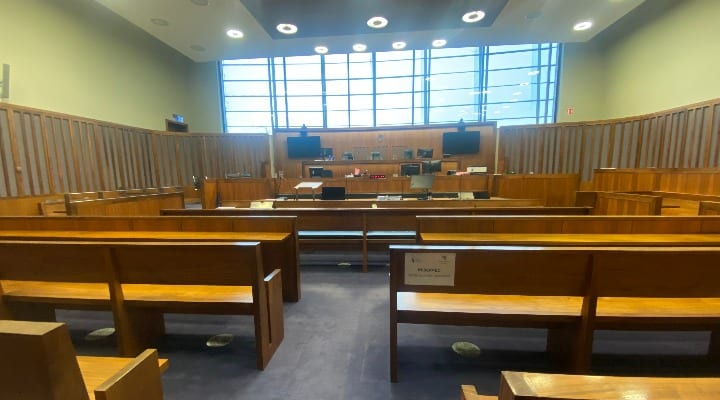
At the start of my year of respite and relaxation, I told myself that I was going to rest. Properly rest. Yet after months of travelling around the world, I found myself back in Dublin, lethargic and arguing with people on anime subreddits.
When I was recommended this part-time gig to stave off my boredom, I accepted, but not without a bit of hesitation. The agency connecting the translators to the courthouses told me that they lacked interpreters in Filipino and other Philippine languages.
ALSO READ
A Famous Irish Political Scientist Has Another Legacy in the Philippines
Suddenly, it was as if I could hear a line from my alma mater's hymn, UP Naming Mahal —-“Malayong lupain, amin man marating, di rin magbabago ang damdamin.” (Even if we reach distant lands, our feelings will never change.) I told myself that this was a good way to serve the country, even while abroad, even while I was resting.
However, I wasn’t a law student. I studied Journalism in my undergrad and Business Marketing for my master’s degree. I also studied Artificial Intelligence at Oxford. I was a digital marketer by profession. I help build startups. I’m a board member of Probe Media Foundation. It turns out that being knowledgeable in different fields and understanding the basic know-how of law and ethics for these different industries was going to be useful.
I was also familiar with reading lengthy case documents as part of my research when I wrote about true crime for Esquire Philippines. So I didn’t shy away from the more macabre aspects of crime. (I wasn’t sure if being a fan of Detective Conan for the past 25 years also qualified me for this post, but I’m counting it.)
Outside CCJ 11 where the drug smuggling case was tried

Of course, I had to take a short legal interpretation course just to know how they do things differently in Ireland. I told myself that if someone was qualified to do it, it had to be me. And now, I have the responsibility of making the voices of Filipinos heard in a foreign court.
The defendants or the accused
At the time of apprehension, when any foreign national requests an interpreter, they should be given one. And this includes Filipinos, even if we are known for our general command of the English language.
Legal translation is not just a verbatim translation of what is happening, but the defendant can also ask questions like what a bail is, what a bench warrant is, or what is going to happen next, or whatever legal jargon comes up during the trial, which the legal translator should be able to answer. (During these times, when the trial is proceeding, we are seated away from the barristers so we couldn’t ask them about it if such questions come up.)
In one of my cases, the defendant also asked the meaning of “et al” which I was very happy to provide. I was, after all, my class’ resident know-it-all and my teachers back in elementary school always seated me beside those who needed help in certain subjects. It was basically this, except I had another person’s life on the line. Instead of a seatmate’s grade hanging in the balance, my translation could mean the difference between a person spending 10 or 20 years in jail or. No pressure at all.
Aside from this, I also have to give the person’s reply in court. If a barrister or a lawyer or a judge asked the accused a question and they prefer to answer in their native tongue, it is the responsibility of the interpreter to translate what they said—no more, no less.
At the beginning of 2025, I found myself part of the translation team working on one of Ireland’s biggest cases, a failed drug smuggling where eight accused—all foreigners—tried to import 2.2 tons of cocaine worth over 157 million euros (about P10.4 billion).
Where the judges and barristers sit
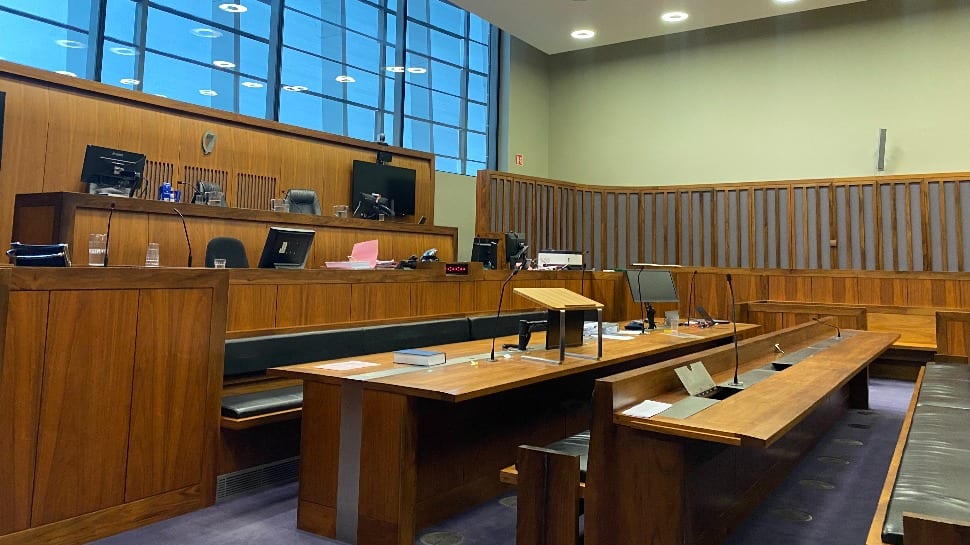
The trial at Ireland’s Criminal Courts of Justice (CCJ) took place for half a year. The Filipino defendant, a marine officer in his 30s, who initially pleaded not guilty, was sentenced to 18 years in prison. There were weeks when we had to be in court almost every day for five hours or so.
The importance of translators
When I had time to chat with the other translators, we all noticed that our defendants could understand English well, but they still requested interpreters for other reasons. “They may need time to think about what they will say, or perhaps they can express themselves better in their native language,” the Dutch translator said.
“It also makes a difference, having someone there with you—someone who speaks your native tongue,” a Russian translator said.
When an interpreter cannot make it, cases are delayed or moved. In one session, a Farsi interpreter was late for an hour, and the proceedings didn’t start until she arrived.
“I would do the same for any other translator,” the judge for that case said, reiterating the fact that having translators is within the rights of any parties involved in the case.
In another case, the accused was arrested in another county, so I did the translation over the phone.
After the arrest, there is usually an initial interview with the police. Then, the answers will be read back to the accused, and they are given the chance to change any detail before they approve and sign the transcript. These would then be used during the trial should it proceed.
Of course, the accused can also choose to stay silent or wait until a legal representative arrives. If they’re involved in a sketchy case, they can also choose to give a voluntary statement.
The defense barristers usually remind the court of the cooperative nature of the accused by agreeing to do the interview early on. Whether they plead guilty or found guilty after the trial, this will be taken into consideration and added to the mitigating factors, which could reduce sentences for a few months or even years.
But it is quite rare for defendants to take the stand, one of the barristers in an assault case told one of my defendants. In his experience, only one in 10 cases chose to do so—a Filipina transwoman in his 60s. The transwoman was accused of molesting an Irish student in his 20s. Unfortunately for that case, the Filipina lost. Immediately after the jury read their verdict, she wondered if the jury would have ruled otherwise if she had given her testimony.
Lobby of CCJ

Her barrister, however, was adamant that the prosecution would not be kind to her and would further distress her on the stand. Since she had known her barrister for years after working on another case together where she was the prosecution and won, she trusted his judgment.
I’ve noticed they can barristers can be lenient, too. In a case of a Filipino defendant in his 60s who was caught with child pornography materials in his phone, he was allowed to have his previously scheduled family vacation in Turkey, on the condition that he visits the police station nearest his residence and surrender his passport once he gets back.
I felt almost compelled to warn the barristers—Is this wise? Are we really allowing someone awaiting trial to fly out for a vacation? But in the event someone misses their court dates, bench warrants are issued. This means they could be arrested on sight.
Contrary to my expectations, the Filipino defendant returned to Ireland right after his family vacation. He even brought his entire family to his next court date. I guess the family vacation went well, despite the looming charges.
For the victims and plaintiffs
Most cases in which Filipinos are the plaintiffs involve domestic abuse. These cases are tried in Family Court, located in another part of Dublin, nearer the city center, in the vicinity of the famous Temple Bar.
One specific case that stayed with me was of a caregiver in her late 20s who had a two-year-old toddler. Her husband, an EU national whom she met as a colleague in another country, had been accused of abusing her. When husband and wife appeared in court, she told the judge of the many times her husband verbally and physically abused her. The caregiver had only been in Ireland for several months and it was their first time living together after their wedding. They moved to Dublin after her husband found a job in a hospital on the north side of town.
During the proceedings, she played Whatsapp messages of him telling her that she had no worth as a person. In the same thread, he asked if she could understand English. And this was over an argument over a simple scheduling conflict. There were more recorded messages of him shouting at her, of things breaking, while their son cried incessantly in the background.
“You don’t speak like that to the mother of your child,” the judge told her husband, “Especially someone who is all alone in a strange country, thousands of miles away from her home.”
The girl said that her husband wouldn’t allow her to communicate with friends or family back home, nor be friendly with their neighbors. She felt alone and isolated, she told me after. Though she didn’t have enough funds for legal fees, the Legal Aid office came to her rescue. Luckily for her, it was located on the upper floor of the same building. I didn’t accompany her for the application as I was booked for another case.
Where the audience sits inside the courtroom

The next one, however, involved a Filipino who spoke almost no English at all, so I was the one filling out his application form, which was about four pages, back-to-back. And thanks to the Filipino’s foresight to bring plenty of identification documents, including proof of his billing address, his latest payslip as a contractual worker in a food court, proof of payment of rent, bank statements, and IDs, we were able to finish the form within an hour of arriving at the Legal Aid office.
The kind lady at the reception told us to wait and I had to explain to her that the man didn’t speak a lot of English (He was part of the earliest batch of Filipinos who arrived in Ireland in the 2000s when English proficiency wasn’t a requirement for a work permit) so it would be difficult for him to go back another day and coordinate with them.
Thankfully, she was understanding of the situation and the man was approved for legal aid that very day, only 20 minutes after we had submitted the completed forms.
Embassy support
For many Filipinos working abroad, the embassy or consulate in their respective countries may be their first port of call if they get into legal troubles, but apparently, not every OFW thinks this way.
Daniel Espiritu, Ambassador of the Philippines in Ireland, said that this law covers both documented and undocumented workers. He referred to the Philippine Migrant Act of 1995 (Republic Act 8042) that mandates robust legal safeguards for overseas Filipino workers (OFWs).
Under Sections?23 to 26, the law establishes a Legal Assistant for Migrant Workers Affairs and a Legal Assistance Fund. This Fund covers legal fees, including hiring foreign counsel, court costs, bail bonds, documentation support, and litigation expenses for Filipinos facing legal proceedings overseas, regardless of whether they are the victims or the accused. Additionally, repatriation support is available for those in distress or underage workers by Sections?16 and?15, ensuring embassy coordination for swift return to the Philippines if needed.
“There’s a common misconception of Filipinos living abroad that you are only supported if you are documented,” Ambassador Espiritu said in an exclusive interview with Esquire. “Many of them think that if they are undocumented, they cannot avail of our services. But it is their legal right.”
The author (left) with Raymond Christopher Garrett, former Philippine Consul Daniel Espiritu, Ambassador Eric Aquino Minister, and Consul Genral and Leah Fe Liong (Former Executive at the Consulate)

Eric Aquino, Minister and Consul General of the Philippine Embassy in Ireland, echoed these sentiments. “We have cases of those who are afraid to come forward because of their status, but they should know that the embassy is here to support them,” Aquino said.
Of course, this doesn’t just apply to Ireland but to any country where there are Filipinos.
In the high-profile drug trafficking case, the embassy offered support to the defendant, the marine officer, by serving as the liaison between him and his family in the Philippines. They also coordinated with his legal team, comprised of a solicitor, two junior barristers, and a senior barrister. They even provided him with a suit so that he could look presentable and feel comfortable during his sentence hearing.
“It makes a difference,” the defendant told me before the hearing started. “Dahil dito, pakiramdam ko, tao ako. (With something as simple as this suit, I feel like a person.)”
And this is something I hear often with the other plaintiffs and defendants I meet—facing the law so far away from home, literally on the other side of the globe can not only make you feel vulnerable, but very much alone. Merely seeing the presence of embassy representatives during important points in the case was a big help in terms of boosting the marine officer’s morale. He was thankful that they were present at important times throughout the entire process, from the start of the case, his arraignment, and sentence hearing.
While the embassy cannot be present for every case whenever a Filipino gets involved in legal issues, if they are requested for support—moral and otherwise—they simply have to coordinate it with the office. And the embassy will do its best to provide what is needed.
International implications and a growing climate of "ultra-nationalism”
Whenever I look at my calendar of bookings and I don’t get called into court, I consider it a good week—it means a Filipino in Ireland either didn’t commit a crime or became the victim of one. But in the case of one or the other, anyone approved for Legal Aid and those who request for translators, it’s the Irish taxpayers who shoulder the costs for these services. There have been conversations around this: why are Irish taxpayers paying for these things when foreign nationals are coming into their country and committing crimes?
Let’s flip the situation around: if a foreign national committed a crime on Philippine soil and we learn that his legal fees and even fees incurred while he stays in our prisons are being paid by Filipino taxpayers—how would that make us feel?
While the initial reaction of many could be shock and dissatisfaction, it shouldn’t take away the reality that these people deserve to avail of these services. Migration and travel are human rights, despite the growing sentiment of anti-foreigners disguised as ultra nationalism.
If anyone commits a crime, they are innocent until proven guilty. This is something I hear almost every day in trials. The presumption of innocence is paramount. Legal services should be provided to anyone apprehended and convicted. When one country affords it to citizens of other countries, then citizens of their own country should also be granted the same privilege if they get into trouble away from their native land. It is only fair and just.
Where the defendants sit accompanied by police or the Garda
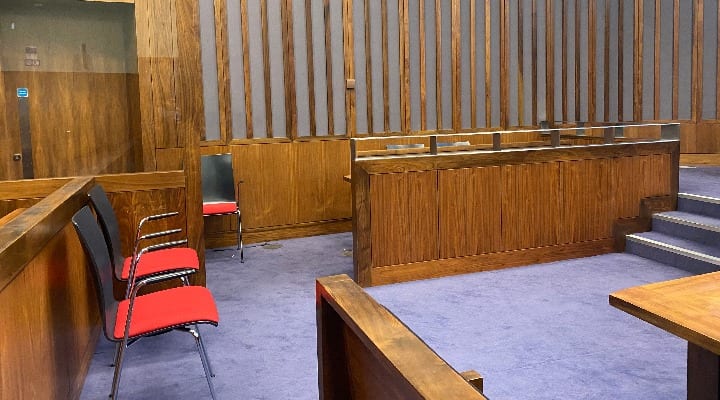
You might start thinking to yourself, “But surely I won’t get into trouble in another country! Surely, I won’t commit a crime whether in the Philippines or anywhere!” Believe it or not, all the defendants in the cases I’ve been involved in have also believed and said the same thing. Many of them are people who come from good families and boast of stellar academic backgrounds. Most of them don’t even have prior convictions. You never really know until it happens to you.
We, Filipinos, then should fiercely advocate for proper and fair trials for foreigners because of our own diaspora. Undoubtedly, there are Filipinos in every corner of the globe. Our Bagong Bayanis—our OFWs, our migrants, our expats—they are all vulnerable.
And no, I’m not just paranoid. Xenophobia and anti-foreigner sentiment are rampant. Racist, discriminatory attacks are on the rise and not just in Europe. The chances of getting into trouble or being a victim of racist attacks is not zero. I, myself, hear someone telling me to “Go back to your country!” at least once every year. It’s like an annual tradition now. I buy myself a cupcake whenever it happens.
And we’re not just vulnerable because of racism and discrimination. With the different cases I’ve handled, I’ve realized that one can be vulnerable for almost anything Filipinos have filed cases against jilted ex-lovers, disgruntled colleagues, unforgiving landlords, drunk strangers in the street. In turn, they have also been accused of the same exact things and many more. Knowing you have the support of the embassy or things like legal aid helps everyone sleep better at night. Living and working abroad already takes a heavy mental toll and having one less thing to think can sometimes make all the difference.
Seeing how the justice system works in an EU country also made me think of the legal situation in the Philippines. While I know that we do have instruments in place—such as the Public Attorney’s Office, the Free Legal Assistance Act of 2010, and others—I don’t have experience working with them or applying for legal aid in the Philippines, so I cannot speak about their efficiency. Can legal aid also be approved in 20 to 30 minutes, like here in Ireland? I hope so. And if it’s not, I can only hope that someday, it will be.