Ninoy, A Force of Nature

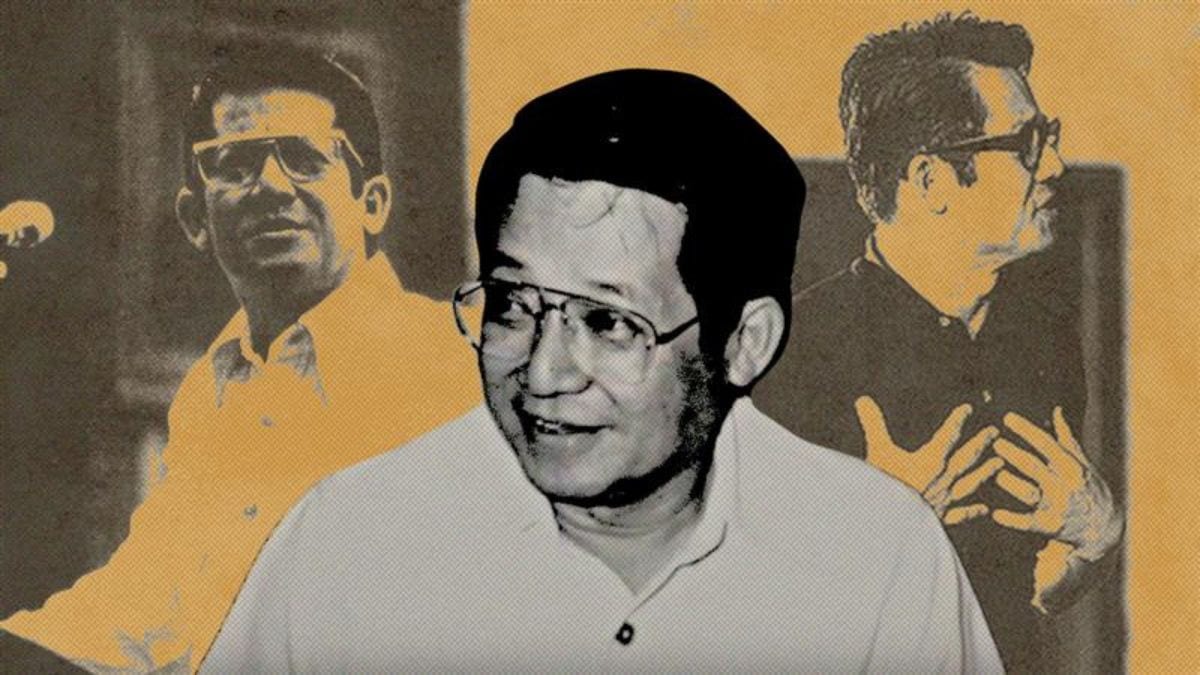
My Tito Dan Lichauco, Principal Architect of Archion Architects and son of Ninoy's older sister Maur Lichauco, came up with the idea of centering the new exhibit of the renovated Aquino Museum around the theme of choice. Each section of the museum would be preceded by a pair of doors representing a major crossroad in the life of Ninoy, Cory, or PNoy. Resist or collaborate? Return or stay? Fight or rest? Follow the historical path and the story continues.
What tickled me though were the “wrong” choices. Short of writing full-blown alternate histories (a project I’d like to pursue when I find the discipline), we settled for giving visitors a flavor of what life might have been for our protagonists had they gone down a different road: the family lives of the Aquino and Cojuangco clans; a glimpse of Cory and PNoy’s shared home in 25 Times St., Brgy. West Triangle, Quezon City, where Cory’s paintings are juxtaposed with PNoy’s CD collection and family photos; and my favorite punchline—a dead end for those who choose to collaborate with the Marcos dictatorship rather than resist.
Since we couldn’t fully flesh out these what-ifs, we instead tried to frontload the displays leading up to the choices with the internal struggle going on in Ninoy’s, Cory’s, and PNoy’s heads. Chino Roces’ million-signature campaign to draft Cory to run for president is shown opposite the wedding of her eldest daughter and the birth of her first grandchild in the lead up to her decision. The sheer exhaustion from Cory’s post-presidency activism and historic funeral weighs down on PNoy as he decides whether to follow in his mother’s footsteps.
And then there’s Ninoy.
Cory to me was Lola Cory. She always made it clear that the Presidency was a sacrifice. PNoy to me was Tito Noy. Though presidential ambition exists in the mind of any politician, especially any senator, I came to learn that there was also always the question of, “Am I ready?”
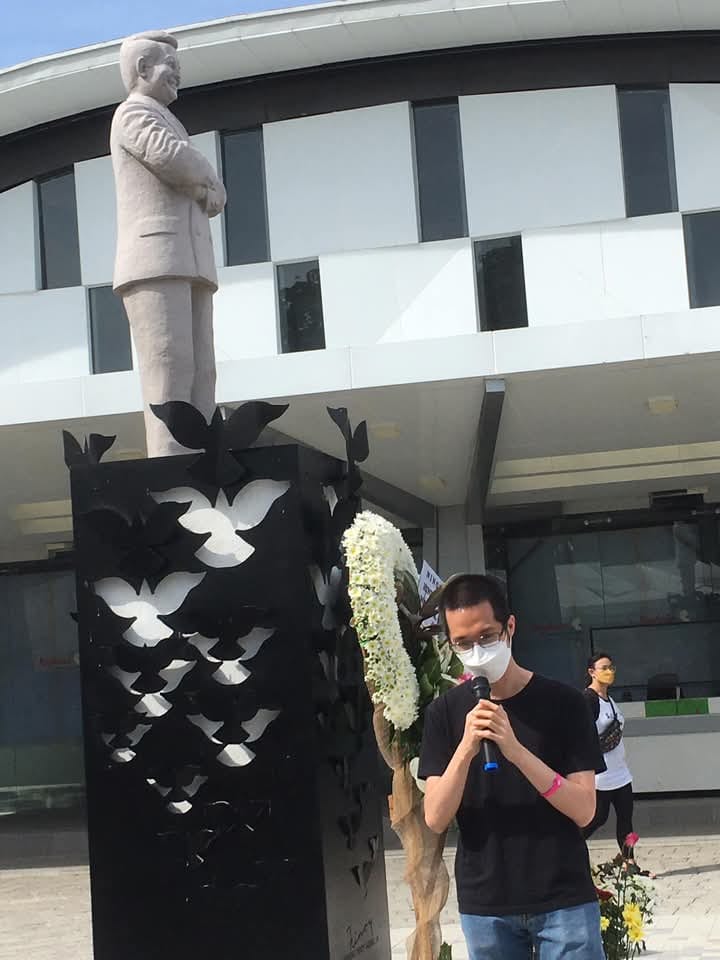
Kiko Aquino Dee giving a speech in front of his Lolo Ninoy's statue in Tarlac after it was desecrated during a UniTeam Campaign event in 2022.
I was born eight years after Ninoy died. I call him “Lolo Ninoy,” but aside from a couple of quirks (being a lover of bargains and consumer of kamaru), I knew him the same way most Filipino school kids (should have) learned about him: He was a hero whose sacrifice of his life eventually inspired us to free ourselves from the Marcos dictatorship. Collaborate or resist? I don’t think anyone (short of some misguided fratmen) can imagine Ninoy collaborating with Marcos. Stay or return? As Lola said, “Ninoy always wanted to die for his country.”
In short, Lola Cory and Tito Noy to me are people I love. Lolo Ninoy to me was a force of nature.
I imagine that those who actually knew him would agree. At 20, he was able to negotiate the surrender of guerilla leader Luis Taruc. At 22, he became mayor of Concepcion. At 34, senator of the Republic of the Philippines. His legendary rhetorical style was overwhelming: Speak fast, weave in a joke or two, and leave barely any time for factchecking. (He wasn’t perfect.) It must’ve been amazing to hear him deliver his maiden speech in the Senate, “A Garrison State in the Make,” discuss the perennial problem of money and patronage in Philippine politics in “A Carrot and Stick for Mr. Marcos?”, and expose the Jabidah Massacre (though he never used the term) in “Jabidah! Special Forces of Evil?”
He was a force of nature. But what happened when he was forced to stop?
Lolo Ninoy recounts that in solitary confinement in Fort Magsaysay, Laur, Nueva Ecija, he and Ka Pepe Diokno would sing “Bayan Ko” and “Lupang Hinirang” to each other to make sure that the other was still alive. (Interestingly, I don’t think Ka Pepe ever corroborated this story.) I believe “Lupang Hinirang” was particularly close to Lolo Ninoy’s heart, and I suspect that’s what inspired the quote, “the Filipino is worth dying for.” Where does that sentiment come from? Perhaps the previous line, “Buhay ay langit sa piling mo.”
ALSO READ
"Leadership exacts a harsh price, especially in times of evil rule or evil threat." —Ninoy Aquino
Benigno Aquino III, In His Own Words
I think that’s what finally humanized him to me. As a kid, while his parents attended parties, he’d regale everyone, from the socialites to their drivers, with stories and speeches. In the last years of his life, he’d take every opportunity he could to speak to the Filipino community in the US.
He loved his country and loved his people. In a letter to Tito Noy written a few months after his solitary confinement in Laur, Lolo Ninoy told him, “There is no greater nation on earth than our Motherland. No greater people than our own. Serve them with all your heart, with all your might, and with all your strength.”
When Lolo Ninoy’s ambition was stripped away from him during his imprisonment, it was that love that remained. It was that love that let him stand against the injustices inflicted on his fellow Filipino by the Marcos dictatorship, endure seven years and seven months of baseless incarceration, and ultimately sacrifice his life on the tarmac on August 21, 1983.
I dreamt of Lolo Ninoy exactly once in my life. I asked him how he did everything he did. He answered with one word, “Love.”
They say that love can move mountains. Lolo Ninoy’s love moved a people. That love was a force of nature.