
When the Right to Vote Becomes a Privilege

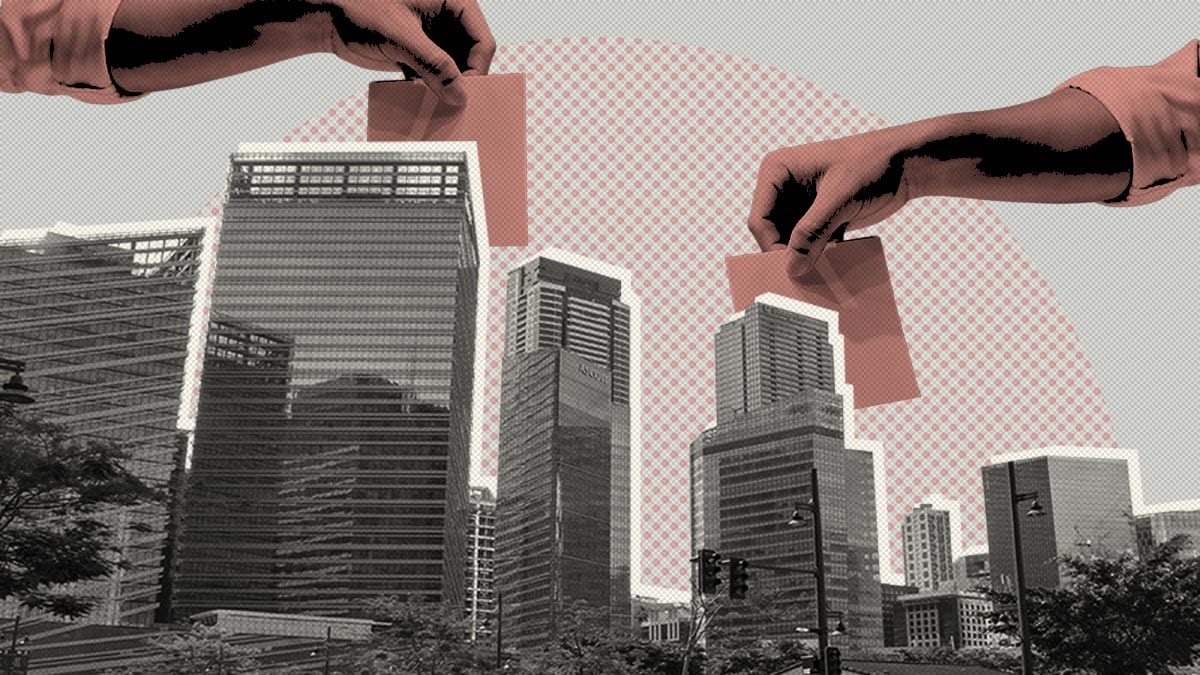
My precinct is less than 300 meters from home, and so it was more than convenient to head there a little before 7 a.m., hoping to beat the queue. Unsurprisingly, that wasn't the case. A long line was already building up outside the classroom. Inside, senior citizens seated on the school chairs were fanning themselves in the heat (and humidity) of the summer to no avail. It probably didn't help that some of the non-senior voters, who were there ahead of time, were told to wait at the back as those over 60 were moved to the front of the line.
"Mamayang 6 p.m. pa kasi ipapasa 'yung boto pag sa senior," an old lady in front of me said. Polling places have a priority area, usually at the quadrangle near the gate of the school, so they don't have to climb the stairs. But this also meant having no access to an electric socket, and thus, an automated counting machine (ACM). Trust issues are real. Inside the classrooms, on the other hand, voters themselves can feed their ballots into the ACM and double-check the voter receipt.
And then there was the problem of the machine itself. The ACM at our cluster broke down early in the morning after a voter scanned their ballot that was shaded by a ballpoint pen (instead of the provided markers). It took some time before voting resumed in that classroom.
After an hour and a half, I was finally able to cast my vote. I walked home, looking forward to the holiday—at least, after this churn. I recognize that this is a privilege. The chance to vote, as it turns out, is not a given.
ALSO READ:
Why Voters Stick to Their Choice—Even If They're Wrong
Is Your Vote Worth It? The Hard Truth About Politics and Elections
The Cost of Voting
The Philippine Collegian, University of the Philippines Diliman's official student publication, reported on May 10 that a number of students have decided to stay in their dormitories instead of traveling to their hometowns to vote.
"Hindi na rin praktikal na magbalikan lang para sa akin considering yung tagal ng biyahe ko na umaabot ng mahigit siyam na oras papunta pa lang," first-year BA Theater Arts student Kristin Roncesvalles, who hails from Albay, was quoted in the story.
Earlier in the month, the Office of the Student Regent had requested the suspension of classes and deadlines from May 10 to 13 to give students enough time to travel home and cast their votes. However, UP President Angelo Jimenez refused to approve the petition, leaving class arrangements at the discretion of the campuses' respective chancellors. UP Los Baños Chancellor Jose V. Camacho, Jr, for example, has allowed asynchronous classes on May 13.
On top of the hours they have to sacrifice, students are also burdened with the fare for transportation, whether it's just traveling within Metro Manila, getting on a plane or RORO to Visayas or Mindanao, or hopping on a bus to nearby towns. Once upon a time, before the chaos that is the shift of the school calendar, elections fell within the month of summer vacation—and this wasn't an issue at all.
People in the working class have the same problem. While it was declared by the Palace to be a "special (non-working) holiday," other private companies (especially BPOs) are business as usual. Plus, no work-no pay applies to blue-collar workers.
"May trabaho pa po 'yung iba sa amin," the person next to me told the election officers, after a group of 10 seniors were moved in front of the line, and once again pushing the others to the back of the queue. This person was probably ready to leave the precinct and just go to work, had the election officers not decided to rearrange the queuing system, alternating a senior/PWD voter and a non-senior/non-PWD one.
Overseas, a niece decided to forego her chance to vote after finding out that the polling place is a two-hour drive away, on a work day at that.
These experiences, from the inconveniences at a nearby precinct to the significant hurdles faced by students and laborers, paint a concerning picture. When the simple act of casting a ballot not only becomes a logistical nightmare but also an economic challenge, we must ask: Are we inadvertently transforming the right to vote into a privilege reserved for those with the time, resources, and patience to navigate the system? And then just to be disappointed by the lack of good governance after voters spend all those hours in line?
The trouble that voters go through to elect a candidate into office is not a joke. A friend couldn't have said it better, "Wag niyo sila biguin. Mahiya naman kayo."
