
Why We Should Watch in Filipino Dubbed—and Demand More of It

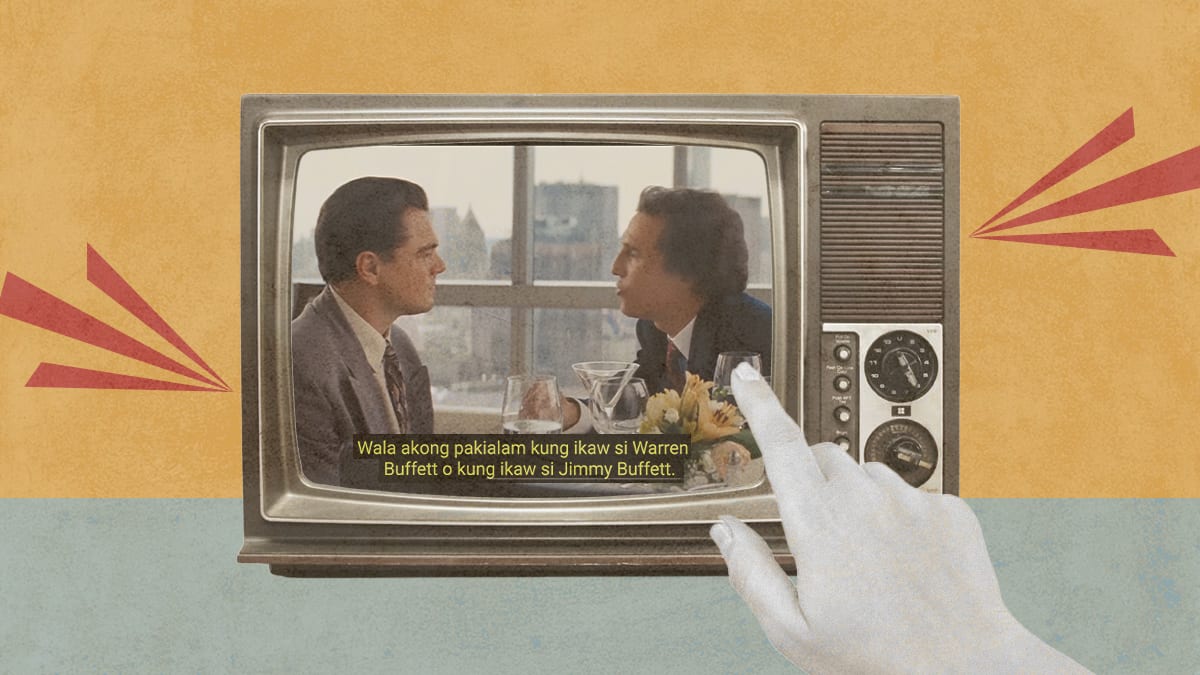
ILLUSTRATION: Igi Talao
After a long day of staring at documents, grading papers, and doomscrolling through office emails, the last thing I want to do is read more text. And yet, every night, I would cue up a K-drama on Netflix, ready to relax—only to find myself chained to subtitles. Look away for two seconds, and you miss a key line. Blink during a dramatic reveal, and you’re rewinding again. It’s homework disguised as entertainment.
Then I discovered Filipino dubbing.
And suddenly, I wasn’t studying the show. I was enjoying it.
ALSO READ:
After English and Spanish, Tagalog Is the Most-Widely Spoken Language in These U.S. Cities
What Is K-Pop Demon Hunters and How Did It Become Netflix’s Biggest Movie Ever?
The Joy of Watching in Your Language
Something happens when you hear characters express themselves in Filipino—it hits closer to the bone. The anger is sharper. The grief cuts deeper. And the humor? Contextualized and local, not stiffly translated.
Nothing beats the crispy, cathartic bite of a perfectly timed “Put*ng Ina!” in the middle of a fight scene. That’s not just a line—it’s a cultural release.
Watching in Filipino removes the filter. It’s not just the words, it’s the emotion that gets translated, reinterpreted, and made ours.
Dubbing Lets You Watch Without Working
The simple, practical truth is that dubbed content is easier on the brain.
When you’re exhausted from work, the last thing you want is to chase subtitles. You look away to sip your coffee, check your phone, or talk to your wife, and suddenly you’ve missed half a conversation. With Filipino dubbing, you can follow the story seamlessly.
Even better, your eyes can enjoy the visual glory of a show—the camera work, the acting nuances, the production design—without constantly being dragged to the bottom of the screen. You’re not just reading the story; you’re immersed in it.
Dubbing Is an Art Form
To some, dubbing has a stigma—like it’s a “lesser” way of consuming media. But that ignores the craftsmanship that goes into it. Translation isn’t mechanical—it’s creative, interpretive, and deeply cultural.
The Philippines has a rich tradition of translation. Take Rolando Tinio, the National Artist for Theater and Literature. He didn’t receive that honor for writing new plays alone — he earned it for transforming Western classics into Tagalog. From Shakespeare and Ibsen to Sophocles and Chekhov, Tinio didn’t just translate language — he translated context, tone, and nuance for Filipino audiences.
Good dubbing works the same way. It’s not about saying the exact words. It’s about carrying the intent, the emotion, the music of the original—while letting it resonate in our language. It’s art.
The State of Filipino Dubbing in Streaming
Currently, Netflix is leading the way in offering Filipino dubbing for selected titles, especially K-dramas. That’s where I’ve found most of the shows I now watch in the local language.
But other major platforms? Disney+, Prime Video, HBO Go? Most don’t bother. Which is baffling, given how big the Filipino streaming audience is. We deserve better. We deserve choices. We deserve to hear our language more often, not just as subtitles buried at the bottom of the frame.
Imagine watching the next big global series and enjoying it with your parents, titos, titas, or grandparents who might not be comfortable reading subtitles. Imagine the inclusivity, the accessibility, the sheer joy of hearing our language give life to these stories.
A Call for More Filipino Dubbed Content
Watching in Filipino isn’t laziness. It’s not “dumbing it down.” It’s a way of claiming space for our language in the global conversation. It makes foreign shows feel closer, more immediate, more alive.
It also makes watching more communal. You can share it with your family without pausing to explain every line. You can laugh together at jokes that actually land. You can feel emotions not just as “borrowed” from another culture, but filtered through your own.
We shouldn’t treat dubbing as a guilty pleasure. We should celebrate it, demand more, and recognize it as part of our cultural right as Filipino audiences.
Because at the end of the day, watching the local dubbing isn’t just about convenience. It’s about hearing ourselves reflected from the screen—and realizing that translation, when done right, is not just language work. It’s storytelling. It’s art.
