
Financial Adviser: 5 Best Performing Stocks in the PSE in 2024 and How to Profit from Them

The Philippine stock market has encountered a challenging environment this year, driven by a combination of global economic uncertainties and domestic headwinds.
While concerns about geopolitical tensions and a slow economic recovery remain, recent signs of easing inflation and lower interest rates have injected some optimism into the market outlook.
In theory, lower inflation boosts consumer purchasing power, with potential upside for corporate earnings. At the same time, reduced interest rates lower borrowing costs for businesses, paving the way for expansion and capital investments.
However, lower interest rates also increase speculative demand for foreign exchange, which recently caused the peso to depreciate to P59. Despite lower inflation, higher aggregate demand in the economy has not yet materialized, as GDP growth for the third quarter slowed to 5.2 percent.
The PSE Index has been on a downward trend in recent weeks, losing 12.3 percent from its peak of 7,546 in October. While the current level remains 2.5 percent higher than last year, the prevailing trend reflects deteriorating market sentiment, which could potentially push the index down to its support level at 5,700.
It is worth noting that while the stock market has been bearish this year, there has been a notable upward trend in the performance of small and mid-cap stocks. These stocks have shown resilience and have risen despite the overall market downturn.
If you’re willing to take on higher risks and are seeking higher returns, you may consider investing in non-index stocks. These stocks, often categorized as riskier due to their smaller market capitalization and potentially higher volatility, can offer greater growth potential.
What stocks were the biggest gainers this year? How risky are these stocks? Do they have emerging fundamental value that may be worth looking at next year? Note that the best-performing stocks this year do not necessarily guarantee success in the upcoming year.
In fact, three of the top five biggest winners last year ended lower this year. These are EEI Corp (PSE: EEI), which gained +109 percent last year and lost -42 percent this year; Pacific Online (PSE: LOTO), with a +102 percent gain last year but dropped -49.5 percent this year; and Ionics, Inc (PSE: ION), which saw a +85.7 percent gain last year but ended with a -18.8 percent loss this year.
Only two stocks from last year’s top performers managed to sustain their upward momentum this year. Digiplus Interactive Corp (PSE: PLUS), the biggest winner in 2023 with a remarkable gain of +185.5 percent, continued its strong performance with an additional +212 percent increase in 2024. Similarly, SSI Group (PSE: SSI), which gained +62 percent last year, added another +35.2 percent to its value this year.
History teaches that top performers one year may falter the next, and careful scrutiny of their financials and prospects will separate genuine opportunities from fleeting momentum plays. Investors should assess risks, examine intrinsic value, and approach the market with a clear-eyed perspective grounded in data.
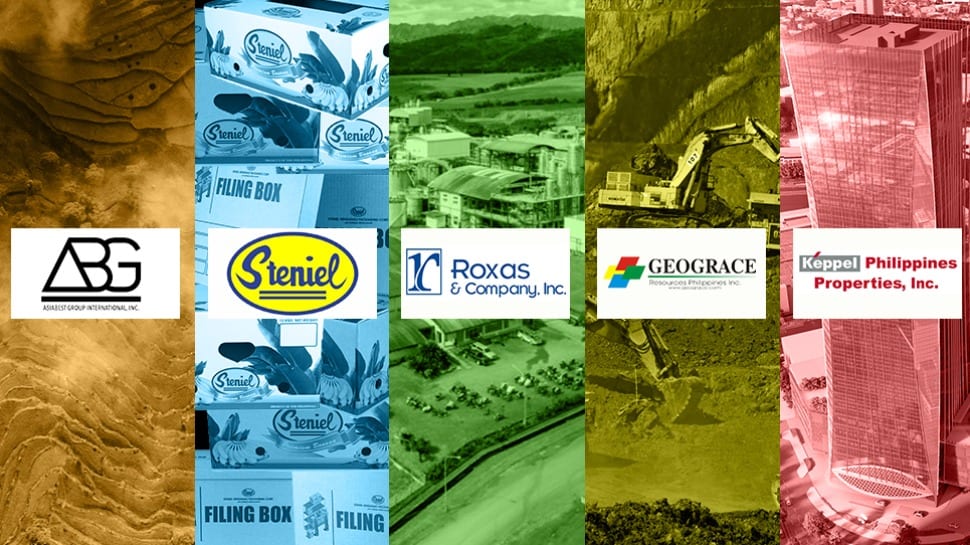
Here are the top five biggest stock market winners in 2024:
ALSO READ
Financial Adviser: 5 Worst-Performing Stocks in the PSE in 2024 and How to Profit from Them
1| Asiabest Group International
Price: P26.20
Year-to-date gain: +770.4 percent
Asiabest Group International Inc. (PSE: ABG) is an investment holding company and a subsidiary of Tiger Resort Asia Limited (TRAL), a Hong Kong-based entity wholly owned by Universal Entertainment Corporation (UEC). UEC, a publicly listed company on the Tokyo Stock Exchange, is majority-owned by Okada Holdings Ltd., a corporation registered in Hong Kong.
ABG had no active operations since 2017, which accumulated deficit of P48.9 million as of September 30, 2024. The company’s strategy was supposed to explore opportunities in entertainment and gaming, as approved by its ultimate parent company, UEC.
But last October, the shareholders of ABG sold 67 percent controlling stake to a group of companies, Premiumlands Corp (PLC) and Industry Holdings and Development, Inc (IHDC) led by its chairman and founder, Francis Lloyd Chua.
PLC specializes in both residential and commercial real estate projects, which range from affordable housing developments to modern business communities, while IHDC is a construction holdings company that operate across key industries such as manufacturing and logistics.
ABG's shares have surged five-fold since October, rising from P5.29 per share to P26.20 per share. At this market price, ABG's market capitalization has reached P7.86 billion, approximately double the market capitalization of its closest peer, EEI Corp (PSE: EEI), and 60 percent higher than Megawide Construction's (PSE: MWIDE) market cap of P4.9 billion.
Since there is no information yet regarding the financial profile of the new group that took over ABG, we can only estimate the potential earnings they might bring. Assuming a P/E ratio of 16 times, which is comparable to EEI, ABG's expected annual earnings from the new group would likely fall within the range of P400 million to P500 million.
If the actual projected earnings fall below the estimated range, the stock would be considered overvalued, and its share price would likely correct. Conversely, if the projected earnings exceed expectations, a higher share price would be justified.
2| Steniel Manufacturing Corp
Price: P1.59
Year-to-date gain: +511.5 percent
Steniel Manufacturing Corporation (PSE: STN) was initially engaged in manufacturing, processing, and selling paper products, corrugated containers, and other related products. However, due to business losses, the company ceased its manufacturing operations in 1997 and shifted its focus to holding investments.
Over the years, there have been significant changes in the company’s ownership structure. In 2006, Steniel (Netherlands) Holdings B.V. (SNHBV) became the majority shareholder, and through various transactions, the ultimate parent company changed multiple times.
Notably, in 2020, a group of companies, including Greenkraft Corporation and Corbox Corporation, acquired a significant portion of the company's shares, with the ownership of SNHBV being reduced to five percent.
In 2019, STN made efforts to address its negative equity by reacquiring Steniel Mindanao Packaging Corporation (SMPC) through a share swap transaction and converting loans into equity. This led to an increase in the company's authorized capital stock from P1 billion to P2 billion.
The trading of STN’s shares was suspended in 2006 and was only lifted this year, after 18 long years. When STN's shares first traded in April, its share price surged to P2.00, up from the previous dormant price of P0.26 per share.
STN’s total revenues have been growing over the past three years, rising from P1.3 billion in 2021 to P3.4 billion in 2023. Alongside this, its gross profit margin has improved from 10.6 percent in 2021 to 13.2 percent in 2023, indicating enhanced operational efficiency and profitability. Because of this, STN’s net income has increased by almost ten-fold from P17.9 million in 2021 to P117.8 million in 2023.
This year, STN's total revenues for the nine-month period decreased by 8.47 percent, from P2.61 billion in 2023 to P2.39 billion in 2024. Despite an improvement in gross profit margins, rising from 13.0 percent in 2023 to 19.2 percent in 2024, this was not sufficient to offset the decline in net income.
STN’s net income fell by 51.61 percent, from P205.2 million in 2023 to P99.3 million in 2024, which was largely driven by the drop in other income and higher finance charges.
STN’s share have been actively traded this year, reaching as high as P2.10 per share, but it has since corrected to P1.59 per share.
If we annualize STN’s net income for this year based on the nine-month earnings, we estimate that the company could achieve a full-year net income of P127 million. With this projected net income, STN would have a P/E ratio of 17.8 times.
STN may consider a follow-on offering in the future, as its current additional paid-in capital of P408 million is insufficient to offset its accumulated deficits of P942 million. With a deficit in equity, the company will be unable to declare dividends, which could limit its potential for value appreciation.
Assuming STN proceeds with a follow-on offering, the stock is likely to remain actively traded, providing more liquidity for investors. Management will need to focus on strengthening the company’s financial position and addressing its accumulated deficits to ensure long-term sustainability and unlock further value appreciation for the company.
3| Roxas and Company, Inc
Price: P2.86
Year-to-date gain: +495.8 percent
Roxas and Company, Inc. (PSE: RCI) is a diversified holding company with interests in various sectors, including real estate, hotel development, coconut processing, and renewable energy.
Through its subsidiary, Roxaco Land Corporation (RLC), RCI engages in real estate development, operations, and property management. This includes high-end developments like Anya Hotel and Resort in Tagaytay and budget hotels under the “Go Hotels” brand. RCI also has investments in Fuego Development Corporation, Club Punta Fuego, and other real estate entities.
RCI holds a significant stake in Roxas Holdings, Inc. (RHI), a company involved in sugar milling and ethanol production, though its equity interest has been diluted over time. The company is also a major player in the coconut processing industry through its subsidiary, Roxas Sigma Agriventures, Inc. (RSAI), which produces coconut-based products for international markets.
In recent years, RCI has undergone a series of corporate restructuring, including the merger of its subsidiary RLC with Anya Hotels and Resorts Corporation, and the increase of its stake in RLC. The company also raised capital by issuing preferred shares, which helped reduce debt and fund operational requirements.
RCI’s total revenues for the past 10 years have been growing by a compounded rate of 24 percent per year from P83 million in 2013 to P732 million in 2023. However, despite this revenue growth, the company has faced operational losses due to rising operating expenses over the years.
But the company has managed to grow its net income by compounded rate of 17.9 percent per year from P265 million in 2013 to P1.4 billion in 2023. This growth has been driven by unrealized fair value gains on its properties in Nasugbu, Batangas, which have surged from P709 million in 2018 to P2.1 billion in 2023, reflecting an impressive 25 percent annual increase.
This year, RCI’s nine-month total revenues fell by 35.6 percent to P364 million from P567 million in the same period last year due to reduced revenues from its real estate and hotel operations.
With operating expenses higher than its gross profits, RCI’s registered net loss of P584 million, which is 20 percent higher compared to the P485 million loss incurred during the same period last year.
RCI’s liquidity position has shown some improvement over the past year, with its current ratio rising from 0.52:1 to 0.72:1 in September 2024. However, despite this positive trend, the current ratio remains below the ideal benchmark of 1:1, which implies that the company still has potential liquidity risks.
Since the current ratio is still less than 1, the company might face challenges in paying off its short-term debts when they become due, unless it relies on external financing or sells assets to meet its obligations.
RCI’s debt-to-equity ratio has decreased from 0.67:1 in 2023 to 0.54:1 in September 2024, which indicates that the company has been reducing its reliance on debt to finance its operations. This is a positive sign of improved financial stability, as a lower ratio suggests reduced financial risk.
If we account the P1.4 billion unrealized gain from fair value of its assets in 2023, RCI’s 12-month trailing income stands at P1.2 billion. By comparing this against its market cap of P8.0 billion, RCI enjoys a P/E ratio of 6.7 times.
RCI appears to be an asset play on its investment property in Nasugbu, Batangas, which is now valued at P11.5 billion. With this valuation, RCI’s book value of P3.57 per share offers a 20 percent at current market price.
4| Geograce Resources Philippines
Price: P0.11
Year-to-date: +307 percent
Geograce Resources Philippines, Inc (PSE: GEO) was incorporated in 1974 with roots in mineral exploration and resource development. Over the years, GEO transitioned from a mining company to an investment holding company to explore broader business opportunities.
GEO operates as an investment holding entity and holds several direct and indirect ownership in subsidiaries and associates, primarily engaged in mineral exploration and development, but most of these are in their pre-operating stages.
GEO currently has no active income sources, as its subsidiaries remain non-operational as of September 30, 2024. The company reported net losses of P1,499,379 and has accumulated deficits of P2.78 billion.
Should GEO be sold for a backdoor listing, any potential investor would need to infuse fresh capital, including an additional paid-in capital equivalent to the P2.78 billion deficit, to address and eliminate the accumulated losses.
Despite these challenges, GEO is actively exploring profitable business opportunities, including investments, acquisitions, and capital-raising initiatives, to support current operations and fund future projects. The company also aims to retain its listing on the Philippine Stock Exchange (PSE).
Earlier this year, GEO’s shares had been actively traded on rumors of potential backdoor listing, which resulted in a five-fold increase in its share price. However, the stock has since corrected after it peaked in May and has declined to P0.10 per share. This trend is expected to persist in the absence of new speculative activity.
5| Keppel Philippines Holdings
Price: P16.46
Year-to-date gain:+229.2 percent
Keppel Philippines Holdings, Inc. (PSE: KPH) is an investment holding company with principal operations that involve managing investments, while its subsidiaries focus on real estate leasing within the country.
KPH is owned and controlled by Keppel Limited (KL), formerly known as Keppel Corporation Limited, which is a publicly listed company on the Singapore Exchange.
KPH’s wholly owned subsidiary, KPSI Property, Inc. (KPSI) owns 51 percent of Goodwealth Realty Development Corporation (GRDC), which in turn, owns Goodsoil Marine Realty, Inc. (GMRI), where KPH has an effective 51 percent indirect ownership. Through GMRI, the company holds a 25 percent stake in Consort Land, Inc. (CLI), giving KPH an indirect ownership of 13 percent in CLI.
Early this year, KPH sold the 24.9 hectares of land in Bauan, Batangas, owned by its 51 percent-owned Goodsoil Marine Realty, Inc to a non-related third party for P1.5 billion. The transaction was completed on an “as-is, where-is” basis, resulting in a net gain of P1.3 billion after land costs, commission, and taxes.
The sale of KPH’s Batangas property drove its share price up four-fold, from P5.98 to a peak of P25 per share. However, the stock has since corrected due to profit-taking and settled at P16.46 per share.
As of September 2024, KPH holds a cash balance of P1.27 billion, primarily from the proceeds of the property sale by its subsidiary. After deducting its total liabilities of P10 million, KPH’s net cash position stands at P1.26 billion. Dividing this amount by its total outstanding shares yields a net cash per share of P22.
At its current share price, KPH trades at a 25 percent discount to its net cash per share of P22. If KPH retains the same cash balance it had in 2023 at P575 million for working capital, it could potentially distribute the remaining P695 million as dividends next year.
A dividend payout of P695 million would result in a large dividend yield of 67.2 percent, which could trigger a significant share price rally. Assuming an average dividend yield of 10 percent, KPH’s share price could rise by five times its value today next year.
Henry Ong, RFP, is an entrepreneur, financial planning advocate and business advisor. Email Henry for business advice hong@financialadviser.ph or follow him on Twitter @henryong888
