
Notice the PHP-USD Exchange Rate Glitch Today on Google Finance?

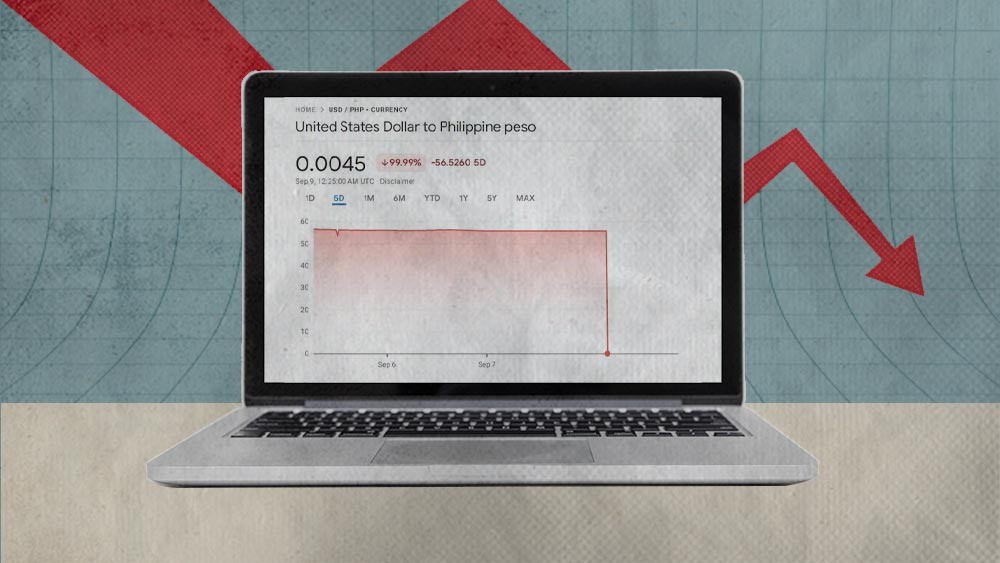
For a second there, Filipino traders on Google Finance couldn't believe their eyes. It was a glimpse of what it meant to be a first-world country.
On early Monday, September 9, 2024, the platform showed the United States dollar to Philippine peso rate was at 0.0045 to 13. Forex traders, rejoice! Yes, for a time, having P45 was equal to USD 2,888.89. This meant that you could've bought your own Tesla Cybertruck for P50,000 if you wanted, as one Redditor pointed out when the glitch occured. Insanity, right?
And it was. It seems that only Google had the glitch, too (one Redditor also pointed out on the same thread that there had been a glitch for AUD, as well). Other platforms such as Yahoo Finance and even GoTyme had the accurate figures. For future reference, of course, we can always check with the Bankers Association of the Philippines. So what really happened? And how worried should we be about glitches like these?
ALSO READ:
Philippine FinTech Startup BillEase Closes P566 Million in Series B Round
Endeavor Welcomes Philippine Startup BillEase in its Network of 'High-Impact' Entrepreneurs
What Do We Do the Next Time the USD-PHP Exchange Rate Acts Up on Google Finance?
This minor glitch doesn't take away from the fact that the platform itself is still one of the best ways to search for real-time financial security data. It still tracks information on stocks, mutual funds, indexes, and the like, as well as currency and cryptocurrency exchanges at a respectable clip.
The platform aggregates articles and insights from various resources, including data from earnings reports, industry movement, and overall analysis of the market. Users can access current stock prices and historical data well into weeks, months, and years with help from a single function.
Nevertheless, most users encounter problems with the function itself and how it doesn't return the requested data for hours at times. Inaccuracies and instability happen from time to time, as well. Users can write a custom function in place when needed. Issue trackers such as this should be able to help users identify and troubleshoot any errors that pop up along the way.
